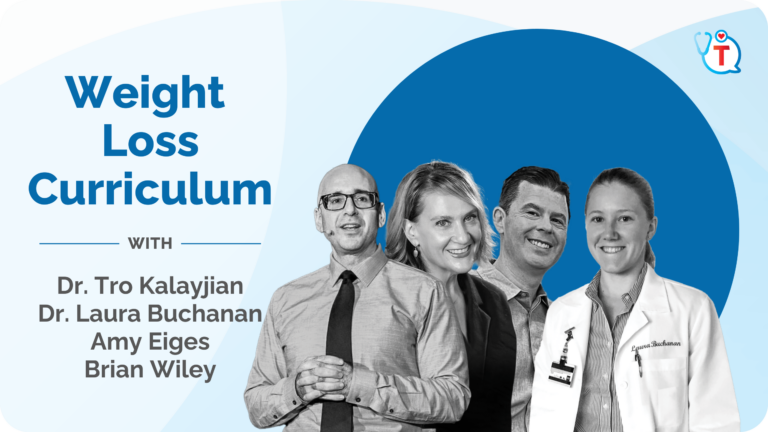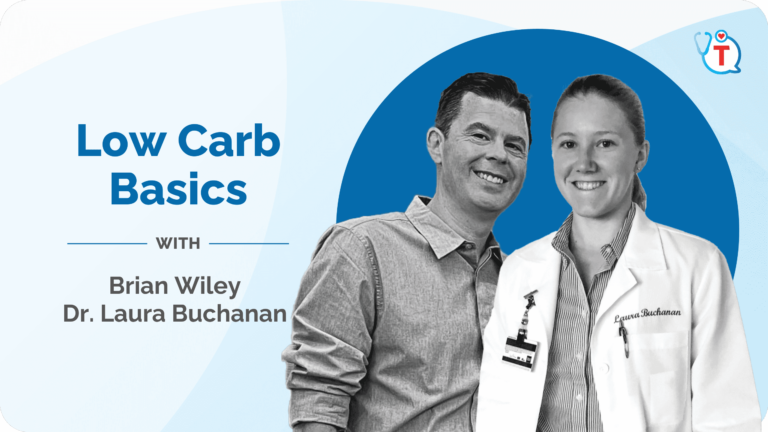

Starting low carb does not require changing every meal overnight, buying specialty products or following someone else’s perfect menu. It helps to have a simple plan for what to eat, what to drink, how to handle cravings and what to do when life gets busy.
This guide combines Toward Health’s practical beginner advice with Dr. Tro’s clinical Blueprint. Start with five repeatable steps, learn what keeps you satisfied and use your care team when the plan or your medications need to be individualized.

On this page
The quick-start version
- Build meals around protein and lower-carbohydrate foods you enjoy.
- Choose water and other unsweetened drinks intentionally.
- Prepare backup foods before a difficult or busy day.
- Plan for cravings, restaurants, travel and social situations.
- Track hunger, satisfaction and triggers, then adjust with your care team.
Before you begin
For medically appropriate adults, Toward Health’s structured clinical Blueprint commonly begins with fewer than 30 g of total carbohydrate per day. Your clinician may individualize the target and explain how to count non-starchy vegetables within your plan.
Carbohydrate restriction can change glucose, blood pressure, fluid balance and medication needs quickly. Work with your clinician before making a major reduction if you use insulin, sulfonylureas or meglitinides, an SGLT2 inhibitor[5], blood-pressure medicine or a diuretic; have type 1 diabetes or significant kidney, heart or liver disease; are pregnant or breastfeeding; or have a history of an eating disorder. Do not change medication on your own.
For a deeper clinical explanation, watch Dr. Laura Buchanan’s separate lesson, Safely Implementing a Low Carb Lifestyle.
Step 1: Build satisfying meals
For the clinical Blueprint, reduce sugar and high-carbohydrate foods while keeping total carbohydrate below the target you established with your care team. Build meals from foods such as eggs, meat, poultry, fish, seafood, plain Greek yogurt, cheese, leafy greens and other non-starchy vegetables, and lower-sugar fruit such as berries.
Eat until comfortably satisfied. The early goal is not to white-knuckle chronic hunger or alternate between severe restriction and binges. It is to learn which foods keep you full and make the plan easier to repeat.
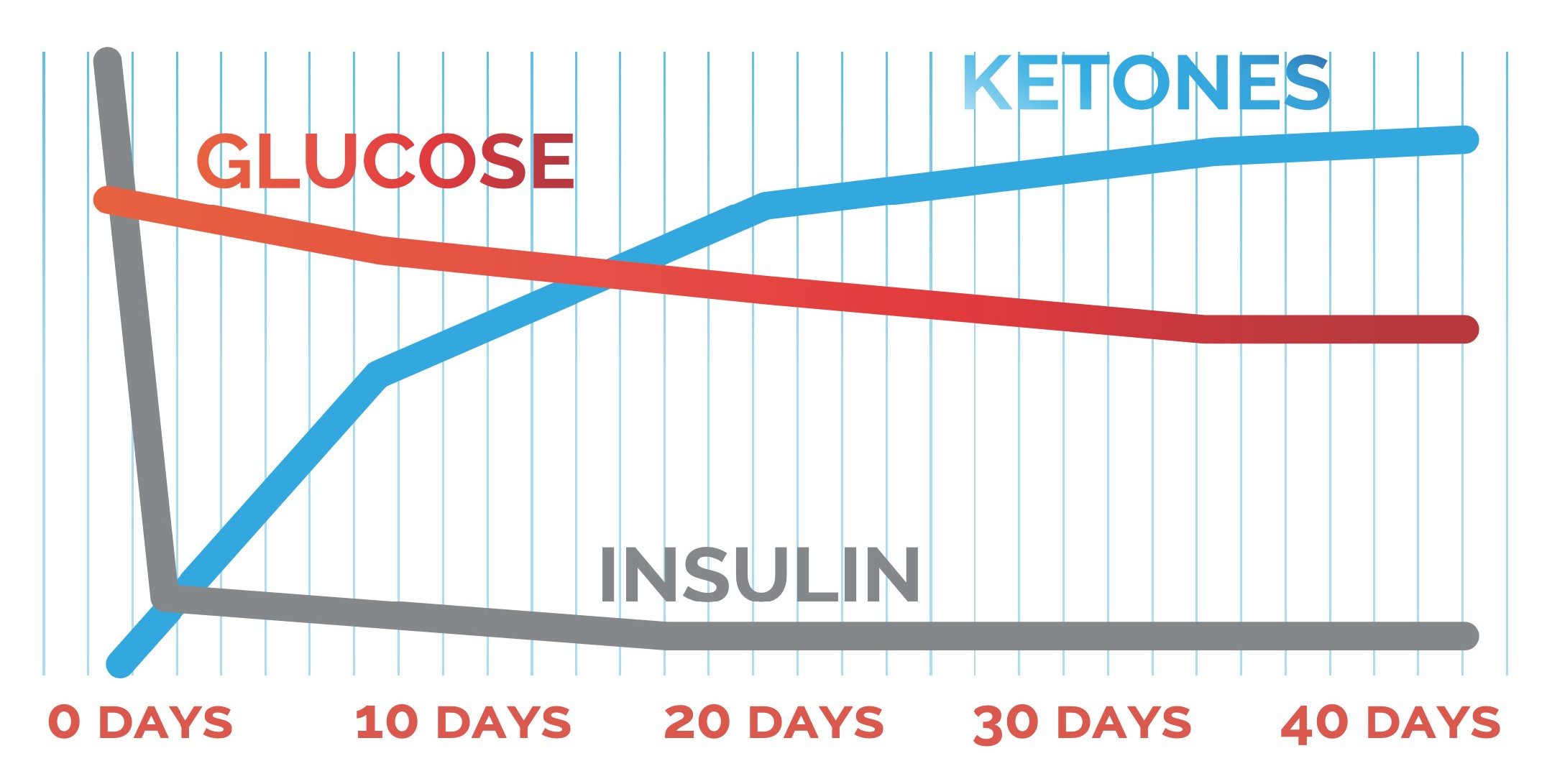
Reducing carbohydrate lowers glucose and insulin exposure and encourages the body to rely more heavily on fatty acids and ketones for fuel. Protein, non-starchy vegetables and sufficient dietary fat can support satiety, and many people find that hunger and cravings become quieter over time.
Rethink breakfast


Use a simple lunch-and-dinner template
Choose one item from each group:
- Protein: fish, poultry, eggs, meat, tofu, tempeh, plain dairy or another option that suits your needs.
- A lower-carbohydrate side: leafy greens, broccoli, cauliflower, cabbage, peppers, cucumber, zucchini, green beans, mushrooms or another option that fits your culture and tolerance.
- Flavor and enough energy for the meal: herbs, spices, dressing, sauce, avocado, olives, nuts, seeds or another fat source in an amount appropriate for you.
Rethink lunch and dinner


Read labels by serving
Marketing terms such as “keto,” “low carb” and “no added sugar” do not tell you whether a product fits your plan. Check the serving size, total carbohydrate, fiber, sugars, protein and the number of servings you will actually eat. If your clinical plan uses total or net carbohydrate, apply that method consistently.
Step 2: Pay attention to hydration and sodium
When carbohydrate intake falls, lower insulin levels and the use of stored glycogen can cause the kidneys to release more sodium and water, particularly at the beginning.
Drink water and other unsweetened fluids regularly and respond to thirst. Pale-yellow urine can be a useful general cue, but forcing water until urine is completely clear is unnecessary.
Some people benefit from salting food to taste during early adaptation. Sodium needs must be individualized if you have been advised to restrict salt, take blood-pressure medicine or a diuretic, or have a heart or kidney condition. Persistent dizziness, vomiting, weakness, very low blood pressure or abnormal glucose should prompt contact with your care team rather than being treated automatically with salt.

Replace sweetened drinks


Step 3: Give fat adaptation 4–6 weeks
Ketone production can begin within days. Toward Health’s clinical Blueprint allows about 4–6 weeks for fat adaptation as the body becomes more efficient at using fatty acids and ketones for energy; timing varies by person.

During these first weeks, focus on consistency, satisfaction and learning rather than demanding a particular number from the scale every day. Stay below your established carbohydrate target and eat until comfortably full without deliberately eating past fullness. As appetite becomes quieter, you and your care team can decide whether meal size or timing needs to change for continued weight loss.
Step 4: Prepare backup and replacement strategies
The best backup plan is one you will actually use. Keep satisfying, minimally processed low-carb foods available when storage permits: eggs, leftovers, chicken, meat, fish, seafood, plain yogurt or cheese. Shelf-stable options might include tuna or salmon packets, nuts, seeds or another product whose label you have reviewed.
Low-carb replacement foods—such as protein shakes, bars, chips or planned desserts—can be useful defensive tools when they prevent an unplanned return to foods that trigger cravings or loss of control. They are not mandatory. Notice whether a product makes you more satisfied, leaves you hungrier or becomes difficult to stop eating, and use that information to decide whether it belongs in your plan.
Plan snacks and desserts




Watch: Low-Carb Replacement Foods
Step 5: Identify triggers and prepare for difficult situations
Identify the foods, emotions, places, times and situations most likely to challenge your plan. Then decide what you will need on your worst day—not only your best day. Preparation reduces how often you must depend on willpower or impulse control when the going gets tough.

During the first few weeks, ask:
- What makes me hungry?
- Which foods leave me hungrier?
- Which foods keep me satisfied?
- Did sleep, stress, habit or routine affect my hunger?
- Which situations or emotions preceded a craving or binge?
If binge eating or loss-of-control eating is recurrent, distressing or worsening, contact your Toward Health care team for additional support. It should not be managed solely by increasing dietary restriction.
Restaurants, events and travel
- Review restaurant menus before you arrive and decide what substitutions you may request.
- Ask for sauces or dressings on the side when useful.
- Bring a dish you enjoy when the setting permits.
- Pack shelf-stable backup options for travel and identify restaurants or grocery stores near your destination.
- Decide in advance how you want to handle dessert or a food that commonly triggers cravings.
If someone pressures you to eat, use a short response and redirect the conversation. See How to Handle Food Pressure and Set Boundaries for practical scripts.
A simple first-week plan
Before day one
- Choose two breakfasts, two lunches and two dinners you are willing to repeat.
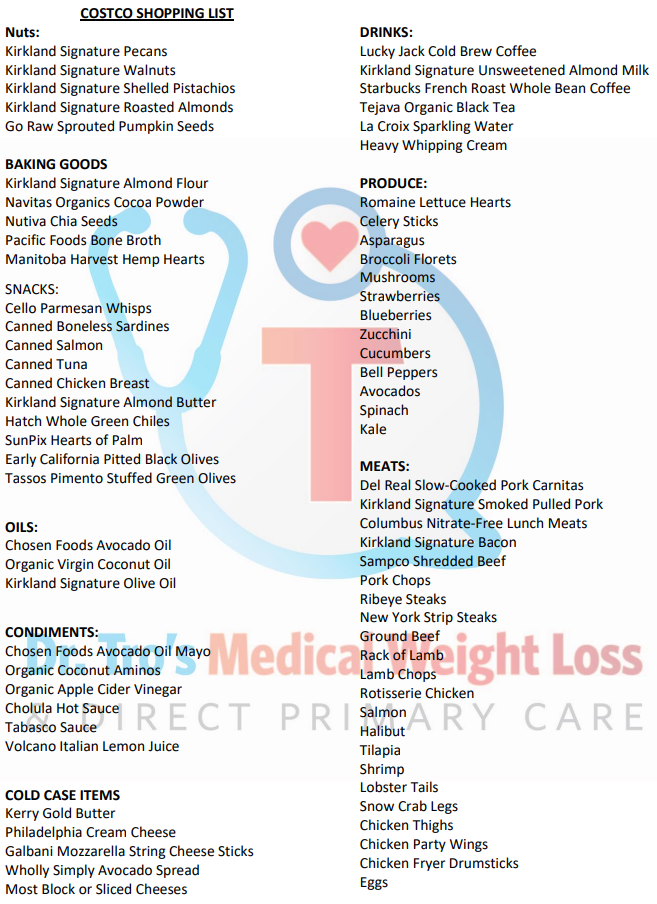
- Make a short grocery list.
- Identify one drink change.
- Put two safely stored backup options where you will need them.
- Decide how you will contact your care team if medication, glucose or blood pressure needs attention.
During the week
Begin with repeatable meals and drinks. Check labels on the packaged foods you use most often. At the end of the week, keep what made the routine satisfying and practical, and adjust what left you hungry or created unnecessary stress.
The Toward Health Blueprint resources
Download the Blueprint
Download Dr. Tro’s Toward Health Blueprint PDF.
Watch the initial Blueprint overview
Why this approach can work
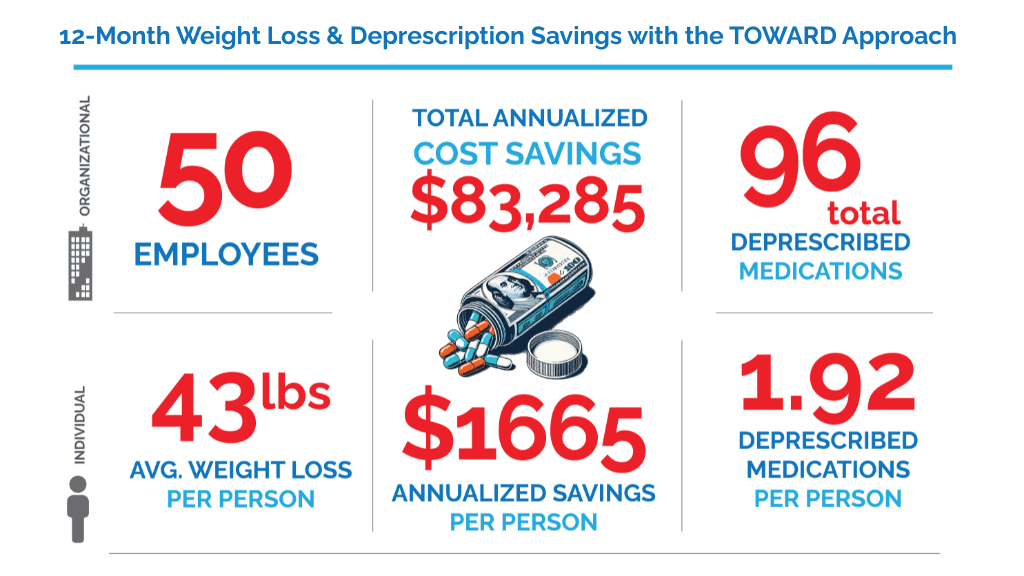
In the 2025 TOWARD study, participants in a medically supervised program combining therapeutic carbohydrate reduction, medical care, coaching, education, monitoring and community support achieved substantial one-year weight loss while medications were deprescribed.[1] A randomized residential crossover trial found lower hunger and lower spontaneous intake during a high-protein ketogenic diet than during a higher-carbohydrate comparison diet.[2]
A separate TOWARD analysis found improvements in food-addiction and binge-eating measures during the intervention.[3] For a broader review of common questions about safety, effectiveness, nutritional adequacy and sustainability, see the 2025 Nutrients paper coauthored by Dr. Tro Kalayjian.[4]
The takeaway
For the first 4–6 weeks, keep the plan simple: follow your established carbohydrate target, build satisfying meals, stay appropriately hydrated, individualize sodium, prepare replacement strategies and notice what affects your hunger. You do not need perfection. You need a plan that still works when life becomes inconvenient—and a care team you are willing to use.
Related learning
- Why Low Carb? How It Changes Hunger, Cravings, and Weight Loss
- LowCarbMD Podcast
- Recommended reading: The Big Fat Surprise; The Obesity Code; Good Calories, Bad Calories; Why We Get Sick; and Always Hungry?
- Safely Implementing a Low Carb Lifestyle — separate Dr. Laura Buchanan video companion covering medications, laboratory changes and adverse events.
References
- Buchanan L, Calkins M, Kalayjian T, et al. TOWARD, a metabolic health intervention, demonstrates robust 1-year weight loss and cost-savings through deprescription. Front Nutr. 2025;12:1548609. https://doi.org/10.3389/fnut.2025.1548609 ↩
- Johnstone AM, Horgan GW, Murison SD, Bremner DM, Lobley GE. Effects of a high-protein ketogenic diet on hunger, appetite, and weight loss in obese men feeding ad libitum. Am J Clin Nutr. 2008;87(1):44–55. https://doi.org/10.1093/ajcn/87.1.44 ↩
- Saner E, Kalayjian T, Buchanan L, et al. TOWARD: a metabolic health intervention that improves food addiction and binge eating symptoms. Front Psychiatry. 2025;16:1612551. https://doi.org/10.3389/fpsyt.2025.1612551 ↩
- Teicholz N, Croft SM, Cuaranta I, et al. Myths and Facts Regarding Low-Carbohydrate Diets. Nutrients. 2025;17(6):1047. https://doi.org/10.3390/nu17061047 ↩
- Mistry S, Eschler DC. Euglycemic diabetic ketoacidosis caused by SGLT2 inhibitors and a ketogenic diet: a case series and review of literature. AACE Clin Case Rep. 2021;7(1):17–19. https://doi.org/10.1016/j.aace.2020.11.009 ↩