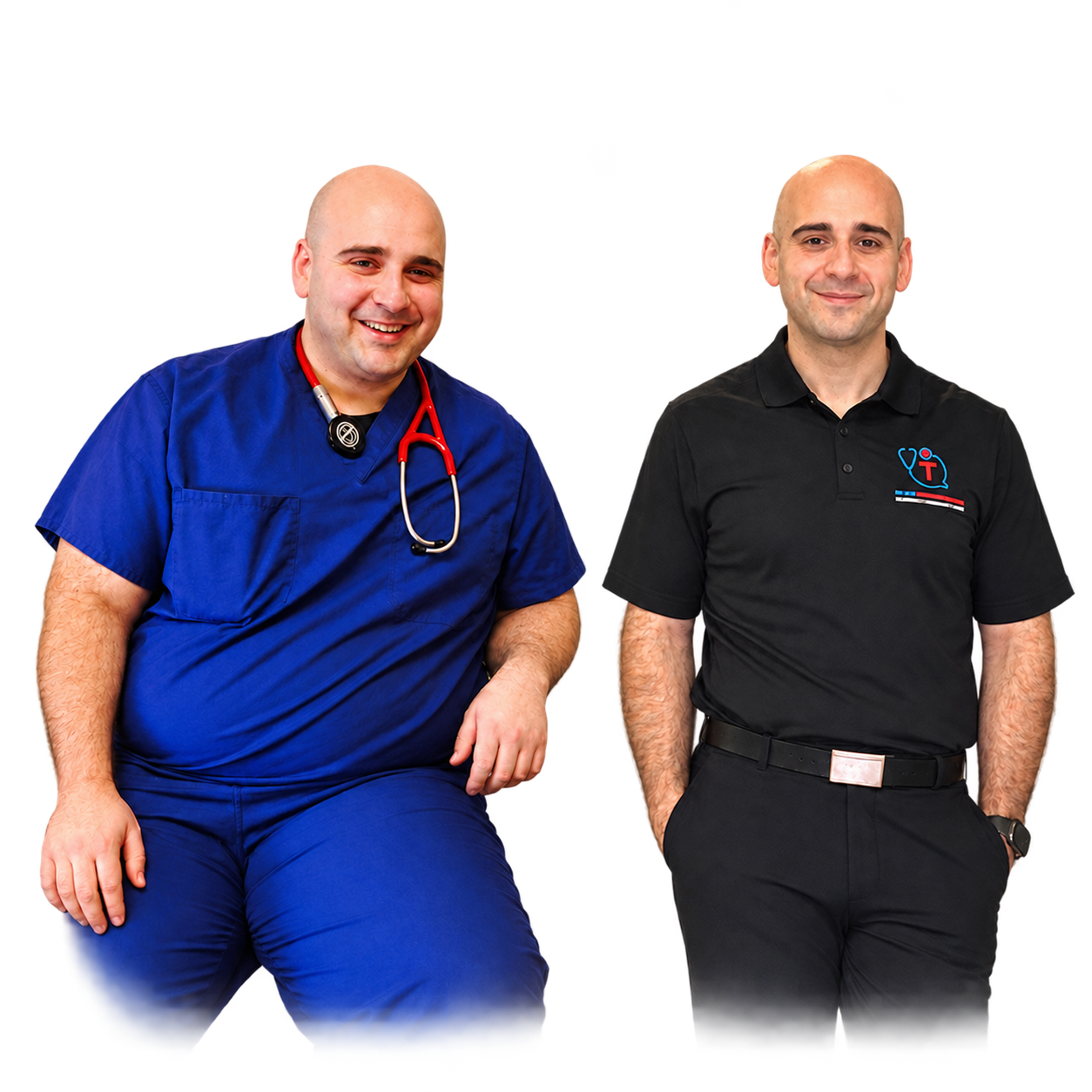
Comprehensive physician-led care, focused on your energy, performance, and measurable progress. Dr. Tro and the Toward Health team connect advanced testing with a personal plan and ongoing medical review. Your care coordinator organizes mobile labs at home or work, specialist input, and follow-up, so you spend less time managing your care.
You want the energy and capacity to keep doing what matters to you. Your ongoing, physician-led partnership connects cardiovascular, metabolic, brain, sleep, strength, and recovery insights into one personalized strategy. Advanced testing, connected data, coaching, mobile labs at home or work, a dedicated care coordinator, and physician oversight for urgent issues and hospitalizations reduce logistical burden while supporting energy, focus, resilience, and long-term health.
Clear answers. Less for you to manage.
Your doctors should be working from the same picture. Your physician connects laboratory, imaging, specialist, and performance information into one strategy with clear priorities.
Your time should not disappear into scheduling and paperwork. Your dedicated care coordinator manages mobile labs, imaging, records, referrals, scheduling, and follow-up, and helps reconnect the plan after urgent issues or hospitalizations.
You need to understand what a finding means for you. Advanced imaging, cancer screening, genetics, sleep evaluation, and preventive neurology are interpreted together in clinical context.
More data should lead to clearer decisions. CGM, activity, sleep, glucose, ketones, blood pressure, and coaching add usable context between medical reviews.
Affiliations
Logo movement pauses while this area has keyboard focus.
Understand your risks. Know what to do next.
You want to understand what deserves attention before deciding what comes next. A whole-person approach looks beyond isolated symptoms or numbers to understand the patterns shaping how you feel, perform, and age. Metabolic health connects laboratory trends and everyday data with cardiovascular, cancer, genetic, neurologic, sleep, and performance assessments.
Your physician brings those signals together to identify priorities, act on what matters now, and decide what comes next.
An advocate when care gets complicated.
When care becomes complicated, you need someone to help connect the decisions. When an urgent concern, hospitalization, or specialist decision interrupts the plan, your dedicated care coordinator connects the pieces across your multidisciplinary team and outside specialists. Support includes clinically appropriate guidance and escalation, pre-ER coordination when medically safe, integration of specialist recommendations, discharge-plan review and follow-up, and a physician consultation for each hospitalization.
Know where you stand on heart risk.
You want a clear understanding of your heart risk and the next steps that matter for you. When medically appropriate, coronary CTA with AI-assisted analysis helps evaluate coronary anatomy and plaque-related findings. Your physician reviews the imaging alongside symptoms, laboratory results, medical history, and family history to guide next steps.
A cancer screening plan built around your risk.
You want a screening plan that makes sense for your age, history, and risk. For eligible adults, Cologuard® supports colorectal cancer screening, Galleri® looks for a signal associated with multiple cancers, and AI-assisted full-body MRI, when medically appropriate, adds a broader view across major body regions. Your physician interprets findings together and recommends targeted follow-up. Galleri and MRI do not replace routine age- and risk-based screening; a positive Cologuard result requires colonoscopy.
Understand your brain health and inherited risks.
You want to stay mentally sharp and understand what your family history may mean for you. Every member receives a comprehensive preventive neurology assessment addressing personal and family history, neurologic and cognitive concerns, medications, sleep, mood, hearing, prior head injury, and vascular and metabolic risk, together with a neurologic examination. APOE testing and a 100 Gene Longevity Panel are included and offered after education and informed consent. Results can inform an individualized risk discussion, but they cannot predict who will or will not develop Alzheimer’s disease or prevent dementia by themselves.
Stay strong for the life you want to lead.
You want to keep the strength and mobility your work, travel, and everyday life require. Your dedicated strength and conditioning coach develops a progressive plan around strength, mobility, recovery, and your medical context. Your dedicated health coach helps translate the broader plan into sustainable daily action.
You’re investing time and effort in your health. You should be able to see what is changing. Every member receives a CGM for a defined wear period. Your physician reviews how you feel alongside glucose, laboratory data, activity, sleep, blood pressure, ketones, imaging, screening, genetics, and performance findings during quarterly medical and laboratory reviews. Your care coordinator and coaches help carry out shared priorities, while specialist recommendations are integrated into the evolving plan.
Your physician leads. Your team handles the details.
You should not have to become the project manager for your healthcare. Your physician leads the strategy. Your care coordinator manages scheduling, records, mobile labs, referrals, and follow-up. Your coaches help make the plan workable in daily life and sustainable over time.
Dedicated physician
Directs the medical assessment, interprets CGM, laboratory, blood-pressure, imaging, and screening findings in context, manages the longitudinal plan, and coordinates specialist care.
Dedicated care coordinator
Coordinates connected-device onboarding, mobile labs, sleep testing, scheduling, records, referrals, imaging logistics, specialist communication, and follow-up throughout the partnership.
Dedicated health coach
Helps translate physician-reviewed CGM and activity or sleep patterns into practical work on nutrition, sleep, stress, behavior change, and consistent follow-through.
Dedicated strength & conditioning coach
Builds a progressive training plan aligned with your health, current capacity, injuries, recovery, and performance goals.
Support through urgent decisions and hospital care.
An urgent concern or hospital stay should not leave you to coordinate everything alone. When an urgent concern, hospitalization, or specialist decision interrupts the plan, your dedicated care coordinator helps connect the pieces with the clinical team.
Urgent clinical guidance and escalation when appropriate
Pre-ER care coordination when it is medically safe to do so
Specialist coordination and integration of recommendations
Physician consultation for every hospitalization
Support reviewing discharge plans and coordinating follow-up
In the news
Logo movement pauses while this area has keyboard focus.
Diet Doctor
A medical team that stays involved.
You want support that continues after the test results arrive. Your partnership brings advanced assessment, a dedicated care team, and ongoing coordination into one physician-led relationship.
Longitudinal metabolic care
Dedicated four-person team: physician, care coordinator, health coach, and strength and conditioning coach
Quarterly medical and laboratory reviews
CGM for every member, with physician and health-coach review
Connected monitoring across activity, sleep, glucose, ketones, and blood pressure
Structured sleep review, with clinician-ordered home sleep apnea testing when appropriate
Mobile laboratory collection at home or work
Advanced assessment
AI-assisted CCTA, when medically appropriate
AI-assisted full-body MRI, when medically appropriate
Galleri testing for eligible patients
Colorectal screening pathway, including Cologuard when appropriate
Genetic testing and family-history-guided imaging, when medically appropriate
Comprehensive preventive neurology assessment for every member
APOE testing and 100 Gene Longevity Panel
Urgent, specialist, and hospitalization coordination
What to know before you begin
Testing is personal. Your physician will determine what is appropriate after reviewing your health and family history.
Is every listed test appropriate for every member?
No. Your physician selects testing based on age, medical and family history, symptoms, prior testing, safety considerations, and clinical appropriateness.
Does Galleri replace routine cancer screening?
No. Galleri should be used in addition to screening recommended by your healthcare provider. It does not detect every cancer, false-positive and false-negative results can occur, and a detected signal requires confirmatory diagnostic evaluation. Galleri has not been cleared or approved by the FDA. Read Galleri safety information.
Is Cologuard appropriate for everyone?
No. Cologuard is intended for adults age 45 and older who are at average risk for colorectal cancer. It is not a substitute for diagnostic or surveillance colonoscopy in higher-risk individuals. A positive result requires colonoscopy. Read Cologuard risk information.
What happens if a test identifies a concern?
Your physician reviews the result in context, explains the recommended next step, and helps coordinate appropriate imaging, diagnostic testing, or specialist care. Additional outside services may involve separate charges.
What can APOE testing tell me?
APOE ε4 can increase susceptibility to late-onset Alzheimer’s disease, but it is not a diagnosis and cannot determine whether or when dementia will occur. People without APOE ε4 can still develop Alzheimer’s disease. Results are reviewed alongside family history, current health, and modifiable brain-health risks. Read the National Institute on Aging genetics fact sheet.
Does every member complete a home sleep study?
Every member completes a structured review of sleep symptoms, routines, and relevant medical history. When that review indicates increased risk for obstructive sleep apnea, the program includes a clinician-ordered home sleep apnea test with physician interpretation. Home testing evaluates obstructive sleep apnea in appropriate adults; it does not assess every sleep disorder, and additional evaluation may sometimes be needed. Findings guide appropriate follow-up aimed at safer, more restorative sleep.
What support is provided during a hospitalization?
The program includes a physician consultation for each hospitalization to help review events, prepare questions, understand the discharge plan, and coordinate next steps. It does not replace the hospital’s treating team.
Start with your goals.
Start with what you want to improve and what currently gets in the way. Book a discovery call to discuss your priorities, partnership fit, and what getting started could look like.
This is a discovery call with our concierge team, not a medical appointment. For new, non-clinical inquiries only. Existing patients should use their secure care channel or call (845) 397-2873. Do not include medical information in the scheduling form. For a medical emergency, call 911. Review our Privacy Policy and Terms. For scheduling help, call (845) 397-1115.