
Most weight-loss advice begins with a calorie target. Our approach begins with a different question:
What is driving you to eat?
That distinction matters because hunger, cravings, food reward and the persistent desire to eat are among the strongest forces working against long-term weight loss. A plan that asks someone to remain hungry indefinitely is not a durable treatment strategy. It is a recurring test of endurance.
Low-carbohydrate nutrition changes that equation. By prioritizing protein and minimally processed foods, reducing sugar and refined starch, and allowing nutritional ketosis when appropriate, a low-carb diet can make hunger quieter, meals more satisfying and cravings less intrusive. Many people naturally eat less without having to make calorie counting the center of every meal.
That is why low carb belongs in a discussion about hunger—not simply in a list of diets.
Weight loss is possible with many diets, but the experience is not the same
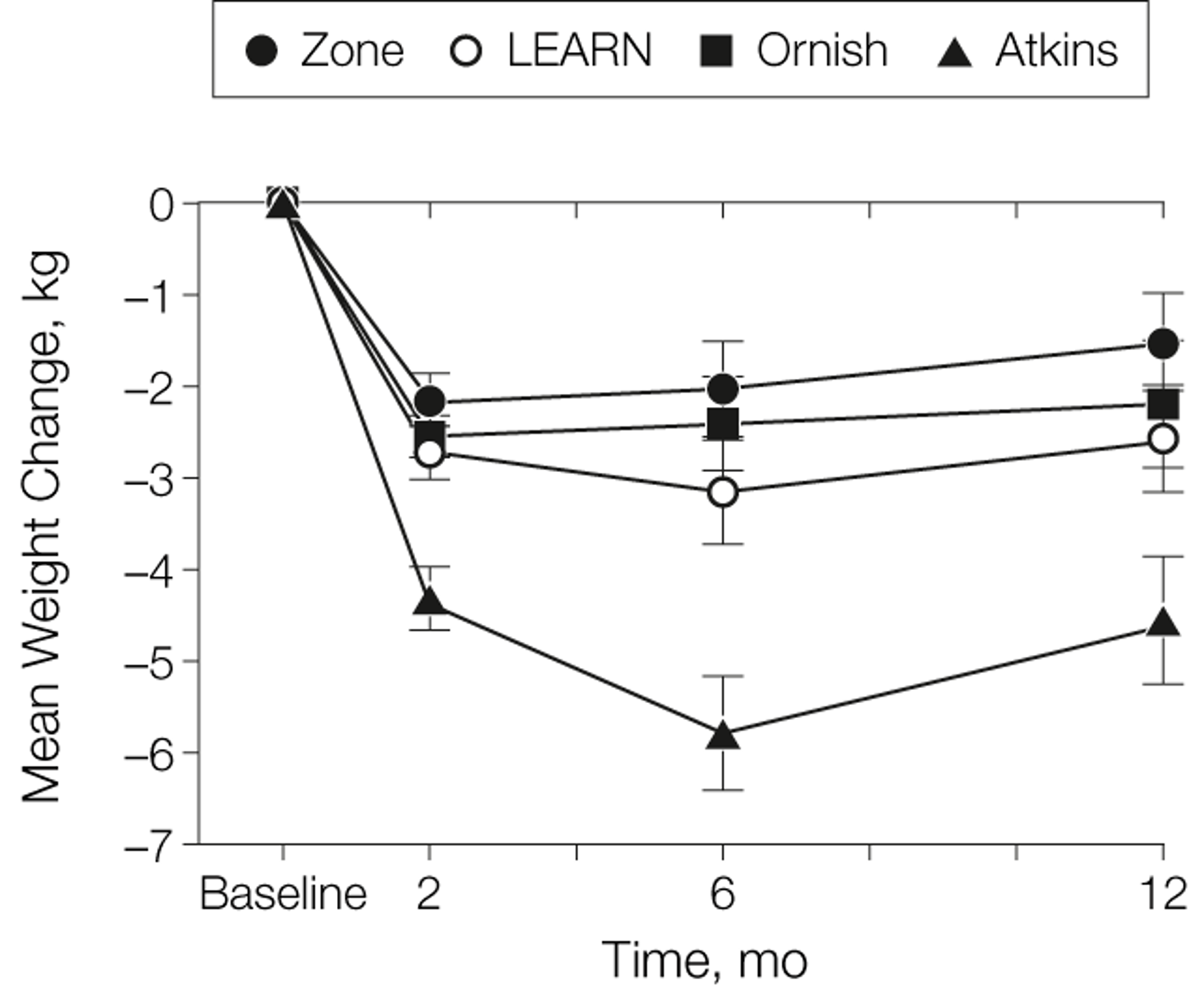
Clinical trials show that people can lose weight with several dietary approaches. In the A TO Z randomized trial, the Atkins, Zone, LEARN and Ornish diets all produced weight loss at 12 months, but the Atkins group lost the most weight and experienced favorable changes in several metabolic risk factors.[1]
Across randomized trials, low-carbohydrate diets have also produced greater average weight loss than low-fat diets. A 2016 meta-analysis found an average advantage of approximately 2 kilograms—about 4 pounds—for low-carbohydrate diets, along with higher HDL cholesterol and lower triglycerides.[3]
Low-carbohydrate versus low-fat meta-analysis
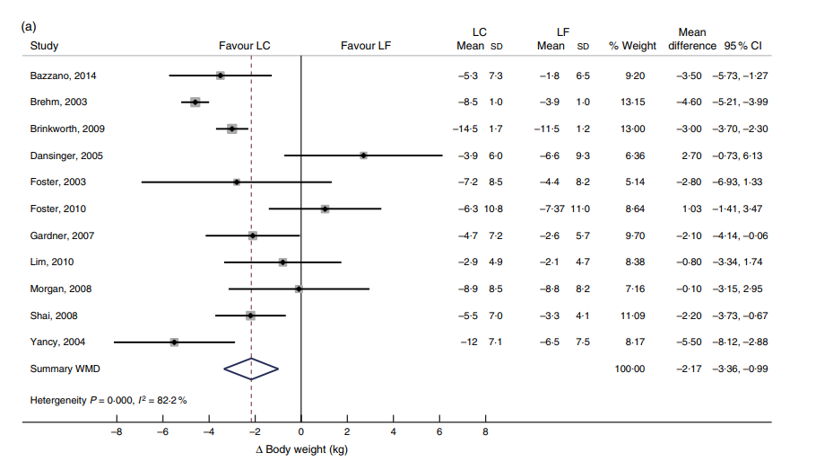
An average difference does not capture the full clinical value of the approach. The more important question is what happens to the daily biological pressure to eat. If a diet lowers hunger, reduces cravings and makes it easier to stop eating, it addresses the part of weight loss that patients actually have to live with.
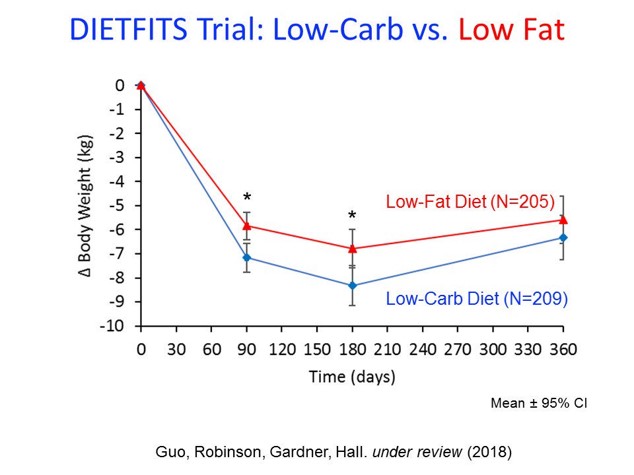
Additional diet comparison: DIETFITS
Low carb puts protein and satiety first
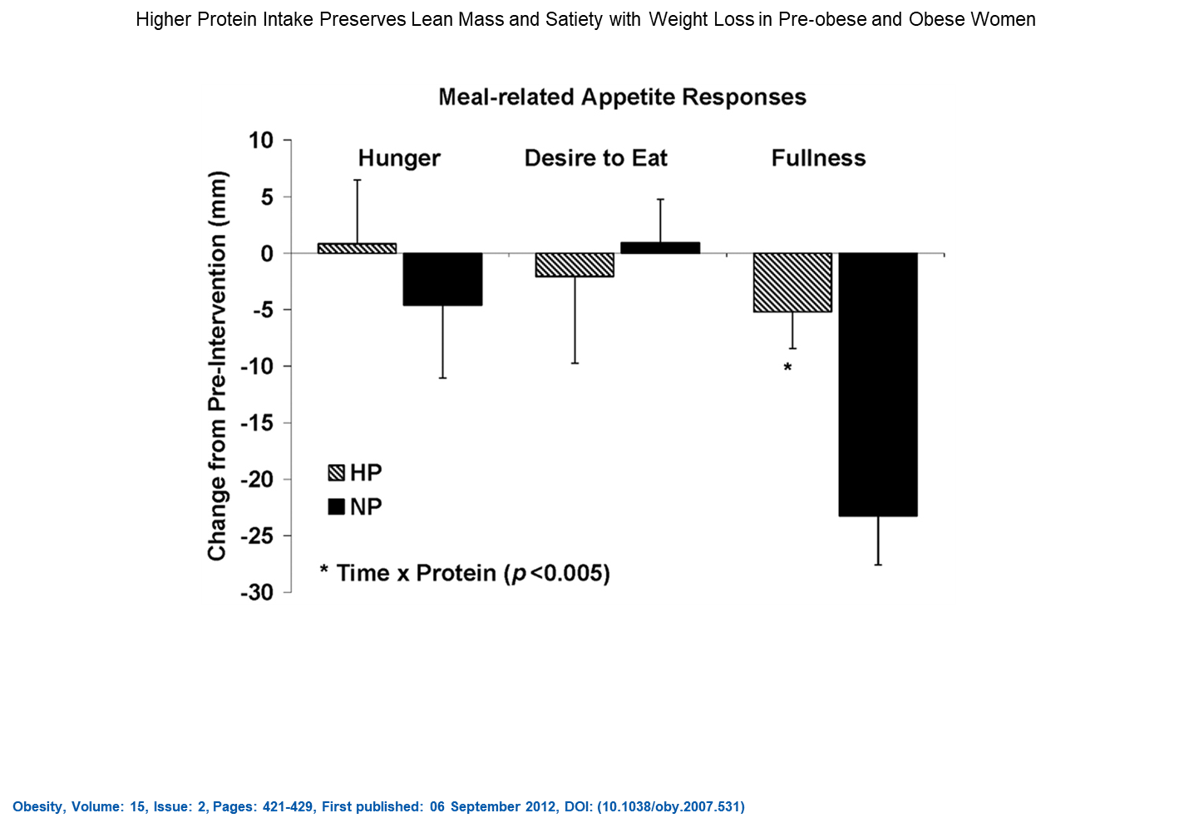
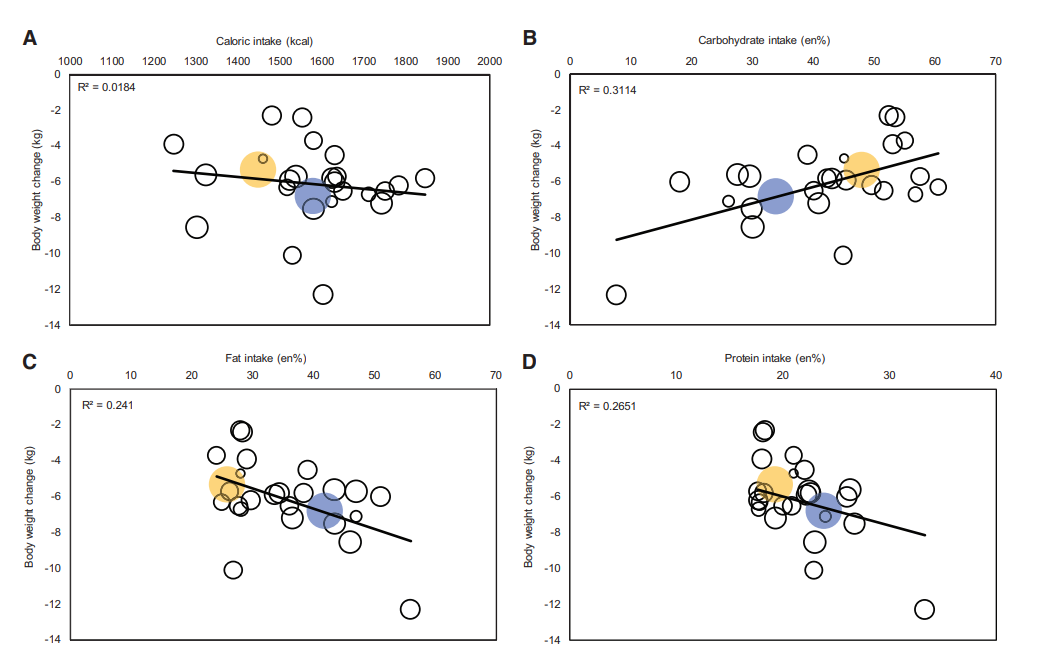
Many well-formulated low-carbohydrate diets contain more protein than the diets they replace. Protein is highly satiating, helps preserve lean mass during weight loss and has a greater thermic effect than carbohydrate or fat.[4]
The thermic effect of food is the energy used to digest, absorb and metabolize what we eat. Roughly 20% to 30% of protein's energy can be used in processing it, compared with approximately 5% to 10% for carbohydrate and 0% to 3% for fat. That does not make calories disappear. It means that 100 calories of protein do not have the same metabolic handling—or the same effect on fullness—as 100 calories of refined carbohydrate.
The protein-leverage model adds another useful insight: when the proportion of protein in the diet is low, people may continue eating in an effort to reach their biological protein target, increasing total energy intake. Prioritizing protein early in the meal can help produce the opposite experience: greater satiety with less need to keep searching for food.[13]
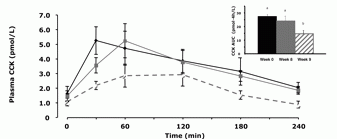
Cholecystokinin response
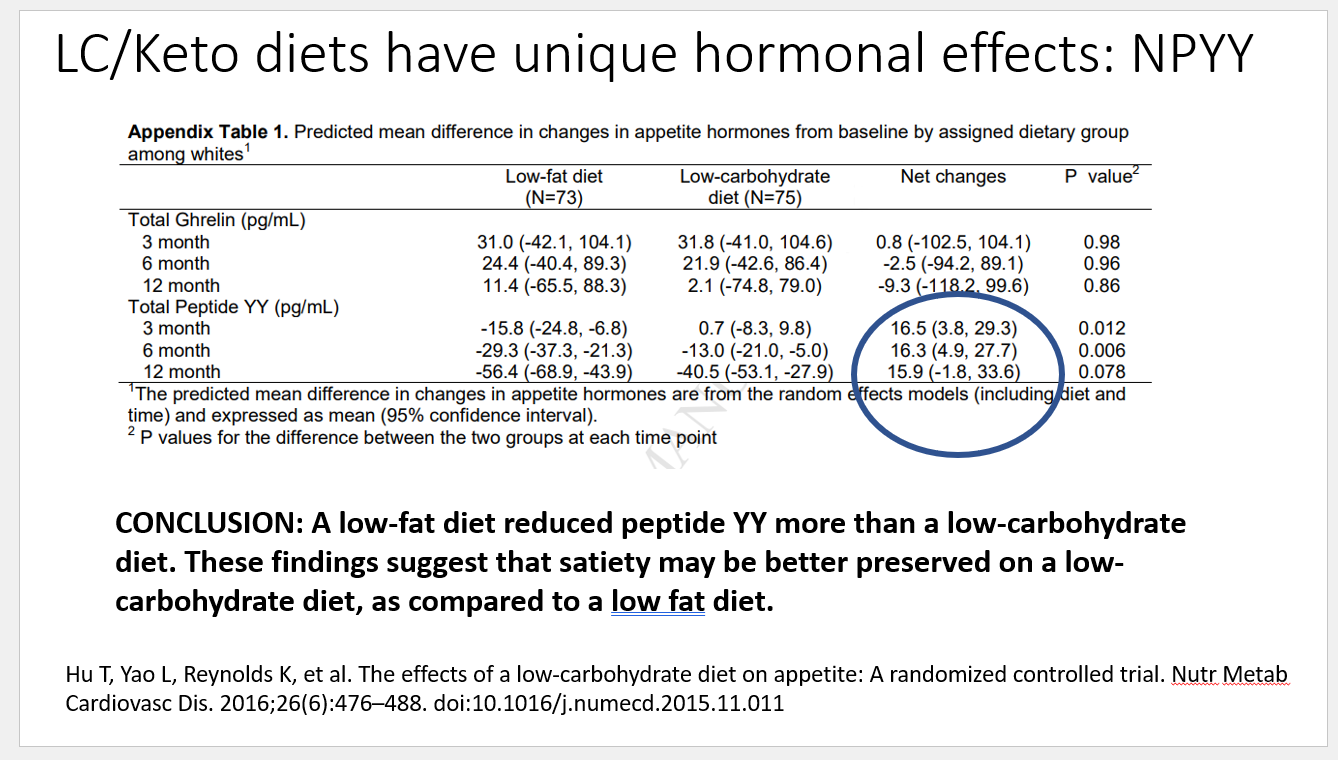
Appetite-hormone table
Diet composition and weight change
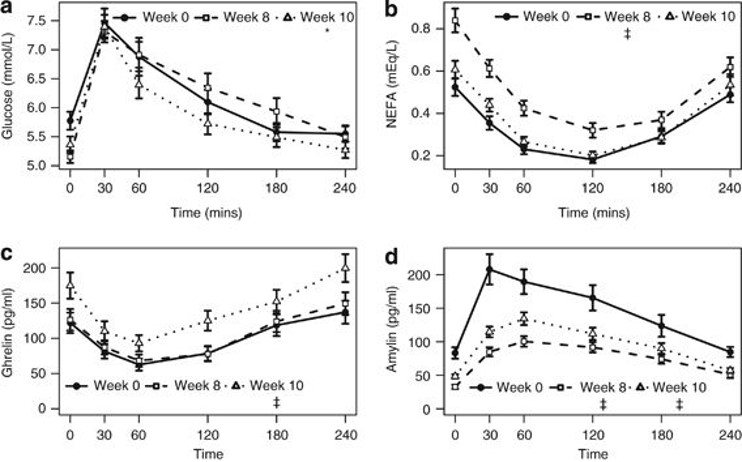
Ketosis can blunt the biological rise in hunger after weight loss
Weight loss often triggers a compensatory response. Ghrelin rises, appetite increases and the body pushes back against further weight loss. This is one reason people can follow a low-calorie plan successfully for weeks or months and then feel as if their appetite has suddenly become much harder to control.
Nutritional ketosis can change that response.
In a controlled study of adults after weight loss, ketosis suppressed the expected increase in ghrelin and appetite.[7] In a randomized residential crossover trial, a high-protein ketogenic diet led to lower hunger, lower spontaneous food intake and greater short-term weight loss than a high-protein nonketogenic diet with more carbohydrate.[16]
Other studies describe effects on satiety hormones:
- Cholecystokinin (CCK) helps slow gastric emptying and contributes to fullness. Weight loss commonly reduces post-meal CCK, while ketosis has been shown to preserve it.[5]
- Peptide YY (PYY) sends a satiety signal to the brain. In a year-long randomized trial, a low-fat diet reduced PYY more than a low-carbohydrate diet, suggesting that satiety was better preserved with carbohydrate restriction.[6]
- Ghrelin is a major hunger signal. Ketosis can prevent or reduce the rise in ghrelin that often accompanies weight loss.[7]
The practical result is familiar to many patients: fewer urgent hunger signals, longer periods of comfortable satiety and less mental energy spent negotiating with food.
Low carb can reduce cravings—not merely calories
Hunger and cravings are not identical. Hunger is a biological drive to eat. A craving is a focused desire for a particular food, often triggered by its sight, smell, availability, emotional meaning or anticipated reward.
Low-carbohydrate diets can improve both.
In a two-year randomized trial, the low-carbohydrate group experienced larger reductions in cravings for carbohydrates and starches and in preferences for high-carbohydrate and high-sugar foods. Participants following the low-carbohydrate diet also reported being less bothered by hunger than those following the low-fat diet.[17]
In a four-week carbohydrate-restriction intervention, total food cravings fell, including cravings for sweets, starches and fast-food fats. Hunger scores fell by 22%, while dietary restraint improved.[15]
Toward Health's 2025 food-addiction and binge-eating study adds real-world clinical evidence. In a multimodal program built around therapeutic carbohydrate reduction, medical care, coaching, education, monitoring and community support, average food-addiction symptom scores decreased by 40.7% and average binge-eating scores decreased by 34.7%.[20]
This is a crucial reason low carb can work when calorie-first approaches repeatedly fail: the intervention can reduce the drive to eat rather than merely asking the patient to resist it.
Blood sugar stability can make hunger more predictable
Meals built around sugar and refined starch can produce rapid glucose excursions followed by changes in energy, appetite and the desire to eat again. The response is especially important in people with insulin resistance, prediabetes or type 2 diabetes.
Reducing dietary carbohydrate lowers the amount of glucose entering the circulation after a meal and reduces the insulin required to manage it. In clinical care, people often report that hunger becomes less abrupt and less tied to a cycle of eating, crashing and eating again.
The relationship between glucose patterns, appetite and cravings deserves its own deeper article. For this discussion, the central point is simple: a lower-carbohydrate meal can create a steadier metabolic environment in which hunger signals are easier to interpret.
The original evidence bank for this article includes an observational study linking higher sugar intake in children with higher total energy intake and waist measurements,[12] a mechanistic study showing that triglycerides can cross the blood-brain barrier and induce central leptin and insulin resistance,[14] and a carbohydrate-restriction intervention that reduced cravings and hunger.[15]
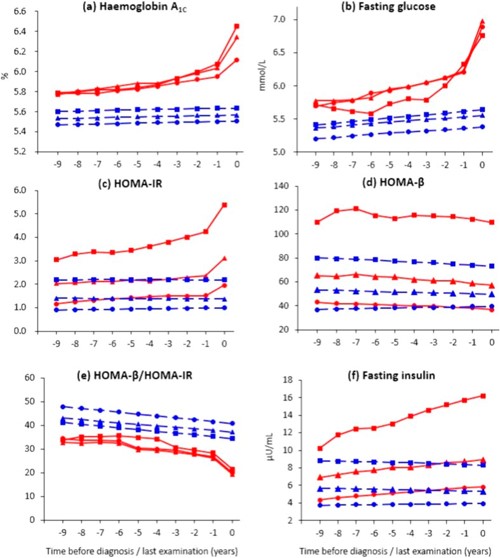
Metabolic changes before diagnosis
Low carb often removes the foods that drive passive overconsumption
A low-carbohydrate diet is not automatically a whole-food diet, but a good low-carb plan usually shifts people away from sugar, refined grains and many ultra-processed foods.
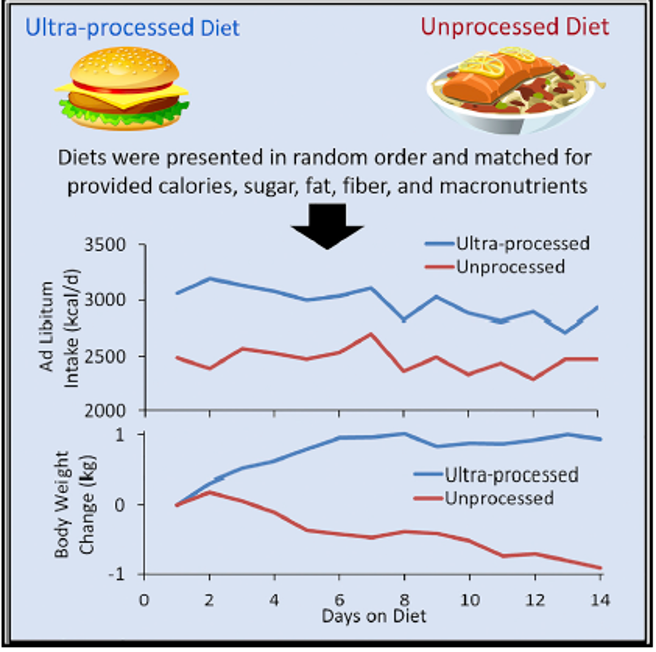
That shift matters. In the landmark NIH inpatient randomized trial, participants ate 508 additional calories per day on the ultra-processed diet and gained weight, while they lost weight during the minimally processed diet. The meals offered were matched for presented calories, energy density, macronutrients, sugar, sodium and fiber.[10,18]
Participants were not instructed to overeat. The food environment changed their intake.
When low-carb nutrition replaces cereal, bread, chips, cookies, sweetened drinks and packaged snack foods with eggs, meat, fish, poultry, Greek yogurt, cottage cheese, nonstarchy vegetables and other minimally processed foods, it changes far more than a carbohydrate number. It changes protein density, texture, eating speed, food reward and the likelihood of passive overconsumption.
Lower insulin can improve access to stored energy
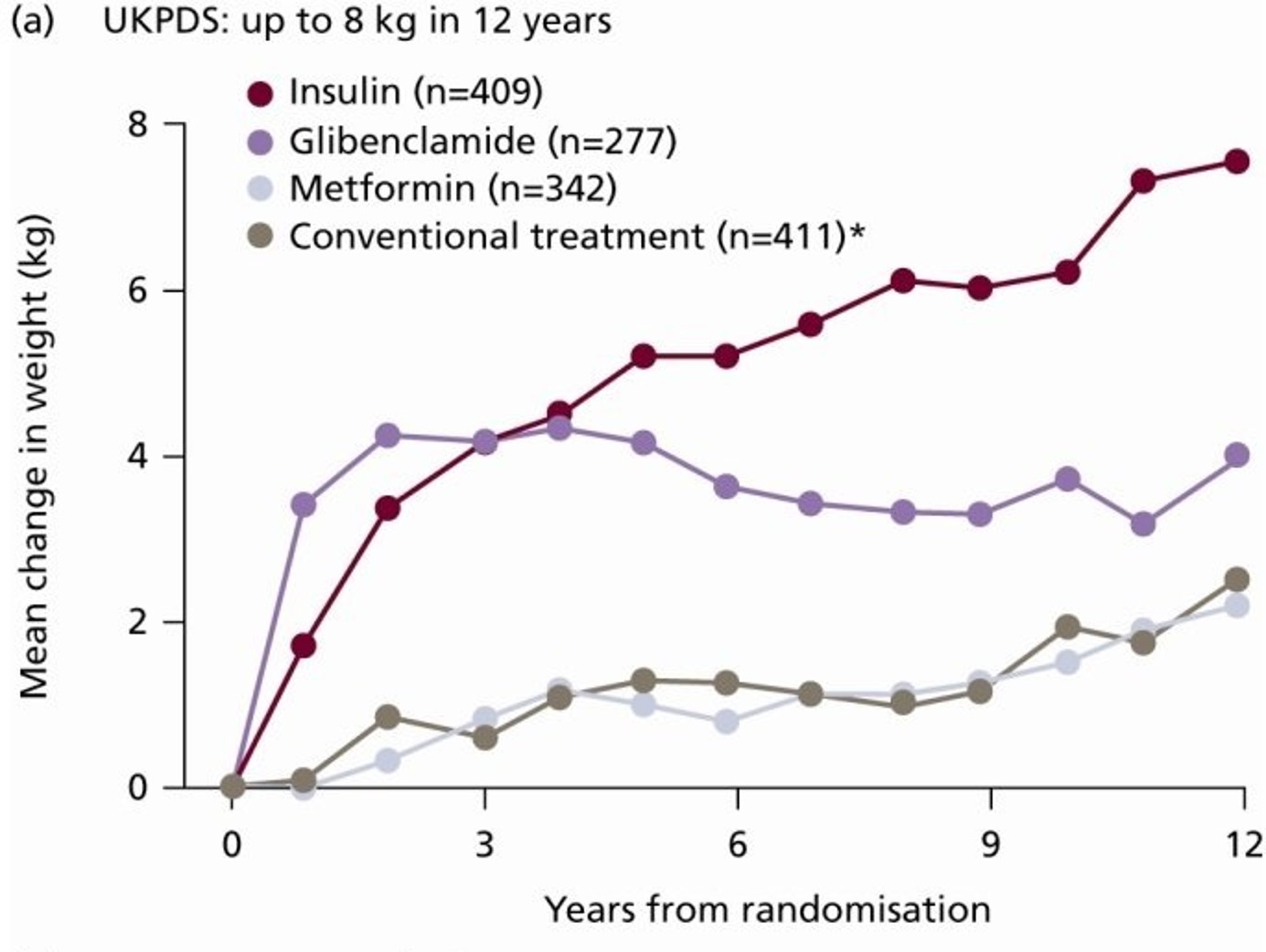
Insulin is an essential hormone, but chronically elevated insulin is closely tied to insulin resistance, metabolic disease and weight gain. Insulin and insulin-secreting medications can promote weight gain, while carbohydrate restriction lowers post-meal insulin demand and often reduces the medication needed to control glucose.
Longitudinal evidence shows that changes in visceral fat and glucose metabolism begin before type 2 diabetes is diagnosed.[8] Low-carbohydrate nutrition directly targets this metabolic pathway by reducing the dietary glucose load and lowering insulin requirements.
When insulin levels fall, stored fat becomes more available as fuel. For the patient, that metabolic shift may be experienced as steadier energy and less urgency to eat between meals.
Energy expenditure may also change
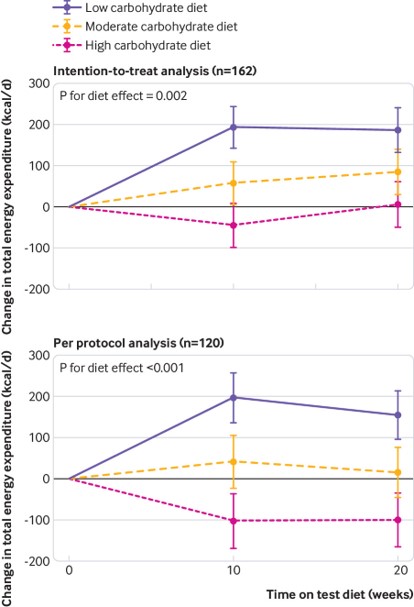
In a five-month randomized feeding study during weight-loss maintenance, participants assigned to the low-carbohydrate diet had higher total energy expenditure than those assigned to the high-carbohydrate diet. The reported difference was approximately 200 calories per day in the intention-to-treat analysis and was larger among participants with the highest insulin secretion before weight loss.[9]
This finding supports the possibility of a metabolic advantage during weight-loss maintenance: diet composition may influence how strongly energy expenditure falls after weight loss, not just how many calories a person consumes.
An updated meta-analysis of 29 controlled-feeding trials found that study duration changed the result. During shorter trials, total energy expenditure initially declined. After more than approximately 2.5 weeks—allowing time for metabolic adaptation—lower-carbohydrate diets increased total energy expenditure compared with higher-carbohydrate diets. The original analysis estimated the longer-duration difference at approximately 135 calories per day. A published reanalysis agreed that the longer-term effect remained statistically significant but estimated a smaller difference of approximately 63 to 74 calories per day. After metabolic adaptation, controlled-feeding studies therefore support higher energy expenditure on lower-carbohydrate diets; published estimates range from approximately 63 to 135 calories per day.[22]
What Toward Health has seen in practice
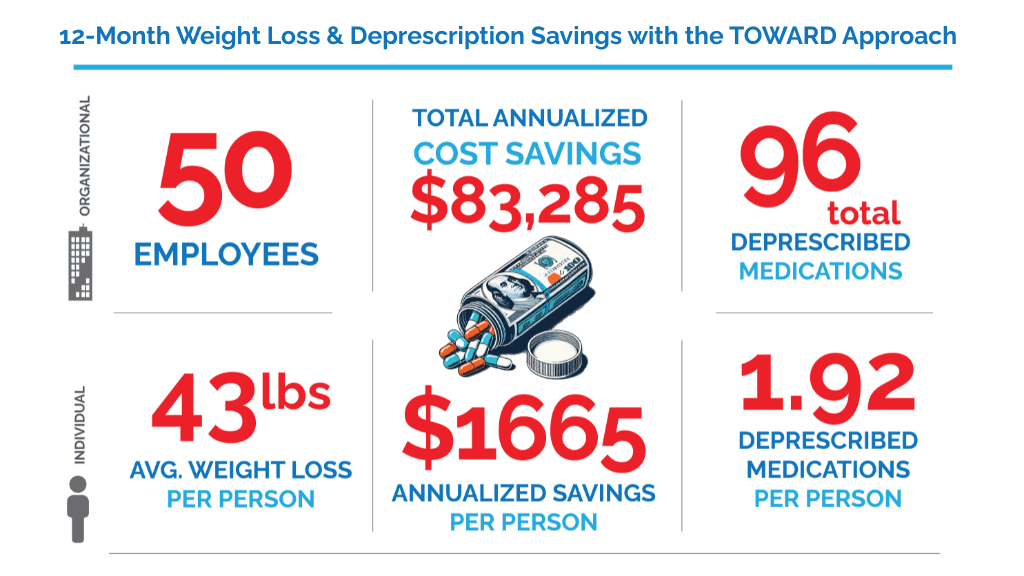
The 2025 TOWARD study followed 50 employees with a mean starting BMI of 43.2 kg/m² in a metabolic health program that emphasized therapeutic carbohydrate reduction without prescribed calorie counting. Participants also received medical care, coaching, education, community support and remote monitoring.[19]
At one year, mean weight loss in the intention-to-treat analysis was 19.5 kilograms—15.5% of initial body weight. The program also deprescribed 96 medications while starting eight. Participants were encouraged to eat according to hunger rather than meet a fixed calorie target.[19]
The study evaluated the full TOWARD intervention, not diet in isolation. That is exactly why it is clinically useful: successful weight treatment rarely comes from a macronutrient target alone. Nutrition works best when it is integrated with medical supervision, rapid medication adjustment, behavioral tools, accountability and support.
The companion TOWARD analysis of food addiction and binge eating helps explain how that model may work. Improvements in compulsive-eating symptoms occurred alongside weight loss and were not simply proportional to the amount of weight lost.[20]
A newer randomized trial supports the appetite effect
A 2026 randomized trial in 120 adults with type 2 diabetes compared a calorie-and-carbohydrate-restricted lifestyle intervention, the same intervention combined with time-restricted eating, and a control group. Both intervention groups also received structured exercise and behavioral education.[21]
At 24 weeks, hunger decreased by 24.1 millimeters on a 100-millimeter scale in the calorie-and-carbohydrate-restriction group and by 32.7 millimeters in the group that also used time-restricted eating. Satiety increased by 21.7 and 29.4 millimeters, respectively.[21]
The result reinforces the central clinical point: when carbohydrate reduction is combined with a structured treatment plan, people can experience less hunger and greater satiety—not merely a lower number on the scale.
Low carb is a tool, not a single rigid menu
“Low carb” can describe several levels of carbohydrate reduction. Some people do well with a moderate reduction. Others benefit from a ketogenic level of carbohydrate intake. Protein needs, food preferences, cultural patterns, metabolic health, medications, activity and prior eating history all shape the plan.
The core strategy is consistent:
- Prioritize enough protein at meals.
- Replace sugar and refined starch with satisfying, minimally processed food.
- Use carbohydrate reduction to improve glucose control and lower insulin demand.
- Let hunger—not an arbitrary eating clock—help guide meal timing when medically appropriate.
- Identify foods that trigger cravings or loss of control.
- Adjust fat intake to satiety rather than treating added fat as an unlimited target.
- Pair the food plan with sleep, stress management, movement, support and medication monitoring.
Low carb is not the same as eating unlimited fat. It is not a requirement to consume packaged “keto” products. And it should not become a new form of constant tracking and food anxiety. The goal is a calmer appetite and a sustainable way of eating.
Important medical considerations
Carbohydrate restriction can lower glucose and blood pressure quickly. People taking insulin, sulfonylureas, SGLT2 inhibitors or blood-pressure medications should make major dietary changes with a clinician who can monitor and adjust treatment. SGLT2 inhibitors require particular attention because nutritional ketosis can complicate recognition of euglycemic diabetic ketoacidosis.
Pregnancy, breastfeeding, childhood, advanced kidney or liver disease, a history of an eating disorder, or a medical condition affecting nutrition requires individualized guidance. Symptoms such as persistent vomiting, dehydration, severe weakness, confusion, or unexpectedly high ketones with illness require prompt medical attention.
These considerations do not weaken the case for therapeutic carbohydrate reduction. They are part of using it as a real medical intervention.
The takeaway
The most important advantage of a low-carbohydrate diet is not that it gives people a different set of foods to count. It is that it can change the biological experience of weight loss.
Low carb can:
- increase protein and satiety;
- preserve CCK and PYY signaling;
- blunt the rise in ghrelin and hunger that often follows weight loss;
- reduce cravings for sugar and starch;
- stabilize glucose and lower insulin demand;
- reduce exposure to ultra-processed foods that drive passive overconsumption; and
- help people eat less spontaneously without making hunger a permanent requirement.
Calories still describe energy. But counting calories does not explain why one meal leaves a person satisfied for hours while another leaves them searching for food. Hunger, satiety, food reward, glucose, insulin, protein and processing all matter.
That is why we use low-carbohydrate nutrition: not simply to prescribe fewer calories, but to create the metabolic conditions in which eating fewer calories can happen with less hunger and more control.
Related video resource
References
- Gardner CD et al. A TO Z Weight Loss Study. JAMA. 2007;297:969-977. https://doi.org/10.1001/jama.297.9.969
- Guo J, Robinson JL, Gardner CD, Hall KD. Objective versus Self-Reported Energy Intake Changes During Low-Carbohydrate and Low-Fat Diets. bioRxiv 421321. https://doi.org/10.1101/421321
- Mansoor N et al. Effects of low-carbohydrate diets versus low-fat diets on body weight and cardiovascular risk factors: a meta-analysis of randomized controlled trials. Br J Nutr. 2016;115:466-479. https://doi.org/10.1017/S0007114515004699
- Leidy HJ et al. Higher protein intake preserves lean mass and satiety with weight loss in pre-obese and obese women. Obesity. 2007;15:421-429. https://pubmed.ncbi.nlm.nih.gov/17299116/
- Chearskul S et al. Effect of weight loss and ketosis on postprandial cholecystokinin and free fatty acid concentrations. Am J Clin Nutr. 2008;87:1238-1246. https://doi.org/10.1093/ajcn/87.5.1238
- Hu T et al. The effects of a low-carbohydrate diet on appetite: a randomized controlled trial. Nutr Metab Cardiovasc Dis. 2016;26:476-488. https://doi.org/10.1016/j.numecd.2015.11.011
- Sumithran P et al. Ketosis and appetite-mediating nutrients and hormones after weight loss. Eur J Clin Nutr. 2013;67:759-764. https://doi.org/10.1038/ejcn.2013.90
- Kuwahara K et al. Body mass index trajectory patterns and changes in visceral fat and glucose metabolism before the onset of type 2 diabetes. Sci Rep. 2017;7:43521. https://doi.org/10.1038/srep43521
- Ebbeling CB et al. Effects of a low carbohydrate diet on energy expenditure during weight loss maintenance: randomized trial. BMJ. 2018;363:k4583. https://doi.org/10.1136/bmj.k4583
- Hall KD et al. Ultra-processed diets cause excess calorie intake and weight gain: a one-month inpatient randomized controlled trial of ad libitum food intake. OSF preprint. https://doi.org/10.31232/osf.io/w3zh2
- Willems AEM et al. Effects of macronutrient intake in obesity: a meta-analysis of low-carbohydrate and low-fat diets on markers of the metabolic syndrome. Nutr Rev. 2021;79:429-444. https://academic.oup.com/nutritionreviews/article/79/4/429/5901338
- Morales-Suárez-Varela M et al. Total sugar intake and macro and micronutrients in children aged 6-8 years: the ANIVA study. Nutrients. 2020;12:349. https://doi.org/10.3390/nu12020349
- Gosby AK, Conigrave AD, Raubenheimer D, Simpson SJ. Protein leverage and energy intake. Obes Rev. 2014;15:183-191. https://doi.org/10.1111/obr.12131 Protein-leverage analysis.
- Banks WA et al. Triglycerides cross the blood-brain barrier and induce central leptin and insulin receptor resistance. Int J Obes. 2018;42:391-397. https://doi.org/10.1038/ijo.2017.231 Mechanistic evidence.
- Anguah KOB et al. Changes in food cravings and eating behavior after a dietary carbohydrate restriction intervention trial. Nutrients. 2020;12:52. https://doi.org/10.3390/nu12010052
- Johnstone AM et al. Effects of a high-protein ketogenic diet on hunger, appetite, and weight loss in obese men feeding ad libitum. Am J Clin Nutr. 2008;87:44-55. https://doi.org/10.1093/ajcn/87.1.44
- Martin CK et al. Change in food cravings, food preferences, and appetite during a low-carbohydrate and low-fat diet. Obesity. 2011;19:1963-1970. https://doi.org/10.1038/oby.2011.62
- Hall KD et al. Ultra-processed diets cause excess calorie intake and weight gain: an inpatient randomized controlled trial of ad libitum food intake. Cell Metab. 2019;30:67-77.e3. https://doi.org/10.1016/j.cmet.2019.05.008
- Buchanan L et al. TOWARD, a metabolic health intervention, demonstrates robust 1-year weight loss and cost-savings through deprescription. Front Nutr. 2025;12:1548609. https://doi.org/10.3389/fnut.2025.1548609
- Saner E et al. TOWARD: a metabolic health intervention that improves food addiction and binge eating symptoms. Front Psychiatry. 2025;16:1612551. https://doi.org/10.3389/fpsyt.2025.1612551
- Mohammadpour S et al. Effects of intensive lifestyle interventions with calorie-carbohydrate-restricted diet versus time-restricted eating on appetite and binge eating in type 2 diabetes: a randomized controlled trial. Appetite. 2026;227:108718. https://doi.org/10.1016/j.appet.2026.108718
- Ludwig DS, Dickinson SL, Henschel B, Ebbeling CB, Allison DB. Do lower-carbohydrate diets increase total energy expenditure? An updated and reanalyzed meta-analysis of 29 controlled-feeding studies. J Nutr. 2021;151(3):482-490. https://doi.org/10.1093/jn/nxaa350