
Depression is not a personal failure, and it rarely has a single cause. Biology, life experience, trauma, chronic stress, sleep, relationships, physical health, medications, financial pressure, and many other factors can shape how a person feels and functions.
Food cannot erase trauma, repair a painful relationship, or remove the circumstances causing stress. A diet is not a cure for depression. Still, nutrition affects the body that supports the brain. That has led researchers to ask an important question: could improving metabolic health, or changing the brain's available fuel, help reduce depressive symptoms for some people?
The early answer is encouraging, but not definitive. Better-quality diets have improved depressive symptoms in several clinical trials. Low-carbohydrate and ketogenic diets are also being studied more directly. The strongest recent evidence suggests that ketogenic nutrition may provide a modest additional benefit for some people with treatment-resistant depression when used alongside established care and intensive professional support.
Why researchers are looking at metabolic health
The brain has high and continuous energy needs. It depends on a complex system involving glucose, insulin signaling, mitochondria, inflammation, neurotransmitters, sleep, stress hormones, and the gut microbiome. Researchers are studying whether disruptions in these systems contribute to symptoms in some people with depression.
This does not mean depression is simply a blood-sugar problem. It means mental and metabolic health can overlap.
Observational research has found that several measures of insulin resistance predicted a later diagnosis of major depressive disorder. Depression is also common among people living with type 2 diabetes. Studies of glycemic variability, dietary glycemic load, added sugar, micronutrient status, and overall food quality provide additional reasons to study the relationship. These studies cannot prove that one dietary factor causes or cures depression, but they help form the biological and clinical rationale for better trials.
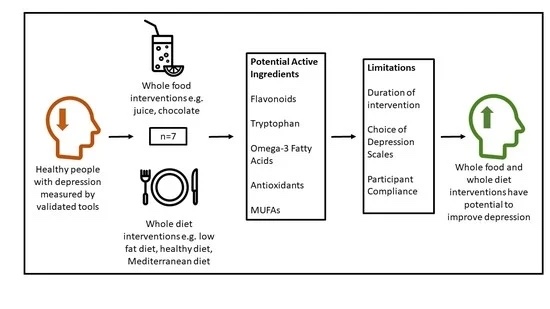
There is also evidence that food quality matters even when a diet is not ketogenic. Trials such as the SMILES study and a brief dietary intervention in young adults found improvements in depressive symptoms after structured dietary change. A systematic review of randomized trials reached a similarly cautious conclusion: dietary interventions may help some adults with depression, but the studies vary in design, diet, duration, and quality.
What makes a ketogenic diet different?
A ketogenic diet sharply reduces carbohydrate intake and provides enough fat and protein for the body to produce ketones. Ketones can serve as an alternative fuel for the brain. Researchers are studying whether this change in fuel availability also affects inflammation, oxidative stress, mitochondrial function, neurotransmitter systems, brain reward pathways, or the gut microbiome.
These proposed mechanisms are still being investigated. Producing ketones does not guarantee an antidepressant response, and a ketogenic diet should not be treated as a universal solution.
The strongest direct evidence: a 2026 randomized trial
In 2026, JAMA Psychiatry published the first well-controlled randomized clinical trial focused on ketogenic nutrition for treatment-resistant depression.
The study included 88 adults in the United Kingdom who had ongoing depression despite prior treatment. Participants were assigned for six weeks to either:
- a ketogenic diet providing fewer than 30 grams of carbohydrate per day, with prepared food and weekly individual dietetic support; or
- a comparison diet emphasizing phytochemical-rich foods, with produce vouchers and the same amount of professional support.
Both groups improved substantially. The average improvement in the PHQ-9 depression score was 10.5 points in the ketogenic group and 8.3 points in the comparison group. The adjusted difference between groups at six weeks was 2.18 points in favor of the ketogenic diet.
That result is promising, but it needs context. The difference was modest, its clinical importance remains uncertain, and the advantage was not statistically clear at the 12-week follow-up. The groups also did not differ on the trial's secondary outcomes. No serious adverse events occurred, but adherence required intensive support, and few participants chose to continue the ketogenic diet after that support ended.
The responsible conclusion is not that keto cures depression. The trial suggests that a well-supported ketogenic diet may offer an additional antidepressant benefit for some people with treatment-resistant depression when used as an adjunct to medication and other psychiatric care.
What earlier studies found
Earlier research provides supporting context, although it is less direct or less rigorous.
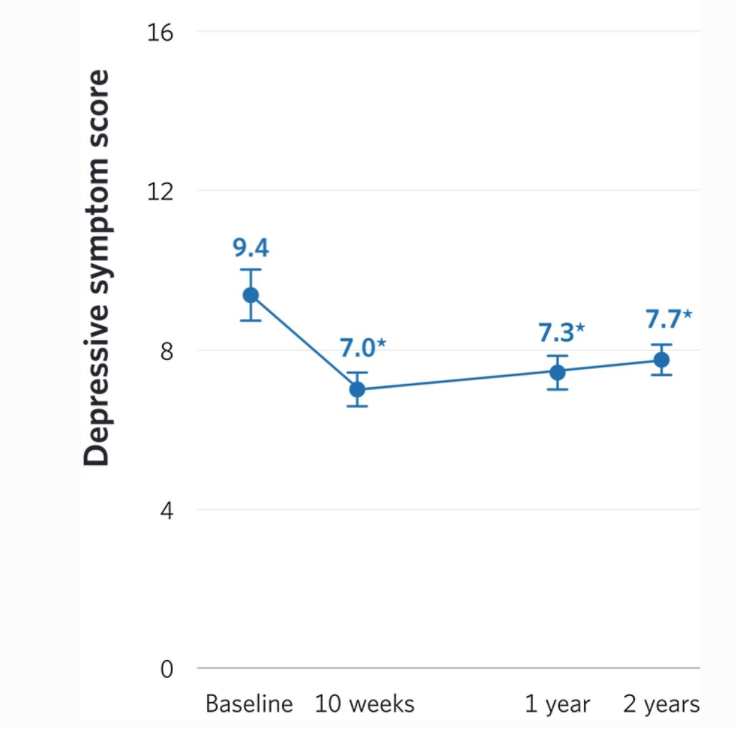
A two-year continuous remote-care intervention for people with type 2 diabetes used carbohydrate restriction as part of a broader treatment program and reported improvements in depressive symptoms. Because participants also received ongoing clinical support and experienced other health changes, the study cannot isolate the effect of carbohydrate restriction itself.
A randomized trial in people with type 2 diabetes found improved depression scores after an almond-based low-carbohydrate diet. Researchers proposed changes in glycemic control, the gut microbiome, and GLP-1 as possible contributors. This was a specific population and dietary protocol, so the findings should not be generalized to everyone with depression.
A retrospective inpatient report described substantial improvements among 31 people with severe, treatment-refractory mental illness who received a ketogenic diet in addition to intensive psychiatric care. A later pilot trial studied ketogenic nutrition in people with bipolar disorder and schizophrenia and reported improvements in metabolic and psychiatric measures. Those studies established a clinically important signal that has now been followed by randomized research in psychosis.

Taken together, the evidence has progressed from case reports and carefully observed inpatient interventions to outpatient pilots and randomized trials. The field is now asking sharper questions about which symptoms change, whether metabolic and psychiatric improvements move together, and whether ketones contribute effects beyond weight loss.
What the schizophrenia and psychosis studies add
The metabolic-psychiatry signal becomes especially provocative in schizophrenia and schizoaffective illness, where cardiometabolic disease is common and psychosis can remain disabling despite treatment.
In the 2022 inpatient report, 31 adults with severe, persistent mental illness were placed on a ketogenic diet providing no more than 20 grams of carbohydrate per day as an adjunct to conventional psychiatric care. Twenty-eight remained on the intervention long enough for analysis. Clinical Global Impression severity improved in all 27 participants with paired scores, and 12 of 27 reached a score of 1, corresponding to clinical remission. Among the 10 participants with schizoaffective illness, average Positive and Negative Syndrome Scale scores fell from 91.4 to 49.3. Weight, blood pressure, glucose and triglycerides also improved, and 64% were discharged on less psychiatric medication.[4]
The inpatient setting matters: meals, medication changes and psychiatric care were closely managed, and there was no untreated comparison group. But the magnitude and coherence of the changes—psychosis symptoms improving alongside metabolic health—made the observation difficult to dismiss as a minor dietary effect.
The 2024 Stanford pilot then followed 23 outpatients with schizophrenia or bipolar disorder and metabolic abnormalities for four months. Among participants with schizophrenia, Brief Psychiatric Rating Scale scores fell by 32%. Across the cohort, average Clinical Global Impression severity improved by 31%; 79% of participants who began with elevated symptoms improved by at least one CGI point. By the study’s conclusion, no participant met criteria for metabolic syndrome. Among adherent participants, weight fell by 12%, waist circumference by 13%, visceral fat by 36%, HOMA-IR by 27% and triglycerides by 25%.[5]
That result is sometimes repeated as “91% achieved clinical remission.” The paper did not report that. The defensible number is that 79% of participants with elevated baseline symptoms improved by at least one CGI point. Correcting the statistic does not erase the signal; it makes the case stronger by keeping the claim faithful to the experiment.
In 2026, investigators reported randomized data in 58 outpatients with schizophrenia or bipolar I disorder. Participants were assigned to a ketogenic diet or diet as usual for one month, followed by an optional ketogenic extension in a subgroup. During the randomized month, the ketogenic group improved weight, A1c and insulin resistance relative to diet as usual. After four months on the ketogenic intervention, positive symptoms, negative symptoms, depressive symptoms and cognitive performance had improved. Higher ketone levels correlated with improvements in prediabetic markers and depressive symptoms, while weight loss itself did not explain the metabolic and symptom changes.[6]
This trial was short and the four-month clinical findings came from the extension subgroup, but it changes the level of the conversation. The evidence is no longer confined to case reports and uncontrolled inpatient care. Randomization showed early metabolic effects, while the longer exposure linked sustained ketosis with broader psychiatric and cognitive improvement.
One plausible interpretation is that the brain and the rest of the body are responding to a shared metabolic intervention. Insulin signaling, mitochondrial energy production, oxidative stress, inflammation, neurotransmitter balance and medication-associated metabolic dysfunction may all be relevant. The studies do not yet isolate one mechanism, but they show why schizophrenia belongs in a serious discussion of metabolic health rather than being treated as unrelated to it.
Watch the research discussion
Low-carb nutrition is not the only dietary approach with evidence
The broader nutrition-and-depression literature matters. The SMILES randomized trial showed that structured dietary improvement could reduce symptoms in adults with major depression. Another randomized trial found that a brief diet intervention helped young adults with elevated depressive symptoms. A 2025 systematic review and meta-analysis also found that Mediterranean-style dietary interventions can reduce depressive symptoms.
Exercise has its own evidence base. A systematic review found that aerobic exercise can improve symptoms of major depressive disorder, and a later study comparing running therapy with antidepressant medication examined both mental and physical outcomes.
This wider evidence supports a practical principle: the goal is not to defend one perfect diet. The goal is to identify a safe, sustainable treatment plan that matches the individual, improves overall health, and works alongside appropriate mental-health care.
What this means for someone living with depression
If you are interested in using a low-carbohydrate or ketogenic diet as part of your care, start with a conversation with the clinician treating your depression. A therapeutic ketogenic intervention is more structured than casually removing bread or sugar. It may require nutrition planning, symptom monitoring, laboratory follow-up, and medication adjustment.
Do not stop or reduce an antidepressant, mood stabilizer, antipsychotic, or other prescribed medication on your own. Nutrition may be used as an adjunct to established care. It is not a substitute for psychiatric assessment, psychotherapy, medication when indicated, sleep support, movement, social connection, or help with the real-life circumstances contributing to distress.
Professional support also appears to matter. In the 2026 trial, both groups received weekly individual support and both improved. That finding is a reminder that structure, attention, accountability, and access to care may be therapeutic parts of the process.
If you are in immediate danger or thinking about harming yourself, call emergency services. In the United States, call or text 988 for the Suicide & Crisis Lifeline.
The bottom line
Nutrition affects metabolic health, and metabolic health can affect the brain. The evidence that dietary change may reduce depressive symptoms is growing. For ketogenic nutrition specifically, the 2026 depression trial provides an important step forward: people with treatment-resistant depression improved in both supported diet groups, with an additional improvement in the ketogenic group at six weeks. The emerging schizophrenia and psychosis literature adds a second signal: metabolic, cognitive and psychiatric outcomes can change together during a structured ketogenic intervention.
That is a reason for careful optimism, not a cure claim. Ketogenic nutrition may be a useful adjunct for selected patients who want to try it, can follow it safely, and have appropriate medical and dietary support. More research is needed to understand durability, safety, adherence, and which patients are most likely to benefit.
References
Direct depression and ketogenic-nutrition evidence
-
Gao M, Kirk M, Knight H, et al. A ketogenic diet for treatment-resistant depression: a randomized clinical trial. JAMA Psychiatry. 2026;83(4):331-340. https://doi.org/10.1001/jamapsychiatry.2025.4431 Added evidence.
-
Adams RN, Athinarayanan SJ, McKenzie AL, et al. Depressive symptoms improve over 2 years of type 2 diabetes treatment via a digital continuous remote care intervention focused on carbohydrate restriction. Journal of Behavioral Medicine. 2022. https://doi.org/10.1007/s10865-021-00272-4
-
Ren M, Zhang H, Qi J, et al. An almond-based low carbohydrate diet improves depression and glycometabolism in patients with type 2 diabetes through modulating gut microbiota and GLP-1: a randomized controlled trial. Nutrients. 2020;12(10):3036. https://www.mdpi.com/2072-6643/12/10/3036
-
Danan A, Westman EC, Saslow LR, Ede G. The ketogenic diet for refractory mental illness: a retrospective analysis of 31 inpatients. Frontiers in Psychiatry. 2022;13:951376. https://www.frontiersin.org/articles/10.3389/fpsyt.2022.951376/full
-
Sethi S, Wakeham D, Ketter T, et al. Ketogenic diet intervention on metabolic and psychiatric health in bipolar and schizophrenia: a pilot trial. Psychiatry Research. 2024;335:115866. https://www.sciencedirect.com/science/article/pii/S0165178124001513?via%3Dihub
-
Abram SV, Kyner JM, Vu A, et al. Metabolic Improvements with a Ketogenic Diet Correlate with Symptom Improvement in Psychosis: A Randomized Controlled Trial. Schizophrenia Bulletin. Published online July 3, 2026. doi:10.1093/schbul/sbag082. PubMed. Added as the current randomized schizophrenia/bipolar evidence.
Broader diet, metabolic health, and depression evidence
-
Depression, is it treatable in adults utilising dietary interventions? A systematic review of randomised controlled trials. Nutrients. 2022;14(7):1398. https://www.mdpi.com/2072-6643/14/7/1398
-
Francis HM, Stevenson RJ, Chambers JR, Gupta D, Newey B, Lim CK. A brief diet intervention can reduce symptoms of depression in young adults: a randomised controlled trial. PLOS ONE. 2019;14(10):e0222768. https://journals.plos.org/plosone/article?id=10.1371/journal.pone.0222768
-
Jacka FN, O'Neil A, Opie R, et al. A randomized controlled trial of dietary improvement for adults with major depression, the SMILES trial. BMC Medicine. 2017;15(1):23. https://bmcmedicine.biomedcentral.com/articles/10.1186/s12916-017-0791-y
-
Morres ID, Hatzigeorgiadis A, Stathi A, et al. Aerobic exercise for adult patients with major depressive disorder in mental health services: a systematic review and meta-analysis. Depression and Anxiety. 2019;36(1):39-53. https://onlinelibrary.wiley.com/doi/10.1002/da.22842
-
Verhoeven JE, Han LKM, Lever-van Milligen BA, et al. Antidepressants or running therapy: comparing effects on mental and physical health in patients with depression and anxiety disorders. Journal of Affective Disorders. 2023. https://www.sciencedirect.com/science/article/pii/S0165032723002239?via%3Dihub
-
Watson KT, Simard JF, Henderson VW, et al. Incident major depressive disorder predicted by three measures of insulin resistance: a Dutch cohort study. American Journal of Psychiatry. 2021;178(10):914-920. https://doi.org/10.1176/appi.ajp.2021.20101479 Added from the Coalition for Metabolic Health evidence bank.
-
Bizzozero-Peroni B, Martínez-Vizcaíno V, Fernández-Rodríguez R, et al. The impact of the Mediterranean diet on alleviating depressive symptoms in adults: a systematic review and meta-analysis of randomized controlled trials. Nutrition Reviews. 2025;83(1):29-39. https://doi.org/10.1093/nutrit/nuad176 Added from the Coalition for Metabolic Health evidence bank.
-
Morris G, Puri BK, Carvalho AF, et al. Induced ketosis as a treatment for neuroprogressive disorders: food for thought? International Journal of Neuropsychopharmacology. 2020;23(6):366-384. https://doi.org/10.1093/ijnp/pyaa008 Added from the Coalition for Metabolic Health evidence bank.
-
Brietzke E, Mansur RB, Subramaniapillai M, et al. Ketogenic diet as a metabolic therapy for mood disorders: evidence and developments. Neuroscience & Biobehavioral Reviews. 2018;94:11-16. https://doi.org/10.1016/j.neubiorev.2018.07.020 Added from the Coalition for Metabolic Health evidence bank.
-
Sethi S, Ford JM. The role of ketogenic metabolic therapy on the brain in serious mental illness: a review. Journal of Psychiatry and Brain Science. 2022;7(5):e220009. https://doi.org/10.20900/jpbs.20220009 Added from the Coalition for Metabolic Health evidence bank.
-
Anderson J, Ozan E, Chouinard VA, et al. The ketogenic diet as a transdiagnostic treatment for neuropsychiatric disorders: mechanisms and clinical outcomes. Current Treatment Options in Psychiatry. 2024. https://doi.org/10.1007/s40501-024-00339-4 Added from the Coalition for Metabolic Health evidence bank.
-
Coalition for Metabolic Health. A metabolic and nutritional approach to mental health: references. https://coalitionformetabolichealth.org/evidence/a-metabolic-and-nutritional-approach-to-mental-health-references/ Added evidence-bank provenance.
References
The links below appeared in Disciple Article 16 and are preserved in full. Some concern adjacent conditions or broader associations rather than direct treatment evidence for depression. Their inclusion here preserves the source record and does not imply that each one supports ketogenic nutrition as a depression treatment.
-
Penckofer S, Quinn L, Byrn M, Miller M, Strange P. Does glycemic variability impact mood and quality of life? Diabetes Technology & Therapeutics. 2012;14(4):303-310. https://www.ncbi.nlm.nih.gov/pmc/articles/PMC3317401/
-
Knüppel A, Shipley MJ, Llewellyn CH, Brunner EJ. Sugar intake from sweet food and beverages, common mental disorder and depression: prospective findings from the Whitehall II study. Scientific Reports. 2017;7:6287. Both source links are preserved: PubMed Central and publisher page.
-
Anderson RJ, Freedland KE, Clouse RE, Lustman PJ. The prevalence of comorbid depression in adults with diabetes: a meta-analysis. Diabetes Care. 2001;24(6):1069-1078. https://www.ncbi.nlm.nih.gov/pubmed/11375373
-
Khuwaja AK, Lalani S, Dhanani R, et al. Anxiety and depression among outpatients with type 2 diabetes: a multi-centre study of prevalence and associated factors. Diabetology & Metabolic Syndrome. 2010;2:72. https://www.ncbi.nlm.nih.gov/pmc/articles/PMC3022608/
-
Syed EU, Wasay M, Awan S. Vitamin B12 supplementation in treating major depressive disorder: a randomized controlled trial. The Open Neurology Journal. 2013;7:44-48. https://www.ncbi.nlm.nih.gov/pmc/articles/PMC3856388/
-
Gangwisch JE, Hale L, Garcia L, et al. High glycemic index diet as a risk factor for depression: analyses from the Women's Health Initiative. American Journal of Clinical Nutrition. 2015;102(2):454-463. https://www.ncbi.nlm.nih.gov/pmc/articles/PMC4515860/
-
Breymeyer KL, Lampe JW, McGregor BA, Neuhouser ML. Subjective mood and energy levels of healthy weight and overweight/obese healthy adults on high- and low-glycemic-load experimental diets. Appetite. 2016;107:253-259. https://www.ncbi.nlm.nih.gov/pmc/articles/PMC5154680/
-
Saneei P, Esmaillzadeh A, Hassanzadeh Keshteli A, et al. The association of whole and refined grains consumption with psychological disorders among Iranian adults. European Journal of Nutrition. 2019;58(1):211-225. https://www.ncbi.nlm.nih.gov/pubmed/29189904
-
Elstgeest LEM, Visser M, Penninx BWJH, et al. Bidirectional associations between food groups and depressive symptoms: longitudinal findings from the InCHIANTI study. British Journal of Nutrition. 2019;121(4):439-450. https://www.ncbi.nlm.nih.gov/pubmed/30588894
-
Bruckauf Z, Walsh SD. Adolescents' multiple and individual risk behaviors: examining the link with excessive sugar consumption across 26 industrialized countries. Social Science & Medicine. 2018;216:133-141. https://www.ncbi.nlm.nih.gov/pubmed/30269866
-
Wiers CE, Vendruscolo LF, van der Veen JW, et al. Ketogenic diet reduces alcohol withdrawal symptoms in humans and alcohol intake in rodents. Science Advances. 2021;7(15):eabf6780. https://pubmed.ncbi.nlm.nih.gov/33837086/
-
Dobersek U, Teel K, Altmeyer S, Adkins J, Wy G, Peak J. Meat and mental health: a meta-analysis of meat consumption, depression, and anxiety. Critical Reviews in Food Science and Nutrition. https://www.tandfonline.com/doi/full/10.1080/10408398.2021.1974336
-
Bohnen J, Albin RL, Bohnen NI. Ketogenic interventions in mild cognitive impairment, Alzheimer's disease, and Parkinson's disease: a systematic review and critical appraisal. https://pubmed.ncbi.nlm.nih.gov/36846143/
-
Hu M, Shi Q, et al. Effect of a low-carbohydrate diet with or without exercise on anxiety and eating behavior and associated changes in cardiometabolic health in overweight young women. https://pubmed.ncbi.nlm.nih.gov/35873416/