
Tobacco’s move into children’s food marketing, the calorie debate, and why Dr. Tro wants adults to listen when kids describe losing control around food.
It was the industry. It funded the calorie message, marketed processed food directly to kids, urged them to eat more, paid scientists to focus on calories, and now its lobby denies that its food can be addictive.
Watch the men at the microphones. On April 14, 1994, seven tobacco executives told Congress they didn’t believe nicotine was addictive. Years later, a federal court found that cigarette companies had deceived Americans about addiction. Here’s the detail I want you to carry into the grocery store. By the morning of that hearing, the company selling Marlboros already owned Kool-Aid. The hearing · The court finding
Follow the Kool-Aid money
Philip Morris bought General Foods in 1985. Its records put dollar figures on a decision most parents never got to see. For Kool-Aid, media spending aimed at mothers dropped from $20.1 million to $10.7 million. The marketing budget aimed at children rose from $2.8 million to $6 million. The kid had no grocery money. The kid could still ask for Kool-Aid by name. The researchers’ account of the company records
R.J. Reynolds saw an opportunity in the same aisle. A company executive authorized lab work on sugary drink mixes and market research with children. Its Hawaiian Punch mascot, Punchy, turned up on toys and schoolbook covers. A company could get its drink into a classroom long before anybody opened a can. And tobacco’s stake in the pantry kept growing. In 2000, six years after the hearing, Philip Morris bought Nabisco. Marlboros and Oreos now had the same corporate parent. UCSF’s account of the tobacco archives · Philip Morris’s SEC filing
Who benefits when the conversation turns to calories?
In 2015, the public learned that Coca-Cola had put $1.5 million into creating the Global Energy Balance Network. Its researchers promoted a focus on the balance between calories consumed and calories burned. In company correspondence, the attraction for Coca-Cola was unusually plain. It saw a chance to “change the conversation” about obesity. Analysis of Coca-Cola’s internal documents
There’s a reason that pitch works. You can look up how many calories are in a drink. You can log them. You can estimate what it takes to burn them off. The company gets to sell the same drink while you do all three. And every minute we spend grading a kid’s arithmetic is a minute we could have spent asking why so much money went into making that kid want a second helping.
Scientists actually tested the part that calorie advice skips over. At the NIH, 20 adults lived in a research ward and tried two menus in random order. Both offered comparable calories, and people could eat as much or as little as they wanted. On the ultra-processed menu, the same adults ate about 500 more calories a day on average. Change what’s on the tray and the number you’re telling people to count can change with it. The experiment measured intake. To understand what losing control feels like, you also have to ask the person eating. Read the controlled feeding trial
What I needed someone to ask me
Today the World Sugar Research Organisation says the evidence doesn’t support calling any food addictive. That’s a public position you can read for yourself. Here’s the question I wish someone had asked me when I was a kid. What happens after you decide you’ve had enough? I knew what it felt like to want to stop and keep eating. Kids deserve an adult who can hear the answer without turning it into another lecture. Read the organisation’s position.
That question belongs in adult medicine, too. In 2023, our Toward Health team helped open the Symposium for Metabolic Health in Boca Raton with a workshop on food addiction. I covered the clinical approach. Amy Eiges spoke about the words clinicians use with people who struggle with food and obesity. How you ask can determine whether a patient will tell you what actually happened. Read our workshop report.
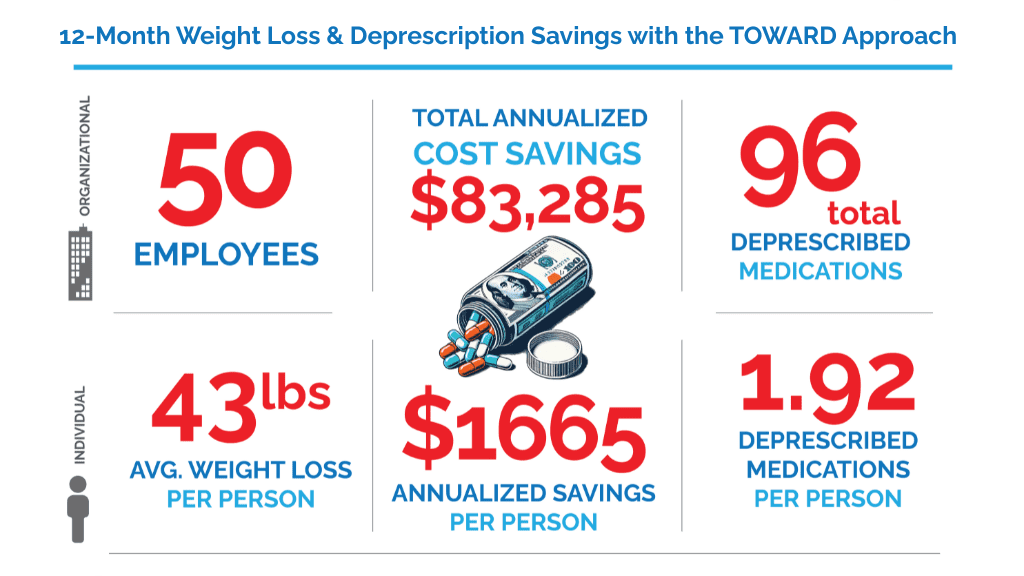
We also put our own care under a microscope. Our published employee wellness study followed 44 adults. Thirty-seven completed food-addiction questionnaires at baseline and follow-up while receiving metabolic care that included carbohydrate reduction, coaching and remote support. The average symptom score fell from 2.58 to 1.53, a 40.7% decrease. Seventeen people reported fewer symptoms, fifteen had the same score and five reported more. Those five matter to me as much as the average. A clinician who asks again has a chance to find out who still needs help. Read our study in Frontiers in Psychiatry.
Give young people the microphone on November 14
If you come to one event because you read this, make it the International Food Addiction Children’s Conference on Saturday, November 14, 2026, at 11 a.m. Eastern. Journalist Michael Moss is covering the food business. Dr. Jen Unwin is talking about recognizing food addiction in families. Young advocates from UNICEF’s Fix My Food initiative will speak about changing the places where they eat and learn. We’ve spent decades studying how to sell things to kids. Here’s a chance to hear what they want adults to do. Your ticket includes the livestream and the recording. Register for the children’s conference.
Then join me in San Antonio, January 29–31, 2027. I’m on the program at SMHP’s Symposium for Metabolic Health, which has dedicated a full day to food addiction. I especially want colleagues who see these patients every week to come. Bring the question your last patient asked that a calorie target couldn’t answer. In-person and livestream registration are available. See the San Antonio program and register.