
A practical guide to maintaining weight-loss progress through repeatable routines, realistic food choices, and support.
Get the free protocol by email →

This seven-step guide now includes Toward Health research, practical ways to spot cravings and setbacks, and options for feedback and support.
As you approach a weight-loss goal, a practical question follows: how do you maintain your progress? Start with a routine for food, activity, tracking, setbacks, and support that you can sustain in everyday life.
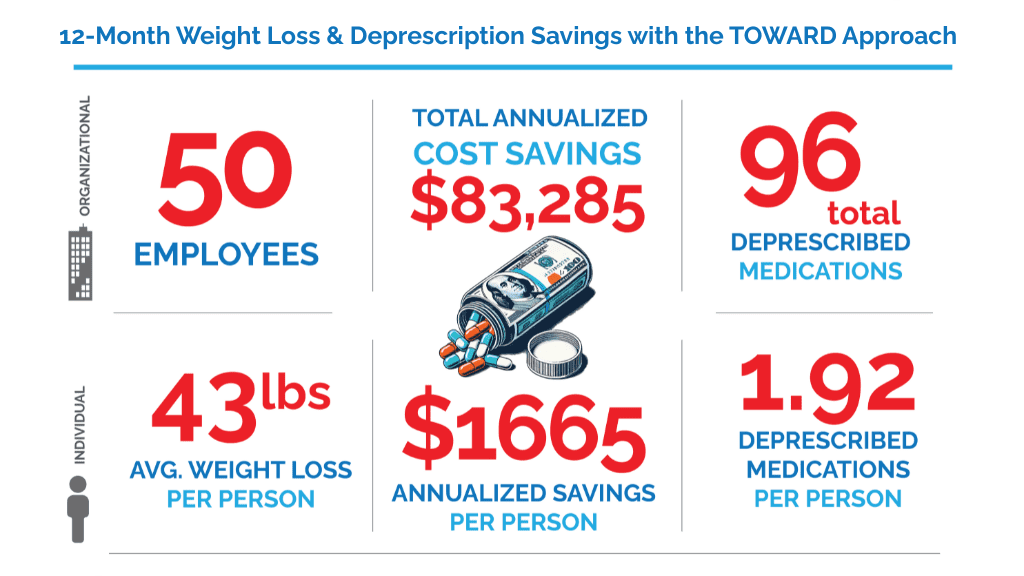
In a published one-year Toward Health program, 50 participants received individualized lower-carbohydrate nutrition alongside optional fasting, coaching, messaging, community support, and monitoring. Forty-one completed the year, and the full-group analysis reported average weight loss of 15.5% at 12 months. For maintenance, we carry forward the parts of a person’s own plan that are repeatable.
Your maintenance check-in
Use these seven steps as a repeatable check-in. They bring together routines, setbacks, food planning, and support.
- Look at long-term trends rather than one reading.
- Return to the approach that worked for you when progress stalls.
- Set clear boundaries around repeatable habits.
- Plan for cravings with replacements and predictable meals.
- Make cooking simple enough to sustain.
- Use “Moment Zero” to resume after a setback.
- Set a small goal and get outside feedback and support.
Step 1: Look at long-term trends, not one number
Start by looking at health markers. The scale can be a useful tracking tool, but it does not define a person or provide a complete picture of health. A daily weight is a momentary snapshot; focus on the trend over time rather than one fluctuation.
Continuous glucose monitors and ketone breath meters can provide immediate feedback, but unrelated factors can skew individual readings. Look at longer-term trends. If glucose feedback would help you understand your own food and timing patterns, explore Toward Health’s CGM options.
For more on this transition, read Amy Eiges’s article “Now What?” (Is an Open-Ended Question), which examines how a person’s focus may change after significant weight loss.
Step 2: Return to what worked
When progress stalls, repeatedly switching plans can make it harder to see what works. At Toward Health, we usually return to the approach that helped the person initially: carbohydrate restriction, intermittent fasting, or a controlled eating plan with planned meals and portions. Recommit to its basic rules before making another major change. Keep what worked and adjust the parts that no longer fit your life.
Step 3: Recommit to clear, repeatable rules
The National Weight Control Registry reports that many long-term maintainers weigh themselves regularly and remain physically active. A separate follow-up found that many participants maintained weight loss over ten years. These observations come from a self-selected group; use them to consider which tracking and activity habits you can repeat.
Make your rules concrete enough to follow: a daily step target, a minimum number of weekly workouts, a carbohydrate range, or a fasting window if that was part of your plan. Decide where the boundaries are and stick to them. A routine you can return to matters more than a perfect day.
Step 4: Get ahead of cravings
Get ahead of cravings instead of waiting until you are hungry and improvising. Identify foods that are difficult to restrict and keep satisfying lower-carbohydrate replacements ready. Make meal timing predictable, too: a steady rhythm can make your appetite easier to anticipate and your next choice easier to plan.
In a published Toward Health food-addiction study, coaches tracked hunger, cravings, and food triggers while helping people choose lower-carbohydrate replacements. Among participants with paired follow-up measures, food-addiction symptom scores fell 40.7% and binge-eating scores fell 34.7%. The practical lesson is to notice your own trigger patterns early and build replacements and support around them.
For individual examples of food planning, see the stories of Bob Collins and Vic Basmadjian. Their experiences offer options, not a routine everyone must follow.
Use replacements and recipes when they help you enjoy familiar foods while following your plan. Notice whether low-carb treats reduce friction or become a new reward pattern that is easy to overdo.
Step 5: Keep the cooking routine simple enough to sustain
Keep everyday meals simple enough to repeat. For example, a weekday routine might rely on protein and non-starchy vegetables, with more involved recipes when time allows. Bringing a suitable dish to a social gathering can help you participate without abandoning your plan.
These are options, not rules. Keep the version that works for your household and schedule.
Step 6: Use Moment Zero after a setback
An off-plan choice is human, not a character flaw. Dr. Tro calls the very next decision “Moment Zero.” Return to your plan with the next choice rather than waiting until “Monday.” One difficult meal does not need to become an off-plan day or week.
Do not add to your own suffering by extending the lapse or punishing yourself with fasting or exercise. Foods that repeatedly trigger cravings can keep the cycle going while you take all the blame. Notice what set the craving off, change what you can about the situation, ask for support, and return to your next planned meal. Dr. Tro explains this in Moment Zero: The Power of Immediate Recovery and Moment Zero: Responding to Setbacks.
Step 7: Get outside feedback and support
Set a small, attainable goal and let someone else help you see the pattern. A coach may notice food triggers, timing, stress, or drifting boundaries that are hard to recognize from the inside. Ask for feedback early, then make one specific adjustment to your routine.
For structured support, explore Toward Health Coaching. For no-cost peer support, join the free Toward Health app community, including Community Chat and support groups.
Take the next step.
Get the PDF and its weekly email series.
Weekly lessons arrive Saturdays at 10:00 a.m. Eastern, one series at a time.
Related guidance
- Non-Scale Victories: How to Measure Weight Loss Progress
- Choosing Maintenance: An Act of Self-Compassion
- How to Start a Low-Carb Diet in 5 Practical Steps