
This overview introduces the main bariatric procedures, their potential benefits and risks, and the lifelong commitments that can follow surgery.
In the United States 25 million adults qualify for bariatric surgery and about 1% of them pursue it: 252,000.
The NIH guidelines for candidates of bariatric surgery include:
- BMI ≥40 or BMI ≥35 plus an obesity related comorbidity (ex. T2DM, OSA, HTN)
- Be prepared and willing to commit to the necessary lifestyle changes → requires lifelong vitamin/mineral supplementation. Over the course of 30 years, this vitamin/mineral supplementation could cost $18,000 or more (assumes $50/mo). Further, this figure does not account for the additional cost required to treat nutritional deficiencies, which are likely to develop and require yet more supplements (1).
- Must have attempted medical weight loss without success.
- Must agree to the regular follow up visits and other requirements of the surgical program
Just like with medicines there is a list of factors that disqualify people for bariatric surgery. The list includes: uncontrolled substance use disorder, eating disorder, history of psychiatric hospitalization in the past year, suicidal ideation or another major untreated psychiatric condition, women looking to become pregnant within the next 12 months, and people who are too ill or too high risk to undergo surgery.
Why might you consider bariatric surgery? There are numerous health benefits of weight loss and bariatric surgery can lead to a large amount of weight loss. In general,
5-10% of total body weight loss can lead to improvement in:
- Cholesterol and cardiovascular disease risk factors
- Blood pressure
- Insulin sensitivity
≥10% weight loss can lead to:
- Reversing NAFLD/NASH and even some liver fibrosis
- Improvement in OSA and arthritis
- Improvement in PCOS and infertility
While surgery should always be used as an adjunct to lifestyle changes (nutrition and physical activity, behavioral therapy), it can also help facilitate lifestyle changes when they have proven unsuccessful previously. Studies clearly show that bariatric procedures can improve health and quality of life, curtail weight regain, and increase the rate of remission from multiple medical conditions. In one study following patients for 20 years they saw an increase of 2.4 years in life expectancy as compared to the control group – HOWEVER – this was confounded by the control group gaining weight (2).
Major Complications
There are some MAJOR acute and chronic complications that frequently occur from bariatric surgeries, and also additional complications that are mostly unique to specific types of procedures. Generally speaking there are:
- Acute complications: Nausea/vomiting, dehydration, bleeding, bowel obstruction, leaks, gout flares, infection, heart arrhythmias, blood clot in leg/lung (can be fatal in up to 1% of cases)
- Chronic complications: Moderate to severe nutritional deficiencies, weight regain, depression, transfer addiction (increase of excess substance use like alcohol and opioids), and need for additional surgery
- Contraindications: Barrett’s esophagus, Crohn’s disease, pregnancy (or trying to become pregnant within one year), uncontrolled drug or alcohol use disorder, uncontrolled psychiatric disorder, untreated gastric ulcer, poor surgical candidate (too many health comorbidities), intolerance to general anesthesia, unable to follow lifelong vitamin/mineral supplementation (can be expensive)
Additionally, following surgery there are higher rates of suicide and self-harm/suicide attempts post-operatively. This is likely multifactorial from psychiatric, medical, psychosocial, physiologic changes, and post-procedure complications that occur after surgery. For example, there are rapid and global changes required in someone’s post operative lifestyle; food is removed as a potential coping mechanism and changes in relationships occur.
We are going to briefly touch on five types of bariatric surgery:
-
Adjustable Gastric Band (Lap Band) -
Vertical Sleeve Gastrectomy -
Roux-en-Y Gastric Bypass (RNY) -
Loop-Duodenal Switch -
Biliopancreatic Diversion with Duodenal Switch
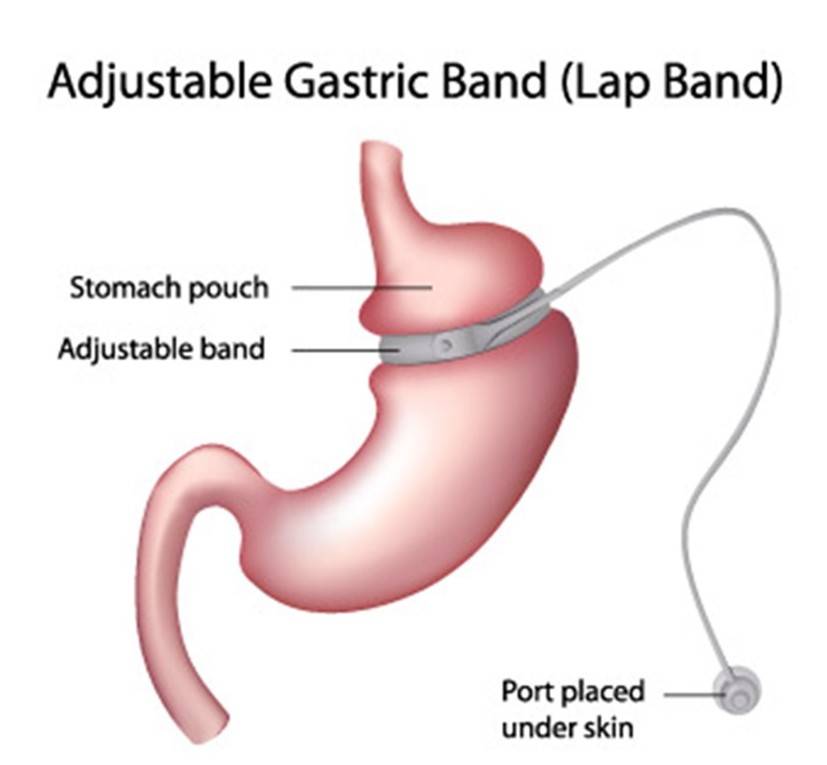
1. Adjustable Gastric Band (Lap Band)
A band is placed around the upper stomach creating a small pouch and is adjustable by injecting saline via a port in your skin that can be accessed from your upper abdomen. Less than 1% of centers now offer this procedure due to high rates of weight regain and lower excess body weight loss (EBWL) compared to other options.
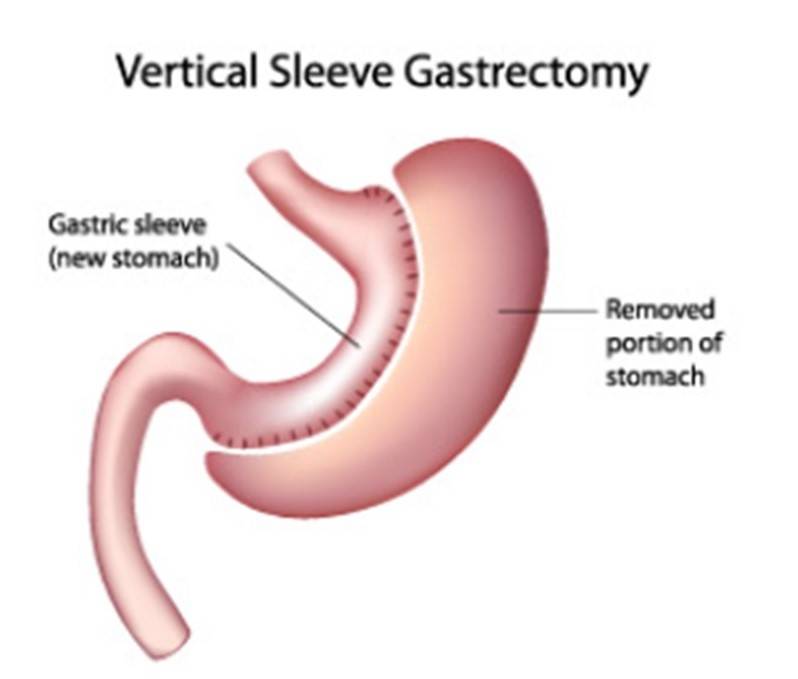
2. Vertical Sleeve Gastrectomy (VSG)
The stomach is reduced to something that is approximately the same size and shape as a banana, which equates to 20-25% of its original size. Patients typically see 50-70% of EBWL by three years, though there is considerable weight regain of up to 75% at 6 years. The surgery can be completed in ~1 hour and usually requires a 1-2 day stay in the hospital, with full recovery expected within 3 weeks.
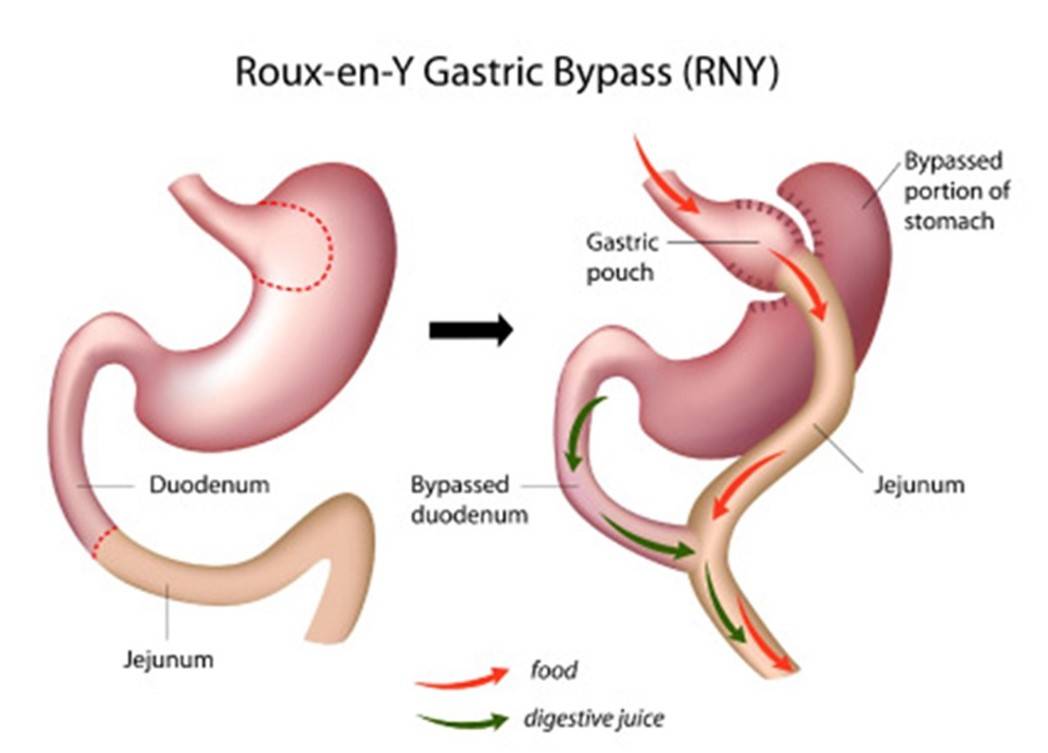
3. Roux-en-Y Gastric Bypass (RNY)
The stomach is divided in two, with a small pouch left to connect to the rest of your digestive system and the larger portion of the stomach being left in the body but not attached to your gut. The small pouch can hold around 1 ounce of food vs. an estimated 32 ounces prior to the procedure. Patients typically see 60-75% of their EBWL within 2 years. By year 10 60-70% of individuals will have maintained at least 50% of the EBWL, with 20% regaining most of their weight and another 15-17% never seeing sufficient weight loss in the first place. This surgery can be completed in 2 hours and usually requires a 1-4 day stay in the hospital, with full recovery expected within 6 weeks.
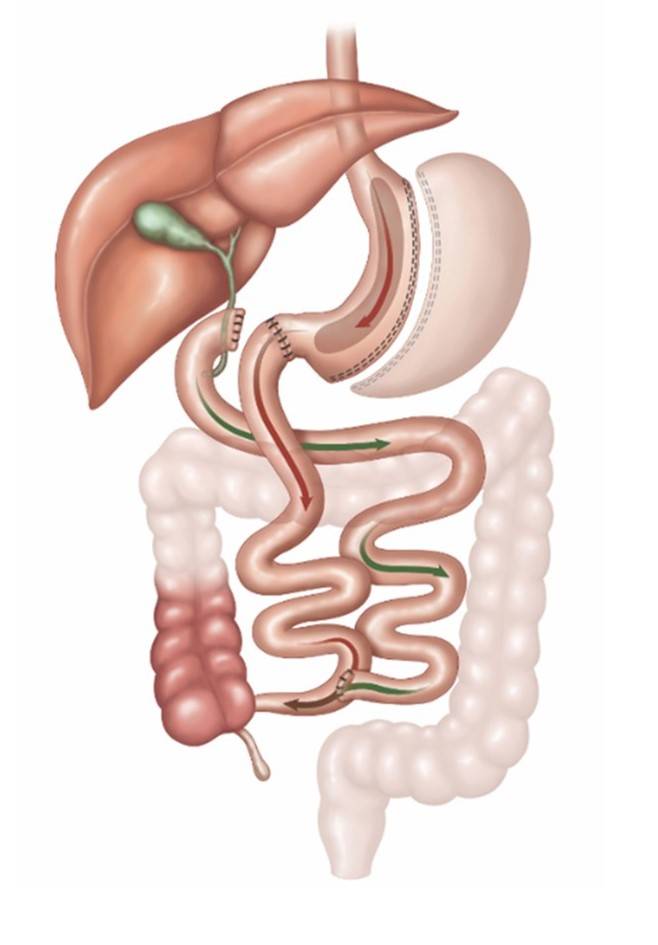
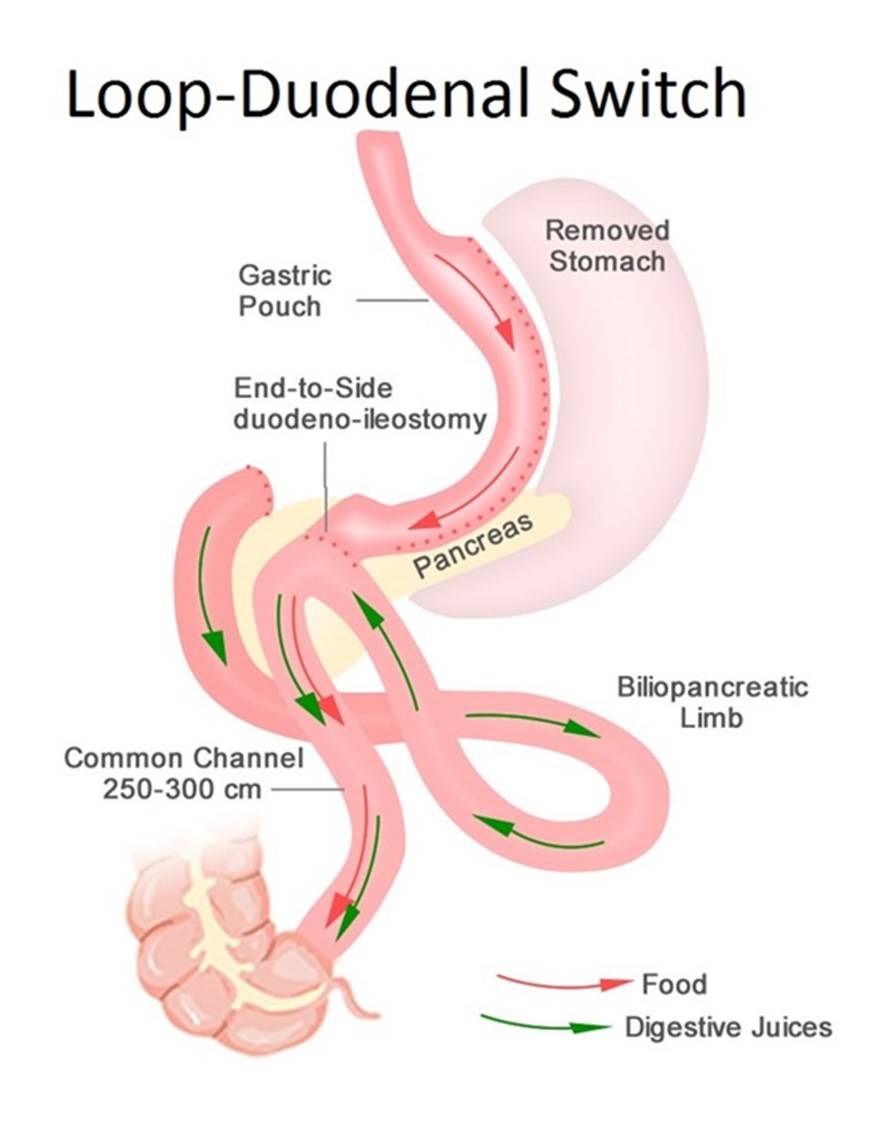
4. Loop-Duodenal Switch
In this procedure a sleeve gastrectomy is performed first (see #2 above), then the stomach is redirected to a lower portion of the small bowel, bypassing about 50% of the small intestine. This surgery usually requires 2-3 hours, 1-4 day hospital stay with full recovery by 6 weeks. Expected EBWL is 70-80% by year 2.
5. Biliopancreatic Diversion with Duodenal Switch
This surgery is the most extreme and has the most side effects, so only accounts for <1% of procedures. The stomach is cut into a small pouch and the rest of it is removed. Then the small intestine is divided into two parts. The end of the small intestine is attached to the small pouch so that food travels directly from the pouch into the last segment of the small intestine bypassing about 80% of it. The bypassed part is reconnected to the last few inches to help carry digestive enzymes. This leaves around 30-40 inches of small intestine to digest your food. This surgery usually takes 2-3 hours, requires 2-4 days in the hospital and you will likely have a full recovery within 6 weeks. You can expect between 70-80% of EBWL at 2 years, and in studies even looking out at 10 years, EBWL is maintained around 80%. Only about 1.5% of individuals regain weight after 3 years.
Surgery is a life altering decision that cannot be undone. It is not an easy way out, nor is it a way to avoid the necessary lifestyle changes for sustainable improvements in metabolic health and weight loss. Each of the above procedures has material and potentially lifelong risks associated with it. They should only be considered after trying (and not succeeding) at a medical weight loss program under the guidance of a trained practitioner. I am biased, but I also think it would be worth trialing a ketogenic lifestyle while working with a team that can empower you to make that a sustainable lifestyle before considering the above surgeries and complications that go along with them.