
#1 malnutrition problem in the U.S.
In 1977, George McGovern warned that obesity would be the #1 malnutrition problem in the U.S. Arguably, that is when society became increasingly aware of obesity and heart disease as a cause for concern at a population level.
At the time, I was only 4 years old, and while I don’t remember it exactly, I do recall what followed in later years, specifically in 1982 when I started out the summer as an average weight kid and returned to school in September as one of a handful of overweight kids.
Around that same time, possibly as a result of McGovern’s warning, there was a massive push for low fat diets, along with low cholesterol and low-calorie foods.
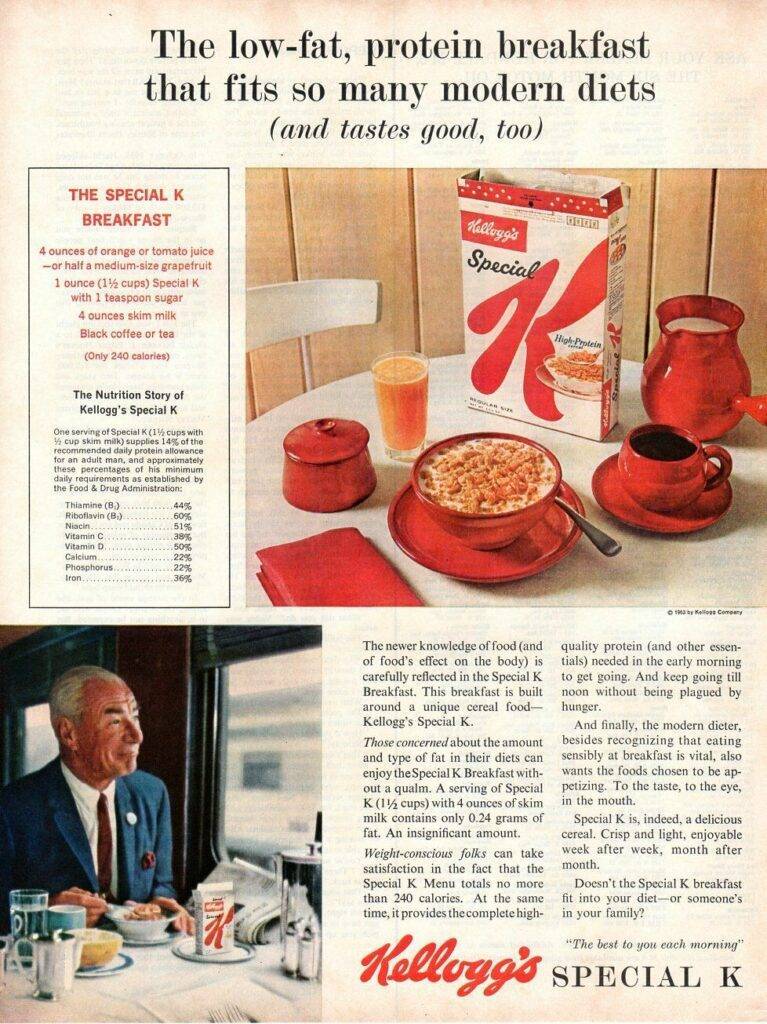
How did the food companies accomplish their goals of creating these products?
They removed the fat and replaced it with sugar in order to make them taste at all palatable. Sugar, in one form or another, was added not just to cookies, candies and other desserts, but to nearly everything, and processed foods started to flood shelves.
 Before that, the supermarket shelves only had a handful of choices in each category, but soon every market had new products with flavors to meet every taste. Grocery store shelves became filled with these things and in just a few short years, stores were three times as big, and there were entire aisles and endless varieties of junk to choose from.
Fast forward to today and it is even worse: every time you turn on TV, scroll through social media, or drive down the highway, you see some new junk food advertised. There is no escape from it. And even worse for our health: the bags, boxes and packages of these things have gotten bigger so that we no longer know what real food is or what a proper serving size looks like.
The food industry took advantage of the situation and made the obesity epidemic even worse.
And who can blame them? Their job is to make money. They have manipulated our biological reward systems to make us repeat customers. Over the past 40+ years they have so much influence that they have marketed and covered up anything that holds them accountable for our current health issues, while they continue to churn out new products daily that are designed to get us to buy more of their products. These non-food-like products offer no satiety and are nearly devoid of any nutritional value.
With obesity and metabolic disease at near epidemic proportions, many are left confused and trying to figure out how to get healthy.
And now, as low-carb and keto become more popular, some of the same problems we saw in the 1980s are happening with low-carb and keto products. When I started low carb in 2009, the only thing you could find for a quick grab-and-go option for a sweet tooth were Atkins bars and shakes, and even among those, there were only two flavors of shakes and a few bars to choose from.
Slowly, over the years, these product lines expanded and there were double the options of bars and shakes to choose from. Along with that, a few frozen meals and other junk food replacement options sprang up. But just a few years later, keto started becoming more popular and every year since, the number of products hitting store shelves with the words “keto” or “low carb” have flooded the market.
These products can be a valuable tool as a bridge when first beginning a low carb or ketogenic lifestyle, and great for a “break-glass-in-case-of-emergency” situation or an occasional treat during a celebration, holiday or social event. Unfortunately, they are not being used or marketed in that way, and just like when I was a kid, these low-carb products are getting further and further away from healthy food.
Today there are so many low-carb and keto products hitting the market that it is hard to keep pace with them.
In our practice, we used to be able to keep on top of it when a client or patient would ask about a product, asking if it was a good, healthy option or not. Now, we see new products we didn’t know existed.
What started as a few bars and shakes has now turned into a replacement for every junk food we ate in the past. There are low carb and keto cookies, chips, ice creams, cereals, granolas, candies, breads and buns, cakes, and the list goes on. And just like what I witnessed as a kid with junk foods, what was once a tiny section in the grocery store with a few options now has limitless choices. You will even see some of the big food brands have jumped on the bandwagon.
Even though these are great options for when you need an occasional fix, just like all other processed foods, they are designed and marketed to make us eat and eat. When we get tired of one flavor, they have many others to keep us coming back. These foods are hyperpalatable and offer nothing in satiety, which is why they’re a slippery slope for a lot of us and can stall us from achieving our goals.
We end up trading our old junk food habits for another, and then these foods sneak their way into our daily lives. Before we know it, they are replacing whole, real foods, so it is important to stay mindful when we consume them.
I believe they have a rightful place in our lifestyle, and I am not trying to scare you into not trying them, but do so with full awareness. Just like everything, you should read the ingredients labels, because there is no government regulation on what can and cannot have the words “low carb” or “keto” on the package. Most companies have taken advantage of this, and there are many products that will have the same adverse reaction on your blood sugar as the original version it is replicating.
These companies are also changing the names of sugar, fibers, and starches in the ingredients labels to make it more confusing, or they use these ingredients as a tactic to get the “net carbs” low and, in turn, make it look a lot healthier than it is.
These words are often plastered across the front of the package, along with a low net carb count to make it look acceptable.
Many will see those buzz words on the front and never bother looking at the back, and this can be very challenging at the beginning of a low-carb journey. In the Weight Loss Curriculum of the Toward Health App are a list of acceptable replacements, hidden sugars to look out for, and information about how to read nutrition labels. As a rule of thumb: if in doubt look at the total carbs on the label. If the total carbs are high and the net carbs are low, it’s probably too good to be true!
Even with the replacements listed in the app, let your own experience, hunger and satiety be the guiding factor: if you regularly find yourself eating or overeating these replacement foods, your best bet is to replace those replacements with real, whole foods that help you achieve satiety, foods that your brain can eventually achieve some level of satisfaction and fullness from.
A practical re-evaluation checklist
In Toward Health group discussions held in 2020 and 2021, Tro Kalayjian, DO, and Health Coaches Amy Eiges and Brian Wiley compared packaged keto foods with a spare tire: an option that may help when it is the best available alternative, but something to reassess rather than automatically make part of every day.
- Am I eating this occasionally, or has it become an everyday habit?
- Can I stop at the amount I planned?
- Do I notice more cravings, appetite, stomach discomfort, or unplanned eating afterward?
- Is it replacing a meal built around foods I find more filling?
- Is this product still helping with the reason I chose it?
Amy said she could still overdo keto treats after years of low-carb eating. Brian described a two-week CGM experiment in which his consumption of packaged keto products more than doubled and was difficult to reduce afterward, even though he said very few of the products affected his glucose readings. These are their individual experiences, not evidence that a product will affect every reader the same way.
If the larger challenge is the urge to eat rather than the label on a package, read Managing Cravings: The Moment After “The F-Its” Hit.