


Toward Health.
In your inbox.

Practical guidance, fresh perspectives and updates from our team.

Get the newsletter.

Toward Health team members

Latest posts

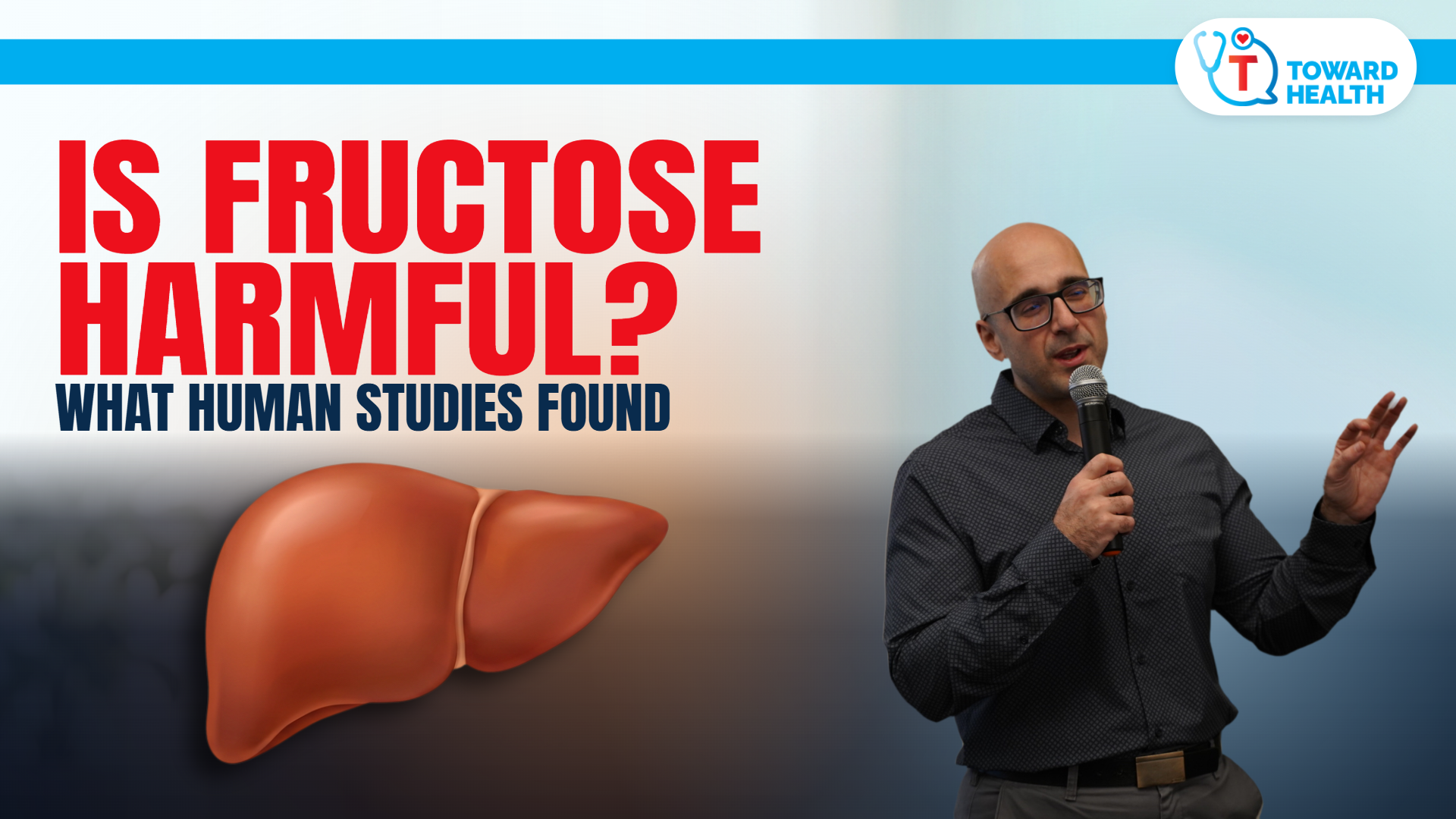
Landscape 16:9. Dr. Tro Kalayjian beside a liver illustration. Text: IS FRUCTOSE HARMFUL? — WHAT HUMAN STUDIES FOUND.

Fructose Is More Than a Calorie

Controlled human studies examine how fructose affects liver fat and insulin sensitivity, including when calories and body weight are held stable.

Landscape 16:9. Dr. Tro Kalayjian beside a liver illustration. Text: IS FRUCTOSE HARMFUL? — WHAT HUMAN STUDIES FOUND.

There is a tendency in nutrition to reduce everything to calories. If two foods contain the same amount of energy, the assumption is that their metabolic effects should ultimately be the same.

That is not how metabolism works.

Fructose is a particularly good example. Human intervention studies show that fructose can change liver metabolism even when calories are held constant and people do not gain weight. It can increase hepatic de novo lipogenesis, increase liver fat, and impair hepatic insulin sensitivity without requiring caloric excess.

One of the cleanest demonstrations came from Schwarz and colleagues.

Eight healthy men were admitted to an inpatient clinical research center for 18 days. Every meal was provided. Nonstudy food was prohibited. Their weight was measured daily.

For nine days they consumed one diet, and for nine days they consumed the other. The diets contained the same calories and the same proportions of carbohydrate, fat, and protein. The major difference was that complex carbohydrate was replaced with fructose.

Their weight remained stable.

Their liver metabolism did not.

When they ate the high-fructose diet, hepatic de novo lipogenesis increased from 11.0% to 18.6%. Liver fat was a median 137% higher. Every participant had more liver fat after the fructose diet.

Fructose also impaired insulin’s ability to suppress glucose production by the liver, while peripheral insulin-mediated glucose disposal did not significantly change.

Nothing about this required weight gain. The calories were matched. The macronutrients were matched. The subjects were living in a research center eating the food investigators gave them.

The carbohydrate changed, and their liver metabolism changed with it.

A larger randomized trial published in the Journal of Hepatology found something similar.

Geidl-Flueck and colleagues randomized 94 healthy men to beverages containing fructose, sucrose, glucose, or no sugar-sweetened beverages for seven weeks.

Despite consuming the sweetened beverages, participants compensated elsewhere in their diets, and total energy intake did not significantly increase.

But what happened in the liver depended on which sugar they drank.

Basal hepatic de novo lipogenesis was 9.1% in the control group and 11.0% in the glucose group. With fructose it was 19.7%. With sucrose it was 20.8%.

Fructose and sucrose approximately doubled hepatic DNL. Glucose did not.

That is difficult to reconcile with the idea that the liver simply sees carbohydrate calories as carbohydrate calories. Glucose and fructose provide the same amount of energy per gram, but they do not follow the same metabolic pathway and did not produce the same hepatic response.

And this isn’t just one or two trials.

Ter Horst and colleagues pooled 29 intervention studies involving 1,005 participants. When fructose was substituted for other carbohydrates without adding calories, fructose significantly worsened hepatic insulin resistance.

Interestingly, the effect was not seen in peripheral glucose disposal. Again, the signal was particularly apparent in the liver.

So we have controlled intervention data showing that changing the type of carbohydrate, without necessarily changing the calories, changes hepatic insulin action.

There is a biological reason for this.

After we eat fructose, a substantial amount is metabolized by the intestine and liver. Isotope-tracing experiments have shown that the small intestine can metabolize much of a small fructose load before it ever reaches the liver.

But that capacity is limited.

Jang and colleagues showed experimentally that at lower exposures the small intestine cleared approximately 90% of dietary fructose. As the fructose load increased, intestinal clearance became overwhelmed and more fructose escaped intestinal metabolism, exposing the liver and colonic microbiota to more fructose.

Follow-up work made the point even more interesting.

When researchers altered intestinal fructose metabolism, they could change how much fructose reached the liver and how much hepatic lipogenesis and steatosis developed. The speed at which fructose was delivered mattered as well. A large rapid exposure was metabolically different from spreading the same amount over time.

In other words, the body doesn’t just count the calories and move on. It has actual metabolic machinery for handling fructose, and that machinery has a finite capacity.

There is also an interesting human trial involving fruit.

Researchers in Iran randomized 80 people with nonalcoholic fatty liver disease to eat at least four servings of fruit per day or fewer than two servings per day for six months.

The group eating more fruit finished the study with worse hepatic steatosis, insulin resistance, fasting glucose, ALT, AST, ALP, GGT, and several lipid measurements.

HOMA-IR was 7.36 in the higher-fruit group compared with 2.66 in the lower-fruit group. ALT was 89.1 versus 32.0 U/L, and AST was 74.5 versus 24.0 U/L.

The investigators reported that adjustment for BMI and calorie intake did not change their findings.

That doesn’t mean fruit and purified fructose are the same thing. They aren’t. But it does challenge the assumption that the effects of fructose-containing foods can always be dismissed as simply a matter of excess calories.

There is an even broader lesson here.

A 2024 Nature study examined fructose metabolism in cancer models. Dietary fructose increased tumor growth without producing weight gain or insulin resistance. Interestingly, the cancer cells weren’t particularly good at metabolizing fructose themselves.

The liver was doing the work.

The liver metabolized fructose and released lipid molecules, including lysophosphatidylcholines, into the circulation. Those lipids could then be used by tumor cells for growth. When researchers interfered with hepatic fructose metabolism, the effect was reduced.

This was an animal study and isn’t evidence that eating fructose causes cancer in humans. But it demonstrates a simpler point: a nutrient can have biological effects through its metabolism that have nothing to do with whether it caused weight gain.

Calories obviously matter. Chronic energy excess matters. And when researchers deliberately overfeed people fructose, the metabolic consequences can become even more pronounced.

But that isn’t the question.

The question is whether fructose only becomes metabolically relevant because it supplies excess calories and causes weight gain.

The controlled human data tell us that it doesn’t.

In an inpatient feeding experiment, investigators kept calories constant and kept body weight stable, changed complex carbohydrate to fructose, and watched liver fat, hepatic DNL, and hepatic insulin resistance change.

In another randomized trial, fructose approximately doubled hepatic DNL without a significant increase in total energy intake, while an equivalent glucose intervention did not.

Across controlled intervention studies, replacing other carbohydrates with fructose without adding calories worsened hepatic insulin sensitivity.

Calories tell us how much energy a molecule contains.

They don’t tell us what the body does with that molecule.

Watch the related interview

For the earlier conversation, watch Fructose and the Liver: Dr. Robert Lustig Explains Why Calories Are Not the Whole Story, from our May 6, 2024 LowCarbMD episode. The short presents Dr. Lustig's explanation of fructose metabolism; the studies reviewed here provide the separate research context.

References

Schwarz JM, et al. Effect of a High-Fructose Weight-Maintaining Diet on Lipogenesis and Liver Fat. Journal of Clinical Endocrinology & Metabolism. 2015;100:2434-2442. PMID: 25825943.

Geidl-Flueck B, et al. Fructose- and sucrose- but not glucose-sweetened beverages promote hepatic de novo lipogenesis: A randomized controlled trial. Journal of Hepatology. 2021;75:46-54. PMID: 33684506.

Ter Horst KW, et al. Effect of fructose consumption on insulin sensitivity in nondiabetic subjects: a systematic review and meta-analysis of diet-intervention trials. American Journal of Clinical Nutrition. 2016. PMID: 27935520.

Alami F, Alizadeh M, Shateri K. The effect of a fruit-rich diet on liver biomarkers, insulin resistance, and lipid profile in patients with non-alcoholic fatty liver disease: a randomized clinical trial. Scandinavian Journal of Gastroenterology. 2022;57:1238-1249. PMID: 35710164.

Jang C, et al. The Small Intestine Converts Dietary Fructose into Glucose and Organic Acids. Cell Metabolism. 2018. PMID: 29414685.

Jang C, et al. The small intestine shields the liver from fructose-induced steatosis. Nature Metabolism. 2020. PMID: 32694791.

Fowle-Grider R, et al. Dietary fructose enhances tumour growth indirectly via interorgan lipid transfer. Nature. 2024. PMID: 39633044.

PMID

25825943
33684506
27935520
35710164
29414685
32694791
39633044

Picture of Dr. Tro

Dr. Tro

I am a board-certified physician, I lost 150lbs to reclaim my health for myself and my family. I did it by ignoring much of the conventional medical advice that we have been told. My life's goal is to get you healthy and prevent disease. I want to get you OFF of your medications.
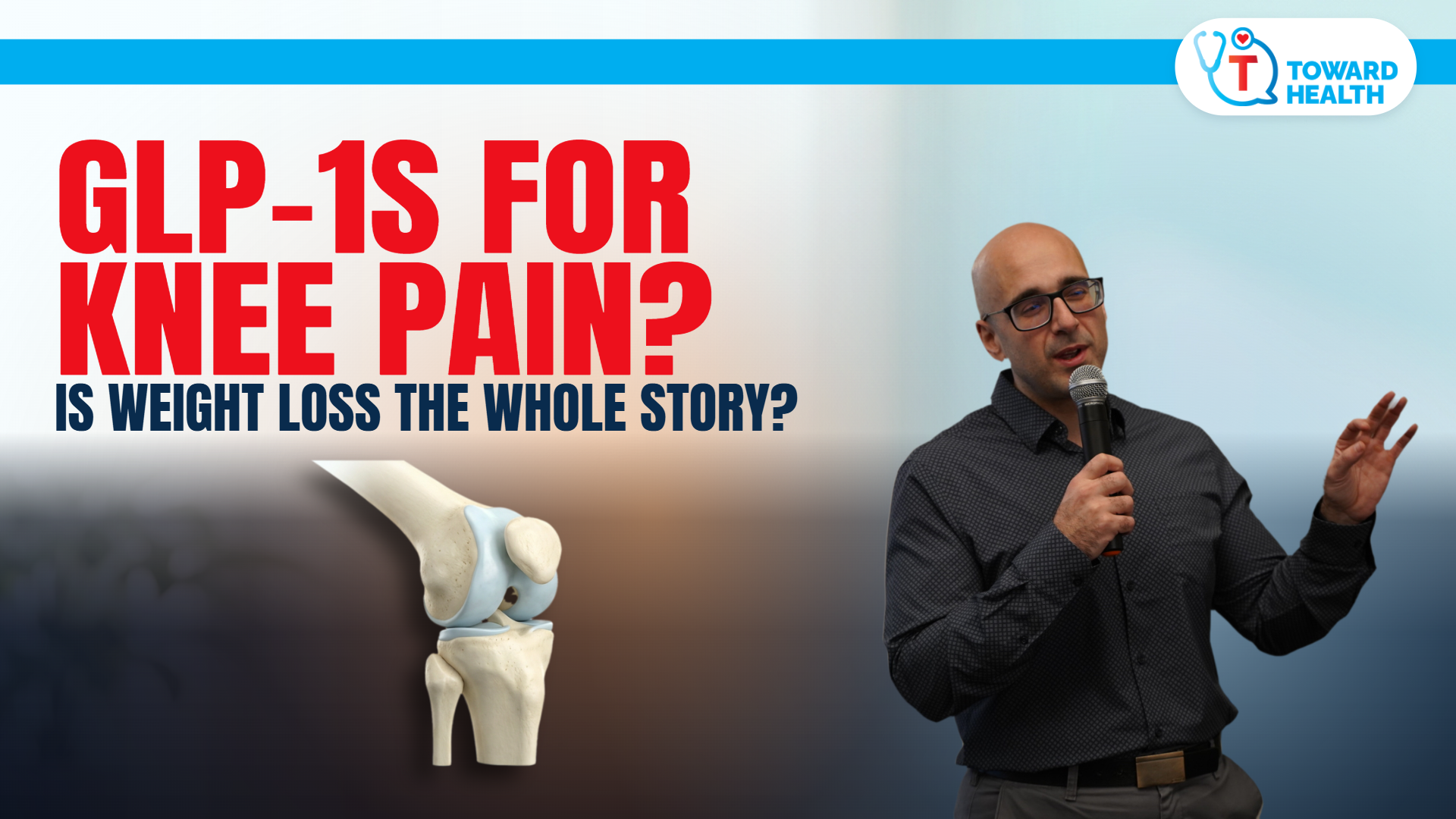
Landscape 16:9. Dr. Tro Kalayjian beside a knee illustration. Text: GLP-1s FOR KNEE PAIN? — IS WEIGHT LOSS THE WHOLE STORY?

Can GLP-1 Medications Help Osteoarthritis Beyond Weight Loss?

Semaglutide can improve knee osteoarthritis pain in people with obesity. Whether GLP-1 medications also protect the joint independently of weight loss remains an open question.

Landscape 16:9. Dr. Tro Kalayjian beside a knee illustration. Text: GLP-1s FOR KNEE PAIN? — IS WEIGHT LOSS THE WHOLE STORY?

The short answer: Semaglutide can improve knee osteoarthritis pain in people with obesity. Whether GLP-1 medications also protect the joint independently of weight loss remains an open question. Recent experiments make that possibility more credible, but human studies have not settled it.

Osteoarthritis affects the whole joint, including cartilage, bone, and the joint lining. Losing weight can help knee pain by reducing the load on the joint. It may also change metabolic factors associated with osteoarthritis. Researchers are now asking whether GLP-1 medications do something additional inside the joint.

What has been shown in people?

The strongest trial is STEP 9, published in The New England Journal of Medicine in 2024. Researchers assigned 407 adults with obesity and painful knee osteoarthritis to semaglutide or placebo, alongside advice about diet and physical activity. After 68 weeks, the semaglutide group had lost an average of 13.7% of body weight, versus 3.2% with placebo. On a 100-point knee-pain scale, scores improved by 41.7 points with semaglutide versus 27.5 points with placebo.

That is meaningful evidence for pain relief. It does not tell us how much of the improvement came from the medication itself and how much came from weight loss. STEP 9 also did not establish that semaglutide repaired cartilage.

Another randomized trial gives an important counterpoint. In a 2021 liraglutide study, participants first followed an eight-week diet program. The 156 people assigned to treatment had already lost an average of 12.5 kg and reported less knee pain during that diet phase. Over the following year, those assigned to liraglutide lost about 3.9 kg more than those assigned to placebo, but had no additional improvement in knee pain. The comparison starts after substantial weight loss; it does not prove that weight loss cannot help pain, or that semaglutide lacks a direct effect. It shows that greater drug-associated weight loss does not guarantee additional pain relief in every setting.

What about cartilage and knee replacement?

In the Shanghai Osteoarthritis Cohort, people with type 2 diabetes and knee osteoarthritis who used GLP-1 medications had less knee surgery and slower measured cartilage loss than nonusers. Knee surgery occurred in 1.7% of 233 users and 5.9% of 1,574 nonusers. The users also lost substantially more weight, with an adjusted difference of 7.29 kg. A statistical model attributed 32.1% of the association with surgery to weight reduction.

These are promising observations, but people were not randomly assigned to treatment. Differences in their health, care, and weight changes could affect the results. The portion of an association that a statistical model does not attribute to weight loss is not proof of a direct drug effect.

The newer 2026 Cell Metabolism study tested that question more directly in mice. When researchers controlled for differences in food intake and weight loss, semaglutide still reduced signs of joint damage and pain sensitivity. The paper also reported a randomized human pilot study with joint findings that support further research. That pilot does not establish lasting cartilage repair in people or confidently separate a clinical benefit from weight loss. A second 2026 experimental study found less joint damage and pain behavior in mice without a significant change in body weight.

What does this mean for you?

If you have obesity and knee osteoarthritis, semaglutide may help you lose weight and reduce knee pain. If you do not lose weight, we cannot yet predict that a GLP-1 medication will improve your arthritis. We also cannot promise that it will regrow cartilage or prevent knee replacement.

Joint care is bigger than a number on the scale. Track your pain, walking, stairs, and strength along with weight; our guide to weight-loss goals beyond the scale can help. If you are beginning exercise, discuss knee-friendly modifications with your clinician or physical therapist and see our two-day strength-training guide. For more on how nutrition and GLP-1 medications can fit into the same plan, read Low-Carb Nutrition and Diabetes Medications.

The next useful human study would compare people who achieve similar weight loss with and without a GLP-1 medication, then measure pain, function, and joint structure over time. Until then, a possible direct effect is an exciting research question, rather than an established treatment benefit.

Watch the related interview

For an earlier clinical perspective, watch Knee Pain and Metabolic Health: Dr. Gary Fettke on Osteoarthritis, from our December 7, 2020 LowCarbMD episode. Dr. Fettke discusses nutrition and joint symptoms; this interview predates the later semaglutide trials reviewed above.

Picture of Dr. Tro

Dr. Tro

I am a board-certified physician, I lost 150lbs to reclaim my health for myself and my family. I did it by ignoring much of the conventional medical advice that we have been told. My life's goal is to get you healthy and prevent disease. I want to get you OFF of your medications.
Unlabeled medicine vials and a capped syringe.

Testosterone Therapy: Benefits, Heart and Prostate Safety, and What We Monitor

When low testosterone and symptoms persist, what does treatment accomplish, and how safe is it? We examine the randomized evidence on heart safety, prostate risk, and what clinicians must monitor.

Unlabeled medicine vials and a capped syringe.

In our earlier article, Low-Carbohydrate Diets and Testosterone: What the Evidence Shows, we explained why obesity, insulin resistance, weight loss, sleep, and nutrition belong in a testosterone evaluation. Weight loss can raise testosterone in men with obesity-related low levels, while carbohydrate restriction alone does not reliably do so. That raises the next question: when symptoms and low testosterone persist, what does treatment accomplish, and how safe is it?

Low testosterone can affect sex drive, sexual activity, blood counts, muscle, fat distribution, and how a man feels day to day. Yet many men who might benefit from treatment have been told that testosterone inevitably causes heart attacks or prostate cancer. Those claims do not describe what the largest randomized trials found. Other concerns, including rising blood pressure and hematocrit, deserve real attention. The answer is to identify the right patient, aim for a physiologic testosterone level, and follow what happens.

Randomized trials are especially useful here: they assign men to testosterone or placebo and measure what changes. They help distinguish treatment effects from the effects of obesity, illness, aging, or other factors that can accompany low testosterone. This article focuses on that interventional evidence.

What can treatment actually improve

Sexual desire and activity. In a TRAVERSE randomized substudy, 1,161 men with low testosterone and low libido received testosterone gel or placebo. Testosterone improved sexual desire, sexual activity, and overall hypogonadal symptoms through two years. It did not significantly improve erectile function compared with placebo. The earlier Testosterone Trials also found a moderate benefit for sexual function. A man whose main problem is erectile dysfunction may need evaluation and treatment for vascular disease, medication effects, or other causes as well.

Anemia. Testosterone stimulates red-cell production. In the TRAVERSE Anemia Study, 815 men began with anemia. At six months, anemia had resolved in 41.0% receiving testosterone versus 27.5% receiving placebo; at 12 months, the figures were 45.0% versus 33.9%. Other causes of anemia still require evaluation. This is a tangible benefit for a man with both symptomatic low testosterone and anemia. It also explains why we monitor hematocrit: the same biological effect can raise it too far.

Muscle and fat. Testosterone can improve body composition. In a 56-week randomized trial of 100 men with obesity and low testosterone, both groups followed a diet program. Compared with placebo, testosterone produced 2.9 kg more fat loss and a 3.4 kg advantage in lean mass preservation or regain. These are between-group differences; they do not mean every treated man gained 3.4 kg of muscle. Testosterone is no substitute for resistance training or adequate nutrition, and more lean mass does not automatically mean a large improvement in strength or physical performance. It can be useful as part of a broader plan for a man who has a real testosterone deficiency.

Bone density. A randomized Testosterone Trial found that spine trabecular volumetric bone density increased 7.5% with testosterone versus 0.8% with placebo after one year. Estimated spine trabecular bone strength increased 10.8% versus 2.4%. But bone scans are not fractures: in the larger TRAVERSE fracture study, clinical fractures occurred in 3.50% of men assigned testosterone versus 2.46% assigned placebo over a median 3.19 years. We should not prescribe testosterone as a proven fracture-prevention treatment. A man with osteoporosis needs his bone health evaluated on its own merits.

Mood and energy. A 2024 randomized TRAVERSE analysis found modest improvements in mood and energy, including among men with substantial depressive symptoms. It did not improve sleep quality or cognition. The earlier Testosterone Trials, involving 790 older men, found moderate sexual benefits and small mood benefits, but no significant improvement in the primary vitality outcome. A separate cognitive trial found no memory benefit. Treatment can help some men feel better; it is not an established treatment for dementia or a replacement for depression care.

Insulin resistance and metabolic health. There is positive interventional evidence, although results vary by population and treatment. In TIMES2, 220 men with low testosterone and type 2 diabetes and/or metabolic syndrome were randomized to testosterone gel or placebo. Testosterone reduced HOMA-IR, a measure of insulin resistance, by approximately 15% at six months and 16% at 12 months compared with placebo.

In the two-year T4DM trial, 1,007 men with central obesity and impaired glucose tolerance or newly diagnosed diabetes received a lifestyle program plus injectable testosterone or placebo. Among men with available two-year glucose tests, 12% in the testosterone group versus 21% in the placebo group met the diabetes threshold. These men had low-normal testosterone without pathological hypogonadism. A hematocrit safety trigger above 54% occurred in 22% versus 1%, an important tradeoff with that regimen.

In contrast, the TRAVERSE diabetes substudy did not show better glycemic control or less progression to diabetes. Testosterone can improve body composition and insulin resistance in some settings, but a diabetes-prevention benefit has not been consistently demonstrated. We treat confirmed symptomatic deficiency while addressing nutrition, activity, sleep, and weight alongside it.

Does testosterone cause heart attacks or strokes

The most informative study is TRAVERSE. It randomized 5,246 men, ages 45 to 80, with symptoms, two fasting testosterone results below 300 ng/dL, and established cardiovascular disease or elevated cardiovascular risk to testosterone gel or placebo. Major cardiovascular events (cardiovascular death, nonfatal heart attack, or nonfatal stroke) occurred in 7.0% receiving testosterone and 7.3% receiving placebo (hazard ratio 0.96, 95% CI 0.78-1.17). Average treatment lasted about 22 months and average follow-up about 33 months. This is strong evidence against the claim that appropriately dosed testosterone routinely causes heart attacks or strokes in men like those studied. It is not proof of cardiovascular benefit, or a lifetime safety result for every formulation and dose.

TRAVERSE also fits a broader randomized evidence base. A 2022 individual-participant meta-analysis obtained data from 17 trials involving 3,431 men. In trials reporting cardiovascular events, rates were 7.5% with testosterone versus 7.2% with placebo, without a significant difference. Average treatment duration in the individual-data studies was only about 9.5 months, making this supporting evidence for short- to medium-term safety.

What do artery-imaging studies show

The three-year TEAAM randomized trial enrolled 308 men aged 60 or older with low or low-normal testosterone. Testosterone did not significantly accelerate coronary calcium or carotid artery wall-thickness progression compared with placebo.

A smaller 2017 randomized coronary CT study, however, found a greater increase in noncalcified plaque after one year: an adjusted between-group difference of 41 mm3. These studies measured different aspects of atherosclerosis. Neither was large enough to establish heart-attack risk; TRAVERSE provides the stronger evidence for actual major cardiovascular events.

Which heart concerns remain legitimate

Some concerns originated in randomized research. The 2010 TOM trial enrolled 209 older men with mobility limitations and substantial chronic illness. It stopped early after cardiovascular-related adverse events occurred in 23 testosterone-treated men versus five receiving placebo. Its broad adverse-event category differed from TRAVERSE's prespecified heart-attack, stroke, and cardiovascular-death outcome. It remains a reason to consider frailty, dose, and the population being treated.

There were also signals in TRAVERSE that we take seriously. In TRAVERSE, atrial fibrillation occurred in 3.5% versus 2.4%, nonfatal arrhythmia warranting intervention in 5.2% versus 3.3%, acute kidney injury in 2.3% versus 1.5%, and pulmonary embolism in about 0.9% versus 0.5%, testosterone versus placebo. These findings warrant attention to symptoms and baseline risk; they do not erase TRAVERSE's major-event result.

The FDA removed its boxed-warning language about increased major cardiovascular events in 2025 after reviewing TRAVERSE. In the same action, it required warnings that testosterone products can raise blood pressure. We measure blood pressure before treatment and during treatment, particularly if a patient has hypertension or cardiovascular disease. We also ask about palpitations, chest symptoms, leg swelling, and new shortness of breath rather than assuming a normal testosterone level answers every safety question.

What about PSA and prostate cancer

An early randomized prostate-biopsy study assigned 44 men with symptomatic low testosterone to injections or placebo for six months. Although blood testosterone increased into the normal range, investigators found no significant treatment-related change in prostate tissue testosterone or dihydrotestosterone, or in measured markers of cell proliferation. This helps challenge the assumption that normalizing blood testosterone automatically overstimulates prostate tissue. A small six-month study cannot establish cancer safety by itself.

The TRAVERSE prostate-safety trial followed 5,204 men with structured PSA monitoring and adjudicated outcomes. High-grade prostate cancer was found in 5 of 2,596 men (0.19%) receiving testosterone and 3 of 2,602 (0.12%) receiving placebo; there was no statistically significant difference in high-grade or overall prostate cancer, urinary retention, prostate surgery, or new medication for urinary symptoms. Testosterone can cause a small early PSA rise. A PSA rise calls for repeat testing and evaluation, not an automatic cancer diagnosis and not automatic dismissal.

The small number of cancers matters: a nonsignificant difference is reassuring but does not prove identical risk. What did this study leave unanswered? It excluded men with prior prostate cancer, suspicious prostate findings, PSA above 3.0 ng/mL, or severe lower urinary tract symptoms. Follow-up was also too short to settle the development of cancers that may take many years to appear. A man with a history of treated prostate cancer needs an individual discussion involving his urologist; the TRAVERSE result cannot simply be applied to him. In June 2026, FDA requested further testosterone-label revisions concerning age-related low testosterone, prostate cancer, and benign prostatic hyperplasia. Those were requested changes, so a clinician should check the current label for the specific product when prescribing.

Who is a candidate, and what do we monitor

We start with symptoms and two separate morning testosterone measurements. We consider free testosterone or SHBG when the total result is difficult to interpret, and LH, FSH, prolactin, medication history, sleep apnea, obesity, and other possible causes when indicated. We ask about fertility plans before starting: external testosterone can suppress sperm production. Someone without symptoms or without confirmed low testosterone should not assume that a higher number will improve his health.

Low testosterone is not always permanent hypogonadism. Obesity, sleep apnea, certain medications, inadequate nutrition, and other medical conditions can suppress testosterone production. Identifying and addressing reversible contributors is part of treating the underlying problem.

Before treatment we document symptoms and goals, blood pressure, a complete blood count and hematocrit, and prostate history with PSA when appropriate to age, preference, and risk. We review cardiovascular disease, prior blood clots, urinary symptoms, untreated sleep apnea, and medications. We choose a formulation and dose aimed at a normal physiologic range, then recheck testosterone at a time appropriate to the formulation, along with hematocrit, blood pressure, symptoms, and adverse effects. A practical follow-up plan is reassessment within about three months, again during the first year, and every six to 12 months once stable, with earlier checks when clinically indicated. This is a clinical monitoring approach; trials have not established that one fixed testing schedule is best for everyone. A hematocrit reaching 54% calls for holding or adjusting therapy and evaluating contributing causes. A confirmed, concerning PSA change or new prostate finding calls for urologic evaluation; in TRAVERSE, a confirmed PSA increase of more than 1.4 ng/mL in the first year triggered referral.

If testosterone normalizes without meaningful symptom improvement, we reassess the diagnosis and whether continuing treatment is worthwhile.

For long-term treatment, we keep looking at the whole patient, not just testosterone. More frequent laboratory review may be useful when doses change, levels fluctuate, hematocrit rises, or symptoms evolve. We may use cardiovascular testing or prostate imaging when a patient's history, exam, PSA, or other findings justify it. Routine coronary CT, carotid imaging, or prostate MRI has not been shown to make testosterone treatment safer merely because it is repeated on a schedule. Imaging should answer a clinical question.

Our earlier testosterone article explains why we address weight, nutrition, sleep, and other reversible contributors while evaluating the cause of a low result. When low testosterone and meaningful symptoms remain, treatment deserves a serious discussion of its benefits. The best randomized evidence does not support treating heart attacks and prostate cancer as inevitable consequences. It also does not support ignoring blood pressure, hematocrit, arrhythmia, clots, fertility, or the prostate over years of care. Individualized treatment and close follow-up are how we protect the upside without pretending there are no tradeoffs.

For an earlier clinical perspective on metabolic contributors, watch the selected short interview with Dr. José Carlos Souto. That 2020 discussion predates the later trials reviewed here and does not address their findings.

For related reading, see our guide to hormone care, our discussion of why coronary calcium can change a cardiovascular risk conversation, and our heart and metabolic screening options.

Picture of Dr. Tro

Dr. Tro

I am a board-certified physician, I lost 150lbs to reclaim my health for myself and my family. I did it by ignoring much of the conventional medical advice that we have been told. My life's goal is to get you healthy and prevent disease. I want to get you OFF of your medications.

Latest from the blog

Continue your learning.

Explore related articles, videos and practical guides in the Learning Hub.

Explore the Learning Hub

Apply Now