
A useful weight-loss goal gives you direction without turning every weigh-in into a verdict. Our practice looks at body composition, the course of your progress and the support you need along the way.
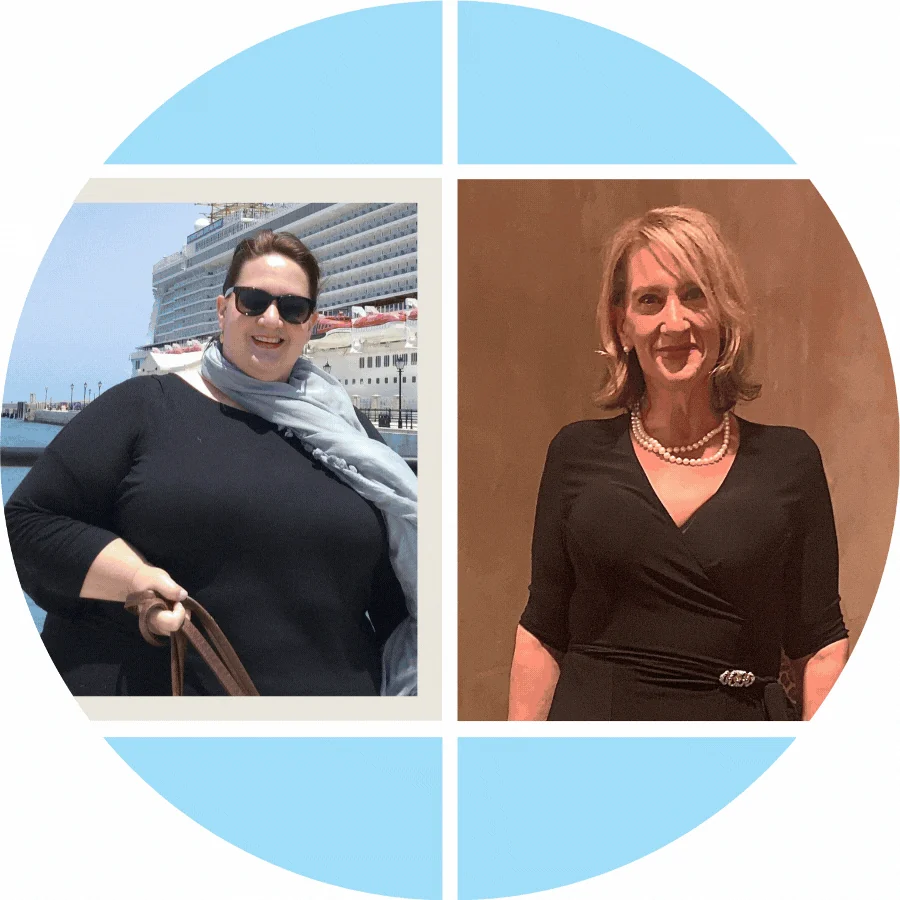
Determining a goal weight can be tricky. Patients often feel they should lose ten pounds in the first week. That pressure may come from their own expectations or dramatic transformation stories on social media. The reality is that this is a process, and a few pounds a month is a huge win. In fact, the average person gains several pounds during Thanksgiving, Christmas, New Years and Easter Week alone. This means that during times where social cues to eat are pervasive, staying the same weight is a huge win in itself. Weight loss is a journey that includes progress, pauses and adjustments.
Why our practice looks beyond BMI
In our clinical practice, we rarely use BMI as a goal because it is such an imprecise measurement. To give you an example of how imprecise BMI actually is, before filming Conan, Arnold Schwarzenegger weighed 240 pounds. Using BMI, this weight would have put him in the obese category!
BMI doesn’t take into account the amount of muscle mass, fat mass, bone, and water a body contains. Nor does it accurately estimate visceral fat. This is why our clinic DOES NOT USE BMI at all. Furthermore, BMI has a U-shaped curve when looking at mortality. This means that less BMI is not always better and more BMI is not always worse.
Measurements we use to discuss a goal
To help our patients determine a "goal weight," we like to guide them to three different metrics which have a more linear mortality relationship. In the graphs below you will see that the waist-to-height ratio has a more linear relationship with mortality. It seems that a good “goal” is when your waist measurement is half of your height.
Another way we guide our patients is to use two separate measures from their bioimpedance scale (body fat scales). We have found that mortality stops decreasing below about 50 pounds of fat mass. This means that a good “goal” is to get around 40-50 pounds of total body fat. Visceral fat also has a more linear relationship with mortality. Our practice generally advises a visceral-fat score below 12 on bioimpedance scales.
So to recap, BMI is an imprecise and inaccurate tool for setting a weight loss goal. Our practice favors the use of waist-to-height ratio, fat-mass and visceral fat measurements. 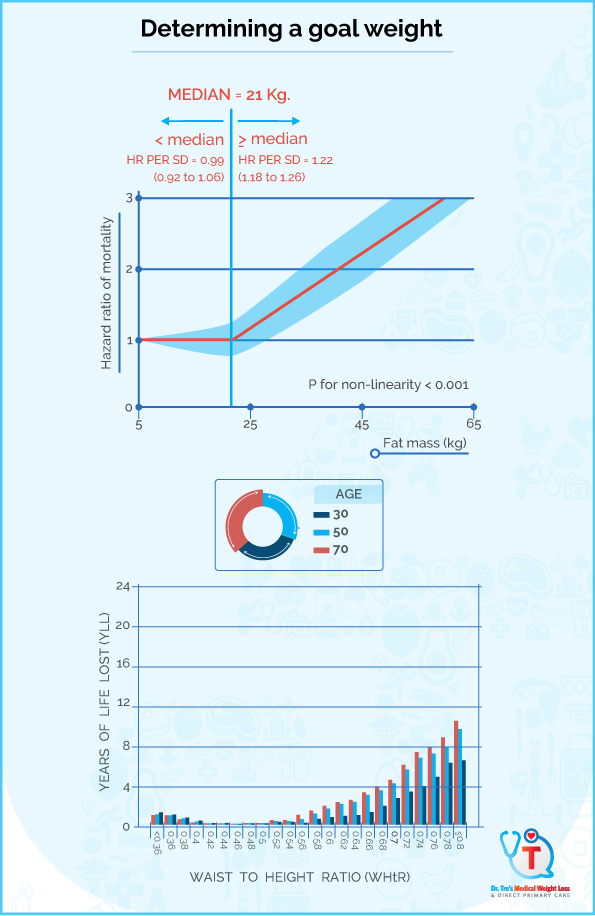
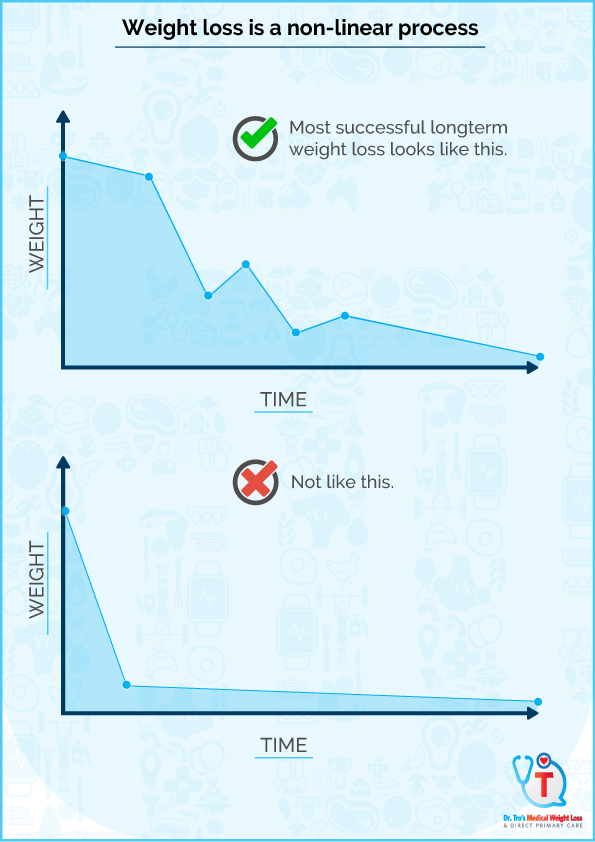
Progress will not be a straight line
Weight loss is not a steady, predictable process. You will experience bumps along the way. You will experience stress and increased hunger. You will see water weight fluctuations on the scale. None of this is a reflection of your character or your efforts; it is all part of the process.
Stay connected to support
Some people achieve their weight-loss goals during the program. Others continue working toward them after it finishes. Like any other part of our life, the journey is long and there will be lots of bumps in the road. We ask that every single one of you REACH OUT FOR HELP if you stumble along the way. Sometimes our relationship to food comes with intense emotions like shame and guilt, and these can be barriers that prevent us from getting the help we need. WE ARE HERE FOR YOU. THIS IS A LIFELONG JOURNEY. Please reach out for help whenever you need it.
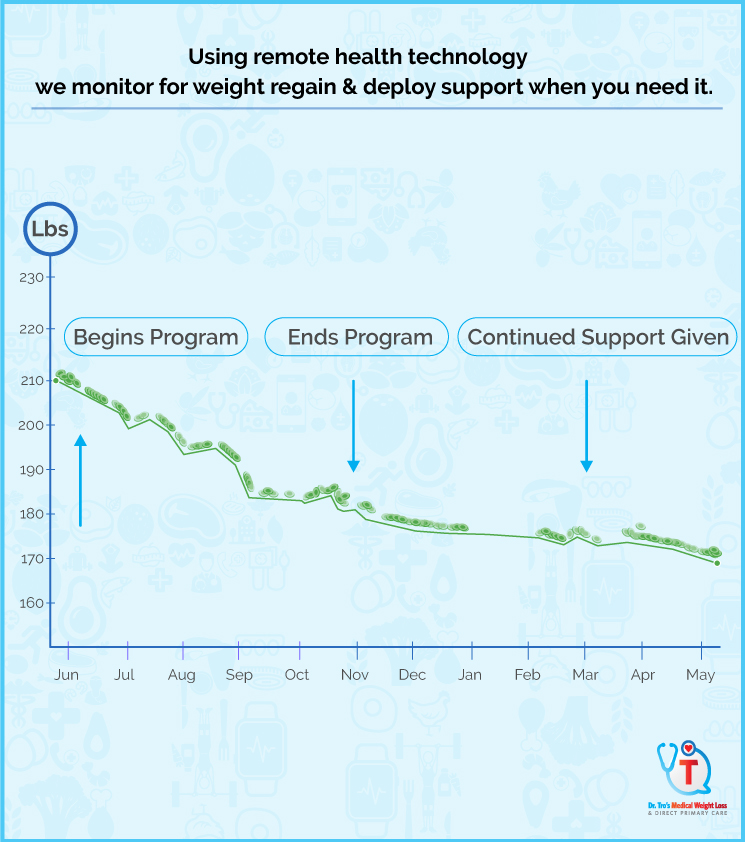
Certainly if you struggle along the way, we will reach out to see how you are doing. Above all, we ask that you stay resilient and realize that given our environment of constant food, commercials, restaurants and junk food normalization, many of us, including myself, will have to be eternally vigilant and resilient. REACH OUT FOR HELP!