
In Make It Be So, Dr. Laura Buchanan shares her journey from skepticism to faith and explains why clinical rigor and spiritual curiosity can coexist.
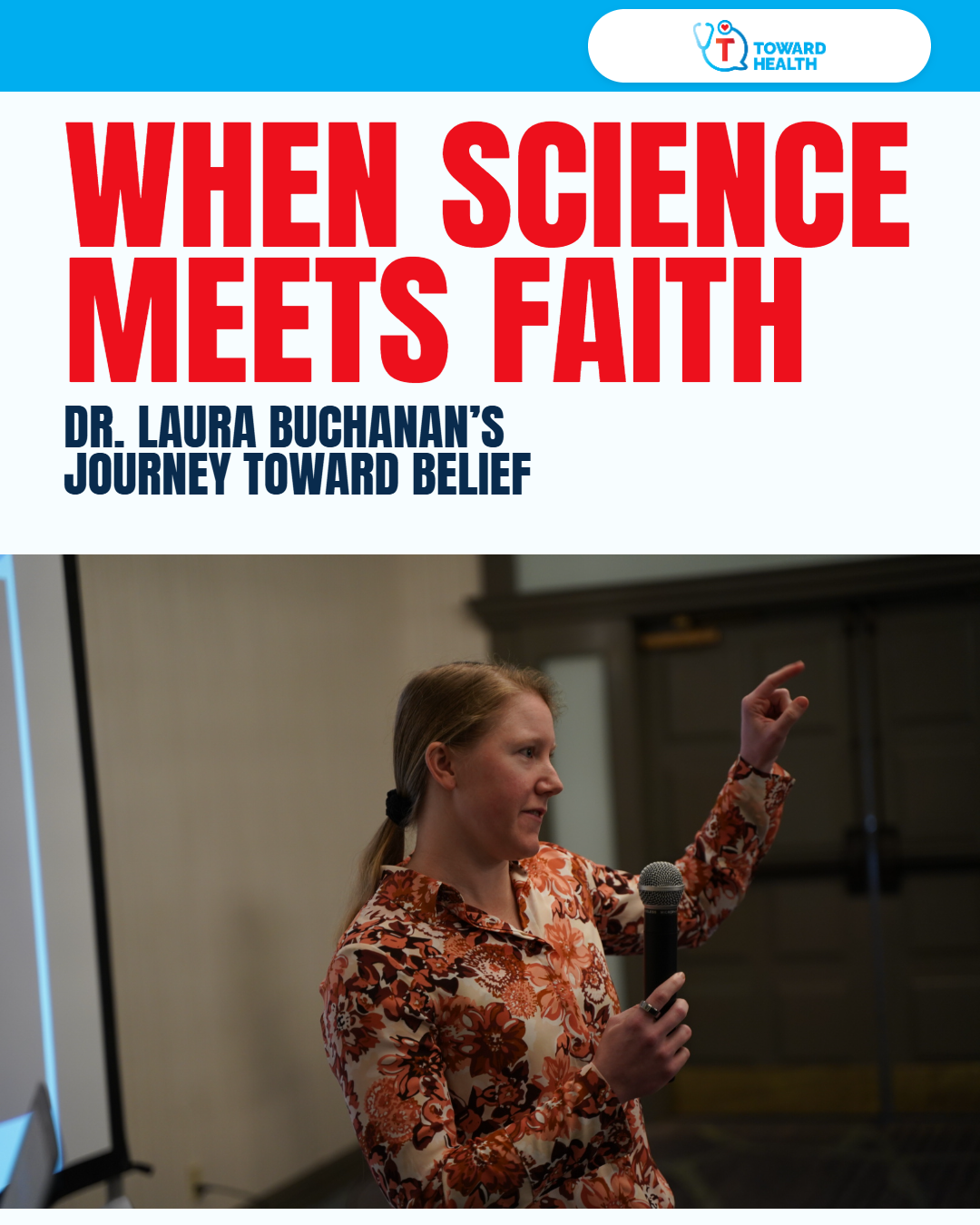
In her first book, Make It Be So: A Physician’s Journey Toward Faith, Toward Health’s Dr. Laura Buchanan explores the unexpected intersection of evidence-based medicine, spirituality, and the human experience of healing.
As a physician, Dr. Laura Buchanan has built her career around evidence. She reads and analyzes scientific studies, conducts research, and helps patients improve their health through medicine and lifestyle changes. She believes in asking questions, challenging assumptions, and following the science wherever it leads.
So when Buchanan began experiencing events she could not easily explain, she found herself confronting a different kind of question: What if there is more to understand about the world than what science can currently measure?
Her first book, Make It Be So: A Physician’s Journey Toward Faith, chronicles her deeply personal journey from skepticism toward a growing faith in God. What began as a private document to record experiences she could hardly believe were happening eventually became a book she hopes will help others explore their own questions about faith and belief.
“I had no intention of publishing anything or even of writing a book,” Buchanan explains. She initially wanted to preserve these experiences for herself and share them with her family. Over time, however, she began to see how her story might help other people, whether by opening a skeptic’s heart to faith, reinvigorating the faith of someone who already believes, or simply encouraging readers to consider possibilities they had previously dismissed.
The process of writing the book became part of the journey itself. As she documented and revisited her experiences, her faith continued to grow. Today, the book serves as a reminder of those moments and the ways they have shaped her life.
Science and Faith Don't Have to Be in Conflict
For Buchanan, embracing faith has not meant abandoning science. If anything, it has made her more curious about the relationship between what we understand and what remains unknown.
“I have come to believe that science and faith are not only compatible, but that they can be a powerful, synergistic combination,” she says.
Her commitment to evidence-based medicine remains as strong as ever. She continues to analyze research, contribute to scientific publications, and rely on evidence when making medical decisions. What has changed is her willingness to consider that the natural and spiritual worlds might coexist and sometimes intersect.
She sees this possibility in her work with patients. When someone experiences meaningful improvements in health after making lifestyle changes, for example, she can recognize the physiological mechanisms that may explain those improvements while remaining open to the possibility that prayer played a role as well. To her, these explanations do not necessarily cancel one another out.
Buchanan also recognizes the importance of hope, optimism, purpose, community, and healthy ways of coping with stress in the human experience of illness. Faith can offer many of these things, providing support during periods of uncertainty and helping people find meaning when circumstances are difficult.
She is still exploring exactly what the integration of medicine and faith will look like in her own life and practice. But she no longer sees them as competing ways of understanding the world.
The Value of Admitting What We Don't Know
Buchanan's faith journey has also deepened her appreciation for uncertainty, something she knows well as a physician.
Medicine depends on evidence, but evidence does not always provide definitive answers. Some questions are well understood, while others remain unsettled or evolve as new research emerges. Buchanan points to hormone therapy as an example of an area where medical thinking has changed over time and where important questions about individual treatment and long-term outcomes remain unanswered.
For her, recognizing these limitations does not undermine science. It reinforces the importance of continuing to ask questions.
“I don't think saying, ‘I don't fully understand this’ is unscientific,” she says. “In many ways, it is one of the most scientific positions we can take.”
Her spiritual experiences have expanded that curiosity. Rather than becoming less scientific, she has become more comfortable acknowledging that she does not have all the answers.
That humility can be difficult for physicians, who are trained to gather information, interpret evidence, and make recommendations. Buchanan admits that uncertainty has sometimes contributed to feelings of imposter syndrome when she could not give a patient a clear answer.
Faith, she says, requires a different kind of trust. It does not eliminate questions or demand certainty. Instead, it can mean choosing to remain open even when understanding is incomplete.
“I still believe,” she explains, describing what faith increasingly means to her, even when she cannot make sense of everything.
An Expanded View of Healing
At Toward Health, the goal is to look beyond individual diagnoses and consider the whole person. Buchanan already believed strongly in addressing the underlying causes of disease rather than simply treating symptoms or adding prescriptions. Her faith has added another dimension to that philosophy.
She prays for patients outside the clinic and, when appropriate, has shared moments of prayer with patients who welcome that connection. She has also sent Scripture or songs to patients when she believes they might find them meaningful.
She is still discerning how this part of her faith will evolve within her medical practice. But she sees the potential for spiritual well-being to complement the care she provides to patients who share those beliefs.
Buchanan has also observed that many patients want more than a prescription. When possible, they want to improve their health enough to reduce their reliance on medication. They want to feel better, regain function, and reclaim parts of their lives that illness has made more difficult.
Chronic disease can bring fear, anxiety, stress, and hopelessness. Purpose, community, and hope can help people navigate those challenges. Mental, physical, and spiritual well-being, she believes, are more interconnected than we sometimes acknowledge.
Some aspects of healing are difficult to capture through traditional medical measurements. Questionnaires and validated scales can help assess mental well-being, but there is no simple laboratory test or imaging study that can fully measure a person's experience of finding peace, purpose, or hope.
These experiences may be deeply meaningful even when they cannot be easily quantified.
There Is Often More Room for Improvement Than People Realize
Buchanan is particularly passionate about helping people understand that a chronic disease diagnosis does not necessarily mean an inevitable decline.
Through lifestyle changes and appropriate medical care, she has seen patients substantially improve their health, and in some cases reverse chronic disease. She recalls patients in their 60s who feel better than they did in their 30s, become more active than they were decades earlier, and regain physical strength they thought they had lost.
These outcomes are not guaranteed, and not every illness can be reversed. But Buchanan believes that many people have more potential for improvement than they have been led to expect.
For patients who feel powerless in the face of chronic illness, that possibility matters.
She sees no conflict between receiving excellent medical care, making meaningful lifestyle changes, taking medication when appropriate, and drawing strength from faith. Each can have a place in a person's journey toward better health.
Her understanding of healing has also broadened. Healing does not always mean that a disease disappears completely. It can mean regaining function, experiencing less pain, finding emotional peace, or recovering the ability to participate more fully in life.
A person with chronic ankle pain who becomes able to walk, exercise, travel, and enjoy daily activities again has experienced meaningful healing, even if some pain remains.
For Buchanan, healing exists on a spectrum. It can happen through medical treatments, the body's own capacity to recover, emotional growth, spiritual change, or experiences we do not yet know how to explain.
Faith does not diminish the extraordinary achievements of modern medicine. Instead, it has given her a broader framework for appreciating them.
Making Room for the Difficult Questions
Buchanan's journey has not provided easy answers to every question. One of the issues she continues to wrestle with most deeply is suffering.
The reality of cancer, serious illness, the loss of a child, and other devastating events can be difficult to reconcile with belief in a God who is both all-powerful and completely loving. Buchanan does not pretend that faith has resolved those questions for her.
What it has changed is how she navigates suffering.
When facing difficulties in her own life, she now leans more heavily on prayer and Scripture. She also finds comfort in her belief that life extends beyond death and that she will see loved ones again in heaven. That belief does not make grief painless, but it changes the context in which she experiences it.
In caring for patients, she has seen how faith can help people endure extraordinarily difficult circumstances. She has witnessed people draw on their beliefs for emotional and spiritual strength when their situations seemed almost impossible to navigate.
She also recognizes the importance of support and healthy boundaries for physicians. Caring deeply about patients does not mean carrying every tragedy alone. Family, colleagues, and other sources of support help physicians continue to care for people compassionately without becoming overwhelmed by the suffering they encounter.
A Message for the Skeptic
Perhaps one of the most striking aspects of Buchanan's story is how well she understands those who question faith. She was one of them.
For nearly a year, she says, she essentially prayed for evidence while remaining doubtful that anything would happen. She knows what it is like to want proof before believing and would never tell a skeptic to force themselves to accept something they do not believe.
Instead, she encourages people to stay open to the possibility that they might encounter something they cannot yet explain.
Her own journey was not defined by a single moment of transformation. It was a series of experiences that accumulated over time, gradually changing how she understood the world. One particularly important night, which she identifies as the night she was born again, came after many other events and was followed by experiences that continued to shape her faith.
Sharing those experiences publicly required vulnerability. Buchanan knew some readers might find her stories difficult to believe. She worried about how colleagues would respond and understood that people who had not experienced anything similar might struggle to understand her perspective.
But her experience in the low-carbohydrate medical community had taught her the importance of questioning assumptions, examining evidence for herself, and being willing to stand by conclusions that others might not share. Although the subjects are different, that experience helped her become more comfortable with the possibility of professional disagreement.
Writing the book also created unexpected opportunities to hear other people's stories. By sharing her own experiences, she found that others were willing to open up about theirs.
Staying Open to What Comes Next
Today, Buchanan continues to explore the relationship between science, medicine, faith, and the mysteries of human experience. She does not claim to know where the limits of science lie, particularly in a world where technological advances and artificial intelligence are rapidly expanding what we can discover.
Nor does she believe we need to draw a rigid line between science and God, declaring that one ends where the other begins. There may be more to learn about how these different ways of understanding the world relate to one another.
For Buchanan, the most important lesson from her journey is not that every question has been answered. It is that questions can remain, uncertainty can persist, and a person can still choose to be open to new possibilities.
That is also the message she hopes readers will take away from Make It Be So: A Physician’s Journey Toward Faith.
“Stay open,” she says.
You do not have to manufacture certainty or pretend to believe something you do not believe. You can begin with a question, acknowledge your doubts, and remain willing to explore.
For those who are curious but skeptical, Buchanan offers a simple invitation, one that reflects the starting point of her own journey: “God, if You're real, reveal Yourself to me.”
She did not know what would happen when she first asked. She was not expecting the answer she ultimately received. But she was willing to ask the question.
And that willingness to remain open, even in the face of uncertainty, may be where a new journey begins.
To learn more about Laura’s story, Make It Be So: A Physician’s Journey Toward Faith is available on Amazon in print and Kindle formats, is included with Kindle Unlimited, and is also available as an audiobook narrated by Laura herself.
This is not an affiliate link. Dr. Laura is the author of the book and may receive standard author royalties from purchases.