
One difficult meal or missed workout does not erase your progress. When all-or-nothing thinking takes over, a smaller next step can help you return to your routine.
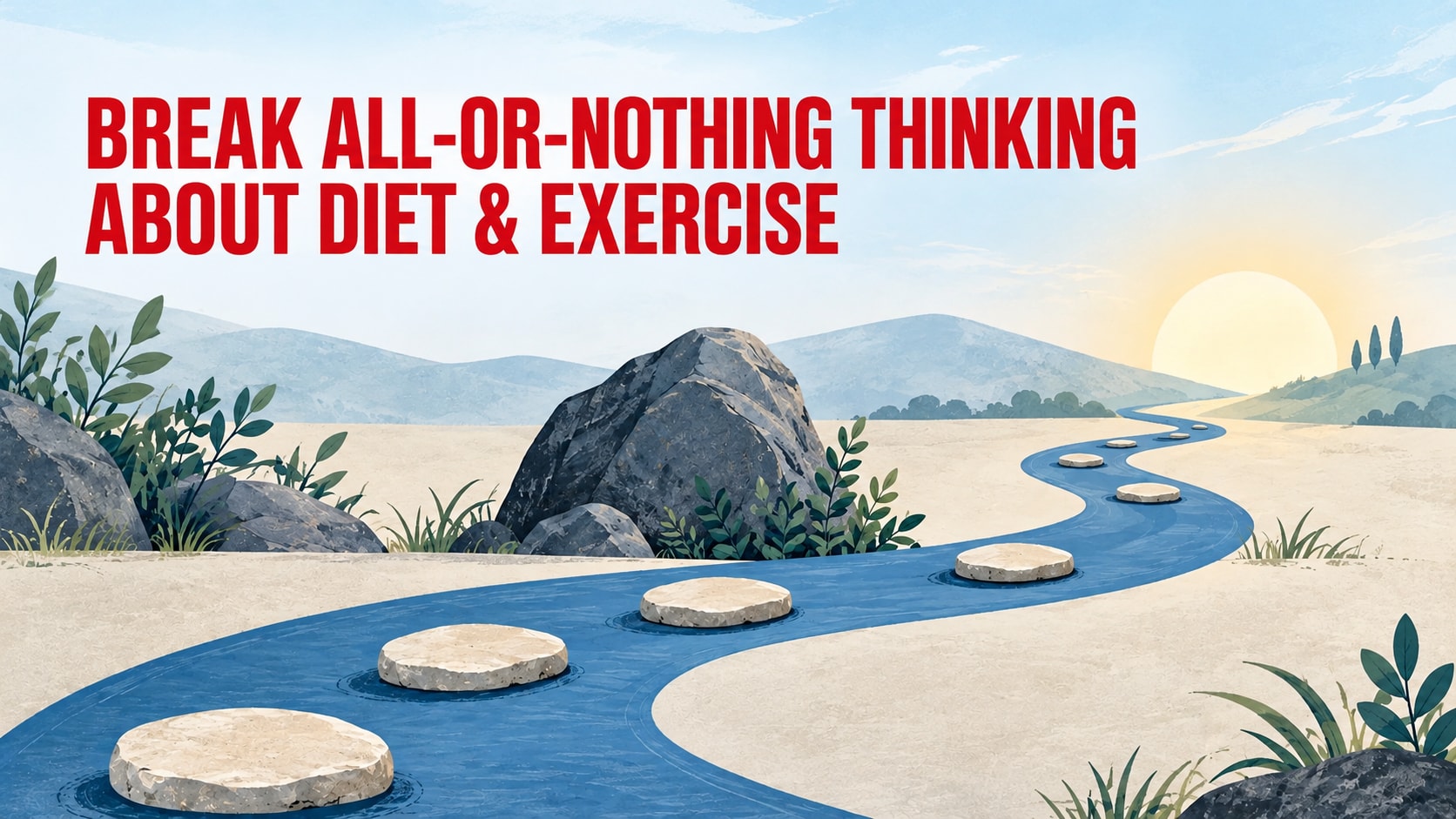
What all-or-nothing thinking can look like
A familiar pattern is eating more than intended or having a “cheat” meal, deciding you have already “blown it,” and then going much further off your low-carb plan.
Dr. Tro compared that reaction to getting one flat tire, pulling over, and stabbing holes in the other three. One difficult meal or missed workout does not require turning a setback into a larger derailment.
For more on recovering after a difficult day, read How to Recover When You’ve Been Off Plan.
Adjusting expectations during stress and recovery
Dr. Tro spoke with a member who was struggling to lose weight after surgery. He described having a similar experience after his own surgery and said post-surgery inflammation creates insulin resistance and increases the drive to eat. He framed that response as part of the body’s natural healing process rather than a personal failure.
Restricting certain low-carb foods may feel more difficult during stress and healing. Do the best you can in that period, then return to basic routines and reduce reliance on convenience foods as recovery progresses.
Make difficult foods easier to manage
Amy and Brian said nuts can be difficult for many low-carb eaters to moderate, and they described their own experiences with overeating them.
Amy’s approach was to divide nuts into single-serving bags and keep them in the back of the freezer, out of sight. Brian described asking Amy for accountability when his own habit felt out of control. Support can help, while not keeping a difficult-to-moderate food nearby may sometimes be the simplest strategy.
Start exercise again with a smaller commitment
All-or-nothing thinking can affect exercise, too. You may decide that if you cannot complete the full workout, there is no point in doing any of it. That reaction can be especially discouraging after a long break, when current ability does not match where you left off.
Be kind to yourself, meet yourself where you are, start slowly, and choose an attainable goal, such as committing to five minutes of exercise. A smaller start can help develop the habit, with intensity and duration following after the habit forms.
A few minutes of movement can relieve stress and provide personal time. Even a five-minute walk during a work break may shift your mood and focus.
A practical response to the next setback
- Treat one difficult choice as one moment, not a verdict on the whole effort.
- Be kind to yourself and adjust expectations during stress or recovery.
- Use portions, placement, or accountability for foods you personally find difficult to moderate.
- Restart exercise with a small commitment you can complete today.
For another way to look at progress without treating one result as the whole story, read Non-Scale Victories: How to Measure Weight Loss Progress.
For support building routines that can adapt to real life, explore Toward Health Coaching.