
Reviewed by Amy Eiges, Certified Health Coach
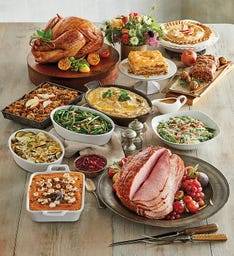
Holiday meals can bring together the people you love, favorite family foods, travel and a break from your usual routine. If you are working on weight loss or following a low-carb lifestyle, a little preparation can make those occasions easier to navigate.
The same approach works for birthdays, vacations, anniversaries and unexpected social plans. Think ahead about the situations that tend to be difficult, arrange food and support that work for you, and give yourself a way to recover when plans change.
At Toward Health, we use six overlapping defenses: awareness, preparation, self-advocacy, community and support, impulse control, and tenacity. The Swiss Cheese Model illustrates the idea: each layer has gaps, but several layers together can provide more support.
On this page
1. Awareness: recognize the situations that challenge you
Start with your own experience. Is it the bowl of Halloween candy that stays on the counter for weeks? A favorite family dessert? Arriving at a gathering hungry? A stressful conversation followed by an afternoon of grazing?
Travel, boredom, unfamiliar food options and time away from your routine can add to the challenge. Family gatherings can also bring a mixture of comfort, stress and pressure to eat.
Before the next event, identify one or two situations you want to prepare for. Being specific gives you something you can act on: “I need lunch before the drive” or “I want a response ready when someone offers me dessert again.”
2. Preparation: make sure you have options
When you know where you are going, ask what food will be available and offer to bring something. You might say, “What is everyone bringing?” or “Can I bring a dish to share?”
Build a plan around foods that fit the way you eat. Holiday meals often include turkey, beef, ham, eggs, cheese and vegetables. Check preparations and sauces when those details matter to your plan.
- Bring a dish you enjoy. A familiar main dish, side or tested dessert gives you an option you chose ahead of time.
- Eat before you go if that works better. This can be useful when you expect few suitable choices or a long wait before the meal.
- Pack a low-carb backup. Keep an option available for travel or a change in plans, using appropriate storage for the food you choose.
- Offer to host or suggest the meeting place. Either can give you more influence over the menu.
- Decide about alcohol in advance. If drinking makes it harder for you to follow your eating plan, choose a nonalcoholic option.
Plan for the next day and leftovers, too.
If a social situation is expected to be stressful, have food ready for the following day.
If foods you find difficult to limit remain in the house after an event, consider giving them away or removing them.
A low-carb dessert can be a useful replacement for some people. Choose one that works with your own experience of hunger and cravings; the label alone does not make every product a good fit.
Include sleep in your holiday and travel plans, especially when late nights disrupt your routine. In a randomized trial of 80 adults with overweight who habitually slept less than 6.5 hours a night, extending sleep reduced objectively assessed energy intake over two weeks, without a prescribed diet change. Tasali and colleagues, 2022.
Cooking and make-ahead planning
Kellie Logsdon of The Kellie Kitchen recommends choosing recipes in advance, making and freezing dishes when practical, keeping simple staples ready, and bringing a tested dish that fits your plan.
When baking, follow the recipe’s guidance for sweeteners and flours. Substitutions do not always work one-for-one. Keep foods made with xylitol away from dogs because it is dangerous to them.
Planning is also a reasonable focus for this guide’s evidence. In a follow-up study of successful weight-loss maintainers, people commonly followed through on their planned strategies. Those who reported using a wider range of strategies tended to gain less weight during the holidays. Olson and colleagues, 2021.
Make the plan specific: identify an obstacle and decide what you will do when it appears. In a 2025 randomized trial, practicing obstacle-focused “if–then” planning alongside usual weight-loss care reduced reported snacking over the following week. For your own gathering, that might mean: “If dinner is delayed, I will use the food I packed.” González-González and colleagues, 2025.
3. Self-advocacy: decide what you want to say
Letting people know about your food choices before a gathering can help. Some will offer support or prepare something for you. Others may continue offering food, even after you decline.
You can be warm and clear without giving a long explanation:
- “Thank you. I’m happy with what I have.”
- “I’ve changed the way I eat, and this is working for me.”
- “I don’t feel well when I eat that.”
- “My doctor recommended this approach.” Use this only when it reflects your situation.
If the offer continues, repeat your answer and change the subject. Your reasons are yours to share. Remember what you want from the day and what matters to you beyond that meal.
For more examples, read How to Handle Food Pressure, Set Boundaries, and Find Support.
4. Community and support: arrange a check-in
A friend, family member, coworker, health coach or member of your healthcare team can be part of your support network. Before a difficult occasion, ask someone whether they would be available for a text or a short call.
You may also find someone at the gathering who understands your goals. They do not need to follow the same diet to be supportive.
Make the request concrete: “I’m worried about the food pressure at dinner. Could I text you if I need a little encouragement?” Agreeing on a check-in ahead of time avoids having to arrange support when you are already struggling.
Give yourself permission to take a break from the table, step into another room, or leave when you need to. An exit plan can be useful even if you never use it.
5. Impulse control: use the plan when cravings rise
Impulse control works alongside preparation and support. If you are hungry, choose a satisfying meal from the foods that fit your plan. If the pull to keep eating comes from the setting, a particular food or a stressful interaction, use the other defenses too: move away from the serving area, contact your support person, or take a break.
There is research behind the interest in low-carb eating and appetite. In a small controlled study of 17 men, a high-protein ketogenic diet led to lower reported hunger and food intake than a high-protein, moderate-carbohydrate diet. Johnstone and colleagues, 2008.
Cravings can change as eating patterns change. A secondary analysis of 270 participants in a two-year randomized diet trial found larger reductions in carbohydrate and starch cravings among those assigned to low-carb eating than those assigned to low-fat eating. Martin and colleagues, 2011.
Give yourself time to notice how you feel. A low-carb label does not make unlimited eating a useful goal, and it does not guarantee that blood glucose, ketones, digestion or body weight will stay unchanged. Aim for a meal that meets your needs and a next step that supports the routine you want to keep.
This matters beyond one holiday. Halloween, Thanksgiving and winter celebrations can run together, just as a birthday or vacation can stretch into several days of changed routines. If one occasion does not go as planned, you can return to your usual approach at the next meal.
6. Tenacity: recover and learn
One difficult meal does not erase the work you have already done. Be as constructive with yourself as you would be with someone you care about.
A study of adults in a weight-loss program found that greater self-compassion after an eating lapse was associated with less negative emotion and a stronger sense of control afterward. It did not predict fewer additional lapses that same day. The useful message here is to respond to a setback with curiosity and a workable next step. Hagerman and colleagues, 2023.
Review the situation when you are ready:
- Where was I, and what was happening?
- Was I hungry, stressed, bored or feeling pressured?
- Which food or situation was especially difficult?
- What would have helped: a meal beforehand, a replacement, a different setting, a boundary or a supportive text?
Choose one adjustment for next time. You do not have to solve every challenge at once. Return to your routine at the next practical opportunity and use what you learned to strengthen your plan.
Put the six defenses into practice
Use the worksheet to prepare for your next gathering. Start with the area where a little extra support would help most.

| Defense | Your plan for the next event |
|---|---|
| Awareness | Name the situation you expect to find difficult. |
| Preparation | Decide what you will eat, bring or have available. |
| Self-advocacy | Choose one sentence you can use comfortably. |
| Community and support | Arrange a check-in with someone you trust. |
| Impulse control | Decide what you will do if cravings or pressure increase. |
| Tenacity | Plan to review what happened and return to your routine. |
References
- Olson KL and colleagues. Holiday weight-management strategies among National Weight Control Registry participants. Obesity Science & Practice. 2021. Primary study. DOI: 10.1002/osp4.470.
- Hagerman CJ and colleagues. Self-compassion and responses to dietary lapses. Appetite. 2023;190:107009. Primary study. DOI: 10.1016/j.appet.2023.107009.
- Kaviani S, vanDellen M, Cooper JA. Daily Self-Weighing to Prevent Holiday-Associated Weight Gain in Adults. Obesity. 2019;27:908–916. Study; PubMed record. This trial studied daily weighing with graphical feedback; it did not test a ketogenic diet or the six-defense framework.
- Durrer C and colleagues. Exploratory study of short-term low-carbohydrate/high-fat feeding and a glucose challenge in healthy young men. Nutrients. 2019;11:489. Study; PubMed record. This small study measured vascular responses and laboratory markers. It did not measure long-term holiday outcomes or establish protection from unrestricted low-carb eating.
- Johnstone AM and colleagues. High-protein ketogenic feeding, hunger and food intake in men with obesity. American Journal of Clinical Nutrition. 2008;87:44–55. Primary study. DOI: 10.1093/ajcn/87.1.44.
- González-González R and colleagues. Online Mental Contrasting with Implementation Intentions for changing snacking behavior and reducing body mass index in people with excess weight: a randomized controlled trial. Appetite. 2025;214:108209. Primary study. DOI: 10.1016/j.appet.2025.108209.
- Martin CK and colleagues. Change in Food Cravings, Food Preferences, and Appetite During a Low-Carbohydrate and Low-Fat Diet. Obesity. 2011;19:1963–1970. Primary study. DOI: 10.1038/oby.2011.62.
- Tasali E and colleagues. Effect of Sleep Extension on Objectively Assessed Energy Intake Among Adults With Overweight in Real-life Settings: A Randomized Clinical Trial. JAMA Internal Medicine. 2022;182:365–374. Primary study. DOI: 10.1001/jamainternmed.2021.8098.