
Fatigue. Brain fog. Loss of strength. Weight gain. Reduced motivation, libido or sexual function. Too many men are told that these changes are simply the unavoidable cost of getting older.
Age can affect testosterone, but symptoms should not be dismissed. Low testosterone can reflect a problem in the testes, pituitary or hypothalamus. It can also be a sign that obesity, insulin resistance, type 2 diabetes, sleep disruption, nutritional inadequacy, medications or another chronic condition is suppressing an otherwise functional hormonal system.
That distinction changes the treatment plan.
At Toward Health, we do not begin with the assumption that every low result requires lifelong testosterone replacement. We look for the reason the level is low and address the metabolic foundation first. For many men, improving nutrition, insulin sensitivity, visceral fat, sleep, strength and nutrient status can substantially improve testosterone and symptoms. When those measures are not enough, testosterone replacement therapy (TRT), clomiphene or another carefully chosen treatment can produce profound improvements in physical, mental and sexual health.
The goal is not to avoid treatment. The goal is to treat the whole person instead of chasing one laboratory number.
What testosterone does
Testosterone is an anabolic steroid hormone involved in sexual function, sperm production, muscle and bone maintenance, red-blood-cell production, body-fat distribution, energy and well-being. In men, most testosterone is produced by Leydig cells in the testes.
Cholesterol is the starting material for steroid-hormone synthesis. Inside the Leydig cells, cholesterol enters the mitochondria and moves through a series of enzymatic steps that ultimately produce testosterone. Production is directed by the hypothalamic-pituitary-gonadal axis: the hypothalamus signals the pituitary, the pituitary releases luteinizing hormone (LH), and LH tells the testes to make testosterone.
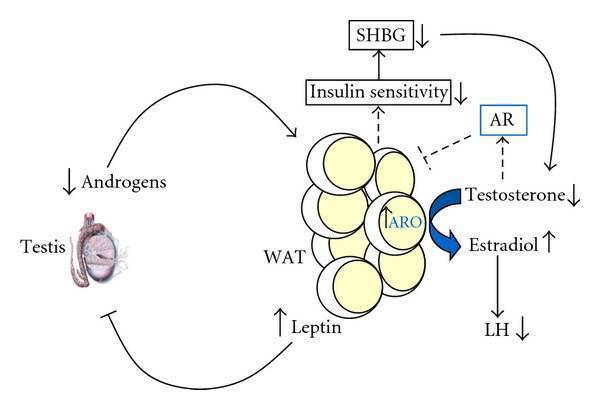
The testosterone measured in blood exists in several forms. Much of it is bound to sex hormone-binding globulin (SHBG) or albumin. A smaller portion is unbound, or free. Insulin resistance and obesity can lower SHBG, which can lower total testosterone and make the relationship between total and free testosterone more complicated. Adipose tissue also contains aromatase, an enzyme that converts testosterone to estradiol. Increased aromatase activity is one part of obesity-related hormonal suppression, but it is not the whole mechanism.
This is why a testosterone result should never be interpreted without the metabolic, hormonal and clinical context.
View the Leydig-cell micrograph

Low testosterone is closely connected to metabolic health
The association between metabolic dysfunction and low testosterone is strong. The original Toward Health article cited a meta-analysis finding that men with metabolic syndrome had lower testosterone and that type 2 diabetes intensified the difference. After adjustment for age and BMI, both metabolic syndrome and type 2 diabetes independently predicted lower testosterone.[1]
The relationship can run in both directions. Low testosterone may contribute to lower muscle mass, increased fat mass and worsening insulin resistance. At the same time, hyperinsulinemia, visceral adiposity, inflammation, sleep apnea and chronic illness can suppress the hormonal signaling needed for normal testosterone production.
In many men with obesity, this is functional hypogonadism: the testes and brain may retain the capacity to produce more testosterone once the metabolic suppression is removed. This is not a reason to ignore symptoms or withhold effective therapy. It is a reason to identify a potentially reversible cause.
Diagnose the person, not just the number
Low testosterone should be diagnosed using symptoms and properly collected laboratory results together. The Endocrine Society recommends compatible symptoms or signs plus unequivocally and consistently low testosterone, confirmed with a repeated morning fasting measurement. The American Urological Association uses total testosterone below 300 ng/dL as a reasonable diagnostic cutoff, again in combination with symptoms and at least two early-morning tests.[2–4]
Laboratory reference ranges are not the same thing as optimal health. A symptomatic 30- or 40-year-old man with repeated morning testosterone around 275 ng/dL should not be dismissed because one laboratory calls the result “normal.” It falls below the AUA’s commonly used 300 ng/dL threshold and warrants a serious evaluation.
A complete evaluation may include:
- Two early-morning fasting total-testosterone measurements on separate days
- Free testosterone when total testosterone is borderline or SHBG may be altered
- SHBG and albumin so free testosterone can be interpreted accurately
- LH and follicle-stimulating hormone (FSH) to distinguish testicular from pituitary-hypothalamic causes
- Prolactin, thyroid testing and other targeted endocrine studies when indicated
- A review of medications, especially opioids, glucocorticoids and other drugs that can suppress the hormonal axis
- Assessment for obesity, insulin resistance, type 2 diabetes, sleep apnea, systemic illness, excessive energy restriction or overtraining
- Evaluation of fertility goals before choosing treatment
At Toward Health, the metabolic evaluation may also include glucose, A1C, fasting insulin, LP-IR, lipids, estradiol, vitamin D, B12, folate and other tests selected for the individual. Not every patient needs every test. The purpose is to identify what is driving the problem rather than treating an isolated result.
Build testosterone from the ground up
The most important non-pharmacologic strategy is not a marketed “testosterone booster.” It is creating a metabolic environment in which the body can produce and regulate hormones properly.
1. Reduce visceral fat and improve insulin sensitivity
Weight loss is one of the most consistent ways to raise testosterone in men with obesity-related hypogonadism. A meta-analysis of 24 studies found that both dietary weight loss and bariatric surgery increased total testosterone, with larger increases among men who lost more weight.[13] A later analysis of 44 studies and 1,774 participants found that weight loss increased both total and free testosterone. The increase was greatest in men with higher starting BMI or lower starting testosterone and SHBG.[14]
This is not merely a cosmetic effect. Reducing visceral fat can improve insulin signaling, decrease aromatase burden, raise SHBG and restore signaling through the hypothalamic-pituitary-gonadal axis.
The newest lifestyle evidence is especially encouraging. In a 2026 secondary analysis of the randomized INTERAPNEA trial, 89 men with overweight or obesity and moderate-to-severe sleep apnea received usual care or an eight-week interdisciplinary weight-loss and lifestyle intervention in addition to usual care. Compared with the control group, testosterone was 77.6 ng/dL higher at eight weeks and 90.4 ng/dL higher at six months. Sexual-activity scores also improved, and the hormonal changes tracked with favorable changes in sleep, weight and body composition.[15]
2. Use low-carbohydrate nutrition to change the metabolic environment
Low-carbohydrate nutrition can do more than lower the number on the scale. It can reduce glucose and insulin exposure, improve triglycerides and other features of metabolic syndrome, decrease visceral fat and make hunger easier to manage. Those changes can remove several signals that suppress testosterone.
The older Toward article correctly recognized that a well-formulated low-carbohydrate diet does not carry the same hormonal signal seen with very-low-fat diets. The details matter. A 2022 systematic review of 27 controlled interventions found no consistent change in resting total testosterone with moderate-protein low-carbohydrate diets. Testosterone fell in the subgroup consuming extremely high-protein low-carbohydrate diets, defined as at least 35% of energy from protein.[9] That is not an argument against prioritizing protein. It is a reason not to confuse a well-formulated low-carbohydrate diet with an ultra-high-protein, very-low-fat crash diet.
A separate ketogenic-diet meta-analysis found a significant average increase in total testosterone of 2.86 nmol/L among 111 participants with testosterone data. The increase was larger in very-low-calorie ketogenic interventions and was strongly associated with the amount of weight lost.[11]
In 22 men with obesity, a very-low-calorie ketogenic intervention increased total testosterone by an average of 35 ng/dL after seven days and 74 ng/dL after 28 days, alongside rapid improvements in weight, fat mass, glucose, insulin and HOMA-IR. The testosterone increase was greater among the men who began with hypogonadism.[10]
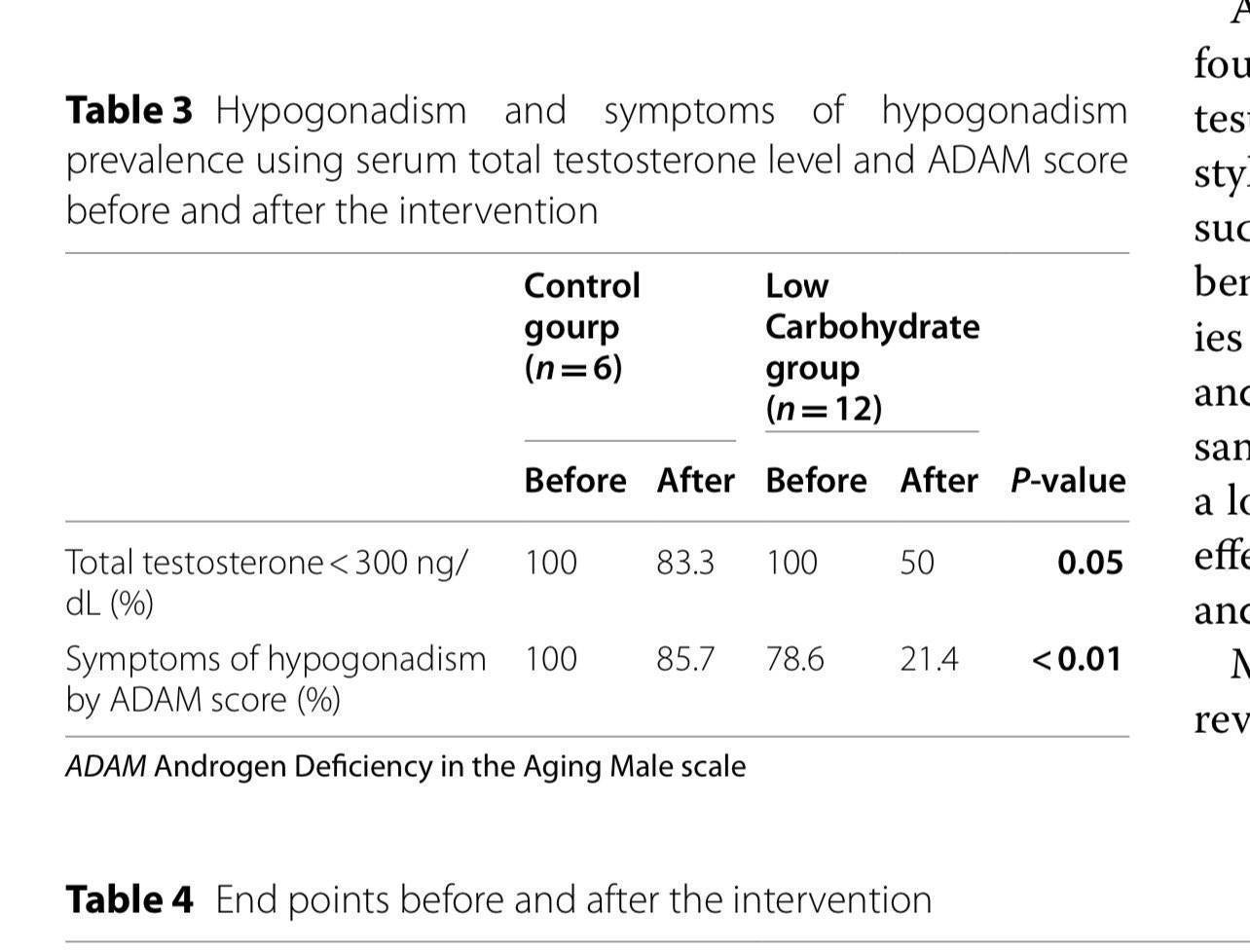
The original article also cited an open-label randomized trial in men with metabolic syndrome and hypogonadism. After three months, total testosterone in the low-carbohydrate group increased from 229.1 to 310.7 ng/dL and free testosterone increased from 4.7 to 6.7 ng/dL. Weight, waist circumference, body composition, blood pressure, Aging Male Symptoms scores and erectile-function scores also improved.[12] The total-testosterone increase was statistically significant within the low-carbohydrate group; the between-group comparison of the testosterone change was p=0.08. That is the accurate statistical reading, while the coordinated improvement across hormones, symptoms and metabolic health remains clinically important.
At Toward Health, the practical approach is built around protein-centered meals, minimally processed food, adequate dietary fat and a carbohydrate target matched to the patient’s insulin resistance, hunger, goals and response. The diet should preserve lean mass and nutrient density. It should not be an underfed, low-fat plan built almost entirely from protein powder.
3. Do not assume that lower fat is always hormonally neutral
Testosterone is synthesized from cholesterol, and controlled dietary studies show that very-low-fat eating patterns can change androgen production.
- A meta-analysis of six intervention studies involving 206 men found lower total testosterone, free testosterone, urinary testosterone and dihydrotestosterone during lower-fat diets compared with higher-fat diets.[5]
- In 39 healthy men, changing from a habitual higher-fat, lower-fiber diet to an isocaloric low-fat, high-fiber diet reduced circulating androgens by approximately 12%.[7]
- In a controlled crossover feeding study of 43 men, plasma total testosterone was 13% higher and SHBG-bound testosterone was 15% higher during a diet providing 41% of energy from fat than during a diet providing 18.8%. Urinary testosterone was also 13% higher.[8]
- In a short dietary intervention involving eight male endurance athletes, lowering saturated fat was associated with reductions in androstenedione, total testosterone and free testosterone.[6]
These studies do not establish one required fat percentage for every man. They do challenge the assumption that aggressively cutting dietary fat is automatically helpful when restoring testosterone is a goal.
4. Protect sleep and look for sleep apnea
Much of a man’s daily testosterone release occurs during sleep. In a laboratory study of ten healthy young men, restricting sleep to approximately five hours per night for one week reduced daytime testosterone by 10% to 15% and lowered vigor scores.[16]
Sleep apnea is common in men with obesity and is associated with lower testosterone, particularly when severe. Improving sleep, treating apnea and reducing the metabolic burden that drives it belong in the same plan. The 2026 INTERAPNEA analysis is especially useful because it showed that a structured lifestyle intervention added to usual sleep-apnea care raised testosterone and improved sexual-activity scores.[15]
5. Train for strength, muscle and metabolic function
Resistance training is important even when a study does not show a large rise in resting testosterone. It builds or preserves metabolically active muscle, improves glucose disposal, supports insulin sensitivity, protects bone and helps preserve lean mass during weight loss. Aerobic activity and regular walking add further benefits for cardiovascular fitness, sleep, weight regulation and insulin sensitivity.
The goal is not to chase a brief post-workout hormone spike. It is to create a stronger, leaner and more insulin-sensitive body that supports normal endocrine function.
6. Correct nutrient deficiencies before buying “boosters”
Zinc, magnesium, vitamin D and other nutrients participate in hormone production, signaling and general metabolic health. When intake or blood status is inadequate, correcting the deficiency can matter.
In a controlled feeding study, eleven young men consumed different levels of zinc. Intake of only 1.4 mg per day reduced serum testosterone from 26.9 to 21.9 nmol/L compared with the 10.4 mg-per-day phase.[17] A later systematic review concluded that zinc deficiency lowers testosterone and that supplementation can improve testosterone, with the response depending on baseline zinc and testosterone status, dose and duration.[18]
A controlled study of magnesium supplementation and exercise reported higher free and total testosterone after four weeks, with the largest response among men who also exercised.[19]
Vitamin D deserves the same deficiency-first approach. In a year-long randomized trial of overweight men with low vitamin D, 3,332 IU daily increased total testosterone from 10.7 to 13.4 nmol/L, while the placebo group did not change.[24] A later randomized trial in otherwise healthy men did not reproduce a testosterone benefit.[25] Correcting vitamin D deficiency is appropriate for health; vitamin D should not be sold as a guaranteed testosterone drug.
What about ZMA?
ZMA combines zinc, magnesium and vitamin B6. In a small randomized double-blind study of collegiate football players, 12 men received ZMA and 15 received placebo during seven weeks of training. Free testosterone increased from 132.1 to 176.3 pg/mL in the ZMA group while declining from 141.0 to 126.6 pg/mL with placebo.[20]
A later double-blind trial in 42 resistance-trained men found no significant effect on free or total testosterone, body composition or training outcomes.[21] The two findings fit a reasonable clinical hypothesis: ZMA may be most useful when training, diet or other factors have left zinc or magnesium status inadequate, but it is not a universal testosterone enhancer in nutrient-replete men.
What about boron?
Boron may influence SHBG, free testosterone, estradiol and inflammatory signaling. In an experiment involving eight healthy men, 10 mg of boron daily for one week increased mean free testosterone and reduced mean estradiol and SHBG.[22] In a separate randomized study of 19 male bodybuilders, 2.5 mg daily for seven weeks did not change total or free testosterone, lean mass or strength compared with placebo.[23]
The human signal is interesting, but it is not yet a treatment protocol. Boron can be described as a possible adjunct with preliminary human support. The doses used in these experiments are study details, not a recommendation for unsupervised supplementation.
Micronutrients should support the foundation, not distract from it. No capsule compensates for untreated insulin resistance, visceral obesity, chronic sleep loss, nutrient-poor food or inactivity.
When metabolic treatment is not enough
Some men have primary testicular failure, pituitary or hypothalamic disease, genetic conditions, previous testicular injury, treatment-related damage or persistent symptomatic hypogonadism despite meaningful lifestyle improvement. These men may need hormonal treatment. Others may choose treatment while simultaneously working on the metabolic drivers.
Effective therapy should not be withheld from a properly diagnosed, symptomatic patient.
Testosterone replacement therapy
TRT can substantially improve sexual desire, sexual activity, hypogonadal symptoms, anemia, body composition and quality of life in appropriately selected men. In the TRAVERSE sexual-function substudy, two years of testosterone improved sexual activity, libido and hypogonadal symptoms compared with placebo. It did not significantly improve erectile function, which is important because erectile dysfunction can have vascular, neurologic, medication-related and psychological causes beyond testosterone.[27]
The cardiovascular evidence has also changed. TRAVERSE randomized 5,246 symptomatic men with two fasting testosterone levels below 300 ng/dL and preexisting or elevated cardiovascular risk. Major cardiovascular events occurred in 7.0% of the testosterone group and 7.3% of the placebo group, meeting the trial’s prespecified standard for cardiovascular noninferiority.[26]
In 2025, the FDA removed boxed-warning language about increased adverse cardiovascular outcomes from testosterone-product labels after reviewing TRAVERSE. The agency also required product-specific information about blood-pressure increases. In June 2026, HHS announced that the FDA was requesting further labeling updates concerning age-related hypogonadism, prostate-cancer risk and benign prostatic hyperplasia.[31,32]
TRT can improve bone density, but it should not be described as proven fracture protection. In the TRAVERSE fracture substudy, clinical fractures occurred in 3.50% of men receiving testosterone and 2.46% receiving placebo.[28]
Treatment choice and monitoring remain individualized. Relevant considerations can include fertility, symptoms, testosterone response, hematocrit, blood pressure, sleep apnea, prostate history, thromboembolic history and the advantages or disadvantages of injections, gels or other formulations.
Clomiphene and fertility-preserving treatment
Exogenous testosterone can suppress LH and FSH and reduce sperm production. A man who wants current or future fertility should discuss that issue before starting TRT.
Clomiphene is a selective estrogen-receptor modulator used off-label in men with functional secondary hypogonadism. Rather than replacing testosterone directly, it can increase pituitary LH and FSH and stimulate endogenous testosterone production. A 2025 meta-analysis of randomized trials found that clomiphene or enclomiphene increased total testosterone by an average of approximately 274 ng/dL compared with placebo. Total testosterone did not differ significantly from testosterone gel, while LH and FSH were higher with the selective estrogen-receptor modulators.[29]
Clomiphene is not the right treatment for every cause of hypogonadism, particularly when the testes cannot respond to increased gonadotropin signaling. For an appropriate man who wants to preserve fertility, however, it can be a powerful alternative to conventional TRT. The AUA/ASRM male-infertility guideline allows selective estrogen-receptor modulators, hCG, aromatase inhibitors or combinations in selected infertile men with low testosterone and advises against testosterone monotherapy when fertility is desired.[30]
The Toward Health approach
Modern hormone care should not force patients into a false choice between lifestyle and medication.
We begin by asking why testosterone is low. We evaluate symptoms, repeat the laboratory testing correctly and examine the entire hormonal and metabolic system. We treat obesity, insulin resistance, type 2 diabetes, sleep, nutrition and strength as active parts of endocrine care. We use medication when it is appropriate rather than treating it as either an automatic first step or a failure.
In Toward Health’s clinical experience, testosterone can change dramatically when the metabolic environment changes. The original articles describe men whose total testosterone increased from approximately 200 to 600 ng/dL within months through nutrition and lifestyle without pharmacologic treatment. That result should be retained as Toward clinical experience once the underlying anonymized case and timeframe are confirmed for public use.
For some men, reversing metabolic suppression may eliminate the need for testosterone treatment. For others, metabolic care and TRT or clomiphene work best together. Either outcome can represent successful treatment because the goal is better health, better function and a better life.
Low testosterone should not be dismissed. It should be understood.
What can support healthier testosterone?
- Loss of visceral fat and improved insulin sensitivity
- A well-formulated low-carbohydrate or ketogenic diet when appropriate
- Adequate dietary fat and protein without extreme underfeeding
- Resistance training, aerobic activity and preservation of muscle
- Sufficient sleep and evaluation for sleep apnea
- Correction of zinc, magnesium, vitamin D or other nutrient deficiencies
- Targeted adjuncts such as ZMA or boron for selected patients
- TRT, clomiphene or other medical treatment when clinically indicated
Talk with our team
Do not let one laboratory range end the conversation. Toward Health evaluates the symptoms, metabolic drivers, fertility goals and treatment options together.
Talk with the Toward Health hormone-care team
References
- Corona G, Monami M, Rastrelli G, et al. Testosterone and metabolic syndrome: a meta-analysis study. J Sex Med. 2011;8(1):272–283. doi:10.1111/j.1743-6109.2010.01991.x. PubMed
- Bhasin S, Brito JP, Cunningham GR, et al. Testosterone therapy in men with hypogonadism: an Endocrine Society clinical practice guideline. J Clin Endocrinol Metab. 2018;103(5):1715–1744. doi:10.1210/jc.2018-00229. Guideline
- Endocrine Society. Statement on Testosterone Replacement Therapy. Published August 2026. Official statement
- American Urological Association. Evaluation and Management of Testosterone Deficiency: AUA Guideline. Official guideline PDF
- Whittaker J, Wu K. Low-fat diets and testosterone in men: systematic review and meta-analysis of intervention studies. J Steroid Biochem Mol Biol. 2021;210:105878. doi:10.1016/j.jsbmb.2021.105878. PubMed
- Raben A, Kiens B, Richter EA, et al. Serum sex hormones and endurance performance after a lacto-ovo vegetarian and a mixed diet. Med Sci Sports Exerc. 1992;24(11):1290–1297. PubMed
- Wang C, Catlin DH, Starcevic B, et al. Low-fat high-fiber diet decreased serum and urine androgens in men. J Clin Endocrinol Metab. 2005;90(6):3550–3559. doi:10.1210/jc.2004-1530. PubMed
- Dorgan JF, Judd JT, Longcope C, et al. Effects of dietary fat and fiber on plasma and urine androgens and estrogens in men: a controlled feeding study. Am J Clin Nutr. 1996;64(6):850–855. doi:10.1093/ajcn/64.6.850. PubMed
- Whittaker J, Harris M. Low-carbohydrate diets and men’s cortisol and testosterone: systematic review and meta-analysis. Nutr Health. 2022;28(4):543–554. doi:10.1177/02601060221083079. Study summary
- Cignarelli A, Santi D, Genchi VA, et al. Very low-calorie ketogenic diet rapidly augments testosterone levels in non-diabetic obese subjects. Andrology. 2023;11(2):234–244. doi:10.1111/andr.13357. PubMed
- Furini C, Spaggiari G, Simoni M, Greco C, Santi D. Ketogenic state improves testosterone serum levels: results from a systematic review and meta-analysis. Endocrine. 2023;79(2):273–282. doi:10.1007/s12020-022-03195-5. PubMed
- Schmitt CDS, da Costa CM, Souto JCS, et al. The effects of a low carbohydrate diet on erectile function and serum testosterone levels in hypogonadal men with metabolic syndrome: a randomized clinical trial. BMC Endocr Disord. 2023;23:30. doi:10.1186/s12902-023-01278-6. Original full text
- Corona G, Rastrelli G, Monami M, et al. Body weight loss reverts obesity-associated hypogonadotropic hypogonadism: a systematic review and meta-analysis. Eur J Endocrinol. 2013;168(6):829–843. doi:10.1530/EJE-12-0955. PubMed
- Ken-Dror G, Fluck D, Fry CH, Han TS. Meta-analysis and construction of simple-to-use nomograms for approximating testosterone levels gained from weight loss in obese men. Andrology. 2024;12:297–315. doi:10.1111/andr.13484. PubMed
- Herrera-Quintana L, Vázquez-Lorente H, Ruiz JR, Amaro-Gahete FJ, Carneiro-Barrera A. Impact of an interdisciplinary weight loss and lifestyle intervention on testosterone and scores for sexual activity on the FOSQ in men with obesity and obstructive sleep apnea: secondary analyses of data from the INTERAPNEA randomized trial. Maturitas. 2026;211:109045. doi:10.1016/j.maturitas.2026.109045. PubMed
- Leproult R, Van Cauter E. Effect of 1 week of sleep restriction on testosterone levels in young healthy men. JAMA. 2011;305(21):2173–2174. doi:10.1001/jama.2011.710. Full text
- Hunt CD, Johnson PE, Herbel J, Mullen LK. Effects of dietary zinc depletion on seminal volume and zinc loss, serum testosterone concentrations, and sperm morphology in young men. Am J Clin Nutr. 1992;56(1):148–157. doi:10.1093/ajcn/56.1.148. PubMed
- Te L, Liu J, Ma J, Wang S. Correlation between serum zinc and testosterone: a systematic review. J Trace Elem Med Biol. 2023;76:127124. doi:10.1016/j.jtemb.2022.127124. PubMed
- Cinar V, Polat Y, Baltaci AK, Mogulkoc R. Effects of magnesium supplementation on testosterone levels of athletes and sedentary subjects at rest and after exhaustion. Biol Trace Elem Res. 2011;140(1):18–23. doi:10.1007/s12011-010-8676-3. PubMed
- Brilla LR, Conte V. Effects of a novel zinc-magnesium formulation on hormones and strength. J Exerc Physiol Online. 2000;3(4):26–36. Full text
- Wilborn CD, Kerksick CM, Campbell BI, et al. Effects of zinc magnesium aspartate (ZMA) supplementation on training adaptations and markers of anabolism and catabolism. J Int Soc Sports Nutr. 2004;1(2):12–20. doi:10.1186/1550-2783-1-2-12. PubMed
- Naghii MR, Mofid M, Asgari AR, Hedayati M, Daneshpour MS. Comparative effects of daily and weekly boron supplementation on plasma steroid hormones and proinflammatory cytokines. J Trace Elem Med Biol. 2011;25(1):54–58. doi:10.1016/j.jtemb.2010.10.001. PubMed
- Ferrando AA, Green NR. The effect of boron supplementation on lean body mass, plasma testosterone levels, and strength in male bodybuilders. Int J Sport Nutr. 1993;3(2):140–149. doi:10.1123/ijsn.3.2.140. PubMed
- Pilz S, Frisch S, Koertke H, et al. Effect of vitamin D supplementation on testosterone levels in men. Horm Metab Res. 2011;43(3):223–225. doi:10.1055/s-0030-1269854. PubMed
- Lerchbaum E, Trummer C, Theiler-Schwetz V, et al. Vitamin D and testosterone in healthy men: a randomized controlled trial. J Clin Endocrinol Metab. 2017;102(11):4292–4302. doi:10.1210/jc.2017-01428. PubMed
- Lincoff AM, Bhasin S, Flevaris P, et al.; TRAVERSE Study Investigators. Cardiovascular safety of testosterone-replacement therapy. N Engl J Med. 2023;389(2):107–117. doi:10.1056/NEJMoa2215025. PubMed
- Pencina KM, Travison TG, Cunningham GR, et al. Effect of testosterone replacement therapy on sexual function and hypogonadal symptoms in men with hypogonadism. J Clin Endocrinol Metab. 2024;109(2):569–580. doi:10.1210/clinem/dgad484. PubMed
- Snyder PJ, Bauer DC, Ellenberg SS, et al. Testosterone treatment and fractures in men with hypogonadism. N Engl J Med. 2024;390(3):203–211. doi:10.1056/NEJMoa2308836. PubMed
- Hohl A, Chavez MP, Pasqualotto E, et al. Clomiphene or enclomiphene citrate for the treatment of male hypogonadism: a systematic review and meta-analysis of randomized controlled trials. Arch Endocrinol Metab. 2025;69(5):e250093. doi:10.20945/2359-4292-2025-0093. Full text
- American Urological Association and American Society for Reproductive Medicine. Diagnosis and Treatment of Infertility in Men: AUA/ASRM Guideline. Official guideline PDF
- U.S. Food and Drug Administration. FDA issues class-wide labeling changes for testosterone products. Published February 28, 2025. Official update
- U.S. Department of Health and Human Services. HHS announces requested updates to testosterone therapy product labels. Published June 18, 2026. Official update
- Parish SJ, Simon JA, Davis SR, et al. International Society for the Study of Women’s Sexual Health clinical practice guideline for the use of systemic testosterone for hypoactive sexual desire disorder in women. Climacteric. 2021;24(6):533–550. doi:10.1080/13697137.2021.1891773. PubMed