
The word prediabetes sounds reassuring. It sounds like a problem that has not started yet—a distant risk that may matter someday.
That is not what the diagnosis means.
Prediabetes means glucose regulation is already abnormal. The body is no longer handling glucose as efficiently as it should, and insulin resistance, compensatory insulin production, post-meal glucose excursions, liver fat, visceral fat, blood pressure, triglycerides and other metabolic markers may have been changing for 10–15 years before A1C finally entered the “prediabetes” range.[1–3]
The diagnostic label may be new. The metabolic process usually is not.
That is why Dr. Tro has said that “prediabetes” is a misleading term. It is not pre-disease. It is an early warning visible on standard laboratory testing after the body has already spent years compensating.
This message is urgent, but it is also hopeful. Prediabetes is often the point at which a person has an extraordinary opportunity to change direction—before years of escalating glucose, medication use and complications. Food, movement, sleep, stress reduction, treatment of sleep apnea, loss of visceral fat and appropriate medical care can improve insulin sensitivity and return glucose to the normal range.[9–12]
Prediabetes is not harmless. It is also not destiny.
What does a prediabetes diagnosis actually mean?
The American Diabetes Association defines prediabetes using any of the following laboratory findings:[1]
- A1C of 5.7% to 6.4%;
- fasting plasma glucose of 100 to 125 mg/dL; or
- two-hour plasma glucose of 140 to 199 mg/dL during a 75-gram oral glucose tolerance test.
These tests measure related but different parts of glucose regulation, so they do not always identify the same people. Someone can have a fasting glucose below 100 mg/dL and still have abnormal post-meal glucose or an abnormal oral glucose tolerance test. Another person may have a normal A1C while experiencing large daily glucose excursions.
This is not a marginal problem. The CDC currently estimates that 115.2 million U.S. adults—more than two in five—have prediabetes.[13] Many do not know it, and many are reassured by language that makes the condition sound less active than it is.
What A1C measures
A1C is not the percentage of sugar in the bloodstream. It is the percentage of hemoglobin in red blood cells with glucose attached to it. Because red blood cells circulate for roughly 120 days, A1C estimates recent glucose exposure, with the most recent weeks contributing more strongly.[1]
That distinction matters. A1C is a useful average, but an average cannot show every high peak, low value or prolonged post-meal elevation. Anemia, altered red-blood-cell turnover, kidney disease, hemoglobin variants and other conditions can also make A1C disagree with actual glucose exposure.[1]
A1C should therefore be treated as important information—not as the entire metabolic picture.
The diagnostic line is not a biological wall
An A1C of 6.4% is labeled prediabetes. An A1C of 6.5% can establish diabetes. The difference between those values is medically useful for diagnosis, but the body does not experience a sudden transformation at the line.
Risk develops across a continuum. Glucose, insulin sensitivity, beta-cell function, visceral fat and vascular health can move in the wrong direction before a person crosses a diagnostic threshold.[2–8]
Think of the A1C as the speed displayed on a dashboard. Being told that the number is now high does not mean the engine started working hard that morning. The engine may have been redlining long before the warning became obvious.
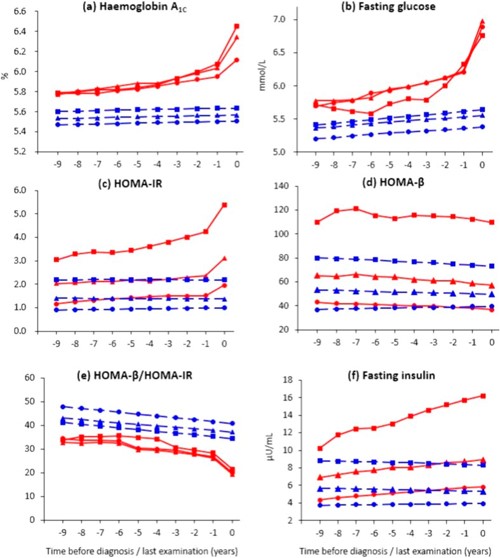
In the Whitehall II study, researchers followed 6,538 adults without diabetes and reconstructed metabolic trajectories for up to 13 years before diagnosis. Among those who developed type 2 diabetes, insulin sensitivity declined and insulin secretion changed years before glucose rose sharply near diagnosis.[2]
The longitudinal study cited in the original Disciple diabetes article also found that body-mass trajectory, visceral fat and glucose metabolism changed before the onset of type 2 diabetes.[3]
This supports the Toward Health position that prediabetes often appears after 10–15 years of a developing metabolic disease process. Type 2 diabetes develops through an observable metabolic progression, and an abnormal A1C is often a late marker of that process—not its beginning.
Damage can begin before diabetes is diagnosed
Calling the condition “pre” can create the impression that complications are impossible until a person crosses the diabetes threshold. The evidence does not support that reassurance.
Heart and vascular risk
An updated meta-analysis of 129 studies involving more than 10 million people found that prediabetes was associated with higher risks of cardiovascular disease, coronary heart disease, stroke and all-cause mortality.[4]
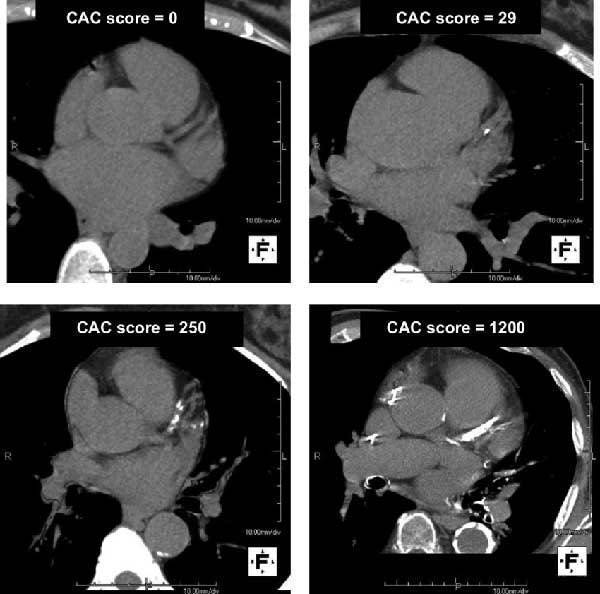
Coronary artery calcium provides an even more direct picture of established plaque. A 2024 multicohort study pooled 13,376 adults without known atherosclerotic cardiovascular disease. CAC of at least 100 was present in 22% of participants with prediabetes, compared with 17% of those with normal glucose and 37% of those with diabetes. People with prediabetes and CAC of at least 100 had an adjusted cardiovascular risk similar to the overall diabetes group.[5]
This supports the clinical observation behind Dr. Tro’s original article: a new prediabetes label does not guarantee that the coronary arteries are free of advanced disease. Toward Health has seen patients in their 40s and 50s who sought help for weight loss or newly identified dysglycemia and were found to have substantial coronary calcium, including scores above 400.
That does not mean every person with prediabetes should automatically receive the same scan. It means cardiovascular risk should be assessed seriously, and a discussion about coronary artery calcium may be appropriate when age, symptoms, family history, blood pressure, smoking, lipids and the broader metabolic picture warrant it.
How our view of PCSK9 inhibitors changed:
Toward Health has re-evaluated PCSK9 inhibitors as the evidence has developed. Lowering LDL cholesterol, preventing cardiovascular events and reducing deaths are different outcomes. Our earlier concerns about mortality deserve to be explained alongside our current conclusion.
Early evidence, 2017–2019: FOURIER (2017) reduced major cardiovascular events but did not demonstrate a reduction in all-cause or cardiovascular mortality. Both were numerically higher with evolocumab: all-cause deaths were 3.2% versus 3.1%, and cardiovascular deaths were 1.8% versus 1.7%. Neither difference was statistically significant.
ODYSSEY OUTCOMES and its 2019 mortality analysis need a distinction: all-cause deaths were lower with alirocumab, 3.5% versus 4.1%, but the result was only nominally significant because the trial’s prespecified testing hierarchy had already stopped at a nonsignificant outcome. Cardiovascular mortality was not significantly reduced. The early trials therefore did not establish a consistent, definitive survival benefit across the class.
Why the mortality reanalysis concerned us: A BMJ Open reanalysis, submitted in 2021 and published in December 2022, found discrepancies in FOURIER death classifications using regulatory clinical-study reports. After readjudication, cardiovascular deaths were more frequent with evolocumab (relative risk 1.20; 95% confidence interval 0.95–1.51). This was a concerning signal, although it did not establish that the drug increased mortality. The investigators could not re-evaluate nonfatal events. We regarded the mortality and reporting questions as reasons for caution.
What changed our assessment: We have now reviewed the longer-term and newer evidence:
- FOURIER-OLE (2022) associated earlier evolocumab treatment with fewer cardiovascular events and cardiovascular deaths. These were exploratory comparisons of earlier versus delayed initiation; both groups received evolocumab during the extension.
- The long-term ODYSSEY OUTCOMES analysis (2023) supported sustained cardiovascular benefit and reassuring safety through follow-up of up to five years, with more injection-site reactions than placebo.
- VESALIUS-CV (2026; online 2025) strengthened the evidence in high-risk patients without a previous heart attack or stroke: five-year coronary death, heart attack or ischemic stroke risk was 6.2% versus 8.0%, an absolute difference of 1.8 percentage points.
After this reassessment, we agree that PCSK9 inhibitors such as alirocumab (Praluent) and evolocumab (Repatha) can be effective options for selected patients with coronary artery disease or other high-risk conditions. This updated position reflects the evolving evidence, while keeping cardiovascular-event reduction distinct from a claim of universal survival benefit.
For plaque regression, separate imaging trials, GLAGOV and PACMAN-AMI, found greater coronary plaque regression when a PCSK9 inhibitor was added to statin therapy. These findings do not establish that CAC scores will fall. Treatment remains individualized to disease burden, overall risk, existing therapy, tolerability and patient preferences.
Nerve damage
Peripheral neuropathy can also begin before diabetes is formally diagnosed. A systematic review of 29 studies and 9,351 people with prediabetes found that most studies reported more peripheral neuropathy than expected in the background population, particularly small-fiber neuropathy. Estimates varied with the testing method, but 21 of the 29 studies reported a prevalence of at least 10%.[6]
Studies of newly diagnosed type 2 diabetes have found neuropathy at the time of diagnosis, with rates approaching 30%. Prospective clinical testing in one study found neuropathy in 29.2% of adults diagnosed within the preceding six months.[14]
The message is not that every person with prediabetes has nerve damage. It is that nerve injury does not wait for a diagnostic code before it begins.
Eye and kidney findings
In the Diabetes Prevention Program, retinal changes characteristic of diabetes were present in 7.9% of participants with impaired glucose tolerance who had not developed diabetes. Retinopathy was found in 12.6% of participants who had developed diabetes, a mean of just 3.1 years after onset.[7]
A 2025 systematic review and meta-analysis likewise found microvascular complications in people meeting prediabetes criteria. The ADA A1C range of 5.7% to 6.4% identified more retinopathy than the narrower 6.0% to 6.4% range, and included studies reported nephropathy prevalence ranging from 1% to 15%, depending on the definition and population.[8]
These findings challenge the idea that complications belong only to established diabetes. They also explain why waiting passively for A1C to reach 6.5% is not an acceptable metabolic-health plan.
Prediabetes is an opportunity to change the trajectory
The seriousness of prediabetes should motivate action, not fear or resignation.
At this stage, the pancreas is often still producing enough insulin to prevent overt diabetes. The problem is that the body may require too much insulin to maintain that control. Reducing the metabolic load can lower glucose demand, improve insulin sensitivity and give the system room to recover.
This is where diet and lifestyle have exceptional power.
In the randomized Diabetes Prevention Program, 3,234 adults with elevated fasting and post-load glucose were assigned to intensive lifestyle intervention, metformin or placebo. Over an average of 2.8 years, lifestyle intervention reduced the incidence of type 2 diabetes by 58%, compared with a 31% reduction with metformin. Lifestyle was significantly more effective than metformin.[9]
That trial used a low-fat, calorie-restricted approach with weight loss and physical activity. It established an essential principle: prediabetes can be changed, and lifestyle treatment is powerful medicine.
Carbohydrate restriction provides another direct path to improving glycemia. Sugars and starches produce the largest immediate dietary glucose burden. Reducing them can lower post-meal glucose, reduce insulin demand and make stored energy more accessible.
In a six-month randomized clinical trial of adults with untreated A1C of 6.0% to 6.9%, a low-carbohydrate intervention produced greater reductions in A1C, fasting glucose, fasting insulin, insulin resistance, waist circumference and body weight than usual diet. The intervention began with a target below 40 grams of net carbohydrate per day and did not prescribe an explicit weight-loss goal.[10]
Real-world primary-care data from David and Jen Unwin reinforce that message. Among 71 people with prediabetes who chose a lower-carbohydrate program and were followed for an average of 23 months, median A1C fell from 44 to 39 mmol/mol, and 93% returned A1C to the normal range. Blood pressure, weight and lipid markers also improved across the broader program.[11]
There is no reason to treat food as a minor footnote while waiting for glucose to worsen. Food is part of the treatment.
Toward Health’s own results show what early metabolic care can do
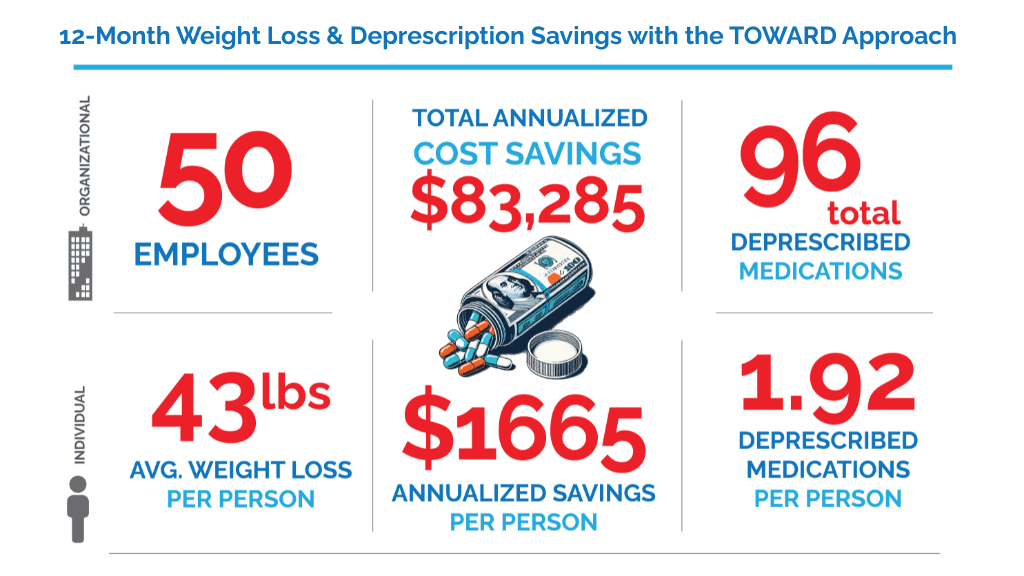
Toward Health’s 2026 poster presented one-year results from a metabolic employee-wellness program using a personalized ketogenic diet of no more than 30 grams of total carbohydrate per day, connected medical care, continuous glucose monitoring, a connected scale and blood-pressure monitoring.[12]
At baseline, 59% of the 64 participants had prediabetes and 41% had type 2 diabetes. At one year, 41% of the full cohort was in the normal glycemic category, 50% was in the prediabetes category and only 9% remained in the type 2 diabetes category.[12]
Across the full cohort:
- mean A1C fell from 6.6% to 5.8%;
- mean fasting glucose fell from 123 to 104 mg/dL;
- mean fasting insulin fell from 21.8 to 12.9 μU/mL; and
- mean weight fell by 34.9 pounds.[12]
Among the 26 participants who began with type 2 diabetes, 54% achieved remission at one year—A1C below 6.5% without diabetes medication—and another 12% reached A1C below 6.5% while taking metformin alone. Twenty-three diabetes medications were deprescribed, with estimated annual medication savings of $93,600.[12]
This poster remains a distinct Toward Health Research & Evidence page. It should be linked here as Toward’s own demonstration that intensive nutrition, metabolic monitoring and ongoing support can change the direction of dysglycemia. It should not be duplicated as a second research article.
Look beyond A1C alone
Prediabetes is one feature of a larger metabolic pattern. A thorough evaluation may include:
- fasting glucose and A1C;
- post-meal glucose or an oral glucose tolerance test when appropriate;
- glucose patterns from a continuous glucose monitor when clinically useful;
- fasting insulin interpreted in context;
- triglycerides, HDL cholesterol and other lipid measures;
- blood pressure;
- waist circumference and other indicators of visceral fat;
- liver enzymes and evidence of fatty liver;
- kidney function and urine albumin;
- sleep-apnea risk;
- family history, smoking and cardiovascular risk; and
- symptoms or examination findings suggesting neuropathy, vascular disease or other complications.
Advanced lipoprotein testing, coronary artery calcium, carotid imaging and a sleep study may add important information for selected patients. These tools answer different questions and should be chosen for the person—not ordered as a reflexive package.
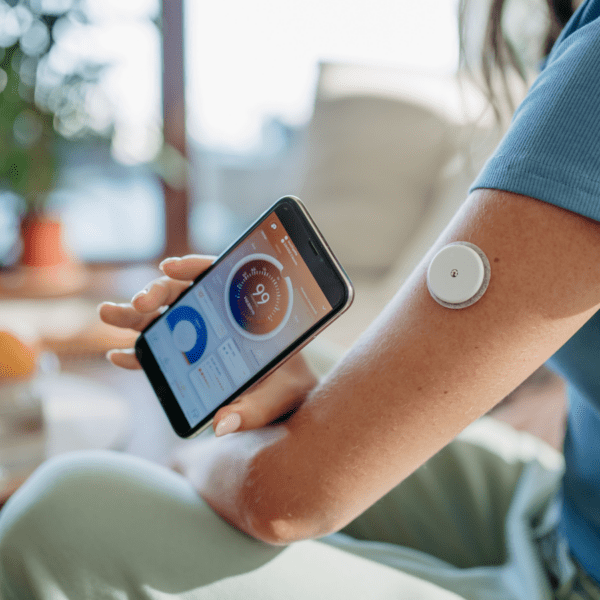
A CGM can be especially useful for education. It can show how particular meals, sleep, stress and movement affect glucose in real time. It is not currently a stand-alone diagnostic test for prediabetes, but it can reveal patterns that an A1C average cannot show.[1]
What to do after a prediabetes diagnosis
1. Do not wait for diabetes
“Let’s recheck it next year” is not a complete treatment plan. Prediabetes is the time to identify the metabolic drivers and intervene with enough intensity to change them.
2. Reduce the dietary glucose burden
Remove or sharply reduce sugar-sweetened drinks, sweets, refined grains and starches that repeatedly drive glucose and insulin higher. A therapeutic low-carbohydrate or ketogenic diet can produce rapid changes and should be personalized to medical history, preferences, food access and medication use.
3. Eat real, satisfying food
Build meals around adequate protein, non-starchy vegetables when tolerated and desired, and minimally processed sources of fat. A successful plan must control hunger and be sustainable in real life.
4. Use movement as a metabolic tool
Walking after meals can lower post-meal glucose. Resistance training builds and preserves muscle that can dispose of glucose. Exercise is not punishment for eating; it is a direct way to improve metabolic function.
5. Treat sleep and stress as physiology
Poor sleep, untreated sleep apnea and chronic stress can increase glucose, hunger and insulin resistance. These are not secondary wellness concerns. They are part of metabolic treatment.
6. Monitor the response
Repeat the markers that were abnormal. Use glucose readings, waist measurements, blood pressure, triglycerides, fasting insulin when useful, liver markers and medication requirements to understand whether the underlying metabolic state is improving.
7. Adjust medication when physiology changes
Many people with prediabetes are not taking glucose-lowering medication, but some use metformin or a GLP-1 medication and many take blood-pressure drugs. Glucose and blood pressure can improve quickly when carbohydrate intake, weight and insulin resistance change. Medication should be reviewed and reduced when clinically appropriate rather than continued automatically after the reason for it has improved.
Do not stop prescribed medication independently. People using insulin, sulfonylureas, SGLT2 inhibitors or multiple blood-pressure drugs need particularly careful planning when making a substantial dietary change. Detailed medication safety and deprescribing guidance belongs in Article 4 of this series.
The goal is not to become “a better prediabetic”
The goal is to restore metabolic health as fully as possible.
That can mean:
- returning A1C and glucose to the normal range;
- lowering fasting and post-meal insulin demand;
- reducing visceral and liver fat;
- improving blood pressure, triglycerides and HDL cholesterol;
- preventing progression to type 2 diabetes;
- avoiding or reducing medication when safely possible; and
- identifying silent complications early enough to act.
Prediabetes is not proof that diabetes is inevitable. It is evidence that the body is asking for a different environment.
The diagnosis should not produce shame. Modern food, chronic stress, poor sleep, sedentary time, medications, genetics, pregnancy history, age and the broader environment all influence insulin resistance. The answer is not blame. It is to recognize the problem early and use treatment powerful enough to change it.
Your numbers are a warning, not a verdict. The metabolic process may have started years ago—but the work to reverse its direction can start today.
Continue the diabetes series
- Type 2 Diabetes and Insulin Resistance: Start Here — the metabolic foundations, diagnosis and possibility of remission.
- Prediabetes Is an Early Warning, Not the Beginning — this article.
- Can Type 2 Diabetes Go Into Remission? — therapeutic carbohydrate restriction, fasting, weight loss and remission evidence.
- Low-Carb Nutrition and Diabetes Medications: What Can Change Quickly — medication tradeoffs, reduction, GLP-1/SGLT2 context and safety.
References
- American Diabetes Association Professional Practice Committee for Diabetes. Diagnosis and classification of diabetes: Standards of Care in Diabetes—2026. Diabetes Care. 2026;49(Suppl 1):S27–S49. Official guideline
- Tabák AG, Jokela M, Akbaraly TN, Brunner EJ, Kivimäki M, Witte DR. Trajectories of glycaemia, insulin sensitivity, and insulin secretion before diagnosis of type 2 diabetes: an analysis from the Whitehall II study. Lancet. 2009;373(9682):2215–2221. doi:10.1016/S0140-6736(09)60619-X
- Kuwahara K, Honda T, Nakagawa T, Yamamoto S, Hayashi T, Mizoue T. Body mass index trajectory patterns and changes in visceral fat and glucose metabolism before the onset of type 2 diabetes. Sci Rep. 2017;7:43521. doi:10.1038/srep43521
- Cai X, Zhang Y, Li M, et al. Association between prediabetes and risk of all cause mortality and cardiovascular disease: updated meta-analysis. BMJ. 2020;370:m2297. doi:10.1136/bmj.m2297
- Al Rifai M, Al-Mallah MH, Blaha MJ, et al. Epidemiology and prognostic implications of coronary artery calcium in asymptomatic individuals with prediabetes: a multicohort study. Diabetes Care. 2024;47(4):698–706. doi:10.2337/dc23-1864
- Kirthi V, Perumbalath A, Brown E, et al. Prevalence of peripheral neuropathy in pre-diabetes: a systematic review. BMJ Open Diabetes Res Care. 2021;9(1):e002040. doi:10.1136/bmjdrc-2020-002040
- Diabetes Prevention Program Research Group. The prevalence of retinopathy in impaired glucose tolerance and recent-onset diabetes in the Diabetes Prevention Program. Diabet Med. 2007;24(2):137–144. doi:10.1111/j.1464-5491.2007.02043.x
- Thiab S, Akhal T, Akeblersane M, Sheth H, Atkin SL, Butler AE. Microvascular complications in prediabetes: a systematic review and meta-analysis. Diabetes Res Clin Pract. 2025;225:112261. doi:10.1016/j.diabres.2025.112261
- Diabetes Prevention Program Research Group. Reduction in the incidence of type 2 diabetes with lifestyle intervention or metformin. N Engl J Med. 2002;346(6):393–403. doi:10.1056/NEJMoa012512
- Dorans KS, Bazzano LA, Qi L, et al. Effects of a low-carbohydrate dietary intervention on hemoglobin A1c: a randomized clinical trial. JAMA Netw Open. 2022;5(10):e2238645. doi:10.1001/jamanetworkopen.2022.38645
- Unwin D, Khalid AA, Unwin J, et al. Insights from a general practice service evaluation supporting a lower carbohydrate diet in patients with type 2 diabetes mellitus and prediabetes: a secondary analysis of routine clinic data including HbA1c, weight and prescribing over 6 years. BMJ Nutr Prev Health. 2020;3(2):285–294. doi:10.1136/bmjnph-2020-000072
- Buchanan L, Calkins M, Richardson C, Eiges A, Wiley B, Reid T, Basmadjian V, Kalayjian T. One-year outcomes in type 2 diabetes remission and medication deprescription in a low-carbohydrate metabolic health employee wellness program. Poster presented at: Society of Metabolic Health Practitioners Conference; 2026; Boca Raton, Florida. Toward Health poster and results
- Centers for Disease Control and Prevention. A U.S. Report Card: Diabetes. Updated 2026. Official statistics
- Bansal D, Gudala K, Muthyala H, Esam HP, Nayakallu R, Bhansali A. A prospective study of prevalence and association of peripheral neuropathy in Indian patients with newly diagnosed type 2 diabetes mellitus. J Postgrad Med. 2014;60(3):270–275. doi:10.4103/0022-3859.138750