
The condition long known as polycystic ovary syndrome (PCOS) now has a more accurate name: polyendocrine metabolic ovarian syndrome (PMOS). The new name recognizes something women with this condition and metabolic-health clinicians have understood for years: this is not simply a problem of ovarian “cysts.” It is a whole-body endocrine and metabolic condition involving insulin, reproductive hormones, ovulation, weight regulation, skin, mental health and long-term cardiometabolic risk.[1, 2, 3]
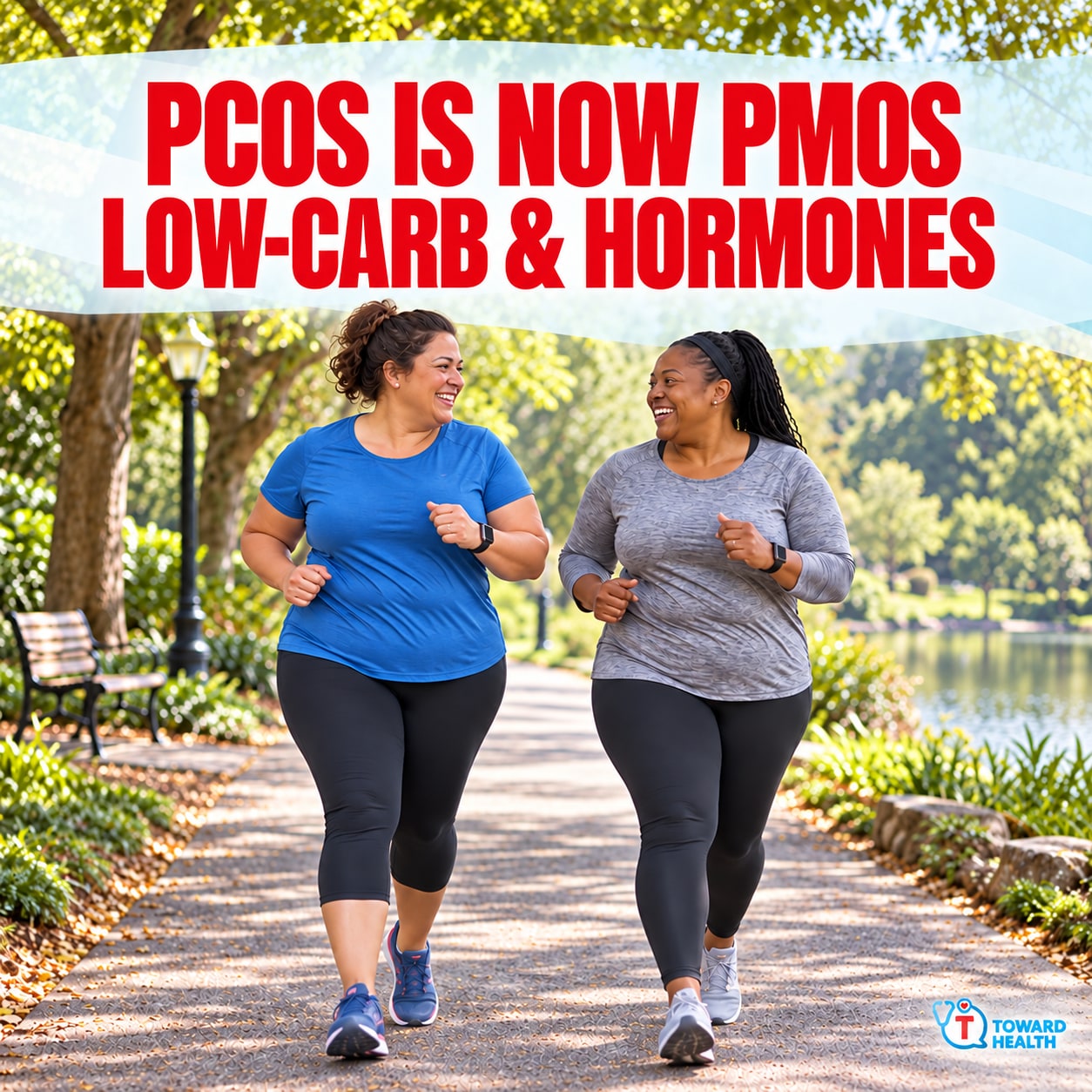
The name change is important, but the treatment implications matter even more. When insulin resistance and hyperinsulinemia are part of the condition, nutrition that lowers the body’s glucose and insulin burden can influence more than weight. Human trials of lower-carbohydrate and ketogenic diets have reported improvements in insulin resistance, total and free testosterone, sex hormone-binding globulin, luteinizing hormone, menstrual regularity and ovulation.[4, 5, 6, 7, 8, 9, 10, 11, 12, 13, 14, 15]
The evidence is no longer limited to one early pilot study. It now includes controlled feeding studies, randomized trials, a placebo-controlled ketone experiment and multiple recent systematic reviews and meta-analyses.
On this page
Why PCOS became PMOS
In May 2026, a global consensus process published in The Lancet introduced polyendocrine metabolic ovarian syndrome as the new name for PCOS. More than 50 patient and professional organizations participated in the process. The condition affects roughly one in eight women, or more than 170 million women worldwide.[1, 2]
The older name caused confusion for several reasons:
- Many affected women do not have true ovarian cysts.
- The structures seen on ultrasound are usually immature follicles, not pathologic cysts.
- A person can meet diagnostic criteria without polycystic ovarian morphology.
- Focusing on the ovaries alone can obscure the metabolic and endocrine drivers of the condition.
The new name describes the biology more clearly:
- Polyendocrine recognizes that multiple interacting hormonal systems are involved.
- Metabolic recognizes the roles of insulin resistance, glucose regulation, adipose tissue and cardiometabolic risk.
- Ovarian preserves the condition’s important effects on ovulation, reproductive hormones and fertility without suggesting that cysts are the cause.
The terminology has changed, but readers will continue to see PCOS throughout older research and clinical resources. In this article, PCOS/PMOS refers to the same condition during this transition.
What PMOS can look like
PMOS does not look the same in every person. Possible features include:
- Irregular, infrequent or absent menstrual cycles
- Inconsistent ovulation or infertility
- Elevated androgen levels
- Excess facial or body hair
- Acne or scalp hair thinning
- Insulin resistance or hyperinsulinemia
- Prediabetes or type 2 diabetes
- Difficulty regulating weight or increased abdominal fat
- Sleep apnea, fatty liver, elevated blood pressure or abnormal lipids
- Depression, anxiety, eating concerns or reduced quality of life
Some people with PMOS live in larger bodies; others are lean. A lean appearance does not rule out insulin resistance. In a study using the euglycemic-hyperinsulinemic clamp, insulin resistance was identified in 75% of lean participants with PCOS and 95% of participants with PCOS and overweight.[16] Those percentages come from one carefully measured cohort rather than a universal prevalence estimate, but they make an essential point: PMOS cannot be understood only through body weight.
How PMOS is diagnosed
The 2023 International Evidence-based Guideline remains the current diagnostic framework while PMOS terminology is adopted. In adults, diagnosis generally requires at least two of the following after other causes have been excluded:[3]
- Clinical or biochemical hyperandrogenism
- Ovulatory dysfunction or irregular menstrual cycles
- Polycystic ovarian morphology on ultrasound, with anti-Müllerian hormone available as an alternative in adults in the appropriate clinical setting
When irregular cycles and hyperandrogenism are already present, an ultrasound is not always required. Diagnosis in adolescents is more restrictive because normal puberty can temporarily resemble some features of PMOS. A clinician should also consider thyroid disease, hyperprolactinemia, nonclassic congenital adrenal hyperplasia and other causes of irregular cycles or androgen excess.
Why insulin can affect reproductive hormones
Insulin is not only a blood-sugar hormone. Chronically elevated insulin can interact directly with the reproductive system.
Hyperinsulinemia can stimulate ovarian theca cells to produce more androgens. It can also reduce the liver’s production of sex hormone-binding globulin (SHBG). When SHBG falls, a greater proportion of testosterone remains unbound or “free,” which may worsen acne, excess hair growth, scalp hair loss and ovulatory dysfunction. Insulin resistance can therefore amplify the hormonal pattern associated with PMOS even when glucose has not yet reached the diabetic range.
This creates a reinforcing loop: insulin resistance can worsen androgen excess, while androgen excess and abdominal adiposity may further impair insulin sensitivity. Improving the metabolic environment can help interrupt that loop.
What lower-carbohydrate diets have shown
Lower-carbohydrate nutrition is a spectrum. It can range from a moderate reduction in carbohydrate to a very-low-carbohydrate ketogenic diet. A person does not need to assume that every lower-carb intervention is ketogenic—or that only weight loss matters.
Hormonal improvement can occur even without intentional weight loss
In a controlled crossover study, 30 women with PCOS followed two weight-maintaining diets for eight weeks each: a standard diet containing 55% of energy from carbohydrate and a lower-carbohydrate diet containing 41%. The lower-carbohydrate phase reduced fasting insulin, fasting glucose, HOMA-IR and total testosterone while improving insulin sensitivity. The change in testosterone tracked with changes in insulin measures.[5]
Because the diets were designed to maintain weight, this study provides important evidence that changing carbohydrate exposure and insulin dynamics can improve the hormonal environment independently of large weight loss.
A Mediterranean low-carbohydrate diet outperformed a low-fat diet
The original Toward Health PCOS article cited a 2022 randomized trial of 72 women with PCOS and overweight. Participants followed either an energy-restricted Mediterranean low-carbohydrate diet or an energy-restricted low-fat diet for 12 weeks.[6]
The Mediterranean low-carbohydrate approach produced greater overall improvements in menstrual recovery, body composition, insulin sensitivity and endocrine measures. The trial assessed fasting insulin and glucose, HOMA-IR, total testosterone, LH, FSH and prolactin. This is useful evidence that carbohydrate reduction can be incorporated into a nutrient-dense Mediterranean pattern rather than treated as a single rigid diet.
Earlier randomized evidence also supports lower-carbohydrate treatment
A 2020 meta-analysis pooled eight randomized controlled trials involving 327 women with PCOS. Compared with control diets, lower-carbohydrate diets improved BMI and HOMA-IR. Interventions lasting longer than four weeks also increased SHBG and FSH and reduced testosterone.[7]
What ketogenic interventions have shown
Ketogenic diets lower carbohydrate enough to increase circulating ketones, including beta-hydroxybutyrate. In PMOS, this may matter through several connected pathways: lower glucose and insulin exposure, reduced visceral fat, improved hepatic insulin sensitivity, increased SHBG and possible direct ketone signaling at the ovary.
The 2005 pilot provided the first clinical signal
In 2005, Mavropoulos, Yancy, Hepburn and Westman studied a ketogenic diet providing no more than 20 grams of carbohydrate per day in women with PCOS and obesity.[4] Eleven women enrolled and five completed 24 weeks.
Among completers:
- Body weight fell by 12%
- Percent free testosterone fell by 22%
- The LH-to-FSH ratio fell by 36%
- Fasting insulin fell by 54%
- Two participants became pregnant despite previous infertility
The sample was small, but the study identified a metabolic and reproductive signal that later trials have continued to observe.
A 16-week randomized trial improved free testosterone and ovulation
In a 2023 randomized trial, 30 women with PCOS and obesity received either a very-low-calorie ketogenic protocol followed by a low-calorie phase or a Mediterranean low-calorie diet for 16 weeks.[8]
Compared with the Mediterranean group, the ketogenic intervention produced greater reductions in:
- BMI: 13.7% versus 5.1%
- Waist circumference: 11.4% versus 2.9%
- Body fat: 24.0% versus 8.1%
- Free testosterone: 30.4% versus 12.6%
Ovulation increased from 38.5% to 84.6% in the ketogenic group. The control group increased from 14.3% to 35.7%. SHBG rose more in the ketogenic group, contributing to the reduction in free testosterone.[8]
A 2024 randomized trial compared ketogenic and moderate-carbohydrate diets
In an eight-week randomized trial, 46 women with PCOS and overweight or obesity were assigned to a ketogenic diet or a plant-forward portfolio diet containing 40% of energy from carbohydrate. Forty participants completed the study.[9]
Both diets improved body composition, fasting glucose, insulin and several reproductive hormones. The ketogenic group had larger improvements in BMI, LH and DHEA-S. Free testosterone improved in both groups; the adjusted between-group difference was not significant. Two women in the ketogenic group became pregnant after previous unsuccessful attempts, an encouraging secondary observation that should not be treated as a fertility-rate estimate.[9]
Ketones may have direct hormonal effects
A 2025 randomized, placebo-controlled crossover trial in 20 women with PCOS tested an oral beta-hydroxybutyrate supplement rather than a ketogenic diet.[10] During the ketone condition, beta-hydroxybutyrate rose to approximately 2.4 mmol/L. Fasting glucose was 10% lower, and androgen concentrations generally moved downward. The clearest statistically significant change was a 21% reduction in 11-ketotestosterone; reductions in total testosterone, free testosterone and androstenedione were close to conventional statistical significance.
This experiment does not replace a diet trial, but it supports the possibility that ketones themselves may influence ovarian androgen production rather than serving only as a marker of carbohydrate restriction or weight loss.
What the recent meta-analyses show
Multiple reviews published from 2023 through 2026 have pooled the expanding clinical literature. These reviews overlap substantially in the trials they include, so they should be read as increasingly updated analyses of the evidence—not as entirely separate participant populations.
Reproductive hormones
A 2023 meta-analysis of seven clinical trials involving 170 women found that at least 45 days of ketogenic nutrition was associated with:[11]
- A lower LH-to-FSH ratio
- Lower free testosterone
- Higher SHBG
A 2025 meta-analysis of seven studies similarly reported reductions in LH, the LH-to-FSH ratio, total testosterone and free testosterone, together with higher SHBG.[12]
A 2026 meta-analysis focused specifically on biochemical hyperandrogenism. Across 290 participants, ketogenic interventions were associated with lower total testosterone. Across 144 participants, SHBG increased. When the authors limited the analysis to four randomized trials, ketogenic diets still produced a statistically significant improvement in total testosterone compared with control diets. LH and the LH-to-FSH ratio also fell.[13]
Notably, the change in total testosterone in that analysis was not statistically explained by the change in BMI, fasting insulin or intervention duration. The result strengthens the hypothesis that ketosis may act alongside weight loss and improved insulin sensitivity.[13]
The newest pooled estimates
A 2026 British Journal of Nutrition meta-analysis included 12 clinical studies, with 11 in quantitative analysis. Very-low-carbohydrate ketogenic interventions were associated with:[14]
- Free testosterone reduction of 0.31 ng/dL
- Total testosterone reduction of 7.21 ng/dL
- SHBG increase of 15.22 nmol/L
- LH reduction of 3.97 U/L
- LH-to-FSH ratio reduction of 1.04
- HOMA-IR reduction of 2.46
FSH did not change significantly in that analysis. The same review found substantial improvements in weight, waist circumference, fat mass, glucose and insulin.[14]
A separate 2026 Clinical Nutrition meta-analysis included 15 studies and found improvements in weight, insulin resistance, LH and menstrual-cycle duration after ketogenic interventions. In comparisons with other diets, the clearest advantages were seen for weight, insulin resistance and LH; androgen results varied across protocols and studies.[15]
Taken together, the most consistent hormonal findings across the literature are:
- Lower total or free testosterone
- Higher SHBG
- Lower LH and a lower LH-to-FSH ratio
- Better menstrual regularity or shorter prolonged cycles
- Improved ovulation in studies that measured it
These changes align with the clinical goal of reducing hyperandrogenism and restoring more regular ovarian function.
Is the benefit only from losing weight?
Weight loss can improve PMOS, but the evidence suggests the story is broader.
- A weight-maintaining lower-carbohydrate diet reduced insulin and total testosterone.[5]
- Randomized ketogenic trials improved reproductive hormones and ovulation while also reducing visceral fat and insulin resistance.[8, 9]
- A randomized ketone-supplement study lowered glucose and several androgen measures within hours, without waiting for weight loss.[10]
- A 2026 hyperandrogenism meta-analysis found that BMI change did not statistically account for the observed total-testosterone change.[13]
The most reasonable interpretation is that several mechanisms can operate together: reduced insulin exposure, improved insulin sensitivity, loss of visceral fat, increased SHBG and possible direct effects of beta-hydroxybutyrate on ovarian steroid production.
What this can mean in real life
When the hormonal environment improves, patients may notice changes in cycle regularity, ovulation, hunger, energy, acne or excess hair growth. Some changes occur faster than others. Menstrual and biochemical markers may respond within weeks or months, while visible hair and skin changes can take longer because of the growth cycle of the hair follicle.
Restored ovulation also has an immediate practical consequence: fertility can return before a person expects it. Anyone who does not want to become pregnant should discuss contraception when beginning an effective metabolic intervention. Anyone pursuing pregnancy should coordinate nutrition and medication changes with an obstetric, reproductive or metabolic clinician.
A personalized metabolic approach
There is no single carbohydrate target for every person with PMOS. An effective plan can be built around:
- Protein-centered meals that support satiety and lean mass
- Minimally processed foods
- Non-starchy vegetables and other nutrient-dense plants according to tolerance and preference
- Carbohydrate reduction matched to insulin resistance, symptoms, goals and response
- Resistance training and regular movement to improve glucose disposal and muscle health
- Sleep and stress support
- Monitoring of menstrual patterns, androgen symptoms and metabolic markers
Some people may improve with a moderate lower-carbohydrate pattern. Others may benefit from nutritional ketosis, particularly when insulin resistance, hyperinsulinemia, prediabetes or obesity is prominent. The intervention should be sustainable and adjusted using both clinical response and laboratory data.
Nutrition is also not the only possible treatment. Depending on symptoms and goals, care may include metformin, combined oral contraceptives, anti-androgen treatment, fertility therapy or anti-obesity medications such as GLP-1–based treatment. These options can be combined with nutrition rather than positioned as competing philosophies.
Medical supervision matters
A lower-carbohydrate diet can change glucose, blood pressure and appetite quickly. Medication doses may need adjustment, especially for insulin, sulfonylureas or blood-pressure treatment. Very-low-calorie ketogenic protocols require closer clinical supervision than a whole-food lower-carbohydrate diet.
A ketogenic weight-loss diet is not a pregnancy diet. Patients who are pregnant, actively trying to conceive, breastfeeding, living with an eating disorder, or managing significant kidney, liver or other medical conditions should work directly with an appropriately qualified clinician.
The takeaway
The change from PCOS to PMOS gives this condition a name that finally reflects its whole-body biology. Insulin resistance, hyperinsulinemia and reproductive-hormone disruption are often deeply connected.
Lower-carbohydrate and ketogenic nutrition can improve that hormonal environment. Across controlled trials and recent meta-analyses, researchers have documented lower total and free testosterone, higher SHBG, lower LH or LH-to-FSH ratios, improved insulin sensitivity and better ovulatory or menstrual function. These benefits may arise through weight loss, but the controlled feeding and ketone-supplement data indicate that the effects are not necessarily explained by weight alone.
For patients with PCOS/PMOS, the goal is not merely to “lose weight.” It is to identify and treat the metabolic and endocrine drivers of the condition with a personalized plan.
What low-carb and ketogenic studies have reported in PCOS/PMOS
- Lower total and free testosterone
- Higher SHBG, which reduces biologically available free testosterone
- Lower LH and LH-to-FSH ratio
- Improved insulin sensitivity and lower fasting insulin
- More regular menstrual cycles
- Improved ovulation in trials that measured it
References
Name change and diagnostic framework
-
Teede HJ, Bahri Khomami M, Morman R, et al.; Global Name Change Consortium. Polyendocrine metabolic ovarian syndrome, the new name for polycystic ovary syndrome: a multistep global consensus process. Lancet. 2026;407(10545):2329–2339. doi: 10.1016/S0140-6736(26)00717-8. PubMed.
-
Endocrine Society. Polyendocrine Metabolic Ovarian Syndrome: New name to improve diagnosis and care of condition affecting 170 million women worldwide. Published May 12, 2026. Official announcement.
-
Teede HJ, Tay CT, Laven JJE, et al.; International PCOS Network. Recommendations From the 2023 International Evidence-based Guideline for the Assessment and Management of Polycystic Ovary Syndrome. Fertil Steril. 2023;120(4):767–793. doi: 10.1016/j.fertnstert.2023.07.025. Full text. Current Monash PMOS guideline hub.
Primary lower-carbohydrate and ketogenic intervention studies
-
Mavropoulos JC, Yancy WS Jr, Hepburn J, Westman EC. The effects of a low-carbohydrate, ketogenic diet on the polycystic ovary syndrome: a pilot study. Nutr Metab (Lond). 2005;2:35. doi: 10.1186/1743-7075-2-35. PubMed.
-
Gower BA, Chandler-Laney PC, Ovalle F, et al. Favourable metabolic effects of a eucaloric lower-carbohydrate diet in women with PCOS. Clin Endocrinol (Oxf). 2013;79(4):550–557. doi: 10.1111/cen.12175. PubMed.
-
Mei S, Ding J, Wang K, et al. Mediterranean Diet Combined With a Low-Carbohydrate Dietary Pattern in the Treatment of Overweight Polycystic Ovary Syndrome Patients. Front Nutr. 2022;9:876620. doi: 10.3389/fnut.2022.876620. PubMed. Full text.
-
Zhang X, Zheng Y, Guo Y, Lai Z. The Effect of Low Carbohydrate Diet on Polycystic Ovary Syndrome: A Meta-Analysis of Randomized Controlled Trials. Int J Endocrinol. 2019;2019:4386401. doi: 10.1155/2019/4386401. PubMed.
-
Pandurevic S, Mancini I, Mitselman D, et al. Efficacy of very low-calorie ketogenic diet with the Pronokal method in obese women with polycystic ovary syndrome: a 16-week randomized controlled trial. Endocr Connect. 2023;12(7):e220536. doi: 10.1530/EC-22-0536. PubMed. Full text.
-
Sharifi M, Saber A, Moludi J, Salimi Y, Jahan-Mihan A. The effects of portfolio moderate-carbohydrate and ketogenic diets on anthropometric indices, metabolic status, and hormonal levels in overweight or obese women with polycystic ovary syndrome: a randomized controlled trial. Nutr J. 2024;23(1):152. doi: 10.1186/s12937-024-01056-7. PubMed. Full text.
-
Rittig N, et al. Ketone supplementation acutely lowers androgen and glucose levels in women with PCOS: a randomized clinical trial. Eur J Endocrinol. 2025;192(6):717–727. doi: 10.1093/ejendo/lvaf106. PubMed.
Systematic reviews and meta-analyses
-
Khalid K, Apparow S, Mushaddik IL, et al. Effects of Ketogenic Diet on Reproductive Hormones in Women With Polycystic Ovary Syndrome. J Endocr Soc. 2023;7(10):bvad112. doi: 10.1210/jendso/bvad112. PubMed. Publisher page.
-
Turetta C, et al. Impact of Ketogenic Diet on Weight, Metabolic, and Endocrine Parameters in Women with Polycystic Ovary Syndrome: A Systematic Review and Meta-Analysis. Gynecol Obstet Invest. 2025;90(5):515–534. doi: 10.1159/000543941. PubMed.
-
Maseroli E, Alfaroli C, Cirillo M, et al. Ketogenic diet as a therapeutic intervention for biochemical hyperandrogenism in PCOS women with obesity or overweight: a meta-analytic study. J Endocrinol Invest. Published online June 13, 2026. doi: 10.1007/s40618-026-02924-1. PubMed.
-
Tosatti JAG, Magalhães FMV, Gomes KB. Effects of the very low-carbohydrate ketogenic diet in women with polycystic ovary syndrome: a systematic review with meta-analysis of clinical trials. Br J Nutr. 2026;135(2):178–193. doi: 10.1017/S0007114525105692. PubMed.
-
Arsenaki E, Stathi D, Katsikas Triantafyllidis K, et al. The effects of ketogenic diet on polycystic ovary syndrome: A systematic review and meta-analysis. Clin Nutr. 2026;56:106535. doi: 10.1016/j.clnu.2025.11.019. PubMed.
-
Stepto NK, Cassar S, Joham AE, et al. Women with polycystic ovary syndrome have intrinsic insulin resistance on euglycaemic-hyperinsulinaemic clamp. Hum Reprod. 2013;28(3):777–784. doi: 10.1093/humrep/des463. PubMed.
Additional research reviews
-
Cannarella R, Rubulotta M, Leonardi A, et al. Effects of ketogenic diets on polycystic ovary syndrome: a systematic review and meta-analysis. Reprod Biol Endocrinol. 2025;23(1):74. doi: 10.1186/s12958-025-01411-1. PubMed. Full text.
-
Eshaghhosseiny N, et al. The effects of ketogenic diet on metabolic and hormonal parameters in patients with polycystic ovary syndrome: a systematic review and meta-analysis of clinical trials. J Diabetes Metab Disord. 2024;23(2):1573–1587. doi: 10.1007/s40200-024-01441-3. PubMed.
-
Diha AM, Uddin MSS, Anha KM, et al. Effects of Ketogenic Diet on Metabolic, Endocrine, and Reproductive Outcomes in Overweight/Obese Women With Polycystic Ovary Syndrome: A Systematic Review. Cureus. 2026;18(2):e103615. doi: 10.7759/cureus.103615. PubMed.