
Yes. Type 2 diabetes can go into remission.
That answer should fundamentally change the conversation at diagnosis.
Type 2 diabetes has long been presented as an inevitably progressive disease: glucose rises, medication accumulates and complications are managed as they appear. That progression is common when the metabolic conditions driving diabetes remain unchanged. It is not the only possible outcome.
Clinical trials, primary-care programs, continuous-care interventions and Toward Health’s own published work show that glucose can return below the diabetes threshold, insulin and other medications can often be reduced or discontinued, and remission can persist for years.[2–10]
Food is not merely supportive care in this process. Nutrition can directly reduce the glucose burden, lower insulin demand, improve insulin resistance, reduce liver and visceral fat and change medication requirements—sometimes within days.
The goal is not simply to make a high glucose number look better while the underlying metabolic disease continues. The goal is to change the metabolic state that produced the number.
What does diabetes remission mean?
An international expert group convened by the American Diabetes Association proposed a clear definition: A1C below 6.5% for at least three months without glucose-lowering medication.[1]
That definition distinguishes remission from glucose control produced by medication.
- If A1C is below 6.5% while a person is taking insulin, a sulfonylurea, metformin, a GLP-1 medication or another glucose-lowering drug, the diabetes may be well controlled, but it does not meet the consensus definition of remission.
- If A1C remains below 6.5% for at least three months after glucose-lowering medication has been stopped, the person meets the usual definition of remission.[1]
Reaching an A1C below 6.5% while remaining on metformin alone is still an important clinical achievement and is reported separately in several studies. It simply does not meet the medication-free consensus definition.
Remission does not mean that prior diabetes should be erased from the medical record or that monitoring should stop. It means the disease is no longer producing diabetic-range glycemia without medication. Continued metabolic care matters because the same conditions that produced diabetes can cause glucose to rise again if they return.
That does not make remission less real. It makes maintenance part of treatment.
Why remission is biologically possible
Type 2 diabetes is not only a failure to produce enough insulin. It is the interaction of insulin resistance, excessive liver glucose production, impaired glucose disposal in muscle, excess energy stored in the liver and pancreas, altered appetite regulation and declining beta-cell function.
Several changes can move that system back toward normal:
Reduce the incoming glucose burden
Sugars and starches are digested into glucose and create the largest immediate dietary demand for insulin. Reducing dietary carbohydrate can lower post-meal glucose and insulin requirements immediately. That is why medication sometimes needs to be reduced before substantial weight loss has occurred.
Improve access to stored energy
When insulin levels fall, the body can more readily use stored fat. Nutritional ketosis is a normal metabolic state in which fat and ketones become major fuels while dietary glucose exposure is low.
Reduce liver and visceral fat
Substantial weight loss can reduce fat stored in the liver and pancreas, improve hepatic insulin sensitivity and restore beta-cell function. DiRECT demonstrated that this pathway can produce medication-free remission.[8,9]
Create periods of low insulin through fasting
Intermittent fasting can extend the period during which insulin is low and stored energy is available. It can be combined with carbohydrate restriction, as in Toward Health’s published case series, or with structured calorie restriction.[2,10]
These pathways overlap. Carbohydrate restriction often leads to spontaneous calorie reduction and weight loss because hunger improves. Weight loss reduces insulin resistance. Fasting lowers meal frequency and insulin exposure. Exercise improves glucose uptake and preserves muscle. Better sleep and treatment of sleep apnea improve hormonal regulation.
Remission is therefore not the result of one magic mechanism. It is what can happen when treatment is strong enough to reverse the metabolic pressures sustaining diabetes.
Toward Health: remission and deprescribing in real-world metabolic care
Toward Health has produced two distinct bodies of remission evidence: a published case series showing rapid improvement without clinically significant weight loss and a larger one-year employee-wellness cohort showing remission at scale.
Major A1C improvement without major weight loss
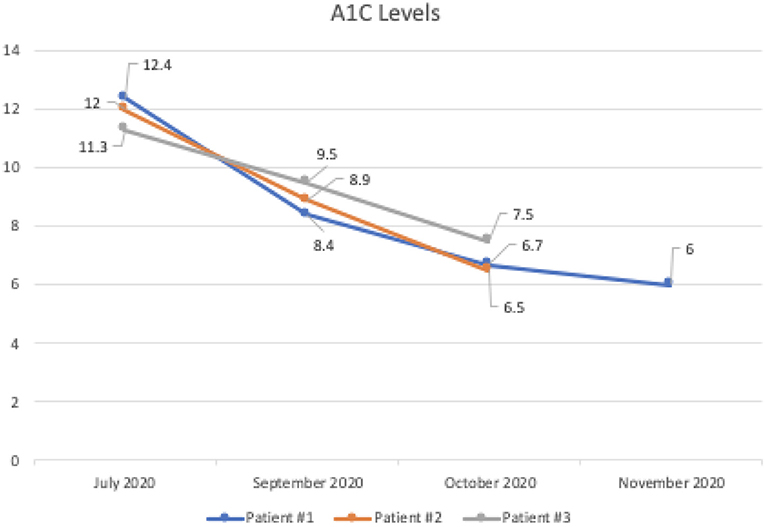
In the published Toward case series, three patients with type 2 diabetes used a patient-centered program combining a low-carbohydrate ketogenic diet, intermittent fasting and clinical oversight. Their average A1C fell from 11.9% to 6.7% in four months, a reduction of 5.2 percentage points. Diabetes medications—including insulin and metformin—were discontinued, and the improvement occurred without clinically significant weight loss.[2]
This matters because it challenges the idea that glucose can improve only after a person has lost a large amount of weight. Weight loss can be powerful, but lowering the carbohydrate burden can improve glycemia before the scale changes substantially.
The following figure illustrates these cases:
Fifty-four percent remission at one year
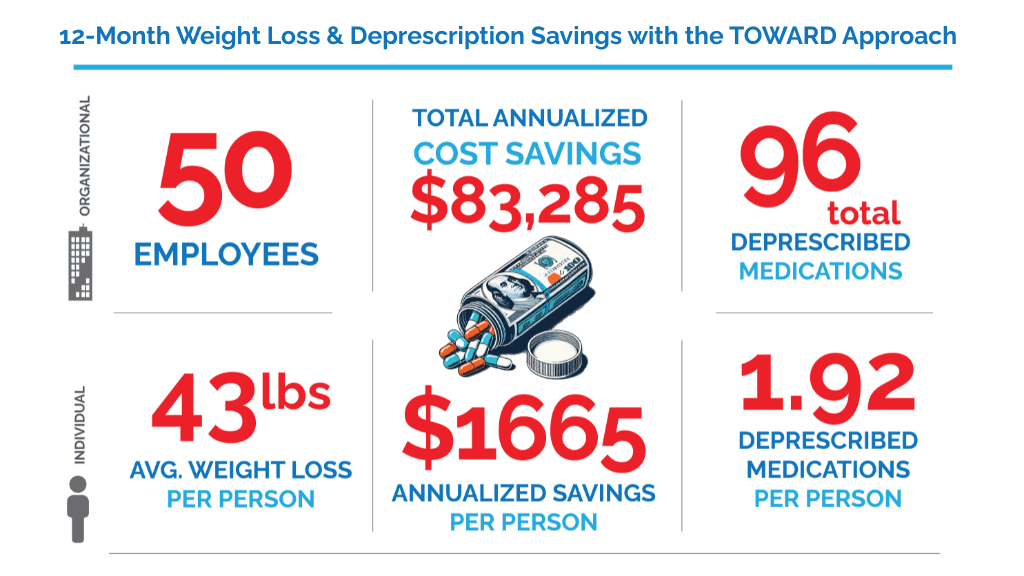
Toward Health’s 2026 Society of Metabolic Health Practitioners poster reported one-year outcomes from an ongoing employee metabolic-health program. Participants received a personalized ketogenic diet of no more than 30 grams of total carbohydrate per day, continuous glucose monitoring, a connected scale, blood-pressure monitoring, direct messaging with the health team and ongoing clinical support.[3]
The cohort included 64 employees: 59% began with prediabetes and 41%—26 people—began with type 2 diabetes.
Among those 26 participants with type 2 diabetes:
- 14 of 26, or 54%, achieved medication-free remission at one year;
- another 3 of 26, or 12%, reached A1C below 6.5% while taking metformin alone.[3]
Across the full 64-person cohort:
- mean A1C fell from 6.6% to 5.8%;
- mean fasting glucose fell from 123 to 104 mg/dL;
- mean fasting insulin fell from 21.8 to 12.9 μU/mL;
- mean body weight fell by 34.9 pounds; and
- 23 diabetes medications were deprescribed.[3]
The estimated annual savings from those deprescribed diabetes medications was $93,600.[3]
These results show what remission looks like when nutrition, monitoring, medical care and behavior support are treated as one integrated intervention. The change was not limited to A1C. Glucose, insulin, weight, medication burden and cost moved together.
Explore the Toward Health remission-poster page for the research behind this discussion.
Virta: nutritional ketosis sustained for five years
Virta’s continuous-care intervention provides important long-term evidence for a very-low-carbohydrate approach supported through telemedicine and health coaching.
At two years, 53.5% of participants met the study definition of diabetes reversal—A1C below 6.5% without glucose-lowering medication other than metformin—and 17.6% met the stricter remission definition. Insulin use fell by 62%, sulfonylurea use fell by 100%, and glucose-lowering medication use declined substantially.[5]
The five-year extension followed 122 participants who remained in the study:[6]
- 20% achieved medication-free remission;
- 32.5% had A1C below 6.5% without medication or with metformin alone;
- body weight remained 7.6% below baseline;
- triglycerides remained 18.4% lower;
- HDL cholesterol remained 17.4% higher; and
- improvements in A1C and inflammatory markers persisted.[6]
Sustained remission was documented over three years in 15.8% and over four years in 12.5% of five-year completers.[6]
The five-year data answer an important question: nutritional ketosis is not only capable of producing a short-term glucose response. With continuing clinical support, meaningful remission, lower medication requirements, weight loss and cardiometabolic improvement can persist for years.
David and Jen Unwin: remission in ordinary primary care
David and Jen Unwin’s work demonstrates that a remission-focused lower-carbohydrate program can be delivered in a community medical practice—not only in a formal research center.
At Norwood Surgery in England, 186 people with type 2 diabetes chose a lower-carbohydrate program and were followed for an average of 33 months. They represented 39% of the practice’s diabetes register.[7]
Across the cohort:
- median A1C fell from 63 to 46 mmol/mol—approximately 7.9% to 6.4%;
- median weight fell from 97 to 86 kilograms, with an average loss of approximately 10 kilograms or 22 pounds; and
- 51% achieved drug-free remission.[7]
The strongest predictor was how quickly effective treatment began:
- 77% of participants whose diabetes duration was less than one year achieved remission;
- remission remained possible with longstanding disease, including 20% of those with diabetes for more than 15 years.[7]
This is one of the clearest arguments for changing the message given at diagnosis. A patient should not be told to watch and wait while the disease progresses. The first year can be a powerful therapeutic window.
The Unwin results also show that remission-focused care does not require a hospital or a highly specialized research protocol. It requires honest communication about the glycemic effect of food, a treatment plan capable of producing metabolic change and continuing support.
DiRECT: remission through substantial weight loss
DiRECT tested a different nutritional pathway: an intensive total-diet-replacement and weight-management program delivered through primary care.
At one year, 46% of participants in the intervention group achieved remission. At two years, 36% remained in remission.[8]
Remission tracked strongly with weight loss. Participants who lost more weight were more likely to restore non-diabetic glucose regulation. This supports the biology of reducing excess fat in the liver and pancreas and restoring insulin sensitivity and beta-cell function.
The five-year extension illustrates the importance of maintenance. Among participants who were in remission at year two, 26% remained in remission at year five. Those who maintained remission at both year two and year five had an average weight loss of 8.9 kilograms.[9]
DiRECT does not show that remission is temporary or unrealistic. It shows that the biological improvement must be protected. When the metabolic drivers return, diabetes can return. When meaningful weight loss is maintained, remission can persist.
Fasting can be a therapeutic tool
Fasting is not required for every patient, but it can increase the strength of a nutritional intervention.
Toward Health’s case series combined intermittent fasting with a ketogenic diet and demonstrated rapid A1C and medication improvement without clinically significant weight loss.[2]
A randomized controlled trial of an intermittent calorie-restricted medical nutrition intervention found that 47.2% of participants achieved remission after the three-month intervention and three-month follow-up, compared with 2.8% in the control group. At 12 months, 44.4% of the intervention group remained in remission, and medication costs were 77.2% lower than in the control group.[10]
Fasting changes glucose and medication needs. It should not be treated as a casual challenge for people using insulin, sulfonylureas or SGLT2 inhibitors. It should be structured around the person’s medications, glucose response, eating behavior, medical history and ability to sustain the plan.
The evidence for carbohydrate restriction is broader than any one program
A systematic review and meta-analysis of randomized trials found that low- and very-low-carbohydrate diets increased diabetes remission at six months compared with control diets.[4]
Additional studies preserved from the original Disciple article reinforce different parts of the same clinical story:
- In 33 outpatients with severe type 2 diabetes, a 30%-carbohydrate diet lowered mean A1C from 10.9% to 7.4% in six months without insulin therapy, hospitalization or reinforcement of sulfonylureas.[11]
- In a two-year randomized trial, low-carbohydrate and higher-carbohydrate diets produced similar weight loss and A1C reduction, but the low-carbohydrate group achieved greater medication reduction, better glucose stability, lower triglycerides and better preservation of HDL cholesterol.[12]
These findings matter because A1C alone can hide an important difference. If two approaches produce the same A1C but one requires less medication and produces steadier daily glucose, those outcomes are not metabolically equivalent.
Simply adding “healthy foods” may not be enough
The research includes a randomized food-bank intervention to challenge conventional diabetes advice. The intervention provided diabetes-appropriate food, education, glucose monitoring and healthcare referral to 568 adults with A1C of at least 7.5%.[13]
At six months, the intervention did not significantly improve the primary glycemic outcome: mean A1C was 9.12% in the intervention group and 8.88% in the control group. The percentage reaching A1C below 7.5% also did not differ significantly.[13]
Food security, food stability and fruit-and-vegetable intake did improve. Those outcomes matter, but the intervention did not produce the glucose improvement needed in a population with poorly controlled diabetes.[13]
The practical conclusion is not that vegetables are harmful. It is that adding foods labeled healthy without sufficiently reducing the dietary glucose burden may be too weak an intervention to reverse severe dysglycemia.
What predicts remission?
No single factor decides a person’s future, but the combined evidence identifies several powerful predictors.
Shorter diabetes duration
The sooner effective treatment begins, the greater the chance that beta-cell function can recover. The Unwin cohort’s 77% remission rate within the first year of diagnosis is a compelling example.[7]
A sufficiently strong intervention
Small dietary changes may produce small results. Remission often requires a meaningful reduction in dietary carbohydrate, total energy, eating frequency, visceral fat—or a combination of these.
Loss of liver and visceral fat
DiRECT shows the power of substantial, maintained weight loss.[8,9] Weight loss is not the only mechanism, but it is an important one.
Lower carbohydrate exposure
Toward, Virta, Unwin, randomized low-carbohydrate trials and meta-analysis show that reducing carbohydrate can produce remission, improve daily glucose stability and reduce medication requirements.[2–7,11,12]
Monitoring and rapid medication adjustment
CGM or frequent glucose testing can show improvement before the next A1C. Clinical supervision allows insulin and other medications to be reduced as physiology changes, preventing treatment-induced hypoglycemia.
Continuing support and maintenance
Remission is easier to achieve than to protect in an environment designed around refined carbohydrate, frequent eating, poor sleep and sedentary living. Coaching, medical follow-up, accountability and a relapse plan help preserve the metabolic changes that made remission possible.
Remission is not only about body weight
Body weight matters, but it should not be used as the sole explanation for diabetes or the only measure of progress.
Toward Health’s published case series showed a 5.2-percentage-point average A1C reduction and medication discontinuation without clinically significant weight loss.[2] The Tay trial found greater medication reduction and glucose stability on a low-carbohydrate diet despite similar weight loss and A1C between groups.[12]
A person can therefore improve glycemia before losing a large amount of weight. Conversely, a person can lose weight while still experiencing post-meal hyperglycemia, high insulin demand or medication dependence.
The full outcome includes:
- A1C and fasting glucose;
- post-meal glucose and daily variability;
- fasting insulin when clinically useful;
- medication burden;
- liver and visceral fat;
- triglycerides and HDL cholesterol;
- blood pressure;
- strength and muscle mass;
- hunger and food preoccupation; and
- the ability to sustain the treatment in real life.
Deprescribing is part of successful treatment
If glucose improves while medication remains unchanged, a person can become overmedicated. Insulin and sulfonylureas can produce hypoglycemia when carbohydrate intake falls. Blood-pressure medication may also need adjustment as weight, insulin resistance and fluid balance change. SGLT2 inhibitors require specific clinical attention when carbohydrate intake is very low because ketoacidosis can occur even without extreme hyperglycemia.[14]
Deprescribing does not mean abandoning medical care. It means reducing or stopping medication that is no longer needed because the patient’s physiology has improved.
Toward’s outcomes make this concrete: 23 diabetes medications were deprescribed in one year while 54% of participants with type 2 diabetes reached medication-free remission.[3]
Medication changes should be planned before beginning a ketogenic diet or fasting regimen. Do not stop insulin or other prescribed medication independently. Article 4 in this series will provide the full medication-by-medication discussion.
What if someone does not reach formal remission?
Formal remission is a powerful goal, but it is not the only meaningful outcome.
A person who lowers A1C from 11% to 7%, stops insulin, reduces multiple medications, improves triglycerides and blood pressure and loses visceral fat has achieved a profound metabolic improvement—even if the A1C has not yet fallen below 6.5% without medication.
Long-duration diabetes reduces the probability of remission, but it does not eliminate the value of treatment. In the Unwin cohort, one in five participants with diabetes for more than 15 years achieved remission.[7] Others improved glucose and medication burden without meeting the formal threshold.
The correct response to an incomplete result is not to declare diet ineffective. It is to assess what remains active:
- Is carbohydrate intake low enough to change the glucose pattern?
- Is hidden sugar or starch maintaining hyperglycemia?
- Is medication contributing to weight gain or high insulin levels?
- Is sleep apnea untreated?
- Is stress or emotional eating disrupting the plan?
- Is fasting appropriate?
- Is insulin production severely impaired?
- Could the diagnosis be type 1 diabetes, LADA, pancreatic diabetes or another condition rather than typical type 2 diabetes?
The plan should be adjusted to the biology and the person.
The message every patient should hear
Type 2 diabetes is serious. It is also treatable, and remission is possible.
The research does not support telling every newly diagnosed patient to expect inevitable decline. It supports offering a real choice: medication can control glucose, while nutrition, weight loss, fasting, movement, sleep, metabolic monitoring and appropriate medication can change the disease process itself.
There is more than one evidence-based route:
- Toward demonstrates ketogenic nutrition, fasting, monitoring and supervised deprescribing.
- Virta demonstrates nutritional ketosis supported continuously for five years.
- David and Jen Unwin demonstrate lower-carbohydrate remission in routine primary care.
- DiRECT demonstrates remission through substantial, maintained weight loss.
- Randomized fasting and carbohydrate-restriction trials demonstrate that these are reproducible therapeutic tools.[2–12]
The best plan is the one that is medically appropriate, strong enough to produce change and sustainable enough to maintain it.
A diagnosis describes where your metabolism is today. It does not determine where it must remain.
Continue the diabetes series
- Type 2 Diabetes and Insulin Resistance: Start Here — the metabolic foundations, diagnosis and possibility of change.
- Prediabetes Is an Early Warning, Not the Beginning — why metabolic dysfunction begins before the diagnostic threshold.
- Can Type 2 Diabetes Go Into Remission? — this article.
- Low-Carb Nutrition and Diabetes Medications: What Can Change Quickly — medication tradeoffs, reduction, GLP-1/SGLT2 context and safety.
References
- Riddle MC, Cefalu WT, Evans PH, et al. Consensus report: definition and interpretation of remission in type 2 diabetes. Diabetes Care. 2021;44(10):2438–2444. doi:10.2337/dci21-0034
- Gavidia K, Kalayjian T. Treating diabetes utilizing a low carbohydrate ketogenic diet and intermittent fasting without significant weight loss: a case report. Front Nutr. 2021;8:687081. doi:10.3389/fnut.2021.687081
- Buchanan L, Calkins M, Richardson C, Eiges A, Wiley B, Reid T, Basmadjian V, Kalayjian T. One-year outcomes in type 2 diabetes remission and medication deprescription in a low-carbohydrate metabolic health employee wellness program. Poster presented at: Society of Metabolic Health Practitioners Conference; 2026; Boca Raton, Florida. Toward Health poster and results
- Goldenberg JZ, Day A, Brinkworth GD, et al. Efficacy and safety of low and very low carbohydrate diets for type 2 diabetes remission: systematic review and meta-analysis of published and unpublished randomized trial data. BMJ. 2021;372:m4743. doi:10.1136/bmj.m4743
- Athinarayanan SJ, Adams RN, Hallberg SJ, et al. Long-term effects of a novel continuous remote care intervention including nutritional ketosis for the management of type 2 diabetes: a 2-year non-randomized clinical trial. Front Endocrinol (Lausanne). 2019;10:348. doi:10.3389/fendo.2019.00348
- McKenzie AL, Athinarayanan SJ, Van Tieghem MR, et al. Five-year effects of a novel continuous remote care model with carbohydrate-restricted nutrition therapy including nutritional ketosis in type 2 diabetes: an extension study. Diabetes Res Clin Pract. 2024;217:111898. doi:10.1016/j.diabres.2024.111898
- Unwin D, Delon C, Unwin J, Tobin S, Taylor R. What predicts drug-free type 2 diabetes remission? Insights from an 8-year general practice service evaluation of a lower carbohydrate diet with weight loss. BMJ Nutr Prev Health. 2023;6(1):46–55. doi:10.1136/bmjnph-2022-000544
- Lean MEJ, Leslie WS, Barnes AC, et al. Durability of a primary care-led weight-management intervention for remission of type 2 diabetes: 2-year results of the DiRECT open-label, cluster-randomised trial. Lancet Diabetes Endocrinol. 2019;7(5):344–355. doi:10.1016/S2213-8587(19)30068-3
- Lean MEJ, Leslie WS, Barnes AC, et al. Five-year follow-up of the randomised Diabetes Remission Clinical Trial (DiRECT) of continued support for weight-loss maintenance in the UK: an extension study. Lancet Diabetes Endocrinol. 2024;12(4):233–246. doi:10.1016/S2213-8587(23)00385-6
- Yang X, Zhou J, Shao H, et al. Effect of an intermittent calorie-restricted diet on type 2 diabetes remission: a randomized controlled trial. J Clin Endocrinol Metab. 2023;108(6):1415–1424. doi:10.1210/clinem/dgac661
- Haimoto H, Sasakabe T, Wakai K, Umegaki H. Effects of a low-carbohydrate diet on glycemic control in outpatients with severe type 2 diabetes. Nutr Metab (Lond). 2009;6:21. doi:10.1186/1743-7075-6-21
- Tay J, Thompson CH, Luscombe-Marsh ND, et al. Effects of an energy-restricted low-carbohydrate, high-unsaturated-fat/low-saturated-fat diet versus a high-carbohydrate, low-fat diet in type 2 diabetes: a 2-year randomized clinical trial. Diabetes Obes Metab. 2018;20(4):858–871. doi:10.1111/dom.13164
- Seligman HK, Smith M, Rosenmoss S, Marshall MB, Waxman E. Comprehensive diabetes self-management support from food banks: a randomized controlled trial. Am J Public Health. 2018;108(9):1227–1234. doi:10.2105/AJPH.2018.304528
- American Diabetes Association Professional Practice Committee for Diabetes. Pharmacologic approaches to glycemic treatment: Standards of Care in Diabetes—2026. Diabetes Care. 2026;49(Suppl 1):S183–S215. Official guideline