
Binge eating is often described as a failure of willpower. That explanation is both incomplete and unhelpful.
Eating behavior is shaped by hunger, stress, sleep, habit, food availability, learned cues and the reward value of food. For some people, these forces can become so powerful that eating feels disconnected from physical hunger. A stressful evening, a familiar place or one highly rewarding food may trigger an episode that feels automatic—and is followed by shame, regret or the promise to “do better tomorrow.”
That cycle is real. It is also treatable.
Low-carbohydrate nutrition can help by reducing hunger and exposure to foods that repeatedly trigger loss-of-control eating. Research from Toward Health clinicians and others has documented meaningful improvements in binge-eating and food-addiction symptoms. A comprehensive approach combines food strategy with medical, psychological and behavioral support tailored to the individual.
Binge eating, stress eating and food addiction are related—but not identical
Binge eating means consuming an unusually large amount of food over a relatively short period while feeling unable to control what or how much one is eating. When episodes recur at least weekly for three months, cause significant distress and are not accompanied by regular compensatory behaviors such as purging, a clinician may diagnose binge-eating disorder (BED).[14,15]
Stress eating or emotional eating describes eating in response to tension, sadness, loneliness, anger, boredom or another emotional cue. The amount eaten may be small or large, and the experience does not necessarily meet the criteria for BED.
Food addiction is a research and clinical framework used to describe addictive-like responses to certain foods, including intense craving, continued use despite harm and repeated difficulty cutting down. Psychologist Ashley Gearhardt and colleagues developed the Yale Food Addiction Scale to measure eating patterns that resemble features of substance addiction.[19] Gearhardt’s subsequent work has helped establish ultra-processed food addiction as a clinically useful framework and has identified ultra-processed foods high in refined carbohydrates and fats as especially relevant.[2,20]
These experiences can overlap, but one does not automatically establish another. A useful assessment asks not only what a person eats, but also how much, how quickly, under what circumstances, with what sense of control and with what emotional consequences.
Why stress can feel like hunger
Stress does more than produce an unpleasant feeling. It can change attention, motivation, impulse control and the perceived reward value of food. Chronic or acute stress may intensify cravings and make familiar coping behaviors easier to trigger.[5]
That is why an eating episode may begin even when the stomach is not asking for food. The cue may be an argument, exhaustion after work, a night of poor sleep or simply entering a place associated with prior binge eating. Once that loop is established, shame can become another stressor—and help keep the cycle going.
Recognizing the cue is not an excuse. It is actionable information. “I have no willpower” offers no next step. “I am most vulnerable when I arrive home depleted and my trigger foods are immediately available” points toward a plan.
The food itself can make control harder
Not all foods affect reward, appetite and intake in the same way.
In a study using the Yale Food Addiction Scale, highly processed foods—particularly those high in refined carbohydrate, fat or glycemic load—were most strongly associated with addictive-like eating reports.[2] Brain-imaging research found that foods combining fat and carbohydrate were valued more highly than equally familiar and equally caloric foods containing mainly fat or carbohydrate alone.[3]
In a tightly controlled inpatient trial, participants ate about 500 more calories per day and gained weight while eating an ultra-processed diet compared with a minimally processed diet, even though the diets as presented were matched for several nutrients.[4] A separate clinical chart review found that the foods reported during binge episodes in its small eating-disorder sample were all classified as ultra-processed.[6]
Ayton and Ibrahim’s review places this change in a broader historical context: the growing dominance of ultra-processed food has changed the metabolic and neurobiological environment in which eating disorders develop and persist.[10]
These findings do not prove that every processed food is “addictive” or that carbohydrate alone causes binge eating. They do support a practical observation: foods engineered around concentrated combinations of refined starch, sugar and fat can be unusually easy to keep eating.
Other retained studies add metabolic context. Meals with different carbohydrate content can produce different patterns of hunger, satiety hormones, glucose change and activity in brain regions involved in reward and energy balance.[7–9] Together, these findings help explain why changing food composition can change both appetite and the drive to eat.
How low-carbohydrate nutrition can help
A well-formulated low-carbohydrate plan changes more than a carbohydrate target. In practice, it often reduces sugar, refined starch and ultra-processed foods while emphasizing protein, minimally processed foods, nonstarchy vegetables as tolerated and fats appropriate to the person’s needs.
A clinical review by Sethi, Sinha and Gearhardt describes low-carbohydrate ketogenic therapy as a metabolic treatment approach for binge eating and ultra-processed food addiction, connecting carbohydrate restriction with appetite, insulin signaling, reward and abstinence from repeatedly triggering foods.[13]
That change can help in several ways:
- Physical hunger may become less frequent or less urgent.
- Glucose and insulin swings may be reduced.
- Repeated exposure to personally triggering foods may decrease.
- Meals built around protein and whole foods may be more satisfying.
- Clear food boundaries may reduce constant negotiation and decision fatigue.
A personalized plan accounts for medical history, eating-disorder history, medications, food preferences and the foods that reliably trigger loss of control. The goal is to make eating more stable and sustainable—not to create another source of guilt or punishment.
What the 2020 ketogenic case series found
In 2020, Toward Health founder Dr. Tro Kalayjian coauthored a case series involving three adults with obesity who also reported binge-eating and food-addiction symptoms. Each followed a low-carbohydrate ketogenic diet for six to seven months.[1]
All three reported reductions in binge eating, cravings or loss-of-control symptoms on validated questionnaires. They also lost 10% to 24% of their initial body weight, and the reported improvements were maintained for 9 to 17 months after starting the intervention.
The case series established the clinical feasibility of a ketogenic approach for patients with obesity, binge-eating symptoms and food-addiction symptoms. It also showed that improvements in eating behavior could be sustained alongside meaningful weight loss.[1]
What the 2025 TOWARD study added
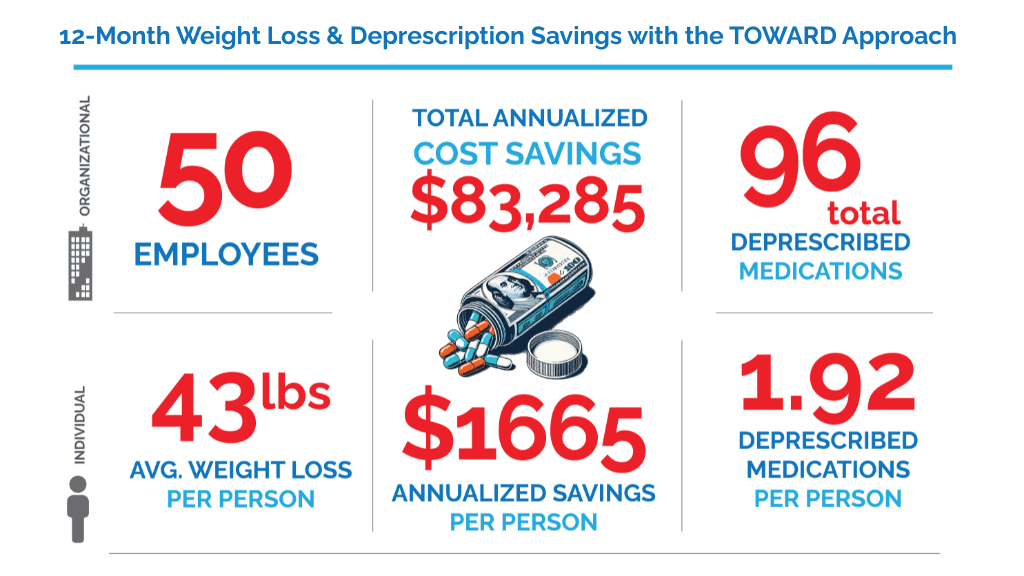
The next step was a real-world study of a much broader intervention. Published in Frontiers in Psychiatry in 2025, the TOWARD report followed 44 adults participating in an employee wellness program.[12]
TOWARD combined:
- Text-based communication
- Online clinical interactions
- Wellness coaching
- Asynchronous education and community support
- Real-time biofeedback and remote monitoring
- Dietary modification emphasizing therapeutic carbohydrate reduction
Among the 37 participants with relevant follow-up questionnaires, average food-addiction symptom scores decreased by 40.7% and average binge-eating scores decreased by 34.7%. Thirty of 37 participants—81.1%—improved their binge-eating score. The statistical analysis suggested that the improvements were not explained only by the amount of weight lost.[12]
The TOWARD results demonstrate the value of combining therapeutic carbohydrate reduction with coaching, clinician access, education, community, self-monitoring and personalized replacement strategies. They also show that improvements in compulsive eating can occur independently of the amount of weight lost.[12]
What Jen Unwin’s work adds
Jen Unwin and colleagues have documented similar results in online programs built around real, low-carbohydrate food, psychoeducation and social support. Their 2022 report included 103 participants across programs in the United Kingdom, North America and Sweden. Food-addiction symptoms decreased, mental wellbeing improved and average body weight declined.[16]
The 12-month follow-up showed that improvements in ultra-processed food-addiction symptoms and mental wellbeing were sustained after the active program, supported by monthly clinician-facilitated groups and participant-led peer support.[17]
In 2026, Unwin and colleagues also reported binge-eating outcomes from the Liberate program. Among 117 adults, the average Binge Eating Scale score fell from 26.5 at baseline to 18.0 after eight weeks and remained improved at 19.2 after six months. The proportion with severe binge-eating scores fell from 48.7% to 24.8% after the program and remained lower at six months.[18]
Across these programs, the pattern is consistent: removing sugar, refined carbohydrates, ultra-processed foods and personally identified trigger foods works best when paired with education, replacement strategies, relapse planning and ongoing human support.
Replacement strategies: the practical heart of the plan
Simply removing a familiar coping food leaves an empty space. A durable plan replaces both the food and the function it served.
Replace the food
Identify the specific foods that repeatedly lead to loss of control. Keep convenient, satisfying alternatives available before the high-risk moment arrives. The best replacement is not necessarily a “keto version” of the same trigger food. For some people, a sweet or highly processed low-carb product keeps the reward loop active. Others can use it successfully as a bridge.
Possible replacements include a prepared protein-centered meal, eggs, meat or fish, plain Greek yogurt or cottage cheese if tolerated, a measured portion of a non-triggering food, or another simple whole-food option chosen with the care team.
Replace the moment
Build a short transition between the trigger and the response. That may mean leaving the kitchen, taking a brief walk, showering after work, making tea, calling someone, joining a support chat or setting a ten-minute pause before deciding what to eat.
The purpose is not to prove that a person can “white-knuckle” a craving. It is to interrupt an automatic sequence long enough to make a deliberate choice.
Replace the isolation
Secrecy and shame strengthen the cycle. Decide in advance whom to contact when risk rises: a clinician, therapist, coach, peer-support group or trusted person. The TRACE randomized trial offers broader evidence that structured telehealth support can improve addictive-eating symptoms and stress, even though it did not test a ketogenic diet.[11]
Replace perfection with a recovery plan
One episode does not erase prior progress. A recovery plan can be as simple as: stop the episode safely, avoid compensatory restriction or punishment, record the trigger without judgment, contact support if needed and return to the next planned meal.
Patterns improve through repeated recovery, not perfect performance.
When professional help should come first
Binge-eating disorder is a recognized eating disorder, not just a nutrition problem. Evidence-based care may include psychotherapy, nutritional counseling, medical monitoring and medication.[14,15]
Seek an evaluation when eating episodes are recurrent, distressing, secretive or feel out of control—especially when they involve purging, laxatives, prolonged fasting, compulsive exercise, self-harm thoughts, major depression or rapid changes in weight or health. A history of anorexia nervosa, bulimia nervosa or another restrictive eating disorder requires particular care before carbohydrate restriction or fasting is attempted.
People using insulin, sulfonylureas, SGLT2 inhibitors or blood-pressure medication should make major dietary changes with medical supervision because medication needs and safety can change quickly.
Low-carbohydrate nutrition can be a central nutritional component of treatment while appropriate eating-disorder and mental-health care address the full clinical picture.
The takeaway
Binge eating and stress eating are not moral failures. They emerge from an interaction among biology, emotion, environment, learning and the properties of food itself.
Reducing refined carbohydrates and ultra-processed trigger foods can lower hunger and make food feel quieter. The 2020 case series and the 2025 TOWARD study provide clinical evidence that therapeutic carbohydrate reduction—especially when combined with coaching, monitoring, education and support—can improve binge-eating and food-addiction symptoms.[1,12]
The most useful plan is compassionate and practical: identify the cue, reduce exposure to the foods that reliably overwhelm control, build satisfying replacements, prepare for stress and ask for help early. The goal is not stricter self-punishment. It is a safer environment, steadier appetite and a growing sense of choice.
Related companion resource
Hunger Signals, Food Reward, and Low-Carb Diets — Watch Dr. Tro’s Grand Rounds lecture for a deeper discussion of physical hunger, appetite, food reward and ketogenic nutrition.
References
-
Carmen M, Safer DL, Saslow LR, et al. Treating binge eating and food addiction symptoms with low-carbohydrate ketogenic diets: a case series. J Eat Disord. 2020;8:2. doi: 10.1186/s40337-020-0278-7. PubMed
-
Schulte EM, Avena NM, Gearhardt AN. Which foods may be addictive? The roles of processing, fat content, and glycemic load. PLoS One. 2015;10(2):e0117959. doi: 10.1371/journal.pone.0117959
-
DiFeliceantonio AG, Coppin G, Rigoux L, et al. Supra-additive effects of combining fat and carbohydrate on food reward. Cell Metab. 2018;28(1):33–44.e3. doi: 10.1016/j.cmet.2018.05.018
-
Hall KD, Ayuketah A, Brychta R, et al. Ultra-processed diets cause excess calorie intake and weight gain: an inpatient randomized controlled trial of ad libitum food intake. Cell Metab. 2019;30(1):67–77.e3. doi: 10.1016/j.cmet.2019.05.008
-
Sinha R. Role of addiction and stress neurobiology on food intake and obesity. Biol Psychol. 2018;131:5–13. doi: 10.1016/j.biopsycho.2017.05.001
-
Ayton A, Ibrahim A, Dugan J, Galvin E, Wright OW. Ultra-processed foods and binge eating: a retrospective observational study. Nutrition. 2021;84:111023. doi: 10.1016/j.nut.2020.111023
-
Holsen LM, Hoge WS, Lennerz BS, et al. Diets varying in carbohydrate content differentially alter brain activity in homeostatic and reward regions in adults. J Nutr. 2021;151(8):2465–2476. doi: 10.1093/jn/nxab090
-
Melanson KJ, Westerterp-Plantenga MS, Saris WH, Smith FJ, Campfield LA. Blood glucose patterns and appetite in time-blinded humans: carbohydrate versus fat. Am J Physiol. 1999;277(2):R337–R345. doi: 10.1152/ajpregu.1999.277.2.R337
-
Radulescu A, Gannon MC, Nuttall FQ. The effect on glucagon, glucagon-like peptide-1, total and acyl-ghrelin of dietary fats ingested with and without potato. J Clin Endocrinol Metab. 2010;95(7):3385–3391. doi: 10.1210/jc.2009-2559. Original article link
-
Ayton A, Ibrahim A. The Western diet: a blind spot of eating disorder research?—a narrative review and recommendations for treatment and research. Nutr Rev. 2020;78(7):579–596. doi: 10.1093/nutrit/nuz089
-
Skinner JA, Leary M, Whatnall M, et al. A three-arm randomised controlled trial of a telehealth intervention targeting improvement in addictive eating for Australian adults (the TRACE program). Appetite. 2024;195:107211. doi: 10.1016/j.appet.2024.107211. Original article link
-
Saner E, Kalayjian T, Buchanan L, et al. TOWARD: a metabolic health intervention that improves food addiction and binge eating symptoms. Front Psychiatry. 2025;16:1612551. doi: 10.3389/fpsyt.2025.1612551. Full text
-
Sethi S, Sinha A, Gearhardt AN. Low carbohydrate ketogenic therapy as a metabolic treatment for binge eating and ultraprocessed food addiction. Curr Opin Endocrinol Diabetes Obes. 2020;27(5):275–282. doi: 10.1097/MED.0000000000000571. PubMed Added clinical review context.
-
National Institute of Diabetes and Digestive and Kidney Diseases. Binge Eating Disorder. NIDDK Added clinical definition and treatment context.
-
National Institute of Mental Health. Eating Disorders: What You Need to Know. NIMH Added clinical safety and treatment context.
-
Unwin J, Delon C, Giæver H, et al. Low carbohydrate and psychoeducational programs show promise for the treatment of ultra-processed food addiction. Front Psychiatry. 2022;13:1005523. doi: 10.3389/fpsyt.2022.1005523. PubMed
-
Unwin J, Delon C, Giæver H, et al. Low carbohydrate and psychoeducational programs show promise for the treatment of ultra-processed food addiction: 12-month follow-up. Front Psychiatry. 2025;16:1556988. doi: 10.3389/fpsyt.2025.1556988. Full text
-
Bennett E, Bellamy EL, Lycett D, Unwin J, Whelan M, Wiss DA, Patel R. Changes in binge eating symptoms following an online community-based ultra-processed food addiction intervention: Liberate. Front Public Health. 2026;14:1807450. doi: 10.3389/fpubh.2026.1807450. PubMed Added as current Jen Unwin-associated evidence.
-
Gearhardt AN, Corbin WR, Brownell KD. Preliminary validation of the Yale Food Addiction Scale. Appetite. 2009;52(2):430–436. doi: 10.1016/j.appet.2008.12.003. PubMed
-
Gearhardt AN, Bueno NB, DiFeliceantonio AG, et al. Social, clinical, and policy implications of ultra-processed food addiction. BMJ. 2023;383:e075354. doi: 10.1136/bmj-2023-075354. PubMed