
Important: This is educational content, not an individualized medication-adjustment protocol. People taking glucose-lowering medication should not begin a ketogenic diet, substantially reduce carbohydrate intake, or start fasting without a medication plan from a clinician who understands therapeutic carbohydrate restriction.
When the food changes, the medication plan may need to change immediately.
That is one of the most important—and most frequently overlooked—facts about using low-carbohydrate nutrition to treat type 2 diabetes.
Digestible carbohydrates—especially sugars and starches—become glucose after digestion. When a person sharply reduces them, the amount of glucose entering the bloodstream after meals can fall within days. The need for insulin or medications that force the pancreas to release insulin can fall just as quickly.[1,2]
If the medication stays the same while the glucose burden drops, blood sugar can fall too low. The nutrition is not causing the problem. The unchanged medication dose may now be too strong for the new metabolic state.
This is why deprescribing is not an afterthought. It is part of treatment.
At Toward Health, the goal is not simply to force A1C downward while medication burden rises. The goal is to improve the metabolic condition that produced high glucose in the first place—using food, movement, sleep, stress treatment, weight loss when needed, and medication when it adds meaningful benefit.
As insulin resistance and glucose improve, medication requirements can fall. Insulin can sometimes be stopped. Other glucose-lowering drugs can often be reduced or discontinued. Medication-free remission is possible.[3–8]
That is not neglect. It is what successful treatment can look like.
Why can glucose change before major weight loss?
Glucose can improve before the scale changes substantially because carbohydrate restriction acts directly on the glucose and insulin system.
Reducing sugar and starch:
- lowers the immediate glucose load from meals;
- reduces the amount of insulin needed to manage that load;
- can reduce post-meal glucose excursions and glucose variability;
- can lower liver glucose production and improve hepatic insulin sensitivity over time; and
- helps many people gain better access to stored body fat for fuel.
Toward Health has published cases in which average A1C fell from 11.9% to 6.7% in four months, insulin and metformin were discontinued, and the improvement occurred without clinically significant weight loss.[3]
This does not mean weight loss is unimportant. Loss of liver, pancreatic and visceral fat can be profoundly therapeutic. It means that a person does not have to wait for major weight loss before expecting meaningful glucose improvement—or before needing medication reassessment.
Deprescribing is active medical care
Prescribing a medication requires clinical judgment. So does removing one.
Safe deprescribing means anticipating the metabolic response, identifying which medications can cause immediate harm as glucose falls, reviewing glucose data frequently, and adjusting treatment before hypoglycemia or ketoacidosis occurs.[1,2,9]
The central questions are:
- Can this medication cause hypoglycemia as carbohydrate intake falls?
- Can it increase the risk of ketoacidosis during nutritional ketosis, fasting, dehydration or illness?
- Does it provide heart, kidney, weight or other benefits that may remain valuable even when A1C improves?
- Does the medication still provide enough benefit to justify its cost, burden and side effects?
The answer will not be the same for every person or every medication. But the need to ask these questions is not optional.
The medications that may need attention first
Insulin
Insulin can be essential and lifesaving. It is also the medication most likely to produce serious hypoglycemia if carbohydrate intake falls and the dose is not changed.
Mealtime insulin is especially tied to the carbohydrate content of a meal. When the meal contains far less carbohydrate, the same bolus dose may become excessive. Basal insulin may also need progressive reduction as fasting glucose and insulin resistance improve.[1,2]
Published low-carbohydrate protocols have used substantial clinician-directed insulin reductions at the start of treatment, followed by frequent monitoring and continued down-titration. These are protocols—not instructions for a reader to change a dose alone. The correct adjustment depends on baseline glucose, A1C, insulin type, total daily dose, degree of carbohydrate restriction, kidney function, hypoglycemia history and whether the diagnosis is truly type 2 diabetes.[1,2]
That last point matters. An adult believed to have type 2 diabetes may instead have latent autoimmune diabetes in adults or another insulin-deficient form of diabetes. Such a person may always require insulin, and stopping basal insulin can precipitate diabetic ketoacidosis.[1,9]
Sulfonylureas and meglitinides
Sulfonylureas and meglitinides force the pancreas to release more insulin. Examples include glipizide, glyburide, glimepiride and repaglinide.
Because their action is not fully matched to the carbohydrate content of the next meal, these medications can cause hypoglycemia when sugar and starch are sharply reduced. They can also promote weight gain—working against one of the central goals of metabolic treatment.[1,10,11]
These drugs are therefore commonly among the first medications reduced or stopped in clinician-led low-carbohydrate protocols.[1,2]
SGLT2 inhibitors
SGLT2 inhibitors—including empagliflozin, dapagliflozin and canagliflozin—lower glucose by causing the kidneys to excrete more glucose in the urine. They can provide important heart and kidney benefits for selected patients.[9]
They also create a special safety issue during ketogenic nutrition or prolonged fasting: euglycemic diabetic ketoacidosis. This is ketoacidosis that can occur without the very high glucose level many patients and clinicians expect.[1,9,12]
Nutritional ketosis and diabetic ketoacidosis are not the same condition. Nutritional ketosis is a regulated physiologic response to reduced carbohydrate availability. Diabetic ketoacidosis is a dangerous state of inadequate effective insulin, excessive ketone production, acidosis and dehydration.
The confusion arises because an SGLT2 inhibitor can increase ketoacidosis risk during very-low-carbohydrate eating, prolonged fasting, dehydration, excessive alcohol intake, acute illness or insulin reduction. Normal or only moderately elevated glucose does not rule it out.[9,12]
Anyone taking an SGLT2 inhibitor needs a specific clinician-directed plan before starting a ketogenic diet or fasting. That plan may include holding or discontinuing the medication, blood-ketone monitoring, sick-day rules and clear instructions for urgent evaluation.[1,9,12]
The American Diabetes Association's 2026 Standards of Care reinforce this point. They call for continuing medical oversight when a person follows a very-low-carbohydrate eating plan because insulin and other diabetes medications may need adjustment, and they advise avoiding a very-low-carbohydrate pattern while a person is actively taking an SGLT2 inhibitor because of the ketoacidosis risk.[9]
Metformin
Metformin has little risk of causing hypoglycemia by itself. It reduces liver glucose production and is often continued while carbohydrate intake is reduced.[1]
Whether it should remain long term depends on the person’s goals, response, kidney function, tolerance and the reason it was prescribed. Continuing metformin may be reasonable even when glucose has normalized, but a person taking metformin does not meet the usual definition of medication-free diabetes remission.[13]
GLP-1 and GIP/GLP-1 medications
GLP-1 receptor agonists and dual GIP/GLP-1 medications can reduce appetite, slow gastric emptying, improve glucose and produce substantial weight loss. Some agents also provide cardiovascular, kidney or liver benefits in appropriate patients.[9]
These medications generally have a low risk of hypoglycemia when used alone. When combined with insulin or a sulfonylurea, however, those medications may need to be reduced as glucose and food intake fall.[9]
Low-carbohydrate nutrition and GLP-1 treatment are not mutually exclusive. Nutrition can lower the glucose and insulin burden while the medication helps with appetite, food noise, weight and cardiometabolic risk. In other patients, sustained metabolic improvement may make it possible to reduce or discontinue the GLP-1 medication with a plan for hunger, food structure, strength, adequate protein and weight-regain prevention.
The right goal is not automatically “medication forever” or “no medication at any cost.” The goal is the least medication burden that safely supports the best metabolic health.
DPP-4 inhibitors, thiazolidinediones and alpha-glucosidase inhibitors
DPP-4 inhibitors generally have little hypoglycemia risk but modest glucose-lowering potency. Their value can be reassessed as glucose improves.[1]
Thiazolidinediones such as pioglitazone and rosiglitazone can improve insulin sensitivity, but they can also cause weight gain, fluid retention and other adverse effects. They may not need immediate reduction for hypoglycemia prevention, but they deserve deliberate review as the metabolic state changes.[1,9]
Alpha-glucosidase inhibitors such as acarbose slow carbohydrate digestion. As dietary starch falls, their practical benefit may fall as well.[1]
A practical medication map
| Medication class | What changes when carbohydrate falls | Primary concern | Typical clinical priority |
|---|---|---|---|
| Mealtime and basal insulin | Glucose requirement can fall rapidly | Hypoglycemia; excessive reduction can cause severe hyperglycemia or ketoacidosis in insulin-deficient diabetes | Plan changes before starting; monitor closely and adjust repeatedly |
| Sulfonylureas and meglitinides | Medication continues driving insulin release despite less incoming glucose | Hypoglycemia and weight gain | Frequently reduce or stop early under supervision |
| SGLT2 inhibitors | Glucose may look acceptable even as ketones and acidosis rise | Euglycemic diabetic ketoacidosis | Create an explicit ketogenic-diet, fasting and sick-day plan; often hold or discontinue when appropriate |
| Metformin | Usually remains compatible with lower carbohydrate intake | Gastrointestinal effects, B12 deficiency and kidney-function considerations | Often continue initially; reassess according to goals and response |
| GLP-1 or GIP/GLP-1 medications | Appetite and food intake may fall further | Gastrointestinal effects; hypoglycemia mainly when paired with insulin or a secretagogue | May continue for weight or organ benefit; adjust insulin/secretagogue and reassess long-term need |
| DPP-4 inhibitors | Usually little immediate safety conflict | Modest added value as glucose normalizes | Reassess after higher-risk drugs |
| Thiazolidinediones | Little immediate hypoglycemia risk | Weight gain, edema, heart-failure and bone considerations | Reassess as glucose permits |
| Alpha-glucosidase inhibitors | Less starch remains for the drug to block | Diminishing usefulness; gastrointestinal effects | Often becomes unnecessary |
This table is a map for a clinician-patient conversation. It is not a dosing guide.
What the major medication trials teach us
Older diabetes trials established that lowering glucose can reduce microvascular complications. They also exposed an uncomfortable truth: how glucose is lowered matters.
UKPDS: lower glucose, but more hypoglycemia and weight gain
In UKPDS 33, intensive glucose treatment with sulfonylureas or insulin lowered A1C and reduced the aggregate diabetes-related endpoint, driven largely by fewer microvascular events. But it also caused more hypoglycemia and significantly more weight gain. Mean weight gain in the intensive group was 2.9 kg, and participants assigned insulin gained an average of 4.0 kg.[10]
The UKPDS figure:
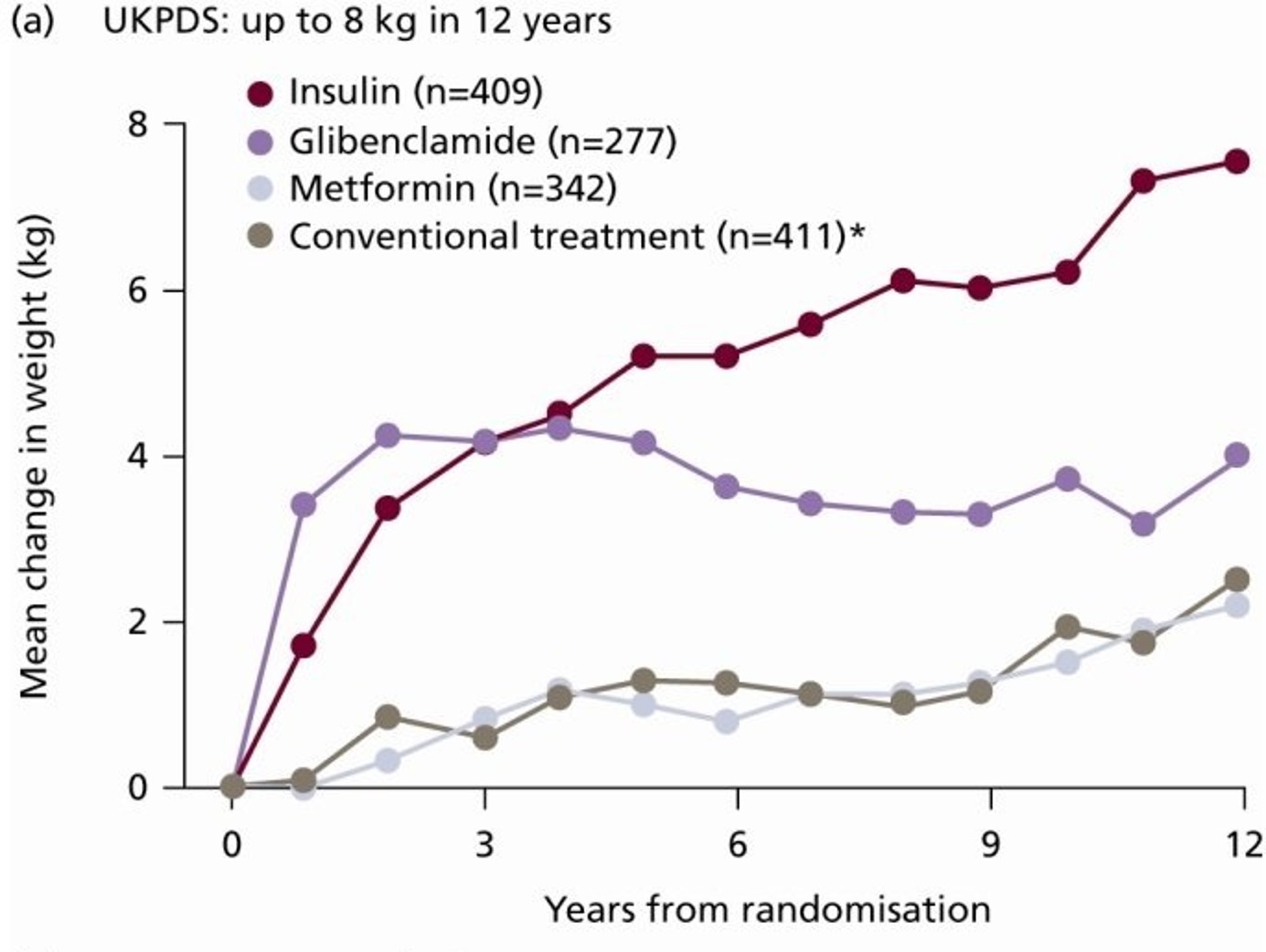
The lesson is not that glucose does not matter. It is that lowering glucose with treatment that raises insulin exposure and body weight may create competing metabolic costs.
ADOPT: medication mechanisms produce different tradeoffs
ADOPT compared rosiglitazone, metformin and glyburide as initial monotherapy. Glyburide produced more hypoglycemia; rosiglitazone produced the most weight gain and edema; metformin produced gastrointestinal effects and modest weight loss.[11]
The research includes the ADOPT design paper. That citation is preserved below, and the primary outcomes paper is added for the public interpretation.
The ADOPT figure:
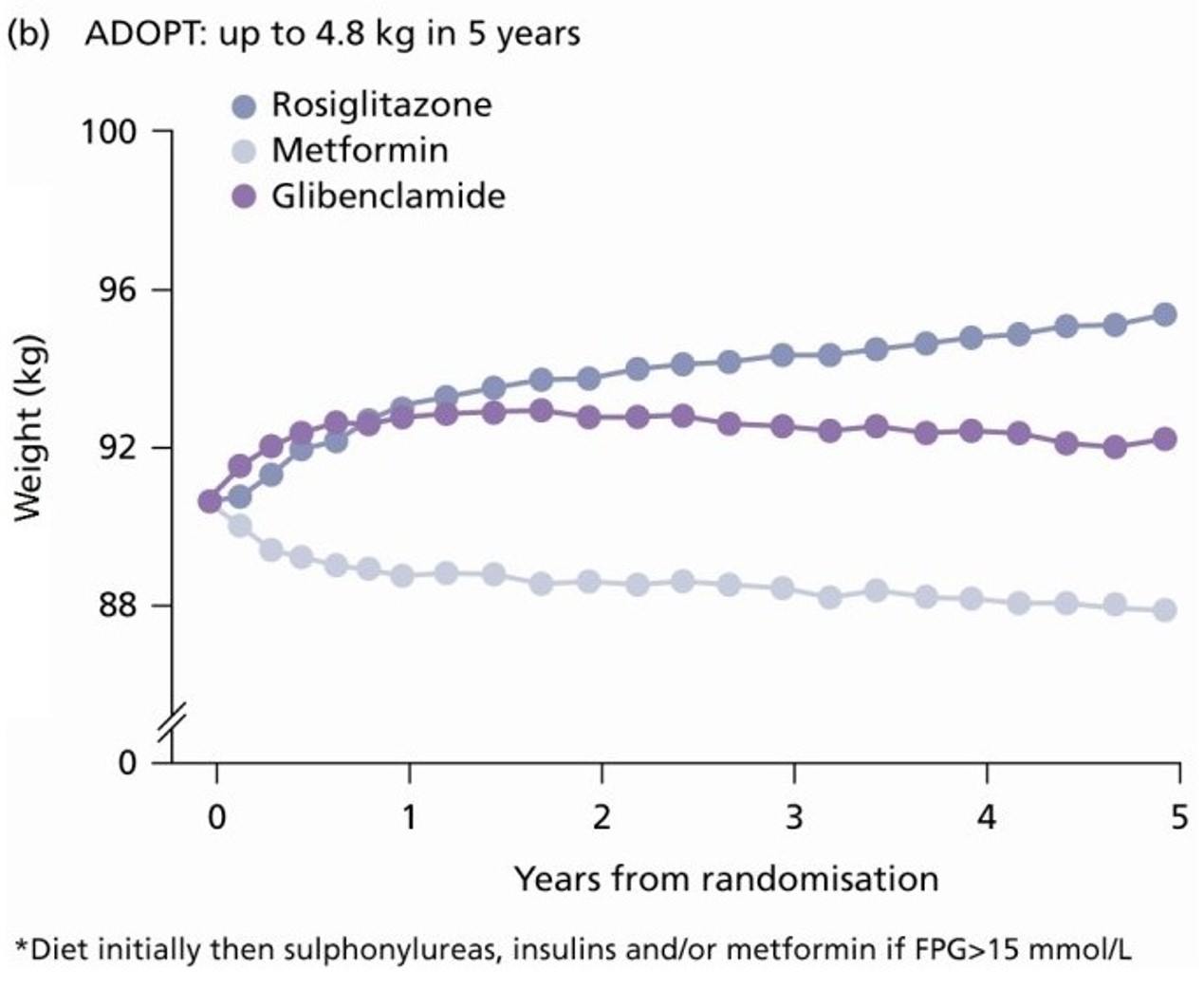
The lesson is direct: medications that lower the same glucose marker can have very different effects on hunger, weight, insulin exposure, fluid balance and hypoglycemia.
ACCORD: a lower A1C is not automatically better treatment
ACCORD randomized 10,251 adults with type 2 diabetes and high cardiovascular risk to an intensive medication strategy targeting A1C below 6.0% or a standard strategy targeting 7.0% to 7.9%. The intensive strategy achieved a lower median A1C, but increased mortality, severe hypoglycemia and major weight gain, and did not significantly reduce the primary major cardiovascular outcome.[14]
The weight analysis found that participants in the intensive arm gained an average of 3.0 kg at two years. Insulin and thiazolidinedione use were associated with the greatest weight gain; participants newly using both gained approximately 4.6 to 5.3 kg at two years.[15]
The ACCORD figure:
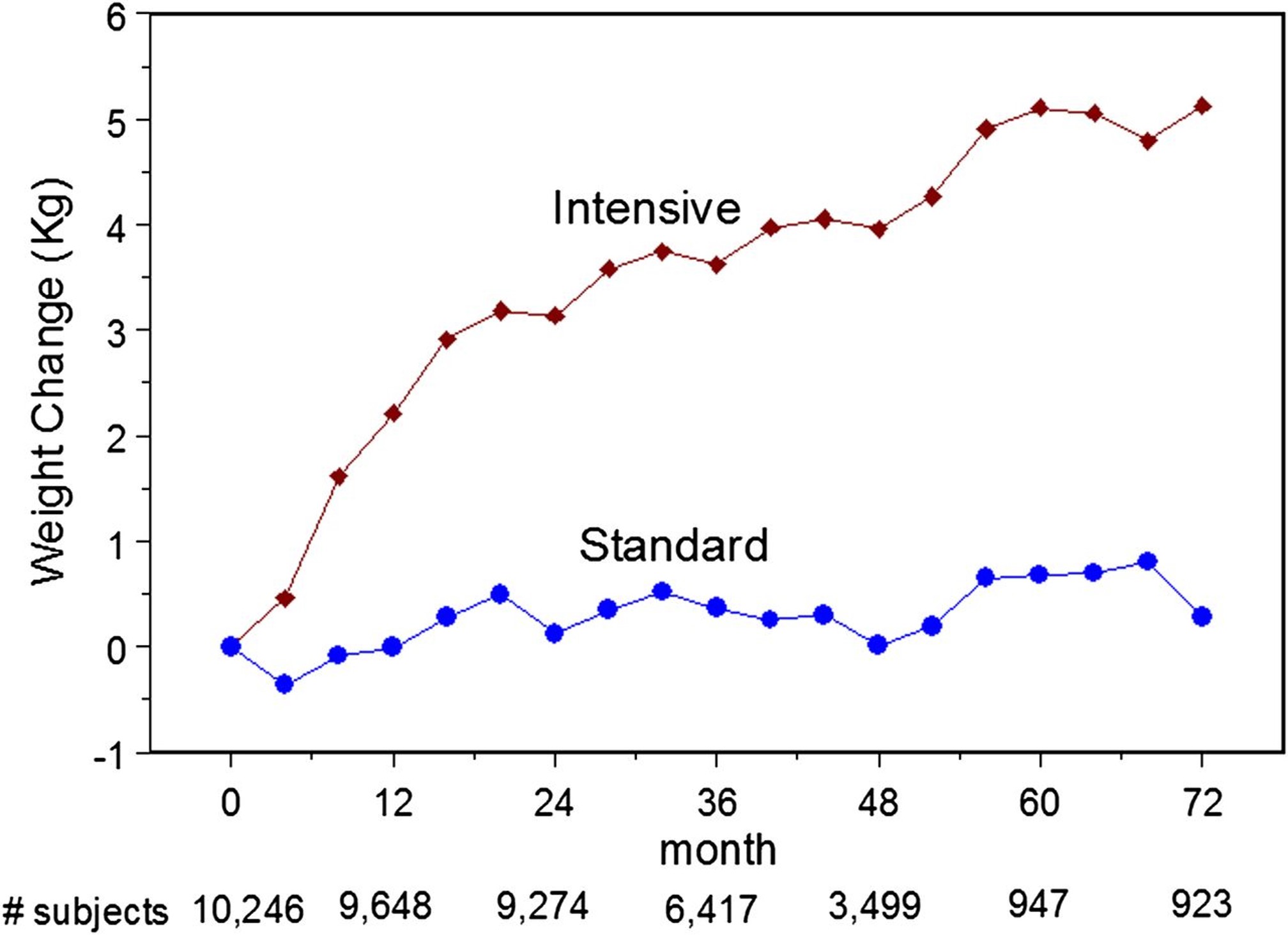
ACCORD does not show that every medication or every attempt to lower A1C worsens diabetes. It shows that aggressively forcing A1C toward normal with intensive medication in this high-risk population increased serious harms. A lower A1C achieved through more medication is not metabolically equivalent to a lower A1C achieved while reducing the glucose burden, losing visceral fat, improving insulin sensitivity and needing less medication.
That distinction should reshape diabetes care.
Low-carbohydrate treatment can lower medication need
The medication reductions seen with therapeutic carbohydrate restriction are not theoretical.
- In a six-month outpatient study of people with severe type 2 diabetes, Haimoto and colleagues found major A1C improvement while antidiabetic medication doses were reduced.[4]
- In a two-year randomized trial, Tay and colleagues found that a low-carbohydrate diet produced a greater reduction in diabetes medication burden than a high-carbohydrate, low-fat diet despite similar A1C and weight loss.[5]
- In Virta’s two-year continuous-care study, use of glucose-lowering medication other than metformin fell from 55.7% to 26.8%; insulin use fell 62%, and sulfonylurea use fell 100%, while multiple cardiometabolic markers improved.[6] At five years, 20% of the 122 completers met medication-free remission criteria, and 32.5% maintained A1C below 6.5% using no glucose-lowering medication or metformin alone.[16]
- In David Unwin’s primary-care work, lower-carbohydrate care produced substantial medication reductions and drug-cost savings alongside improvements in A1C, weight, blood pressure and lipid markers.[7]
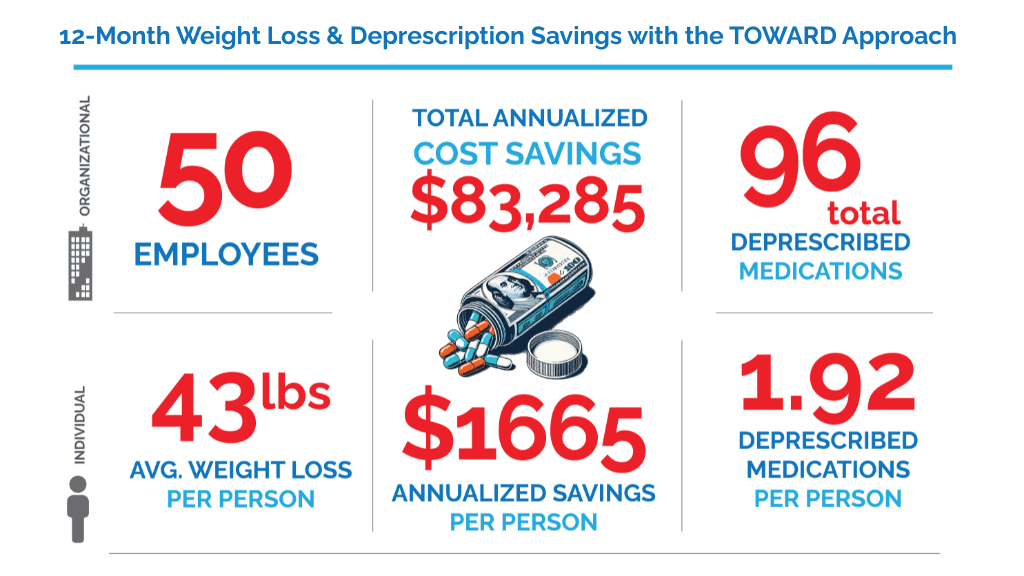
- In Toward Health’s one-year employee metabolic-health program, 14 of 26 participants with type 2 diabetes achieved medication-free remission. Across the full cohort, 23 diabetes medications were deprescribed, with estimated annual prescription savings of $93,600.[8]
- In the 2025 IGNITE trial, 163 adults participated in a six-month, virtual, medically supervised ketogenic diet program. A1C fell by at least 1.3 percentage points in both the CGM and blood-glucose-monitoring groups, time in range increased from 61–63% to 87–88%, and diabetes medications were deintensified in both groups.[17] Because every participant received the ketogenic intervention, the randomized comparison tested the method of glucose monitoring rather than ketogenic nutrition against usual care.
- In the 2026 DIREM randomized trial, an integrated lifestyle program combining calorie-carbohydrate restriction, behavioral support and exercise—with or without time-restricted eating—reduced the number of diabetes medications in 67.5% and 70% of participants, respectively. Medication-free remission occurred in 22.5% and 30%, compared with 2.5% under usual care.[18]
These are different study designs in different populations. Together, they show a consistent clinical reality: when treatment changes the metabolic disease, the medication list can change too.
What a safe plan should include
Before carbohydrate is substantially reduced or fasting begins, the patient and clinical team should establish:
- a complete list of medications, doses and timing;
- which medications can cause hypoglycemia;
- whether insulin deficiency or an incorrect diabetes classification is possible;
- a glucose-monitoring plan, often using a continuous glucose monitor or structured finger-stick testing;
- individualized thresholds for contacting the medical team;
- an SGLT2 inhibitor, ketone and sick-day plan when relevant;
- a clear approach to fasting, exercise and alcohol;
- early follow-up rather than waiting months for the next A1C; and
- a long-term plan for sleep, stress, movement, strength, food structure and weight maintenance.
The safest systems are proactive. They do not wait for repeated low glucose readings, severe hunger, dizziness or an emergency before reconsidering the medication dose.
The goal is better metabolic health, not simply fewer medications
Medication reduction is valuable when it reflects improvement. It is not a contest.
Some people will achieve medication-free remission. Some will remain on metformin. Some will continue a GLP-1 or SGLT2 inhibitor because its heart, kidney, liver, appetite or weight benefits remain important. Some will continue insulin because their pancreas cannot produce enough of it.
But no patient should be told that escalating medication is the only possible future.
Food and lifestyle can be powerful treatment. Carbohydrate restriction can lower glucose and medication needs rapidly. Weight loss can restore insulin sensitivity. Fasting can extend periods of low insulin. Exercise can improve glucose disposal and preserve muscle. Sleep and stress treatment can change appetite, hormonal regulation and the ability to sustain the plan.
When these interventions work, medication should be reassessed—not because medication is inherently bad, but because the patient’s physiology has changed.
The best diabetes care does not merely manage decline. It creates a path toward improvement, deprescribing and remission—and it adjusts quickly enough to keep that path safe.
References
- Cucuzzella M, Riley K, Isaacs D; International Working Group on Remission of Type 2 Diabetes. Adapting medication for type 2 diabetes to a low carbohydrate diet. Front Nutr. 2021;8:688540. doi:10.3389/fnut.2021.688540
- Murdoch C, Unwin D, Cavan D, Cucuzzella M, Patel M. Adapting diabetes medication for low carbohydrate management of type 2 diabetes: a practical guide. Br J Gen Pract. 2019;69(684):360–361. doi:10.3399/bjgp19X704525
- Gavidia K, Kalayjian T. Treating diabetes utilizing a low carbohydrate ketogenic diet and intermittent fasting without significant weight loss: a case report. Front Nutr. 2021;8:687081. doi:10.3389/fnut.2021.687081
- Haimoto H, Sasakabe T, Wakai K, Umegaki H. Effects of a low-carbohydrate diet on glycemic control in outpatients with severe type 2 diabetes. Nutr Metab (Lond). 2009;6:21. doi:10.1186/1743-7075-6-21
- Tay J, Thompson CH, Luscombe-Marsh ND, et al. Effects of an energy-restricted low-carbohydrate, high-unsaturated-fat/low-saturated-fat diet versus a high-carbohydrate, low-fat diet in type 2 diabetes: a 2-year randomized clinical trial. Diabetes Obes Metab. 2018;20(4):858–871. doi:10.1111/dom.13164
- Athinarayanan SJ, Adams RN, Hallberg SJ, et al. Long-term effects of a novel continuous remote care intervention including nutritional ketosis for the management of type 2 diabetes: a 2-year non-randomized clinical trial. Front Endocrinol (Lausanne). 2019;10:348. doi:10.3389/fendo.2019.00348
- Unwin D, Khalid AA, Unwin J, et al. Insights from a general practice service evaluation supporting a lower carbohydrate diet in patients with type 2 diabetes mellitus and prediabetes: a secondary analysis of routine clinic data including HbA1c, weight and prescribing over 6 years. BMJ Nutr Prev Health. 2020;3(2):285–294. doi:10.1136/bmjnph-2020-000072
- Buchanan L, Calkins M, Richardson C, Eiges A, Wiley B, Reid T, Basmadjian V, Kalayjian T. One-year outcomes in type 2 diabetes remission and medication deprescription in a low-carbohydrate metabolic health employee wellness program. Poster presented at: Society of Metabolic Health Practitioners Conference; 2026; Boca Raton, Florida. Toward Health poster and results
- American Diabetes Association Professional Practice Committee for Diabetes. Pharmacologic approaches to glycemic treatment: Standards of Care in Diabetes—2026. Diabetes Care. 2026;49(Suppl 1):S183–S215. Official guideline
- UK Prospective Diabetes Study Group. Intensive blood-glucose control with sulphonylureas or insulin compared with conventional treatment and risk of complications in patients with type 2 diabetes (UKPDS 33). Lancet. 1998;352(9131):837–853. PMID:9742976
- Kahn SE, Haffner SM, Heise MA, et al.; ADOPT Study Group. Glycemic durability of rosiglitazone, metformin, or glyburide monotherapy. N Engl J Med. 2006;355(23):2427–2443. doi:10.1056/NEJMoa066224
- Umpierrez GE, Davis GM, ElSayed NA, et al. Hyperglycemic crises in adults with diabetes: a consensus report. Diabetes Care. 2024;47(8):1257–1275. doi:10.2337/dci24-0032
- Riddle MC, Cefalu WT, Evans PH, et al. Consensus report: definition and interpretation of remission in type 2 diabetes. Diabetes Care. 2021;44(10):2438–2444. doi:10.2337/dci21-0034
- Action to Control Cardiovascular Risk in Diabetes Study Group. Effects of intensive glucose lowering in type 2 diabetes. N Engl J Med. 2008;358(24):2545–2559. doi:10.1056/NEJMoa0802743
- Fonseca V, McDuffie R, Calles J, et al.; ACCORD Study Group. Determinants of weight gain in the Action to Control Cardiovascular Risk in Diabetes trial. Diabetes Care. 2013;36(8):2162–2168. doi:10.2337/dc12-1391
- McKenzie AL, Athinarayanan SJ, Van Tieghem MR, et al. Five-year effects of a novel continuous remote care model with carbohydrate-restricted nutrition therapy including nutritional ketosis in type 2 diabetes: an extension study. Diabetes Res Clin Pract. 2024;217:111898. doi:10.1016/j.diabres.2024.111898
- Willis HJ, Asche SE, Adams RN, et al. Effects of continuous glucose monitoring versus blood glucose monitoring during a carbohydrate-restricted nutrition intervention in people with type 2 diabetes: 6-month follow-up outcomes from a randomized clinical trial. Endocr Pract. 2025;31(9):1116–1126. doi:10.1016/j.eprac.2025.05.746
- Badrooj N, Esteghamati A, Djafarian K, et al. The effect of integrated lifestyle intervention incorporating calorie-carbohydrate restriction with or without time-restricted feeding for remission of type 2 diabetes (DIREM): a single-blind randomized controlled trial. Endocrinol Diabetes Metab. 2026;9(3):e70209. doi:10.1002/edm2.70209
Additional references
Additional references:
- Turner RC, Cull CA, Frighi V, Holman RR; UK Prospective Diabetes Study Group. The UK Prospective Diabetes Study (UKPDS): clinical and therapeutic implications for type 2 diabetes. Br J Clin Pharmacol. 1999;48(5):643–648. doi:10.1046/j.1365-2125.1999.00092.x
- Viberti G, Kahn SE, Greene DA, et al. A diabetes outcome progression trial (ADOPT): an international multicenter study of the comparative efficacy of rosiglitazone, glyburide, and metformin in recently diagnosed type 2 diabetes. Diabetes Care. 2002;25(10):1737–1743. doi:10.2337/diacare.25.10.1737
- Fonseca V, McDuffie R, Calles J, et al.; ACCORD Study Group. Determinants of weight gain in the Action to Control Cardiovascular Risk in Diabetes trial. Diabetes Care. 2013;36(8):2162–2168. doi:10.2337/dc12-1391
- Haimoto H, Sasakabe T, Wakai K, Umegaki H. Effects of a low-carbohydrate diet on glycemic control in outpatients with severe type 2 diabetes. Nutr Metab (Lond). 2009;6:21. doi:10.1186/1743-7075-6-21
- Tay J, Thompson CH, Luscombe-Marsh ND, et al. Effects of an energy-restricted low-carbohydrate, high-unsaturated-fat/low-saturated-fat diet versus a high-carbohydrate, low-fat diet in type 2 diabetes: a 2-year randomized clinical trial. Diabetes Obes Metab. 2018;20(4):858–871. doi:10.1111/dom.13164
Toward data requested to strengthen this article
The existing Toward poster supports remission, total deprescribing and estimated cost savings. This medication-focused article could become more specific if the practice can provide:
- the medication classes represented among the 23 deprescribed prescriptions;
- how many participants discontinued insulin and how many reduced insulin dose;
- median time from program start to the first medication reduction;
- the number of sulfonylureas, SGLT2 inhibitors and GLP-1 medications stopped or continued;
- baseline and one-year total diabetes medication burden per participant;
- CGM time-below-range or documented hypoglycemia before and after medication adjustment;
- whether any episodes of diabetic ketoacidosis or severe hypoglycemia occurred; and
- the clinical protocol used to coordinate nutrition change, glucose monitoring and deprescribing.
These results should not be added publicly until denominators, definitions, timeframe and analysis are confirmed.