
Study proposes a novel insulin-centered mechanism for ketogenic diet-associated hypercholesteremia and highlights a potential new approach to lipid management
TOWARD Health is proud to announce the publication of new research exploring one of the most debated topics in metabolic medicine: why a small subset of individuals following a well-formulated ketogenic diet develop marked elevations in LDL cholesterol, and how those elevations may be effectively treated without abandoning the dietary approach that is improving their health.
The study, co-authored by Dr. Laura Buchanan, Dr. Tro Kalayjian, and Dr. Matthew Calkins of TOWARD Health alongside collaborators from Wake Forest University School of Medicine and the National Institute of Medical Sciences and Nutrition Salvador Zubirán in Mexico, evaluated the effects of ezetimibe in patients with ketogenic diet-associated hypercholesterolemia.
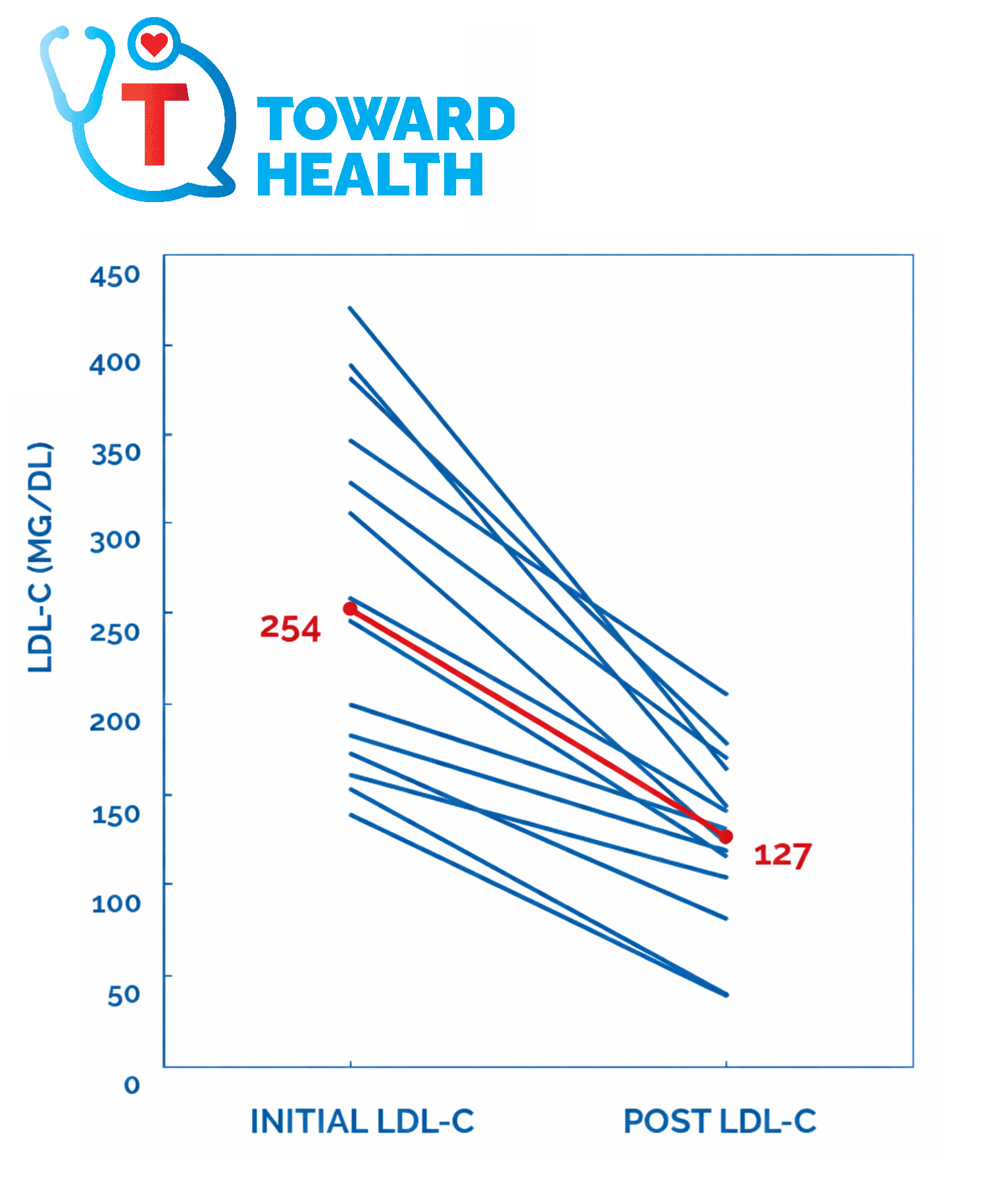 Chart of individual LDL-C values before and after ezetimibe; highlighted mean falls from 254 to 127 mg/dL. Open full-size image
A Personalized Approach to a Complex Clinical Question
Low-carbohydrate and ketogenic diets have been shown to improve blood sugar control, insulin resistance, obesity, and other markers of metabolic health for many individuals. However, a small percentage of patients experience substantial increases in LDL cholesterol while maintaining excellent metabolic health, a phenomenon that remains incompletely understood.
Rather than viewing these patients through a one-size-fits-all lens, the research explores whether a distinct biological mechanism may explain this response and whether treatment should therefore be individualized.
Remarkable LDL Cholesterol Reduction
The study reviewed 14 patients following a low-carbohydrate ketogenic diet who were treated with ezetimibe.
The results were striking:
- Median LDL cholesterol decreased by more than 53%
- Median total cholesterol fell by nearly 39%
- Triglycerides remained low and improved further
- HDL cholesterol remained stable, preserving the favorable metabolic profile commonly seen with carbohydrate restriction
Importantly, these improvements occurred without requiring participants to discontinue their ketogenic dietary pattern.
A New Mechanistic Hypothesis
The publication proposes an insulin-centered explanation for ketogenic diet–associated hypercholesterolemia.
Rather than excessive cholesterol production by the liver, the authors suggest that persistently low insulin levels may alter how cholesterol is absorbed, recycled, and transported through the body. This process could increase cholesterol absorption through the intestine, making ezetimibe, which blocks intestinal cholesterol absorption, particularly effective for certain patients.
While additional prospective studies are needed, the findings offer a compelling biologic explanation for why some patients respond so dramatically to ezetimibe while maintaining the metabolic benefits of carbohydrate restriction.
Advancing Precision Lipid Management
The study reinforces an important principle of metabolic medicine: not all elevated LDL cholesterol occurs through the same biological pathway.
Understanding why cholesterol is elevated may be just as important as measuring the cholesterol itself.
This work supports a more personalized approach to lipid management, one that considers metabolic context, dietary patterns, physiology, and individual response rather than relying solely on population averages.
“The goal isn’t simply lowering LDL, it’s understanding why it’s elevated in the first place. That’s how we deliver truly personalized metabolic care,” said Dr. Tro Kalayjian, DO, TOWARD Health’s Chief Medical Officer.
How our view of PCSK9 inhibitors changed:
Toward Health has re-evaluated PCSK9 inhibitors as the evidence has developed. Lowering LDL cholesterol, preventing cardiovascular events and reducing deaths are different outcomes. Our earlier concerns about mortality deserve to be explained alongside our current conclusion.
Early evidence, 2017–2019: FOURIER (2017) reduced major cardiovascular events but did not demonstrate a reduction in all-cause or cardiovascular mortality. Both were numerically higher with evolocumab: all-cause deaths were 3.2% versus 3.1%, and cardiovascular deaths were 1.8% versus 1.7%. Neither difference was statistically significant.
ODYSSEY OUTCOMES and its 2019 mortality analysis need a distinction: all-cause deaths were lower with alirocumab, 3.5% versus 4.1%, but the result was only nominally significant because the trial’s prespecified testing hierarchy had already stopped at a nonsignificant outcome. Cardiovascular mortality was not significantly reduced. The early trials therefore did not establish a consistent, definitive survival benefit across the class.
Why the mortality reanalysis concerned us: A BMJ Open reanalysis, submitted in 2021 and published in December 2022, found discrepancies in FOURIER death classifications using regulatory clinical-study reports. After readjudication, cardiovascular deaths were more frequent with evolocumab (relative risk 1.20; 95% confidence interval 0.95–1.51). This was a concerning signal, although it did not establish that the drug increased mortality. The investigators could not re-evaluate nonfatal events. We regarded the mortality and reporting questions as reasons for caution.
What changed our assessment: We have now reviewed the longer-term and newer evidence:
- FOURIER-OLE (2022) associated earlier evolocumab treatment with fewer cardiovascular events and cardiovascular deaths. These were exploratory comparisons of earlier versus delayed initiation; both groups received evolocumab during the extension.
- The long-term ODYSSEY OUTCOMES analysis (2023) supported sustained cardiovascular benefit and reassuring safety through follow-up of up to five years, with more injection-site reactions than placebo.
- VESALIUS-CV (2026; online 2025) strengthened the evidence in high-risk patients without a previous heart attack or stroke: five-year coronary death, heart attack or ischemic stroke risk was 6.2% versus 8.0%, an absolute difference of 1.8 percentage points.
After this reassessment, we agree that PCSK9 inhibitors such as alirocumab (Praluent) and evolocumab (Repatha) can be effective options for selected patients with coronary artery disease or other high-risk conditions. This updated position reflects the evolving evidence, while keeping cardiovascular-event reduction distinct from a claim of universal survival benefit.
For plaque regression, separate imaging trials, GLAGOV and PACMAN-AMI, found greater coronary plaque regression when a PCSK9 inhibitor was added to statin therapy. These findings do not establish that CAC scores will fall. Treatment remains individualized to disease burden, overall risk, existing therapy, tolerability and patient preferences.
Expanding the Science of Metabolic Health
At TOWARD Health, research is a core part of our mission.
Our physician-scientists continue to investigate important questions surrounding carbohydrate restriction, metabolic disease, and cardiovascular risk, with the goal of translating emerging science into better patient care.
This publication contributes to a growing body of literature exploring how precision medicine can improve treatment decisions for patients following therapeutic ketogenic diets and underscores the importance of understanding the underlying physiology before applying uniform treatment strategies.
As metabolic medicine continues to evolve, studies like this help move the conversation beyond broad assumptions toward individualized, evidence-based care.
Lead researcher and TOWARD clinician, Dr. Laura Buchanan, MD, “As physicians, our responsibility is to follow the evidence wherever it leads. These findings highlight the importance of asking better questions about metabolism rather than relying on one-size-fits-all assumptions. Personalized medicine begins with understanding the biology of the individual sitting in front of us.”
About TOWARD Health
TOWARD Health is a nationwide physician-led metabolic health practice specializing in obesity, diabetes, cardiovascular risk reduction, and chronic disease reversal through evidence-based nutrition, lifestyle medicine, and personalized medical care. By combining clinical excellence with ongoing research, TOWARD Health is helping shape the future of precision metabolic medicine.
As part of TOWARD’s mission to deliver truly personalized, affordable care, the practice has expanded its cardiac screening program to identify early signs of coronary artery disease and other cardiovascular risks. The program is available to everyone, not just current TOWARD patients, and combines advanced labs with cardiac imaging to provide a more complete picture of health. Each participant meets one-on-one with a physician to review the results and develop a personalized plan with clear, actionable next steps to help prevent disease and protect long-term health.