
A diagnosis of type 2 diabetes can feel like a life sentence. Many people are told that the disease will inevitably progress, medication will increase and complications are simply something to watch for.
That is not the whole story.
Type 2 diabetes is a serious disease, but it is also highly responsive to change. Food can change glucose within hours. Movement can improve glucose disposal immediately. Better sleep and lower stress can reduce the hormonal signals that push glucose higher. As insulin resistance improves, medication can often be reduced. Glucose can normalize, and many people can achieve formal remission.[5–10]
This is not wishful thinking. It is what clinical trials, primary-care programs, Toward Health’s published case series and Toward Health’s 2026 diabetes-remission poster demonstrate.
Type 2 diabetes is not simply “too much sugar in the blood.” High blood sugar is the measurable result of a deeper metabolic problem: the body has become resistant to insulin, the liver is releasing too much glucose, and the pancreas can no longer produce enough insulin to overcome that resistance.
The diagnosis may appear suddenly on a laboratory report. The disease process usually does not. Changes in insulin sensitivity, insulin production, body composition and post-meal glucose can develop for years before fasting glucose or A1C finally crosses the diagnostic line.[1–4]
At Toward Health, we view type 2 diabetes as a treatable metabolic disease—not merely a number to manage while the underlying process continues.
The most important place to start is this: your current numbers describe where your metabolism is today. They do not dictate where it must remain.
What does insulin normally do?
Insulin is a hormone produced by beta cells in the pancreas. Its job is broader than lowering blood sugar.
After a meal, insulin helps:
- move glucose from the bloodstream into muscle and other tissues;
- store glucose as glycogen in the liver and muscles;
- suppress the liver’s release of additional glucose;
- reduce the release of stored fat from adipose tissue; and
- direct incoming energy toward use or storage.
Insulin is essential. The problem in type 2 diabetes is not that insulin is inherently harmful. The problem is that the body requires progressively more insulin to manage the same metabolic load—and eventually even high insulin levels are no longer sufficient to keep glucose normal.
What is insulin resistance?
Insulin resistance means that insulin’s signal is no longer producing a normal response.
- Muscle becomes less responsive, so it takes more insulin to move glucose out of the bloodstream.
- The liver becomes less responsive, so it continues producing and releasing glucose even when glucose is already abundant.
- Fat tissue becomes less responsive, allowing more fatty acids to circulate and accumulate in organs that are not designed to store large amounts of fat.
- The pancreas compensates by producing more insulin—sometimes for years—until beta-cell function can no longer keep pace.[1,2]
This is why a person can have significant insulin resistance while fasting glucose and A1C still look “normal.” The pancreas may be maintaining that normal glucose only by producing unusually high amounts of insulin.
As the process advances, post-meal glucose rises first in many people. Fasting glucose then increases as the liver becomes more insulin resistant and beta-cell function declines. By the time type 2 diabetes is diagnosed, the underlying metabolic disorder may have been developing for a decade or longer.[3,4]
This does not mean the body has simply failed. For years, it has been working harder to keep glucose controlled. High insulin is often evidence of that compensation. The diagnosis tells us that the strategy is no longer enough—and that the metabolic burden needs to change.
That is where hope becomes practical. If the body is being asked to manage less incoming glucose, if stored energy becomes accessible, if muscle can use more glucose and if sleep, stress and medication are addressed, the system can respond.
Food can change the metabolic signal
Carbohydrate is the dietary macronutrient that has the greatest immediate effect on blood glucose. Sugars and starches are digested into glucose, which enters the bloodstream and requires an insulin response.
In someone with good insulin sensitivity, that glucose is handled rapidly and efficiently. In someone with insulin resistance, the same carbohydrate load may produce a larger glucose rise, a larger insulin requirement and a longer period before glucose returns toward baseline.
This gives nutrition unusual therapeutic power. Medication may change how the body handles glucose, but food determines how much dietary glucose enters the system in the first place. Lowering sugar and starch can reduce the glucose burden at its source.
The liver adds another layer. Even when a person has not eaten, the liver can release glucose through glycogen breakdown and gluconeogenesis. In type 2 diabetes, insulin may fail to suppress that output appropriately. Blood sugar can therefore remain high overnight and rise near waking even without late-night eating.[11]
Type 2 diabetes is therefore not simply caused by eating a spoonful of sugar, nor is it explained by body weight alone. It reflects a breakdown in the coordinated regulation of glucose, insulin, stored fat, liver metabolism and pancreatic function. Genetics, age, medications, sleep apnea, chronic stress, physical inactivity, visceral fat and food environment can all influence that system.
But dietary carbohydrate remains uniquely important because it is the nutrient that becomes blood glucose most directly. Reducing that incoming glucose burden can lower the amount of insulin required and improve glycemia immediately—even before major weight loss occurs.[7,8]
For a person who has been told that nothing meaningful will happen until a large amount of weight is lost, this is transformative. The next meal is already an opportunity to lower the metabolic demand.
How is type 2 diabetes diagnosed?
The American Diabetes Association’s 2026 diagnostic criteria allow type 2 diabetes to be identified using A1C or plasma glucose.[12]
A diagnosis can be made with any of the following:
- A1C of 6.5% or higher;
- fasting plasma glucose of 126 mg/dL or higher after at least eight hours without calories;
- two-hour plasma glucose of 200 mg/dL or higher during a 75-gram oral glucose tolerance test; or
- random plasma glucose of 200 mg/dL or higher in a person with classic symptoms of hyperglycemia or a hyperglycemic crisis.[12]
Unless hyperglycemia is unequivocal, an abnormal result should be confirmed with a second abnormal test.
What does A1C measure?
A1C is not “the percentage of sugar in the bloodstream.” It measures the percentage of hemoglobin with glucose attached to it. Because red blood cells circulate for approximately 120 days, A1C provides a weighted estimate of glucose exposure over the preceding two to three months, with more recent glucose contributing more strongly.[12]
A1C is useful but incomplete. Two people with the same A1C can have different glucose patterns: one may remain relatively stable, while the other experiences repeated high peaks and low troughs. Anemia, altered red-blood-cell turnover, hemoglobin variants, kidney disease and other conditions can also make A1C disagree with actual glucose exposure.[12]
Fasting glucose, post-meal testing, an oral glucose tolerance test and continuous glucose monitoring can reveal information that A1C alone may miss.
A diagnosis is a threshold—not a destiny
The cutoff for diagnosing diabetes identifies a level of elevated risk. It does not mean that every value below that line is metabolically optimal.
At Toward Health, our practical goal is to keep glucose approximately 70–120 mg/dL for as much of the day as reasonably possible. Within that safe range, lower and steadier is generally better—provided there is no hypoglycemia, concerning symptoms or medication-related risk. This is our clinical target, not a universal diagnostic cutoff.
The full pattern matters:
- fasting glucose;
- post-meal peaks;
- time spent in a healthy range;
- glucose variability;
- A1C;
- insulin levels when clinically useful;
- triglycerides and HDL cholesterol;
- liver fat and liver enzymes;
- blood pressure;
- waist circumference and visceral fat; and
- medication requirements.
Diabetes is one expression of metabolic dysfunction. A person can remain below the diagnostic threshold while insulin, triglycerides, blood pressure, liver fat or post-meal glucose are already moving in the wrong direction.
The reverse is also true: crossing the diagnostic threshold does not mean the process cannot move back. It tells us to act with greater urgency and use an intervention strong enough to change the trajectory.
Diabetes begins before the diagnosis
The Whitehall II study followed 6,538 adults without diabetes and reconstructed glucose, insulin sensitivity and beta-cell-function trajectories for up to 13 years before diagnosis. People who developed diabetes showed declining insulin sensitivity and compensatory changes in insulin secretion years before glucose rose sharply near the time of diagnosis.[3]
The original Disciple article also cited a longitudinal study showing that changes in body-mass trajectory, visceral fat and glucose metabolism precede the onset of type 2 diabetes.[4]
These findings support a central Toward Health position: prediabetes is not the beginning of the disease process. It is a late warning that compensation is failing. Article 2 in this series will examine that issue directly and incorporate the related Disciple article, “Prediabetes Is a Lie,” rather than creating overlapping pages.
How common is the problem?
The numbers are larger now than when the original Disciple article was published.
The International Diabetes Federation estimated that 589 million adults aged 20–79 were living with diabetes worldwide in 2024, including diagnosed and undiagnosed disease. That number is projected to reach approximately 853 million by 2050.[13]
The CDC’s current U.S. report card states that 40.1 million Americans have diabetes and approximately one in four do not know it. Another 115.2 million American adults—more than two in five—have prediabetes.[14]
Diabetes is also part of a wider metabolic-health crisis. An analysis of U.S. adults from 2009–2016 found that only 12.2% met a strict definition of optimal metabolic health.[15] A later analysis using data through 2018 found that only 6.8% had optimal cardiometabolic health.[16]
This is not a rare personal failure affecting a small group of people who made poor choices. It is a population-level metabolic problem arising from the interaction of biology, food environment, modern lifestyle, socioeconomic conditions and medical treatment patterns.
People did not suddenly lose their willpower. The environment changed, metabolic disease became normalized, and treatment too often began only after glucose crossed a diagnostic threshold. The answer is not blame. It is earlier recognition and more effective treatment.
The risks are real—and so is the opportunity to intervene
Persistently elevated glucose damages blood vessels and tissues throughout the body. It promotes glycation, oxidative stress, endothelial dysfunction and inflammatory signaling. Because every organ depends on healthy circulation and cellular energy regulation, diabetes is not confined to the pancreas.
Major consequences include:
- cardiovascular disease: heart attack, stroke, heart failure and peripheral arterial disease;
- kidney disease: albuminuria, declining filtration and kidney failure;
- nerve damage: pain, burning, numbness, weakness and loss of protective sensation;
- eye disease: diabetic retinopathy, macular edema and vision loss;
- foot injury: ulcers, infection, poor healing and amputation;
- brain effects: higher risk of cognitive decline and dementia, including Alzheimer’s and vascular dementia;
- skin and infection problems: bacterial and fungal infections, slow wound healing and other diabetes-associated skin disorders; and
- sexual and reproductive effects: erectile dysfunction, pregnancy complications and worsened metabolic-hormonal disorders.[17–19]
In UKPDS 35, every one-percentage-point lower updated mean A1C was associated with a 21% lower risk of any diabetes-related endpoint, a 14% lower risk of myocardial infarction and a 37% lower risk of microvascular complications.[17]
That does not make A1C the only target. It demonstrates that chronic glucose exposure is directly connected to clinically meaningful harm—and that lowering that exposure is worth pursuing aggressively and safely.
Type 2 diabetes also damages health before dramatic symptoms appear. Neuropathy, retinopathy, kidney disease and cardiovascular disease may already be present when diabetes is first diagnosed. Waiting for severe hyperglycemia means missing years in which the underlying metabolic process could have been addressed.
Early action matters, but it is never productive to tell someone that the opportunity has passed. People with long-duration diabetes can still improve glucose, reduce medication, lose visceral fat and lower risk. Earlier treatment increases the probability of remission; meaningful improvement remains valuable at every stage.[7,9]
Common symptoms—and why many people have none
Symptoms of significant hyperglycemia can include:
- increased thirst;
- frequent urination;
- blurred vision;
- fatigue;
- increased hunger;
- unexplained weight loss;
- recurrent infections; and
- slow-healing wounds.
But many people with type 2 diabetes have no obvious symptoms. The body adapts to gradually rising glucose, and early damage can be silent. This is why risk-based screening and attention to the broader metabolic pattern matter.
Seek prompt medical care for severe hyperglycemia accompanied by vomiting, abdominal pain, dehydration, confusion, rapid breathing or profound weakness. Hyperglycemic emergencies can occur in type 2 diabetes and should not be managed solely through dietary advice.
Type 2 diabetes is not inevitably progressive
For decades, many patients were told that type 2 diabetes was chronic and progressive: medication would be added over time, beta-cell function would continue to decline, and complications would be managed as they appeared. That message leaves people waiting for deterioration instead of expecting change.
That describes what commonly happens when the underlying metabolic drivers remain active. It is not the only possible outcome.
Multiple lines of evidence now demonstrate that type 2 diabetes can be reversed to the point of remission:
- In the randomized DiRECT trial, an intensive nutrition and weight-management intervention produced remission in 46% of participants at one year and 36% at two years.[5]
- A systematic review and meta-analysis of randomized trials found that low-carbohydrate diets increased diabetes remission at six months compared with control diets.[6]
- In a two-year continuous-care intervention using nutritional ketosis, 53.5% of participants met the study’s definition of diabetes reversal and 17.6% met its stricter remission definition while medication use fell substantially.[7]
- Toward Health’s published case series described three patients whose average A1C fell 5.2 percentage points—from 11.9% to 6.7%—over four months while they discontinued diabetes medications, including insulin and metformin, without clinically significant weight loss.[8]
- In Toward Health’s 2026 SMHP poster presentation, 14 of 26 participants with type 2 diabetes—54%—achieved remission after one year, defined as A1C below 6.5% without diabetes medication. Another three participants, or 12%, reached A1C below 6.5% while taking metformin alone. Across the full 64-person employee-wellness cohort, mean A1C fell from 6.6% to 5.8%, mean fasting glucose fell from 123 to 104 mg/dL, mean fasting insulin fell from 21.8 to 12.9 μU/mL and mean weight fell by 34.9 pounds.[22]
- In an eight-year primary-care service evaluation led by David and Jen Unwin, 51% of the cohort achieved drug-free remission. Remission reached 77% among people whose diabetes duration was less than one year, while meaningful improvement remained possible even with long-duration disease.[9]
These interventions are not identical. DiRECT used intensive calorie restriction and large weight loss. The Toward case series emphasized carbohydrate restriction and intermittent fasting with minimal weight loss. Virta combined nutritional ketosis with continuous clinical support. The Unwin practice used a lower-carbohydrate approach with weight loss.
Together, they refute the claim that type 2 diabetes must always progress. They also show that there is more than one route to remission—and that therapeutic carbohydrate restriction can create major glycemic improvement even before large weight loss occurs.
The practical message is powerful: a person does not need to wait months for the scale to change before knowing the intervention is helping. Blood glucose and medication requirements may begin changing within days.
Reversal and remission are related, but not identical
Reversal describes a meaningful change in the direction of disease: glucose improves, medication requirements fall, insulin resistance decreases and the person moves away from diabetic physiology.
Remission is a formal research and clinical endpoint. An international expert group defined remission as an A1C below 6.5% for at least three months without glucose-lowering medication.[10]
A person can experience major disease reversal without meeting that strict definition—for example, someone whose A1C falls from 12% to 6.2% while continuing metformin or a GLP-1 medication for other benefits. Conversely, remission does not mean permanent immunity. The underlying susceptibility can return if metabolic conditions deteriorate.
The goal should not be restricted to earning a label. The goal is to normalize glucose safely, reduce excessive insulin demand, reduce medication burden whenever possible, protect organs and sustain the improvement.
Article 3 will examine remission and therapeutic nutrition in detail.
Deprescribing is part of successful diabetes treatment
Medication can be necessary, protective and lifesaving. But the success of diabetes treatment should not be measured only by how many prescriptions are added while A1C remains controlled.
If nutrition, fasting, movement, sleep and weight loss improve the underlying metabolic state, the need for glucose-lowering medication can fall—sometimes quickly. Recognizing that change and safely reducing medication is called deprescribing.
Deprescribing is not abandoning treatment. It is the supervised removal or reduction of medication that is no longer needed, is producing more risk than benefit, or would cause hypoglycemia as glucose improves.
This is a meaningful clinical outcome:
- The Toward Health case series reported discontinuation of diabetes medications, including insulin and metformin, while average A1C fell by 5.2 percentage points.[8]
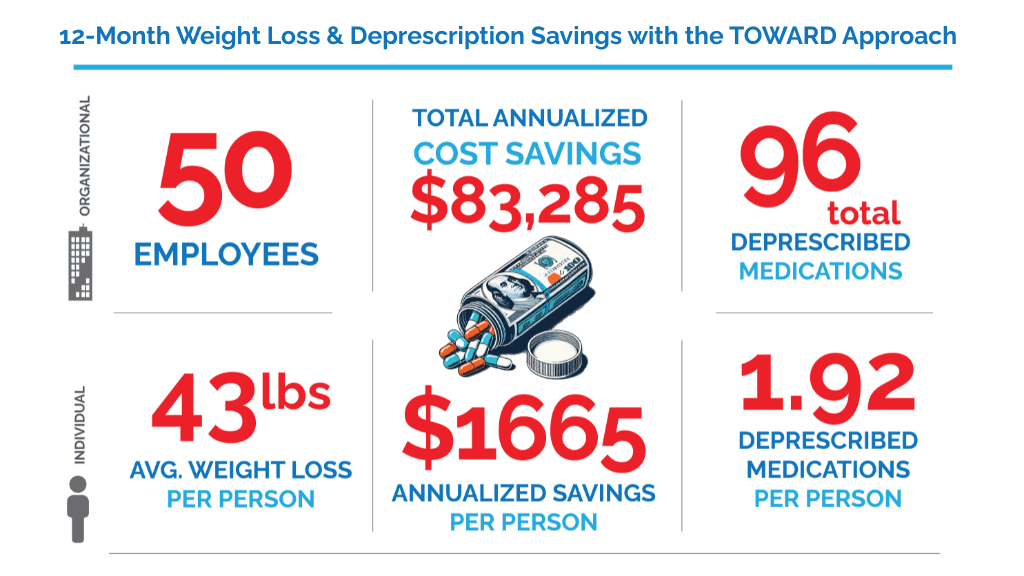
- Toward Health’s 2026 employee-wellness cohort deprescribed 23 diabetes medications in one year, with estimated annual prescription savings of $93,600, while 54% of participants with type 2 diabetes achieved medication-free remission.[22]
- In the two-year nutritional-ketosis intervention, insulin use fell 62%, sulfonylurea use fell 100%, and use of glucose-lowering medication other than metformin declined markedly.[7]
- In the two-year Tay randomized trial preserved from the original Disciple article, the low-carbohydrate group achieved greater medication reduction and better glucose stability than the higher-carbohydrate group despite similar A1C and weight changes.[21]
An A1C of 6.5% achieved with less insulin and fewer hypoglycemia-producing drugs represents a different metabolic and treatment state than the same A1C maintained through escalating medication. Medication reduction should never be forced, and medications with benefits beyond glucose require individualized decisions. But when the body needs less pharmacologic help because metabolic health has improved, that success should be recognized.
Insulin and sulfonylureas may need to be reduced early to prevent hypoglycemia. SGLT2 inhibitors require specific ketoacidosis precautions when carbohydrate intake falls or fasting begins. Deprescribing must therefore be coordinated with a clinician—not attempted after glucose has already become dangerously low.[20]
Article 4 will examine these medication decisions in depth.
How do you start changing the trajectory?
No single intervention is mandatory for every person, but effective treatment must address the actual metabolic drivers.
Use food as treatment
Reducing sugars and starches directly reduces the amount of dietary glucose that must be managed. For many people with insulin resistance, therapeutic carbohydrate restriction produces rapid improvements in post-meal glucose and lowers insulin requirements.[6–9]
This is not a minor lifestyle accessory added to the “real” medical treatment. Nutrition is one of the most immediate and powerful ways to change the disease physiology.
Stop constant energy storage
Eating continuously from morning until night keeps the body in a fed, insulin-signaled state. Satisfying meals, less grazing and appropriately supervised fasting can create periods in which insulin falls and stored energy becomes accessible.
Improve body composition and organ fat
Reducing visceral, liver and pancreatic fat can improve insulin sensitivity and beta-cell function. This can occur through carbohydrate restriction, calorie restriction, fasting, increased activity, medication, surgery or combinations of these approaches.
Preserve and build muscle
Skeletal muscle is a major destination for glucose. Resistance training, adequate protein and daily movement improve glucose disposal and protect function during weight loss.
Address sleep, stress and medical contributors
Sleep apnea, insufficient sleep, chronic stress, glucocorticoids and several other medications can worsen glucose regulation. Treating diabetes means identifying these contributors—not simply telling someone to “try harder.”
Adjust medication as glucose improves
Carbohydrate reduction can lower glucose quickly. Insulin and sulfonylurea doses may need prompt reduction to prevent hypoglycemia. SGLT2 inhibitors require specific ketoacidosis precautions when carbohydrate intake falls substantially or fasting is introduced.[20]
Do not stop prescribed medication without a plan. Article 4 will address medication benefits, limitations and adjustment in detail without reducing diabetes care to “more medication” versus “no medication.”
Your first steps toward change
- Confirm the diagnosis and understand the numbers. Review A1C, fasting glucose and any confirmatory testing with your clinician.
- Determine the severity and look for complications. Blood pressure, kidney markers, eye screening, foot and nerve assessment, lipids and cardiovascular risk all matter.
- Review every medication. Identify which drugs may cause hypoglycemia when diet changes and whether any medication is contributing to hyperglycemia.
- Measure the broader metabolic pattern. Consider triglycerides, HDL cholesterol, liver enzymes, waist circumference and other individualized markers.
- Choose an intervention capable of producing the desired result. Small changes may produce small changes. Achieving reversal or remission often requires a sufficiently strong nutritional and lifestyle intervention with ongoing support. It is reasonable to pursue more than “slowing progression.”
- Monitor early and adjust quickly. Glucose can improve before the next A1C test and before major weight loss.
- Build a maintenance plan from the beginning. Short-term normalization matters, but durable metabolic health is the goal.
The bottom line
A diabetes diagnosis is serious. It is also a moment of possibility.
Type 2 diabetes is the visible stage of a metabolic process involving insulin resistance, excessive insulin demand, abnormal liver glucose production, impaired fat handling and declining beta-cell capacity.
It begins long before the diagnosis. It can damage the heart, brain, kidneys, nerves, eyes, skin and limbs. Its prevalence is enormous and still increasing.
But progression is not inevitable. The metabolic state that produced today’s glucose can change.
Food can reduce the glucose burden immediately. Movement can help muscle use glucose. Sleep and stress treatment can improve hormonal regulation. Losing visceral and organ fat can restore insulin sensitivity. As these changes take hold, medication requirements can fall through deliberate, medically supervised deprescribing.
Glucose can normalize. Insulin can be stopped in appropriate patients. Medication-free remission is possible. Even when formal remission is not reached, better glucose, fewer medications and stronger metabolic health can profoundly change a person’s future.[5–10]
The goal is not to watch diabetes progress more slowly. The goal is to change its direction.
References
- DeFronzo RA. From the triumvirate to the ominous octet: a new paradigm for the treatment of type 2 diabetes mellitus. Diabetes. 2009;58(4):773–795. doi:10.2337/db09-9028
- DeFronzo RA. Dysfunctional fat cells, lipotoxicity and type 2 diabetes. Int J Clin Pract Suppl. 2004;(143):9–21. doi:10.1111/j.1368-504X.2004.00389.x
- Tabák AG, Jokela M, Akbaraly TN, Brunner EJ, Kivimäki M, Witte DR. Trajectories of glycaemia, insulin sensitivity, and insulin secretion before diagnosis of type 2 diabetes: an analysis from the Whitehall II study. Lancet. 2009;373(9682):2215–2221. doi:10.1016/S0140-6736(09)60619-X
- Kuwahara K, Honda T, Nakagawa T, Yamamoto S, Hayashi T, Mizoue T. Body mass index trajectory patterns and changes in visceral fat and glucose metabolism before the onset of type 2 diabetes. Sci Rep. 2017;7:43521. doi:10.1038/srep43521
- Lean MEJ, Leslie WS, Barnes AC, et al. Durability of a primary care-led weight-management intervention for remission of type 2 diabetes: 2-year results of the DiRECT open-label, cluster-randomised trial. Lancet Diabetes Endocrinol. 2019;7(5):344–355. doi:10.1016/S2213-8587(19)30068-3
- Goldenberg JZ, Day A, Brinkworth GD, et al. Efficacy and safety of low and very low carbohydrate diets for type 2 diabetes remission: systematic review and meta-analysis of published and unpublished randomized trial data. BMJ. 2021;372:m4743. doi:10.1136/bmj.m4743
- Athinarayanan SJ, Adams RN, Hallberg SJ, et al. Long-term effects of a novel continuous remote care intervention including nutritional ketosis for the management of type 2 diabetes: a 2-year non-randomized clinical trial. Front Endocrinol (Lausanne). 2019;10:348. doi:10.3389/fendo.2019.00348
- Gavidia K, Kalayjian T. Treating diabetes utilizing a low carbohydrate ketogenic diet and intermittent fasting without significant weight loss: a case report. Front Nutr. 2021;8:687081. doi:10.3389/fnut.2021.687081
- Unwin D, Delon C, Unwin J, Tobin S, Taylor R. What predicts drug-free type 2 diabetes remission? Insights from an 8-year general practice service evaluation of a lower carbohydrate diet with weight loss. BMJ Nutr Prev Health. 2023;6(1):46–55. doi:10.1136/bmjnph-2022-000544
- Riddle MC, Cefalu WT, Evans PH, et al. Consensus report: definition and interpretation of remission in type 2 diabetes. Diabetes Care. 2021;44(10):2438–2444. doi:10.2337/dci21-0034
- Magnusson I, Rothman DL, Katz LD, Shulman RG, Shulman GI. Increased rate of gluconeogenesis in type II diabetes mellitus: a 13C nuclear magnetic resonance study. J Clin Invest. 1992;90(4):1323–1327. doi:10.1172/JCI115997
- American Diabetes Association Professional Practice Committee for Diabetes. Diagnosis and classification of diabetes: Standards of Care in Diabetes—2026. Diabetes Care. 2026;49(Suppl 1):S27–S49. Official guideline
- International Diabetes Federation. IDF Diabetes Atlas. 11th ed. Brussels, Belgium: International Diabetes Federation; 2025. Official atlas
- Centers for Disease Control and Prevention. A U.S. Report Card: Diabetes. Updated 2026. Official statistics
- Araújo J, Cai J, Stevens J. Prevalence of optimal metabolic health in American adults: National Health and Nutrition Examination Survey 2009–2016. Metab Syndr Relat Disord. 2019;17(1):46–52. doi:10.1089/met.2018.0105
- O’Hearn M, Lauren BN, Wong JB, Kim DD, Mozaffarian D. Trends and disparities in cardiometabolic health among U.S. adults, 1999–2018. J Am Coll Cardiol. 2022;80(2):138–151. doi:10.1016/j.jacc.2022.04.046
- Stratton IM, Adler AI, Neil HAW, et al. Association of glycaemia with macrovascular and microvascular complications of type 2 diabetes (UKPDS 35): prospective observational study. BMJ. 2000;321(7258):405–412. doi:10.1136/bmj.321.7258.405
- Chatterjee S, Khunti K, Davies MJ. Type 2 diabetes. Lancet. 2017;389(10085):2239–2251. doi:10.1016/S0140-6736(17)30058-2
- Chatterjee S, Peters SAE, Woodward M, et al. Type 2 diabetes as a risk factor for dementia in women compared with men: a pooled analysis of 2.3 million people comprising more than 100,000 cases of dementia. Diabetes Care. 2016;39(2):300–307. doi:10.2337/dc15-1588
- American Diabetes Association Professional Practice Committee for Diabetes. Pharmacologic approaches to glycemic treatment: Standards of Care in Diabetes—2026. Diabetes Care. 2026;49(Suppl 1):S183–S215. Official guideline
- Tay J, Thompson CH, Luscombe-Marsh ND, et al. Effects of an energy-restricted low-carbohydrate, high-unsaturated-fat/low-saturated-fat diet versus a high-carbohydrate, low-fat diet in type 2 diabetes: a 2-year randomized clinical trial. Diabetes Obes Metab. 2018;20(4):858–871. doi:10.1111/dom.13164
- Buchanan L, Calkins M, Richardson C, Eiges A, Wiley B, Reid T, Basmadjian V, Kalayjian T. One-year outcomes in type 2 diabetes remission and medication deprescription in a low-carbohydrate metabolic health employee wellness program. Poster presented at: Society of Metabolic Health Practitioners Conference; 2026; Boca Raton, Florida. Toward Health poster and results