
Toward Health’s program progresses people step by step through a series of levers for metabolic health. The first lever focuses on reducing processed carbohydrates and sugar. As appetite gradually decreases, the program focuses on building defenses that make it easier to choose low-carbohydrate foods during difficult circumstances.
From there, people may begin restricting their eating window and/or portions. Hunger can follow a change in eating window or portions, so learning to eat low-carb during challenging situations and learning to address cravings are important before advancing to meal frequency and the later levers.
Short on time? Watch the 60-second summary.
Watch the complete overview
Download the original Toward Health 10 Levers PDF
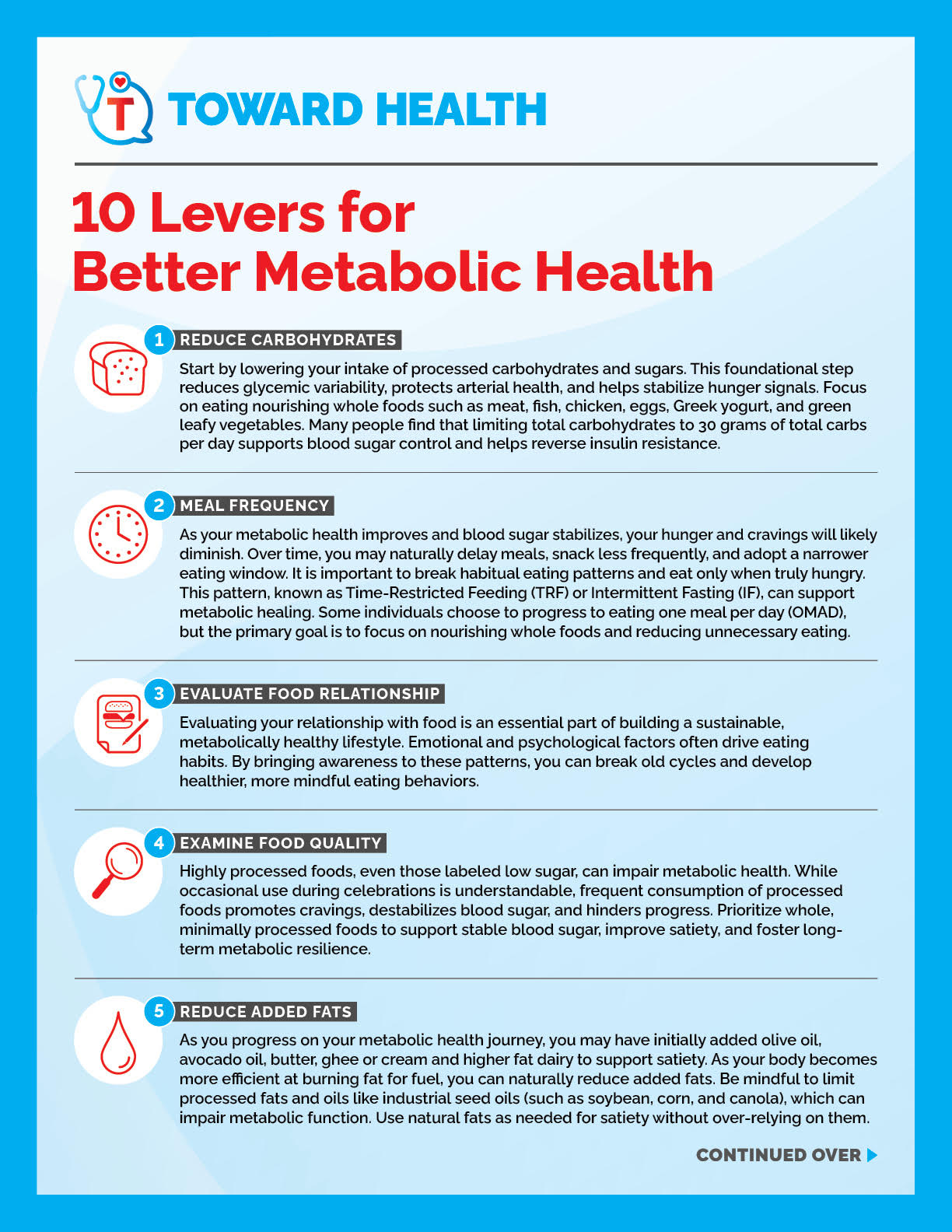
1. Reduce carbohydrates
Start by lowering your intake of processed carbohydrates and sugars. This foundational step reduces glycemic variability, protects arterial health, and helps stabilize hunger signals. Focus on eating nourishing whole foods such as meat, fish, chicken, eggs, Greek yogurt, and green leafy vegetables. Many people find that limiting total carbohydrates to 30 grams per day supports blood sugar control and helps reverse insulin resistance.
2. Meal frequency
As your metabolic health improves and blood sugar stabilizes, your hunger and cravings will likely diminish. Over time, you may naturally delay meals, snack less frequently, and adopt a narrower eating window. It is important to break habitual eating patterns and eat only when truly hungry.
This pattern, known as time-restricted feeding (TRF) or intermittent fasting (IF), can support metabolic healing. Some individuals choose to progress to eating one meal per day (OMAD), but the primary goal is to focus on nourishing whole foods and reduce unnecessary eating.
The Science of Fasting with Dr. Laura Buchanan · Explore the full 52-minute lecture.
3. Evaluate your relationship with food
Evaluating your relationship with food is an essential part of building a sustainable, metabolically healthy lifestyle. Emotional and psychological factors often drive eating habits. By bringing awareness to these patterns, you can break old cycles and develop healthier, more mindful eating behaviors.
4. Examine food quality
Highly processed foods, even those labeled low sugar, can impair metabolic health. While occasional use during celebrations is understandable, frequent consumption of processed foods promotes cravings, destabilizes blood sugar, and hinders progress. Prioritize whole, minimally processed foods to support stable blood sugar, improve satiety, and foster long-term metabolic resilience.
5. Reduce added fats
As you progress on your metabolic-health journey, you may have initially added olive oil, avocado oil, butter, ghee, cream, or higher-fat dairy to support satiety. As your body becomes more efficient at burning fat for fuel, you can naturally reduce added fats.
Be mindful of processed fats and oils such as industrial seed oils—including soybean, corn, and canola oils—which can impair metabolic function. Use natural fats as needed for satiety without over-relying on them.
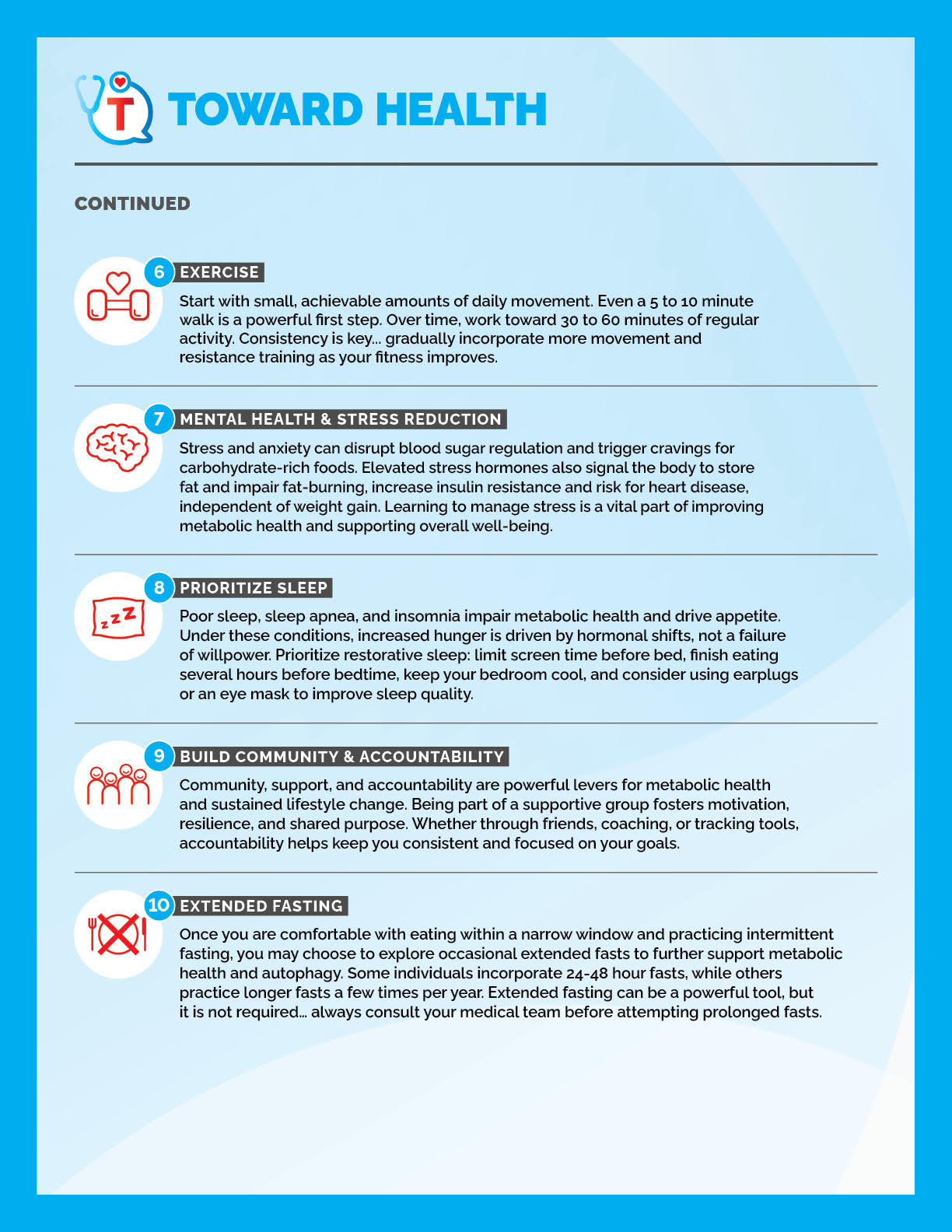
6. Exercise
Start with small, achievable amounts of daily movement. Even a 5- to 10-minute walk is a powerful first step. Over time, work toward 30 to 60 minutes of regular activity. Consistency is key. Gradually incorporate more movement and resistance training as your fitness improves.
7. Mental health and stress reduction
Stress and anxiety can disrupt blood sugar regulation and trigger cravings for carbohydrate-rich foods. Elevated stress hormones also signal the body to store fat, impair fat-burning, increase insulin resistance, and increase heart-disease risk independent of weight gain. Learning to manage stress is a vital part of improving metabolic health and supporting overall well-being.
8. Prioritize sleep
Poor sleep, sleep apnea, and insomnia impair metabolic health and drive appetite. Under these conditions, increased hunger is driven by hormonal shifts, not a failure of willpower.
Prioritize restorative sleep: limit screen time before bed, finish eating several hours before bedtime, keep your bedroom cool, and consider using earplugs or an eye mask to improve sleep quality.
9. Build community and accountability
Community, support, and accountability are powerful levers for metabolic health and sustained lifestyle change. Being part of a supportive group fosters motivation, resilience, and shared purpose. Whether through friends, coaching, or tracking tools, accountability helps keep you consistent and focused on your goals.
10. Extended fasting
Once you are comfortable with eating within a narrow window and practicing intermittent fasting, you may choose to explore occasional extended fasts to further support metabolic health and autophagy. Some individuals incorporate 24- to 48-hour fasts, while others practice longer fasts a few times per year.
Extended fasting can be a powerful tool, but it is not required. Always consult your medical team before attempting prolonged fasts.