
High blood pressure often causes no obvious symptoms, but over time it can damage blood vessels and increase the risk of heart attack, stroke, heart failure, kidney disease and cognitive decline. That is why measuring it accurately—and treating the whole person rather than reacting to one isolated reading—matters.
Blood pressure is influenced by genetics, age, kidney function, medications, sleep, stress, body composition, physical activity, dietary patterns, sodium and potassium balance, alcohol intake and metabolic health. Insulin resistance can be part of this picture, but it is not the only cause of hypertension.
The encouraging part is that blood pressure is modifiable. Lifestyle treatment can make a meaningful difference, and medication can reduce risk when lifestyle changes are not enough or a person’s overall cardiovascular risk is high. These approaches work together rather than competing with each other.
What the two blood-pressure numbers mean
A blood-pressure reading contains two numbers, measured in millimeters of mercury (mm Hg):
- Systolic pressure is the top number. It reflects the pressure in the arteries when the heart contracts.
- Diastolic pressure is the bottom number. It reflects the pressure while the heart relaxes between beats.
For example, a reading of 120/80 mm Hg means a systolic pressure of 120 and a diastolic pressure of 80.
The 2025 American Heart Association and American College of Cardiology guideline classifies blood pressure in adults as follows:[1]
| Category | Systolic | Diastolic |
|---|---|---|
| Normal | Less than 120 | and less than 80 |
| Elevated | 120–129 | and less than 80 |
| Stage 1 hypertension | 130–139 | or 80–89 |
| Stage 2 hypertension | 140 or higher | or 90 or higher |
A diagnosis should generally be based on properly obtained readings from more than one occasion, often supported by home or ambulatory monitoring. One elevated measurement does not tell the entire story.
Why high blood pressure matters
As blood pressure rises, cardiovascular risk generally rises with it. The amount of risk depends on more than the blood-pressure number alone. Age, smoking, diabetes, kidney disease, cholesterol and lipoprotein levels, existing cardiovascular disease, family history and other factors all affect the likely benefit of treatment.
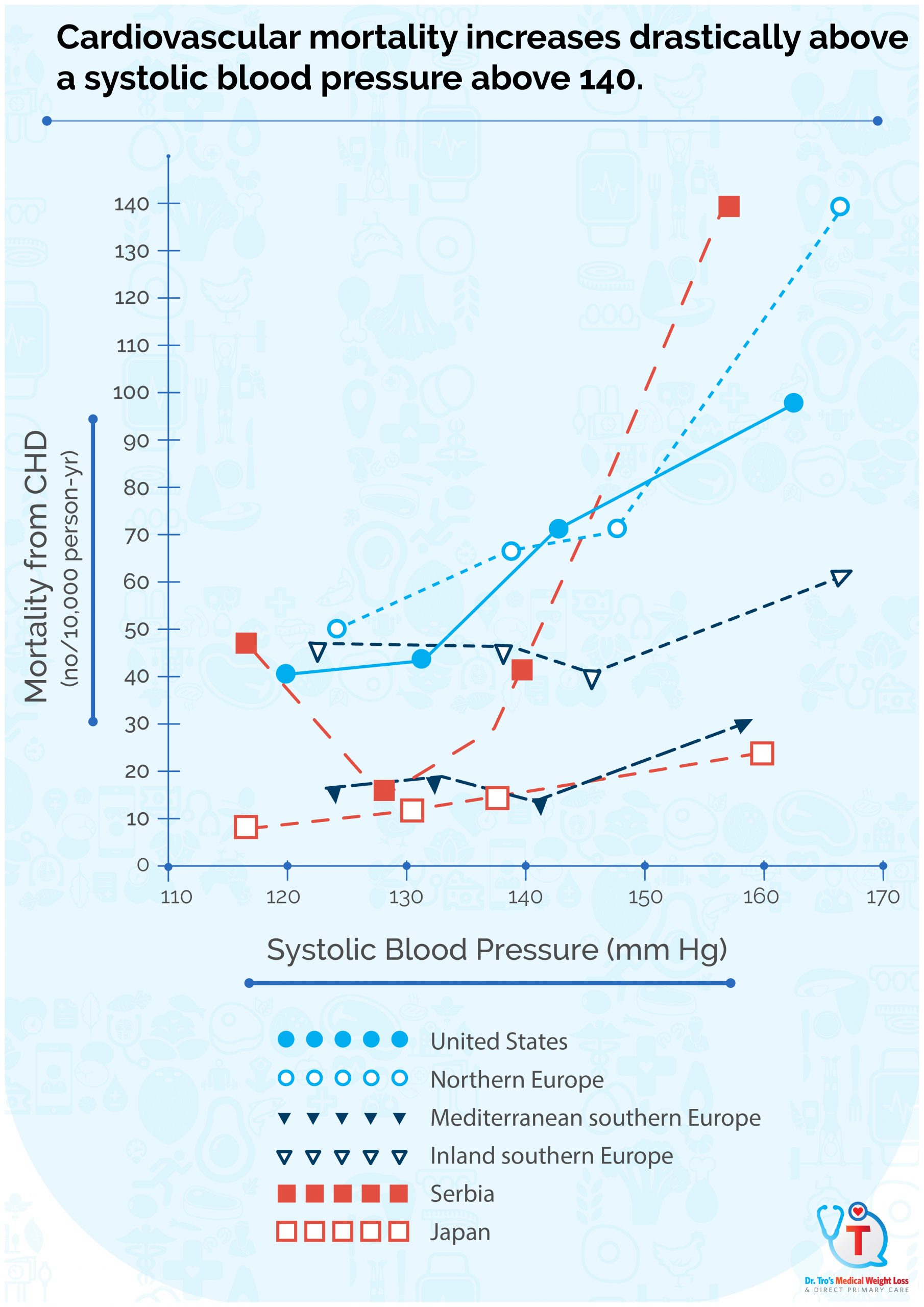
The 2025 guideline identifies a treatment goal below 130/80 mm Hg for most adults, while emphasizing individualized decisions for people who are pregnant, frail, living in an institution or facing a limited life expectancy.[1]
Medication is recommended alongside lifestyle treatment for adults with average blood pressure of 140/90 mm Hg or higher. It is also recommended at lower levels for selected people with cardiovascular disease, previous stroke, diabetes, chronic kidney disease or sufficiently elevated predicted cardiovascular risk. For lower-risk adults with stage 1 hypertension, clinicians may begin with lifestyle treatment and reassess after three to six months.[1]
These are shared clinical decisions. Do not start, stop or change a blood-pressure medication without discussing it with the prescribing clinician.
The connection between hypertension and metabolic health
Hypertension commonly travels with abdominal adiposity, elevated glucose, high triglycerides, fatty liver and other features of insulin resistance. Several biological pathways may contribute, including increased sympathetic nervous-system activity, altered kidney sodium handling, vascular dysfunction and hormonal signaling.
This relationship does not mean that every case of hypertension is caused by insulin resistance. Kidney disease, sleep apnea, thyroid or adrenal disorders, medications, alcohol, genetics and other conditions may contribute. Very high, sudden, treatment-resistant or unusually early hypertension deserves a careful clinical evaluation.
Companion video
How Blood Pressure Relates to Insulin Resistance
Lifestyle strategies that can lower blood pressure
Improve the overall dietary pattern
Strong evidence supports dietary patterns built around minimally processed foods, adequate protein, vegetables and other nutrient-dense foods appropriate for the individual. The DASH dietary pattern has extensive evidence for lowering blood pressure. Reducing excess sodium, obtaining adequate potassium when medically appropriate and limiting alcohol can also help.[1]
People with kidney disease or those taking medications that affect potassium should ask their clinician before deliberately increasing potassium intake or using potassium-containing salt substitutes.
Address insulin resistance and excess weight when present
Losing excess body weight often lowers blood pressure. For some people with insulin resistance, prediabetes or type 2 diabetes, a well-formulated low-carbohydrate approach can improve weight, glucose regulation and blood pressure.
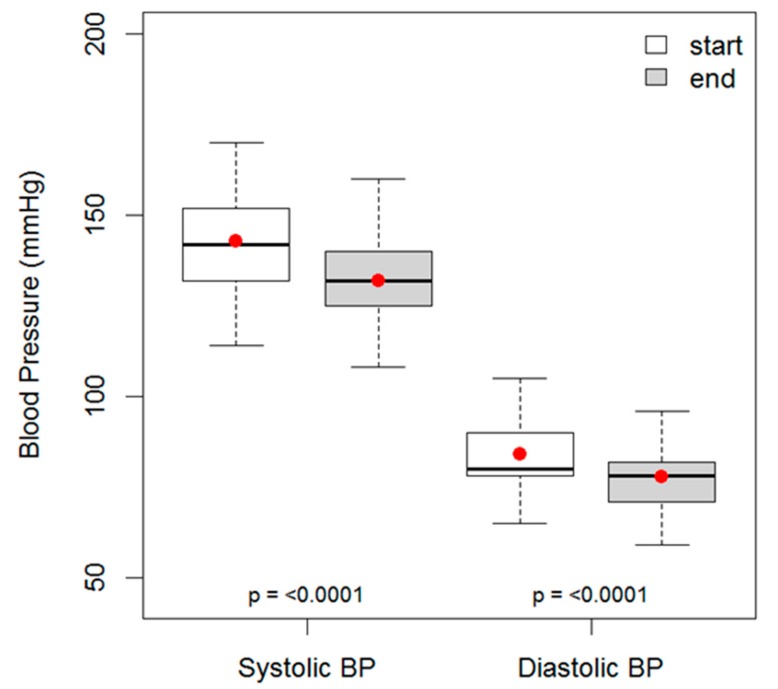
In a randomized trial of adults with hypertension plus prediabetes or type 2 diabetes, a very-low-carbohydrate intervention produced a larger average reduction in systolic blood pressure, weight and A1c than a DASH intervention over four months.[8] This does not prove that one diet is best for everyone. It does show that therapeutic carbohydrate reduction can be a reasonable evidence-based option when it fits the patient’s needs and can be followed safely.
An earlier observational study from a UK primary-care practice also reported sustained improvements in blood pressure, weight and lipid measures among insulin-resistant patients using a carbohydrate-restricted diet.[4] Because that study was observational, it cannot separate the diet’s effect from weight loss, medication changes, clinical support or other factors.
A smaller randomized study in women with obesity examined vascular function during low-carbohydrate weight loss and found that the observed changes were not dependent on prescribing an additional calorie restriction.[7] This informs the vascular discussion but does not establish that carbohydrate restriction alone will control hypertension.
Move regularly
Aerobic activity, resistance training and reducing prolonged sedentary time can lower blood pressure and improve insulin sensitivity. The best program is one a person can perform safely and consistently. People with very high blood pressure, concerning symptoms or significant cardiovascular disease should obtain clinical guidance before beginning strenuous exercise.
Protect sleep and address sleep apnea
Insufficient sleep and untreated obstructive sleep apnea can make hypertension harder to control. Loud snoring, witnessed pauses in breathing, morning headaches or persistent daytime sleepiness should prompt a conversation with a clinician.
Reduce alcohol and stop smoking
Reducing or eliminating alcohol can improve blood pressure. Smoking does not always produce sustained hypertension on a routine office measurement, but it acutely raises blood pressure and greatly increases cardiovascular risk. Avoiding tobacco and nicotine remains essential.
Use fasting carefully
Time-restricted eating or intermittent fasting may help some people improve weight and metabolic health. A randomized trial found that adding time-restricted eating to a DASH intervention improved stage 1 hypertension outcomes.[9] Fasting is not required for blood-pressure improvement and is not appropriate for everyone.
People using insulin, sulfonylureas, diuretics or blood-pressure medications may need monitoring and medication adjustment when changing diet, losing weight or fasting. Blood pressure and blood glucose can fall quickly. Clinical supervision helps prevent dizziness, dehydration, hypoglycemia and overtreatment.
Medication remains an important tool
Lifestyle treatment should be offered to everyone with elevated blood pressure, but it does not eliminate the need for medication when risk remains high or blood pressure stays above target.
The SPRINT trial found that intensive systolic blood-pressure treatment reduced cardiovascular events and mortality in selected adults at elevated cardiovascular risk without diabetes or prior stroke.[5,6] Intensive treatment also produced more adverse events of certain types, which is one reason targets and medication plans should be individualized.
The right regimen depends on the person’s blood-pressure pattern, kidney function, other medical conditions, pregnancy status, medication tolerance and overall cardiovascular risk. Many people require more than one medication.
If lifestyle changes lead to substantial weight loss or metabolic improvement, medication needs may change. That is a reason for closer monitoring—not for stopping medication independently.
How to measure blood pressure at home
Home readings can help confirm hypertension, identify white-coat or masked hypertension and show whether treatment is working. The American Heart Association recommends a validated automatic upper-arm cuff rather than a wrist, finger or unvalidated cuffless device.[2]
For a useful home reading:
- Avoid caffeine, smoking and exercise for at least 30 minutes beforehand.
- Empty your bladder and sit quietly for five minutes.
- Sit with your back supported and feet flat on the floor.
- Place the cuff on bare skin and support the arm at heart level.
- Do not talk, text or move during the measurement.
- Take two readings one minute apart and record both.
- Measure at consistent times according to the plan you made with your clinician.
Correct cuff size matters. A cuff that is too small or too large can give a misleading result. Bring your monitor to a clinical visit so the team can confirm its fit and accuracy.[2]
When a high reading needs urgent attention
A single unexpected high reading should be repeated after at least one minute of quiet rest.
If the reading remains above 180/120 mm Hg and you have chest pain, shortness of breath, weakness, numbness, difficulty speaking, vision changes, confusion or another concerning symptom, call 911. These symptoms may indicate a hypertensive emergency or another acute cardiovascular or neurologic event.[2]
If the reading remains above 180/120 mm Hg without those symptoms, contact a healthcare professional promptly for guidance. Do not attempt to lower it rapidly with extra medication unless a clinician has given you a specific plan.[1,2]
The practical takeaway
High blood pressure is both a cardiovascular issue and, for many people, part of a broader metabolic-health pattern. The most useful plan combines accurate measurement, assessment of overall risk, treatment of contributing conditions and sustainable lifestyle changes. Medication should be used when its expected benefits outweigh its risks, and it should be adjusted as health circumstances change.
The goal is not to chase one perfect reading. It is to reduce long-term risk safely and consistently.
References
Guidelines and patient resources
- Jones DW, Ferdinand KC, Taler SJ, et al. 2025 AHA/ACC/AANP/AAPA/ABC/ACCP/ACPM/AGS/AMA/ASPC/NMA/PCNA/SGIM Guideline for the Prevention, Detection, Evaluation, and Management of High Blood Pressure in Adults. Circulation. Published online August 14, 2025. doi: 10.1161/CIR.0000000000001356. Official guideline hub
- American Heart Association. Home Blood Pressure Monitoring. Reviewed August 14, 2025. https://www.heart.org/en/health-topics/high-blood-pressure/understanding-blood-pressure-readings/monitoring-your-blood-pressure-at-home
Source references
- Prospective Studies Collaboration. Age-specific relevance of usual blood pressure to vascular mortality: a meta-analysis of individual data for one million adults in 61 prospective studies. Lancet. 2002;360(9349):1903–1913. doi: 10.1016/S0140-6736(02)11911-8.
- Unwin DJ, Tobin SD, Murray SW, Delon C, Brady AJ. Substantial and Sustained Improvements in Blood Pressure, Weight and Lipid Profiles from a Carbohydrate Restricted Diet: An Observational Study of Insulin Resistant Patients in Primary Care. Int J Environ Res Public Health. 2019;16(15):2680. doi: 10.3390/ijerph16152680
- SPRINT Research Group, Wright JT Jr, Williamson JD, et al. A Randomized Trial of Intensive versus Standard Blood-Pressure Control. N Engl J Med. 2015;373:2103–2116. doi: 10.1056/NEJMoa1511939
- SPRINT Research Group, Lewis CE, Fine LJ, et al. Final Report of a Trial of Intensive versus Standard Blood-Pressure Control. N Engl J Med. 2021;384(20):1921–1930. doi: 10.1056/NEJMoa1901281
- Hwang CL, Ranieri C, Szczurek MR, et al. The Effect of Low-Carbohydrate Diet on Macrovascular and Microvascular Endothelial Function Is Not Affected by the Provision of Caloric Restriction in Women with Obesity: A Randomized Study. Nutrients. 2020;12(6):1649. doi: 10.3390/nu12061649
- Saslow LR, Jones LM, Sen A, et al. Comparing Very Low-Carbohydrate vs DASH Diets for Overweight or Obese Adults With Hypertension and Prediabetes or Type 2 Diabetes: A Randomized Trial. Ann Fam Med. 2023;21(3):256–263. doi: 10.1370/afm.2968
- Zhou X, Lin X, Yu J, et al. Effects of DASH diet with or without time-restricted eating in the management of stage 1 primary hypertension: a randomized controlled trial. PubMed record