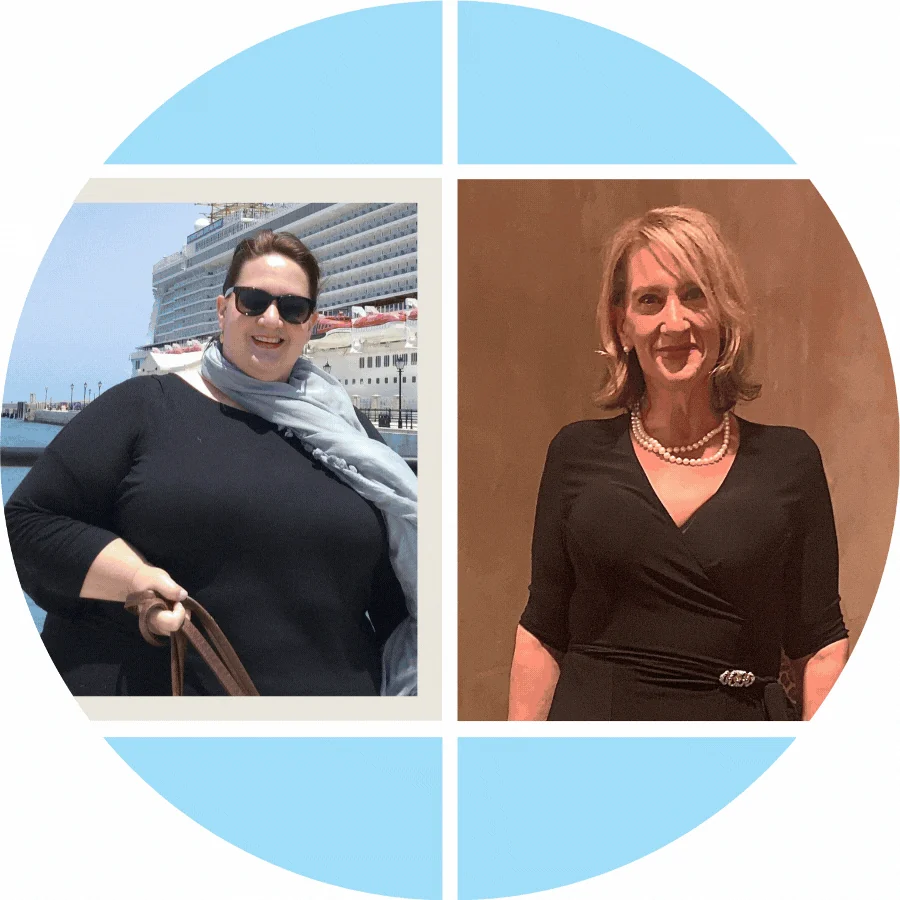

There’s a kind of PTSD that comes from living in a morbidly obese body for decades. There is the reliving of the obvious moments — the stares, the comments, the humiliation — but also the way those experiences settle into our nervous system and linger long after, and one interaction in a restaurant can transport you back to every moment you’ve ever felt too big and too much, ashamed and wanting to hide.
Last weekend, I was out to dinner with family and someone called me fat. Not in those exact words, but close enough that my body immediately understood the subtext of what was being said and I felt the familiar burn of embarrassment in my cheeks and behind my eyes.
My reaction, as it always has been, was to shut down and not draw additional attention to myself. So I did my best to ignore it and pretend it didn’t hurt, moving on quickly and quietly, as if it didn’t happen. This is what I did for decades. I have strong instincts of self-protection, but all that burying never really made the pain disappear, it just made it louder. And heavier. It made me heavier.
I have lost 200 pounds and kept it off. That matters enormously, and no callous comment from a stranger can take that achievement away from me, even though that fact felt meaningless in the moment.
The body I have weighs TWO HUNDRED POUNDS LESS THAN IT USED TO. So much weight lost that even I can’t really wrap my head around it. But some difficult truths: I no longer harbor any illusions that my body will somehow look like that of a young woman who wasn’t morbidly obese for decades. That’s not the reality of massive weight loss, aging, or healing. It also doesn’t take away from the fact that I want to lose 30 pounds, and even when I do, my body won’t be what I envisioned for years.
That realization can feel, at times, devastating. It is hard to come to terms with the fact that I have worked this hard and still don’t have the body I believed was waiting for me at the finish line, the body I earned, the body I deserve. There is real grief in that and a profound sense of loss.
As I untangle myself from years of expectation and disappointment, I know intellectually that I should feel immense pride. I have done the work, changed my health and transformed my life. I am lighter…physically, emotionally, and mentally, but if I am being completely honest, there is another feeling woven into that pride: regret. And beneath that regret lives an old, familiar shame that doesn’t disappear just because I’ve made real progress.
I know from unpacking years of a disordered relationship with food that shame is a part of the addiction cycle and will only serve to pull me back and down. So, in order to fully heal, I need to actively rebuke it, actively choose another path, even though shame is my default setting.
Besides, what choice do I really have? I can spend the rest of my life being ashamed of myself, fighting my body, measuring myself against impossible standards, chasing an image that will never exist, or I can sit with the uncomfortable truth that I worked unbelievably hard to get here, and that my “after” may still look, to many people, like a “before.”
That truth hurts, and if I stay there too long, I become both the victim and the perpetrator with the real crime an inside job and I my own worst enemy. I know exactly what it feels like to weaponize my body into evidence that I have somehow failed despite everything I have accomplished — it’s just that now my body weighs a lot less.
And this is also exactly why I do the work I do. One of my lowest personal weaknesses is also one of my greatest professional strengths, knowing that every person deserves the opportunity to feel better. Including me. Everyone deserves health, dignity, energy, freedom, joy, and a life that is bigger than disease, food obsession and shame. We deserve those things not because our bodies are perfect, but because our bodies are human.
The real victory is learning to stop withholding our worth until our bodies meet someone else’s definition of success. And ironically, when we fully embrace those ideals is when true healing takes root. It is accepting ourselves honestly, fully, and imperfectly, and understanding that our value was never contingent on a number, a size, or an appearance in the first place. And once we truly know that, no scale, no stranger, no old belief — and not even our own inner critic — can take it away from us. Even if it still stings sometimes.