
I view my journey to sustainable weight loss and healing my relationship with food as two distinct parts.
The first is understanding my body's relationship with food. Not my character or how much willpower I have. Not whether I believe that I’m not trying hard enough. My biology.
As someone who went to my first Weight Watchers meeting when I was six years old, I learned to count points before I learned to read. I listened to grown women and men talk about being "good" when they lost weight and "bad" when they gained it. I absorbed the message that food choices reflected moral character and that hunger was something virtuous people learned to ignore.
Children don't question those lessons, they just become a part of who you are, so, I grew up convinced that my struggle with food was evidence that something inside me was intrinsically different from everyone else. Fundamentally flawed. I thought I lacked discipline because I wanted more food than I was told was acceptable. I thought I simply wasn't trying hard enough. I thought I was broken beyond repair, and for decades, every failed diet became living proof of that.
But it turns out, it wasn't me failing diets, it was diets failing me by not acknowledging so many basic truths about human physiology: food changes what is happening inside of us in profound ways. Blood sugar rises and falls, insulin shifts, hunger hormones communicate constantly with our brains. Energy, focus, mood, and cravings are all part of one interconnected system.
When we eat foods that keep us on a roller coaster of spikes and crashes, our bodies don't feel safe or nourished. They don't feel satiated. And a body that doesn't feel sated will keep asking for more and will eventually seek it out until it gets it.
That is why you can finish a meal with a physically full stomach and still feel pulled toward food, why the pantry keeps calling your name and the mental chatter never seems to quiet down.
It is not because you are weak, but because your brain is trying to solve a problem. Hormones like leptin and ghrelin matter. Insulin, blood sugar regulation and the reward centers of the brain matter. Sometimes what we interpret as a moral failure is really a biological alarm system doing exactly what it was designed to do.
When I finally learned to nourish my body in a way that created stability instead of chaos, something remarkable happened: the volume turned down.
Not entirely but enough that I could finally hear myself think, which is when I discovered the second phase of healing which was addressing food's relationship with my body.
Because after the physical hunger quiets, many of us come to the realization that we were never eating solely because we were hungry…food had become something else.
It had become comfort, grounding, companionship. Relief.
For me, food was the one thing that never told me to be less emotional or less needy. It welcomed me exactly as I was. And even though I sometimes feel like I ate in ways that ended up being more work than any diet I could ever subscribe to, for a few moments, food offered dependable comfort, cheap dopamine and quick escape.
And when stress, uncertainty, grief, or overwhelm arrived, as they inevitably always do in real life, my brain did exactly what brains do: reached for the thing that had reliably relaxed my state for years.
And then…the shame, the broken vows to myself, the hiding, the self-criticism, the familiar ache of believing, once again, that I had failed.
And as painful as that cycle was, it was familiar. I think many of us hold on to familiar suffering because it feels safer than the unpaved road of living with discomfort.
Healing, then, is so much more than simply counting macros or eating less.
It is learning to recognize dysregulation before it becomes a binge. Learning what anxiety or overwhelm feels like in your chest before you numb it. Learning what loneliness sounds like before you feed it. Learning to sit with pain long enough to ask, "What do I actually need right now?"
True healing is practicing new ways of creating safety, giving yourself the gift of real comfort, nourishment and connection.
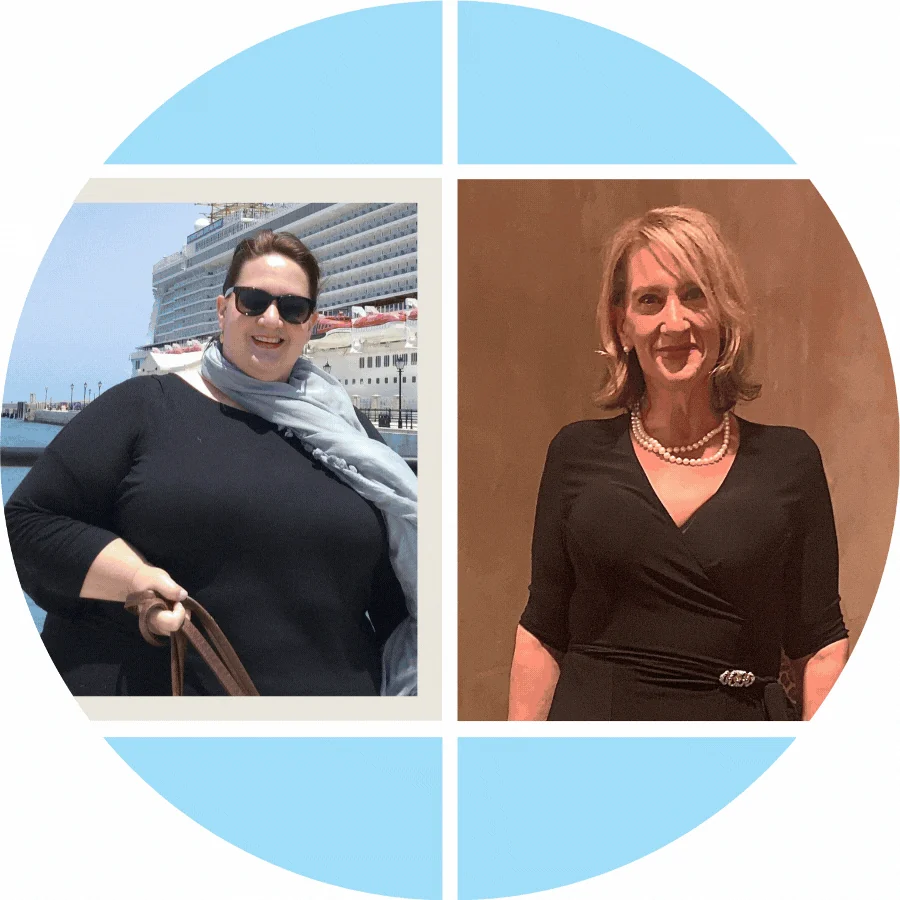
I no longer believe that healing means becoming someone with perfect control around food. After losing more than 200 pounds, I can tell you that the greatest transformation wasn't what happened to my body. It was learning that I didn't need food to rescue me from every hard feeling.
Healing is becoming the person who finally understands that biology is not a character flaw. It's learning to nourish yourself with love instead of punishment, to meet struggle with compassion instead of criticism, and to recognize that you were never bad or broken. You were simply a little girl who learned far too early to carry burdens that were never meant to be hers.