

Guest Post by Ari Kalayjian, 8th Grade
To: Superintendent of Schools
Blauvelt, NY 10913
 Dear Superintendent:
I am an eighth grader at South Orangetown Middle School, and I am writing to you regarding the quality of the school food n the district. Informal peer-group surveys have shown consistent poor sentiment toward the school’s food quantity and quality year-over-year. Not only is the school food undesirable, but it is also not compliant with the 2025-2030 U.S. Dietary Guidelines for Americans. To solve these issues, I propose that the district include more animal meat and vegetables in the school meals, as well as limit the availability of foods containing refined carbohydrates and ultra-processed ingredients. These changes come with many benefits for the student body, including higher academic performance, better behavior, and overall increased focus and enjoyment in school.
Both teenagers’ minds and bodies are actively growing, so it is important that they receive the nutrients needed for proper growth and development. Animal meats (fish, chicken, beef, etc.) are high in protein, B vitamins, iron, calcium, and many other essential vitamins and minerals that are almost entirely exclusive to animal meats, making them crucial to the development of adolescence. Additionally, freshwater fish contain omega-3 fatty acids, which are a very important type of fat that supports brain function and increases attention in children (Richardson, et al). Omega-3 fatty acids are mainly found in freshwater fish, making these fish a very important part of a person’s diet. Whole fruits and vegetables contain vitamins C, K, and E, which are also scarcely found in other foods.
Besides the high nutritional content of meat and whole vegetables, a study was conducted in 2007 observing the effects of meat on children. The study took three groups of children and gave each a different meal for lunch during a two-year time period. One group received a typical starchy meal, one received the same meal but with a cup of milk on the side, and the other group received the same meal but containing meat. The findings of the study were as follows: “For school performance, as measured by end-of-term test scores, the greatest percentage increase in zonal end-term total test scores was observed in the Meat group, with the greatest percentage increase in arithmetic subtest scores also seen in the Meat group, both statistically significant increases… The Meat group, compared with all other groups, showed the greatest increase in percentage time in leadership and the greatest increase in percentage time in initiative behavior” (Neumann, et al). This proves how the food children eat directly affects their academic performance, showing that a shift in the school district’s meal program toward higher quality and more nutrient-dense foods can drastically increase student performance. The USDA also recently published revised dietary guidelines for the US public that emphasized prioritizing protein, eating whole fruits and vegetables, and limiting highly processed foods, added sugars, and refined carbohydrates. And additionally specifying how “adolescents should eat nutrient-dense foods such as dairy, leafy greens, and iron-rich animal foods, while significantly limiting sugary drinks and energy drinks and avoiding highly processed foods” (United States Department of Agriculture).
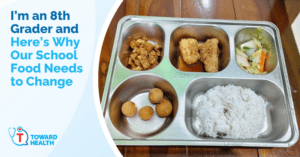
Many lunch options that the school district provides do not meet these USDA criteria and are often the exact opposite of what the dietary guidelines suggest. For example: the school’s cheesy breadsticks, mozzarella sticks, pizza, pasta with meat sauce, grilled cheese sandwich, and bacon cheddar potato roll make up about half of the lunches the school district offers and are void of much higher-quality animal protein, vitamins, and minerals. These meals are also very high in processed carbohydrates and are served with a choice of snack (ex. chips, candy, ice cream), which are all ultra-processed foods. The school’s breakfast options are even worse, as the school offers foods like Pop-Tarts, Coco-Puffs, Trix, Scooby Snacks, cinnamon buns, and sweetened yogurt, which are also very high in processed carbohydrates, sugar, and ultra-processed ingredients. The NIH reviewed a plethora of studies pertaining to the correlation between consumption of ultra-processed foods and the overall health of adolescents and published that “the findings of this review disclose associations between the consumption of ultra-processed foods and harmful health outcomes in childhood and adolescence, such as overweight, obesity, physical inactivity, cardiovascular diseases and periodontal diseases” (Mescoloto, et al). This data shows just how harmful ultra-processed foods are to adolescents.
The school district does serve meals containing animal meat and vegetables, though the meat in these meals is usually not high quality and the meal itself is still high in processed carbohydrates and sugar. Vegetables are also offered as an optional side to the meal, not cooked into it, which leads to children choosing not to eat vegetables with their meal and instead choosing to eat ultra-processed snacks.
It is the school district’s responsibility to provide nutritious, healthy, and filling meals for its students. Meals high in processed carbohydrates and sugar can leave students feeling unsatisfied, and can lead to a spike in blood-sugar (a sugar crash), followed by feeling drowsy. School meals high in sugar can cause students to be distracted and unable to focus on their teacher’s lesson or their own work. Many students also rely on the school to provide them with their first meal of the day. Students may not have time to eat breakfast before school, or their guardians may not be able to prepare a full dinner when they get home from work. So these students are forced to rely on the school’s meal options, a Pop-Tart or grilled cheese, for example, to nourish them and keep them full during the day.
Even though high-quality meals with more meat and whole vegetables are more expensive than the current school meals, they are still affordable. The district can apply for multiple grants to afford a change in meal program, such as New York’s Regional School Food Infrastructure Grant Program and the New York State Farm-to-School Grant Program. The district can also preemptively change the lunch program, as the school district’s requirements will change in the coming years to fit the new dietary guidelines.
Food should be a priority in our school district, as it nourishes the student’s mind and body. The school board has a dual imperative to include more real food in their school meal program, particularly meat, whole vegetables, and whole fruits, both morally and legally. As research and evidence clearly show, diets rich in high-quality animal proteins and whole fruits and vegetables can significantly improve students’ academic performance, behavior, and overall well-being, while diets high in ultra-processed foods and refined carbohydrates can have the opposite effect. This is a change that is supported by numerous studies, the national dietary guidelines, and the consensus of the student body. Ultimately, providing healthier school meals is not just about food, it is an investment in students’ ability to learn, grow, and thrive.
Sincerely,
Ari Kalayjian
8th Grade Student, South Orangetown Middle School
Works Cited
“Governor Hochul Awards $10 Million Through Second Round of New York’s Regional School Food Infrastructure Grant Program.” Governor Kathy Hochul, New York State, 13 May 2025, https://www.governor.ny.gov/
Mescoloto, Samantha Bittencourt, et al. “Ultra-processed food consumption and children and adolescents’ health.” PMC, October 2023, https://pmc.ncbi.nlm.nih.gov/
Neumann, Charlotte G, et al. “Meat Supplementation Improves Growth, Cognitive, and Behavioral Outcomes in Kenyan Children.” ScienceDirect, Elsevier Inc., April 2007, https://www.sciencedirect.com/
“RFP 0378 – New York State Farm-to-School Grant Program 2026.” Department of Agriculture and Markets, New York State Department of Agriculture and Markets, https://agriculture.ny.gov/
Richardson, Alexandra J, et al. “Docosahexaenoic Acid for Reading, Cognition and Behavior in Children Aged 7–9 Years: A Randomized, Controlled Trial (The DOLAB Study).” PLOS, PLOS, 12 September 2012, https://journals.plos.org/
South Orangetown Central School District. “2025 – 2026 Proposed Budget.” South Orangetown Central School District, 20 May 2026, https://resources.finalsite.
United States Department of Agriculture. “Dietary Guidelines for Americans, 2025–2030.” Eat Real Food, USDA, 2025, https://cdn.realfood.gov/DGA.