
By Amy Eiges
For decades, it felt like I was hitting my head against a brick wall trying to lose weight and improve my health. Every day brought another plan, another diet and, eventually, another reason to lose hope.
When I discovered a low-carbohydrate, ketogenic approach and went on to lose nearly 230 pounds, it was painful to think about all the years I had spent “failing.” The farther I get into this journey, however, the more I understand that those experiences were not wasted. They taught me what does not work—and what I need around me when things get hard.
Those experiences eventually brought me to Dr. Tro. Before each appointment, I sent him detailed food logs. He had never asked me to track my food, but I had been conditioned by decades of diets, nutritionists and doctors to believe that weighing, measuring and documenting every bite was the only way to succeed.
One week, he put the logs aside and asked me a beautifully simple question:
“Are you hungry?”
I thought he was kidding. What did hunger have to do with anything? I had stayed within my macros.
He asked again: “Are you hungry?”
That question changed the way I understood weight loss. It also led to the next, more practical question:
If I am not physically hungry, what is driving me to eat—and what defense do I have ready for that moment?
The answer is not more shame or a heroic burst of willpower. For people who have struggled with obesity, food addiction, cravings or repeated weight regain, hope alone is not a sustainable strategy. We need a system of defenses prepared before the difficult moment arrives.
Watch: Are You Hungry? The 6 Defenses
Hunger is not the only driver to eat
Physical hunger is only one reason we reach for food. Appetite, cravings, stress, poor sleep, habit, boredom, social pressure, celebration, food cues and the desire to soothe an uncomfortable feeling can all become drivers to eat.
Sometimes the pattern begins with something eaten earlier. Highly processed or personally triggering foods may make it harder to stop. A meal that leaves you unsatisfied may send you looking for more food soon afterward. A few sleepless nights or a difficult day may lower the distance between an impulse and an action.
Sometimes the driver is almost entirely environmental: food is on the counter, in the office, in the car, at the meeting or offered by someone who will not take no for an answer.
That does not mean every urge is the same or that every craving should be ignored. It means the question “Are you hungry?” creates a small but important pause. In that pause, you can identify what is actually happening and choose the defense that fits.
Try asking:
- Am I physically hungry?
- Am I tired, stressed, lonely, angry or bored?
- Did a specific food, place, person or routine trigger this urge?
- Am I satisfied but still wanting more reward from the food?
- What happened the last time I was in this situation?
- Which defense can I use now?
Willpower is not a plan
When I overate on past diets, I believed it had simply happened. The episode felt like proof that I was a failure. In reality, there were often many points before the eating began—or before it escalated—when a prepared defense might have changed the outcome.
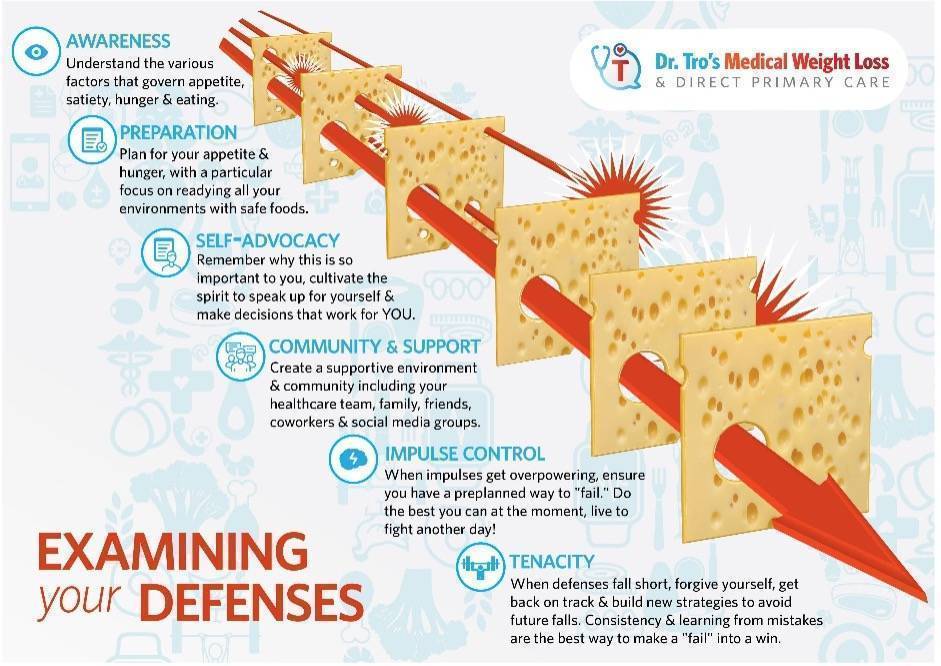
This is the central idea: do not rely on one defense. Build several layers.
One strategy may fail. You may arrive home more depleted than expected. The restaurant may change. A trigger food may appear. Someone may push past a boundary. When your first defense is not enough, a second and third defense keep one difficult moment from becoming an abandoned week.
The six defenses
1. Awareness: know what is driving you to eat
Awareness means understanding the factors that affect your hunger, appetite, satisfaction and eating. It also means knowing your own patterns without turning that knowledge into a character judgment.
What you ate earlier can affect what you want later. What you are eating now can make it easier—or harder—to recognize that you have had enough. For some people, foods such as sweeteners, nuts, cheese, low-carb desserts or highly processed “keto” products can become difficult to stop eating even when physical hunger is gone.
Awareness is not constant surveillance. It is learning to recognize your vulnerable situations so you no longer walk into them unarmed.
2. Preparation: make the easier choice available
Plan for hunger and appetite before they become urgent. Keep nourishing foods that fit your plan available at home, at work, in your bag or car, and during travel. Reduce easy access to the foods that repeatedly cause problems for you.
Preparation also means having more than one option. Your ideal dinner is Plan A. Leftovers may be Plan B. A bunless burger, rotisserie chicken or another simple emergency meal may be Plan C. Plan C does not have to be perfect; it has to be available when the alternative is losing control around a trigger food.
3. Self-advocacy: protect the reason you started
Be clear about why you want to change and what you want your life to look like in one, five or ten years. That reason becomes especially important when the people or environment around you pull in another direction.
Self-advocacy may mean asking a restaurant to adjust a meal, bringing food to a gathering, declining something without a long explanation or setting a boundary with a persistent food pusher. It also means treating your own health with the strength and kindness you would offer someone you love.
4. Community and support: do not wait until you are overwhelmed
Create a supportive environment that may include your healthcare team, coach, therapist, family, friends, coworkers or peer community. Asking for help is not evidence that you should have tried harder. It is one of the defenses.
For a long time, I believed I should know better and should be able to do this by myself. I could not—and I did not have to. Neither do you.
Support works best when it is specific. Instead of waiting until things fall apart, decide whom you will contact and what you will ask for. You might send a simple message: “I’m having a difficult evening and need ten minutes of support before I make a food decision.”
5. Replacement and impulse control: plan a safer way through
When an impulse becomes overpowering, have a preplanned fallback. The goal is not to prove that you can white-knuckle a craving. The goal is to interrupt the automatic sequence and give yourself a reasonable alternative.
Replacement is the practical heart of this defense. Replace a trigger food with a lower-carbohydrate or less-triggering option that works for you. Replace the walk toward the kitchen with a shower, a short walk, tea, a phone call or a change of room. Replace an unplanned decision with a written “if-then” plan: If the late-night craving arrives, then I will use my prepared option and contact my support person before deciding what comes next.
A replacement food is not automatically helpful because it is labeled “keto” or “low carb.” Choose options you can eat safely and reasonably. For some people, recreating a trigger food keeps the same reward loop active; for others, it is a useful bridge. Know yourself and adjust the plan based on what actually happens.
6. Tenacity and recovery: learn quickly and restart now
No defense system works perfectly. When your defenses fall short, avoid turning one episode into a reason to abandon everything.
Pause. Get honest about what happened without attacking yourself. Which layer was missing? Did you arrive hungry? Was the food too accessible? Did you need support sooner? Was your replacement still a trigger? Use the answer to strengthen the system.
Recovery does not have to wait until Monday, next month or after the holidays. Return to your next planned action as soon as you can. Consistency is not never struggling. It is shortening the time between a setback and a constructive response.
Using the defenses in everyday situations
The defenses work together. In a late-night craving plan, for example, recognizing stress or poor sleep might lead you to prepare a satisfying dinner, keep trigger foods out of the house, and decide how you will pause, choose an alternative or contact support. If the plan falls short, returning to your next planned meal becomes the recovery step.
Use the situations below to find the preparations that fit your life.
Boredom or evening eating
Eat enough at dinner to feel satisfied, then give the urge time to pass. Water, seltzer, tea or coffee may help if appropriate. Change the setting: walk, listen to a podcast, shower, read or relax away from the kitchen for 30 to 60 minutes.
If you remain physically hungry, start with planned leftovers or another prepared meal rather than switching immediately to a highly rewarding snack flavor.
Restaurants and social events
- Review the menu before you arrive and identify at least two workable meals.
- Do not arrive desperately hungry; eat beforehand if that makes the situation safer.
- Build the meal around protein, with vegetables or salad as appropriate.
- Save your usual orders for your five most-frequent restaurants in your phone.
- Decide in advance what you will say if someone pressures you to eat something you do not want.
Eating at a friend’s home
Offer to bring or prepare a dish that works for you, and decide before you arrive which foods are flexible and which are not. You can explain your choice simply: “I’m avoiding that because I feel better without it. May I bring something to share?”
Work meetings
Eat beforehand when appropriate, or adjust the available meal by removing bread or starch and prioritizing the protein. Keep an emergency option at work, in your bag or in your car. A choice that feels conspicuous at first may become routine.
High-stress or overloaded days
Keep quick meals available: leftovers, eggs, prepared protein, a bunless burger, rotisserie chicken or another option that fits your plan. When you do have time to cook, make two to three times your usual amount. Emergency food is part of the system; needing it does not mean you failed to meal prep perfectly.
Difficult people and food pushers
Identify the exact trigger: pressure, criticism, conflict, guilt or the food itself. Plan one brief response and repeat it instead of entering a debate. Leave the room, table or event if protecting your health requires it, and contact support afterward—especially if the interaction commonly leads to stress eating.
Make your plan for the week
Do not try to build the entire system in one day. Write down a plan for a situation you regularly face, then choose two actions this week that will make it easier to follow.
- Name the situation and the driver. Which situations most often lead you to eat, and what is driving the urge? Start with the one you are most likely to face next.
- Choose a first defense and a backup. What will you do first, and what can you do if that option is unavailable? Include a brief self-advocacy sentence if someone may challenge your choice.
- Prepare your alternatives. What food replacement, non-food replacement or emergency meal will you have ready?
- Make support specific. Which person or community will you contact, and what will you ask them to help with?
- Write your recovery step. If the plan falls short, what is the next constructive action you will take?
Your two actions can be small: try an emergency restaurant order, prepare extra portions, or find a bread, pizza or dessert replacement that works for you. A replacement that triggers continued eating may not be helpful. You can also practice your response to food pressure or tell a support person exactly how they can help.
If it fits your medical and nutrition plan, practice waiting for physical hunger before your first meal.
These actions are not tricks that cause weight loss by themselves. They make your eating plan easier to live with and more resilient when life becomes difficult.
Why this system can help
This approach is practical, but it is not merely anecdotal. Controlled brain-imaging research has shown that glucose state can influence hunger, desire for high-calorie foods and activity in brain regions involved in reward.[1] That is one reason a craving can feel biologically urgent rather than like a calm, abstract choice.
Planning matters, too. A 2025 randomized trial found that adding structured mental contrasting and “if-then” implementation intentions to behavioral weight-loss treatment improved reported snacking measures and body mass index over the study period.[2]
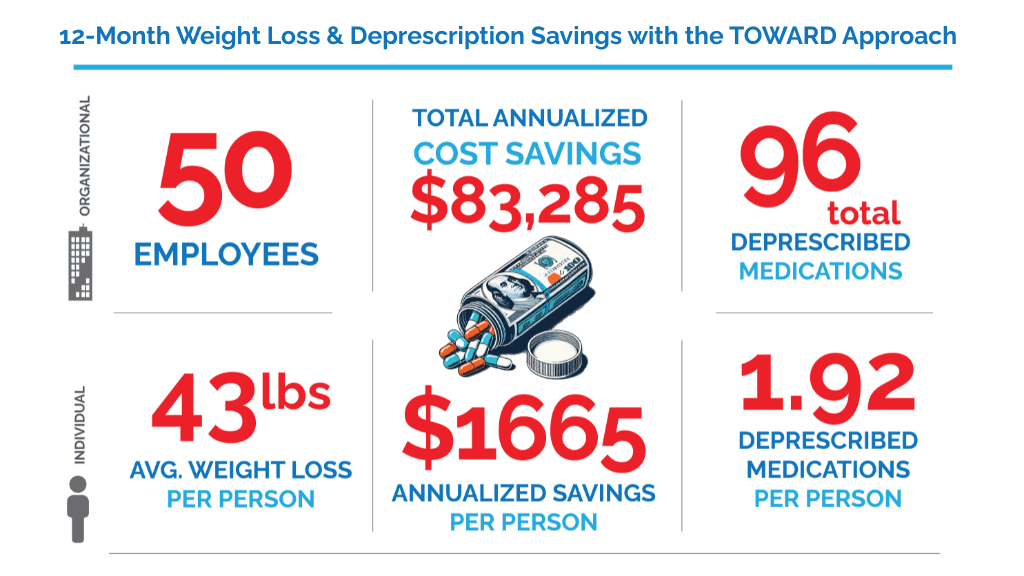
Support and food strategy can work together. In the 2025 TOWARD study, an intervention combining therapeutic carbohydrate reduction, clinician access, health coaching, education, community and real-time monitoring was associated with a 40.7% decrease in average food-addiction symptoms and a 34.7% decrease in average binge-eating symptoms among participants with follow-up questionnaire data.[3]
The 2026 Liberate study also reported sustained improvements in binge-eating symptoms following an online community-based intervention built around real-food, low-carbohydrate nutrition, psychoeducation and peer support.[4]
The lesson is not that one tactic eliminates every urge. It is that eating behavior becomes more manageable when biology, food environment, advance planning, replacement strategies and human support are addressed as one system.
When more support is needed
If eating regularly feels out of control, causes significant distress, happens in secret or includes bingeing, purging, prolonged compensatory fasting or other unsafe behaviors, involve a qualified clinician. A history of an eating disorder also deserves individualized support before making major dietary or fasting changes.
People who use glucose-lowering or blood-pressure medication should coordinate significant nutrition or meal-timing changes with their medical team because medication needs can change.
Needing more support does not mean the defenses failed. It means professional care should be part of the defense system.
The takeaway
The question “Are you hungry?” is not a command to ignore every urge to eat. It is an invitation to understand the urge before acting on it.
Build the system before you need it. Start with two defenses this week. Let each difficult moment teach you how to make the next one safer.
Related Toward Health reading
- How to Recover When You’ve Been Off Plan
- “I Am Not Broken”
- Binge Eating and Stress Eating: Why It Happens and How Low-Carb Nutrition Can Help
References
-
Page KA, Seo D, Belfort-DeAguiar R, et al. Circulating glucose levels modulate neural control of desire for high-calorie foods in humans. J Clin Invest. 2011;121(10):4161–4169. doi: 10.1172/JCI57873. Full text.
-
González-González R, et al. Online Mental Contrasting with Implementation Intentions for changing snacking behavior and reducing body mass index in people with excess weight. Appetite. 2025;214:108209. doi: 10.1016/j.appet.2025.108209. PubMed.
-
Saner E, Kalayjian T, Buchanan L, et al. TOWARD: a metabolic health intervention that improves food addiction and binge eating symptoms. Front Psychiatry. 2025;16:1612551. doi: 10.3389/fpsyt.2025.1612551. PubMed.
-
Bennett E, et al. Changes in binge eating symptoms following an online community-based ultra-processed food addiction intervention: Liberate. Front Public Health. 2026;14:1807450. doi: 10.3389/fpubh.2026.1807450. PubMed.