
Original interview released September 28, 2020 · LowCarbMD Episode 137
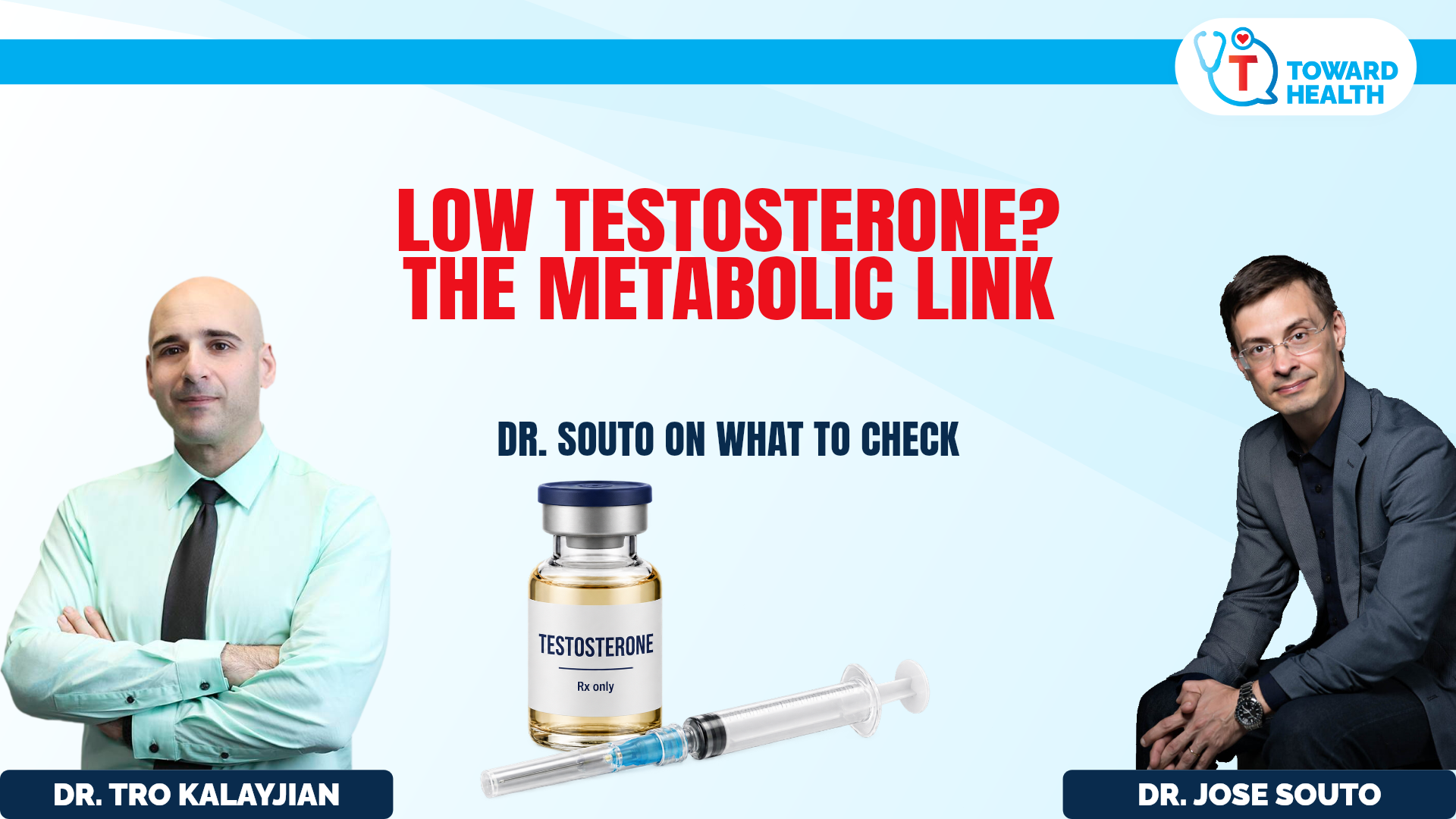
A low testosterone result can raise an immediate question: should I replace it? In this selected interview excerpt, Brazilian urologist Dr. José Carlos Souto explains why he also looks at weight, metabolic health, and symptoms before deciding how to proceed.
Dr. Souto joined Dr. Tro Kalayjian and Dr. Brian Lenzkes to discuss nutrition and his clinical experience. This short focuses on one part of that conversation: evaluating low testosterone while addressing factors that may be contributing to it.
Watch the interview short
Dr. Souto describes how he thinks about low testosterone in the setting of excess weight and metabolic changes, then distinguishes men with symptoms from those who may be better served by addressing contributing factors and retesting. The short preserves that distinction.
What Souto sees in practice
Dr. Souto describes patients whose testosterone levels rise as they lose weight and improve their metabolic health. He discusses body fat and the conversion of testosterone to estrogen as part of the explanation he gives during the interview.
These are observations from his practice. They do not mean every person will have the same response, that weight loss will correct every cause of low testosterone, or that the interview establishes an effect of carbohydrate restriction independent of other changes. His central point is that a laboratory value is only one part of the evaluation. Symptoms, underlying health, and response over time also matter.
Symptoms change the conversation
The passage does not present a blanket argument against testosterone treatment. Dr. Souto distinguishes men with low levels and symptoms, for whom he may use testosterone while addressing metabolic contributors, from men without symptoms, for whom he describes focusing on nutrition and exercise and reassessing later. The appropriate plan depends on the individual evaluation.
From the interview to today’s evidence
This interview was released in 2020, before the later TRAVERSE trial results. Dr. Souto is discussing his clinical approach at that time. He is not commenting on findings published afterward.
Our related guide, Testosterone Therapy: Benefits, Heart and Prostate Safety, and What We Monitor, examines later randomized evidence, potential benefits, safety signals, and monitoring. It also explains why an evaluation begins with symptoms and repeat morning testosterone measurements, while considering reversible contributors and fertility plans.
Source: LowCarbMD Episode 137: Dr. José Carlos Souto. The short uses a selected passage from the original recording; the full episode remains available for context.
This article is for education and does not replace individual medical evaluation.