
Your glucose results are an important part of your metabolic health. They do not tell the whole story about how much insulin your body needs to keep those results in range.
Insulin resistance means your muscles, liver and fat tissue respond less effectively to insulin. Your pancreas may compensate by releasing more insulin, allowing glucose to remain within the usual range for a time.[1,9] Prediabetes describes elevated glucose below the diabetes threshold. The two are connected, but they are not interchangeable diagnoses.[1]
A useful assessment brings together your history, examination and laboratory results. It should help you understand your risk and decide what to do next.
Start with the whole picture
Your clinician may review your family history, previous gestational diabetes, medications, sleep, activity and changes in weight or waist size. Insulin resistance is a central feature of many metabolic disorders. Its clues can appear before glucose reaches the prediabetes range.[1,6]
- Triglycerides and HDL cholesterol: Higher triglycerides together with lower HDL can signal a pattern associated with insulin resistance. Fasting triglycerides above 100 mg/dL can be an early reason to look more closely, especially alongside low HDL or other risk factors. This is a prompt for clinical assessment, not a universal diagnostic cutoff; insulin resistance can be present below the usual 150 mg/dL triglyceride threshold used in metabolic syndrome criteria.[11,12]
- Blood pressure, waist size and fatty liver: Higher blood pressure, increasing waist size and fatty liver can add to the same metabolic pattern. Body weight alone cannot establish insulin resistance or rule it out.[1,6,11]
- Inflammation and vitamin D: Elevated C-reactive protein (CRP), a marker of inflammation, and low vitamin D have also been associated with insulin resistance. Both have other possible explanations, so they add context rather than establish a diagnosis. These associations do not mean that CRP itself causes insulin resistance or that vitamin D supplementation will necessarily correct it.[13,14]
Insulin resistance is also linked to changes in mitochondrial function—the processes cells use to produce energy. This connection helps explain why metabolic health involves more than blood sugar. The relationship is complex, however: routine blood tests do not directly measure mitochondrial function or diagnose a mitochondrial disorder.[15,16]
These findings are most useful when considered together. They help determine which tests are appropriate and whether a result needs further investigation.
Bring previous results when possible. A trend often provides more context than a single measurement.
What glucose tests can tell you
Three established tests are used to identify prediabetes and diabetes. They measure glucose exposure or glucose handling, rather than directly measuring insulin sensitivity.[3]
| Test | What it measures | Prediabetes range* |
|---|---|---|
| A1C | An estimate of average glucose exposure over roughly three months | 5.7–6.4% |
| Fasting plasma glucose | Blood glucose after at least eight hours without calories | 100–125 mg/dL |
| Two-hour oral glucose tolerance test (OGTT) | Blood glucose two hours after a standardized glucose drink | 140–199 mg/dL |
*These are standard U.S. criteria for nonpregnant adults. Pregnancy uses different testing pathways. Diabetes-range results are A1C 6.5% or higher, fasting plasma glucose 126 mg/dL or higher, or two-hour OGTT glucose 200 mg/dL or higher.[3]
Unless hyperglycemia is unequivocal, a diabetes diagnosis requires confirmation.[2]
A result below the prediabetes range does not, by itself, demonstrate normal insulin sensitivity. Conversely, an elevated glucose result does not establish insulin resistance as the only cause. Insulin production and other medical conditions also matter.[1,3]
When the results do not agree
A1C and glucose tests can identify different people. A1C can also be misleading when red blood cell survival or hemoglobin is affected—for example, with certain anemias, hemoglobin variants, recent blood loss or transfusion. Your clinician may repeat testing or choose a different method when the results do not fit the clinical picture.[4]
Preparation matters for an OGTT. Tell the ordering clinician if you follow a low-carbohydrate or ketogenic diet. Preparation for the standard 75-gram OGTT includes at least 150 grams of carbohydrate daily for the three days before testing; recent carbohydrate restriction can affect the result. Arrange the preparation and any medication instructions with your care team.[2]
Why we measure fasting insulin
At Toward Health, insulin testing is part of our assessment of all patients with metabolic disease. Fasting insulin measures how much insulin is circulating; the result reflects both pancreatic insulin production and how quickly the body clears it.[8] We read it alongside glucose to understand the body’s insulin demand.
The Society of Metabolic Health Practitioners (SMHP) includes fasting insulin, HOMA-IR and post-meal insulin testing among its metabolic assessment options. Its patient laboratory guide also highlights fasting insulin.[5,20]
Early in insulin resistance, the pancreas may compensate by producing more insulin. This higher insulin level, called hyperinsulinemia, can keep glucose and A1C within their usual ranges. Measuring insulin is especially useful at this stage because it can reveal the extra demand before glucose tests become abnormal.[1,22]
As type 2 diabetes develops and progresses, the pancreas’s insulin-producing beta cells may become unable to meet that demand. Insulin production can become inadequate and glucose can rise. A low—or apparently normal—insulin result alongside high glucose can therefore signal significant beta-cell dysfunction or insulin deficiency, rather than improved insulin sensitivity. This pattern deserves further assessment of pancreatic insulin production.[21,22]
When insulin production is in question, C-peptide can help assess how much insulin the body is making, particularly in someone using injected insulin. SMHP discusses its use when assessing insulin production during insulin reduction.[5,22]
What HOMA-IR adds—and what it cannot settle
HOMA-IR is an estimate calculated from fasting insulin and fasting glucose. It can be useful in research and selected clinical assessments, but it is not a direct measurement of how every tissue responds to insulin.[6,7]
Different insulin assays and different populations can produce different reference values. The developers of the HOMA model caution that there is no absolute, universal boundary between normal and abnormal results.[7]
That is why an online calculator’s colored result should not be treated as a diagnosis. HOMA-IR needs particular caution when insulin production is impaired or a person uses injected insulin. Your clinician should decide whether it is appropriate and whether the result would change your care.[6,7]
What the LP-IR score can tell you
The lipoprotein insulin resistance score (LP-IR) uses the sizes and numbers of certain lipoprotein particles measured by an NMR blood test. It captures a lipid pattern associated with insulin resistance, providing information beyond a standard cholesterol panel. It does not directly measure insulin.[17]
Higher LP-IR scores have predicted future type 2 diabetes in long-term research. In a large prospective study of women, higher scores were also associated with future coronary heart disease, especially disease occurring at younger ages.[18,19]
LP-IR can therefore provide meaningful additional context for metabolic and cardiovascular risk. It should be interpreted alongside your history, glucose results and other risk factors. It is not a percentage chance of developing disease, and it does not replace a full cardiovascular assessment.
Can a CGM diagnose insulin resistance?
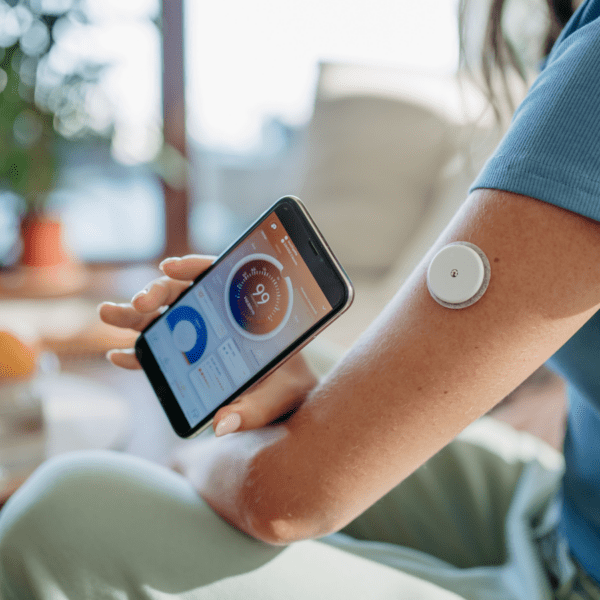
A continuous glucose monitor measures glucose in the fluid beneath the skin. It does not measure insulin. A glucose pattern cannot reveal, on its own, how much insulin was needed to produce that pattern.[10]
CGM may help you and your clinician explore glucose responses to meals, activity and daily routines.[10] It complements clinical assessment. Laboratory blood tests are used to establish a diagnosis of prediabetes or diabetes.[3]
More involved tests of insulin sensitivity are primarily used in research.[1]
Turn the findings into a plan
The value of testing is what it helps you do. Ask your clinician:
- Which findings are most relevant to my health right now?
- Would fasting insulin or another test change the plan?
- Could my diet, medications or another condition affect these results?
- Which changes should I start with, and when should we reassess?
Nutrition, physical activity, sleep and weight management when appropriate can all be part of a plan. Treatment and follow-up should reflect your circumstances. Do not change prescribed medication independently.[1]
You do not need to pursue every available test before beginning a thoughtful conversation about your metabolic health.
Continue learning
- Type 2 Diabetes and Insulin Resistance: Start Here
- Prediabetes Is an Early Warning, Not the Beginning
- What Is Metabolic Syndrome?
- Added Sugar, Blood Glucose, and Type 2 Diabetes
- The 10 Levers for Better Metabolic Health
References
- National Institute of Diabetes and Digestive and Kidney Diseases. Insulin Resistance & Prediabetes.
- National Institute of Diabetes and Digestive and Kidney Diseases. Diabetes & Prediabetes Tests.
- National Institute of Diabetes and Digestive and Kidney Diseases. Diabetes Tests & Diagnosis.
- National Institute of Diabetes and Digestive and Kidney Diseases. The A1C Test & Diabetes.
- Society of Metabolic Health Practitioners. Clinical Guidelines for Therapeutic Carbohydrate Restriction. Version 1.3.9. February 28, 2022. Sections 4.3.1 and 6.1.
- European Association for the Study of the Liver, European Association for the Study of Diabetes, and European Association for the Study of Obesity. Clinical Practice Guidelines on the Management of Metabolic Dysfunction-Associated Steatotic Liver Disease (MASLD). 2024. Guideline.
- University of Oxford, Diabetes Trials Unit. HOMA Calculator: Frequently Asked Questions.
- Goodarzi MO, et al. Fasting insulin reflects heterogeneous physiological processes: role of insulin clearance. American Journal of Physiology–Endocrinology and Metabolism. 2011;301:E402–E408.
- Bonadonna RC, et al. Obesity and insulin resistance in humans: a dose-response study. Metabolism. 1990;39:452–459.
- National Institute of Diabetes and Digestive and Kidney Diseases. Continuous Glucose Monitoring.
- National Heart, Lung, and Blood Institute. Metabolic Syndrome Diagnosis.
- Association between normal triglyceride and insulin resistance in US adults without other risk factors. BMJ Open. 2019;9:e028652.
- Brunner EJ, et al. Inflammation, Insulin Resistance, and Diabetes—Mendelian Randomization Using CRP Haplotypes Points Upstream. PLoS Medicine. 2008.
- Kayaniyil S, et al. Association of Vitamin D With Insulin Resistance and Beta-Cell Dysfunction in Subjects at Risk for Type 2 Diabetes. Diabetes Care. 2010.
- Petersen KF, et al. Impaired Mitochondrial Activity in the Insulin-Resistant Offspring of Patients with Type 2 Diabetes. New England Journal of Medicine. 2004.
- Toledo FGS, et al. Mitochondrial capacity in skeletal muscle is not stimulated by weight loss despite increases in insulin action and decreases in intramyocellular lipid content. Diabetes. 2008.
- Shalaurova I, et al. Lipoprotein Insulin Resistance Index: A Lipoprotein Particle–Derived Measure of Insulin Resistance. Metabolic Syndrome and Related Disorders. 2014.
- Harada PHN, et al. Lipoprotein insulin resistance score and risk of incident diabetes during extended follow-up of 20 years: The Women’s Health Study. Journal of Clinical Lipidology. 2017.
- Dugani SB, et al. Association of Lipid, Inflammatory, and Metabolic Biomarkers With Age at Onset for Incident Coronary Heart Disease in Women. JAMA Cardiology. 2021.
- Society of Metabolic Health Practitioners. Labs for Metabolic Health and Talking to Your Doctor. Accessed September 12, 2026.
- Tabák AG, et al. Trajectories of glycaemia, insulin sensitivity, and insulin secretion before diagnosis of type 2 diabetes: an analysis from the Whitehall II study. Lancet. 2009;373:2215–2221.
- National Library of Medicine, MedlinePlus. Insulin in Blood. Updated August 7, 2023.