
My whole life, I thought weight loss was about food and willpower, but after decades in the trenches, it turns out I couldn’t have been more wrong.
If there’s one thing I’ve learned after losing more than 200 pounds and keeping it off, it’s that this journey is about so much more than the number on the scale. It’s about unlearning decades of beliefs, dismantling decades of diet-culture entrenchment, rebuilding trust with myself, and discovering that the path to health is rarely linear. More than anything, it’s about learning how to stop battling myself to start becoming an ally to the person I was all along.
If I could sit down with the version of myself who was just beginning this journey, terrified, overwhelmed, and desperate for things to finally be different, these are the things I would tell her. Not because they would have made the process easier, but because they would have helped me be a little kinder to myself, a little more patient, and a lot more willing to believe that lasting change was possible. These are the lessons I wish someone had given me at the very beginning.
(Rule #1) Everyone deserves health and happiness, and you are the expert on how to get there
Most of us intrinsically know that everybody deserves health and happiness, and yet we often serve ourselves last while we make sure everyone around us gets what they deserve.
To change that, do a quick inventory: what were you doing when you were the healthiest, best version of yourself? When, where and what were you doing when you were the happiest? When were you most at peace and aligned with who you really are?
When you begin to choose yourself, it can feel odd, and if it’s been a while, often we don’t really know where to begin, so we outsource it to everyone else: the latest hack, guru, book, or Instagram/TikTok “expert.”
But in my experience, after trying it all, the best expert? You.
Use the self-inventory of your own experiences as a guide for how to achieve your own happiness. Remember what worked before and then start doing those things. If you can’t do them exactly as you did them before or need to adjust to what is realistic today, the goal is to slowly get back to them, and with brutal honesty (rather than shame or self-loathing, which is often a trap that will assuredly lure us off the path we know to be true) assess what is working….what is progress and what is a distraction, what is no longer working for you and what is.
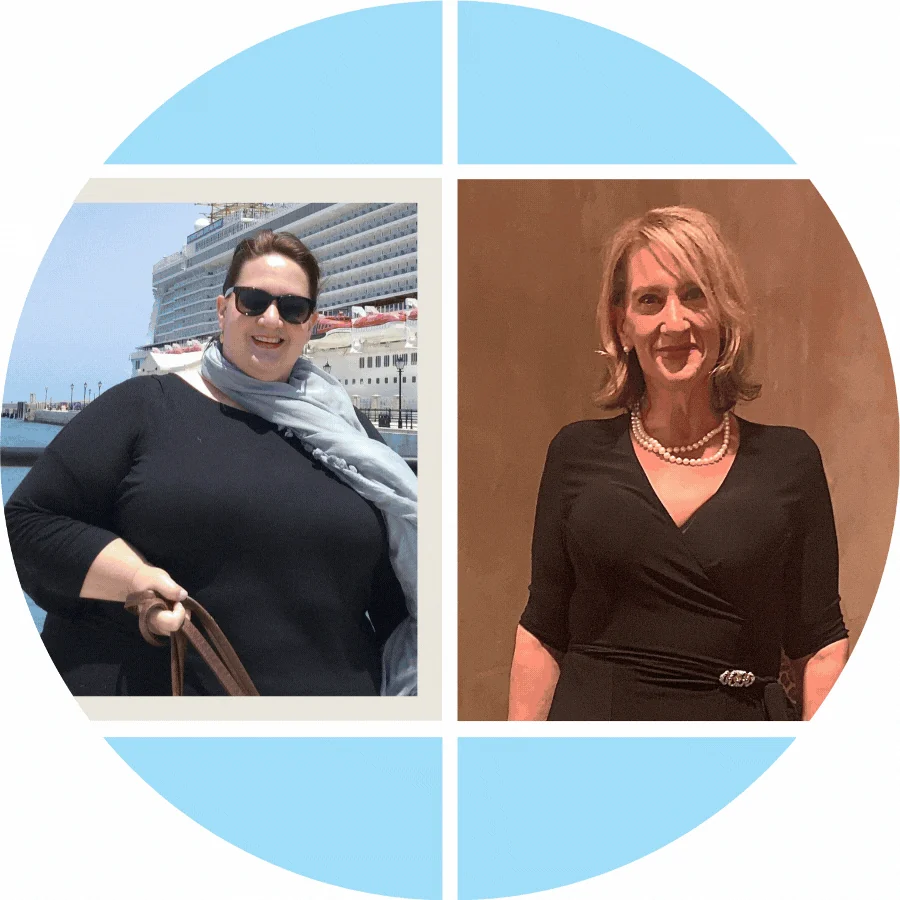
If I could sit down with the version of me who was just starting out – the woman who weighed over 400 pounds and felt broken, overwhelmed, and convinced this time wouldn’t be any different – I wouldn’t try to hand her a perfect plan. I’d take a deep breath and remind her of this instead.
(Rule #3) You don’t need to have this all figured out. Just start.
Waiting until I was “ready” was one of the biggest lies I told myself. I spent years thinking I needed the perfect plan, the perfect mindset, the perfect Monday. But perfection was a killer. And shame? It’s willing accomplice. Those two kept me stuck longer than anything else ever did.
Yes, there are certain physiological truths that I now understand are important factors: the impact of blood sugar and metabolic health on my food relationship and diet. But beyond that? There is no single “right” path for every person, only the one you can stick to and that brings you closer, day in and day out, to wellness and peace.
For me, sustainable weight loss didn’t come from extremes, but from viewing myself as an experiment, seeing what worked, and learning how to keep going by making minute adjustments and improvements. It came from realizing that when I couldn’t do everything, I could still do something. A short walk. A better choice. One small decision that moved me forward.
That’s how this works.
There will be times when you do everything “right” and the scale goes the wrong way. It will feel unfair. It will make you question everything. And in those moments, you will be tempted to quit.
Don’t.
Because I can almost guarantee you that at some point you will become frustrated by just how slow of a process this can be. Yes, it might be slower than you think you can withstand. But slow is sustainable. Slow is real. And slow is what allowed me to lose over 200 pounds and keep it off.
But none of that would have lasted if I hadn’t learned one of the hardest lessons of all:
(Rule #7) You cannot hate yourself thin.
There are still old messages living in the back of my mind that tell me I’m not enough, that I should be ashamed of myself. But what I’ve learned, again and again, is that self-hatred doesn’t move you forward. It pulls you backward and eventually… under.
Shame doesn’t make you stick to the plan or try harder in any meaningful way. In fact, it drags you back into the darkest places you fought like hell to leave. So, start there. Learn to speak to yourself differently. Offer yourself the same compassion you so freely give everyone else. When you took the self-inventory from Rule #1 – think about what you were telling yourself in the happiest, healthiest version of yourself. Duplicate those thoughts. And if you don’t quite believe it yet? Fake it ‘til you make it. Catch yourself telling yourself terrible untruths and redirect.
There will be seasons when you feel impossibly far from the person you want to become. Or you’ll have moments when everything feels aligned – your nutrition, your movement, your mindset – and then suddenly, you stumble. Not just a little. Sometimes you fall hard.
It happens to all of us, and in those moments, it can feel like there’s an invisible wall between you and the life you want. You can see it, but you have no idea how to get to the other side. Here’s what I wish someone had told me sooner:
(Rule #10) You don’t have to climb over the wall. You can just walk around it.
When you’re in a dark place and desperately longing for the light, it can feel impossible to believe another side even exists for someone as loathsome as you believe you are. It’s like everything you want is standing just beyond a glass wall. visible, but out of reach.
But then, you take one small step. And then another. And eventually, somehow, you find yourself on the other side.
And when you finally get there, you realize what Glinda the Good Witch told Dorothy was true: You had it in you the whole time.
You don’t need to scale the wall in one impossible leap; you only need to keep putting one foot in front of the other and walk around it. One step, one choice at a time. One day at a time.
That’s what consistency really is: it’s not perfection or doing everything right every single day.
It’s continuing to show up for yourself, even when it’s messy, even when it looks different than you planned, even when all you can manage is the bare minimum.
Because those days count. Especially those days.
So, if you’re at the beginning of your journey, or somewhere in the middle wondering if you’ll ever make it? Keep going.
Remember: there is a version of you who has come out on the other side and is looking back at you now and saying, “It’s all going to be okay.”
There is no shortcut around this part, and the only way out is through: through the fear, the grief, the uncertainty, and the letting go of the stories you’ve carried for decades.
But you can do this. And when it feels impossible, borrow the strength of all of us standing beside you until you can find your own again.
One day, you’ll look back and realize you were never broken. You were becoming.
Not perfectly. Just honestly.
So start where you are, do what you can, and don’t stop showing up for yourself.
That’s how everything changes.