
At TOWARD, we have been helping women navigate menopause with science-backed hormone therapy and whole-person lifestyle care long before the FDA initiated removal of the black-box warning from menopausal hormone therapy. We have reviewed the evidence for years, and the data has always been clear: for the right women, started at the right time, hormones can protect health, prevent disease, and restore quality of life.

November 10, 2025 marked a historic turning point for women’s health.
On November 10, 2025, the U.S. Food and Drug Administration officially initiated the removal of the decades-old black-box warnings from menopausal hormone therapy (MHT) products, warnings that had long fueled fear and confusion since the early 2000s.
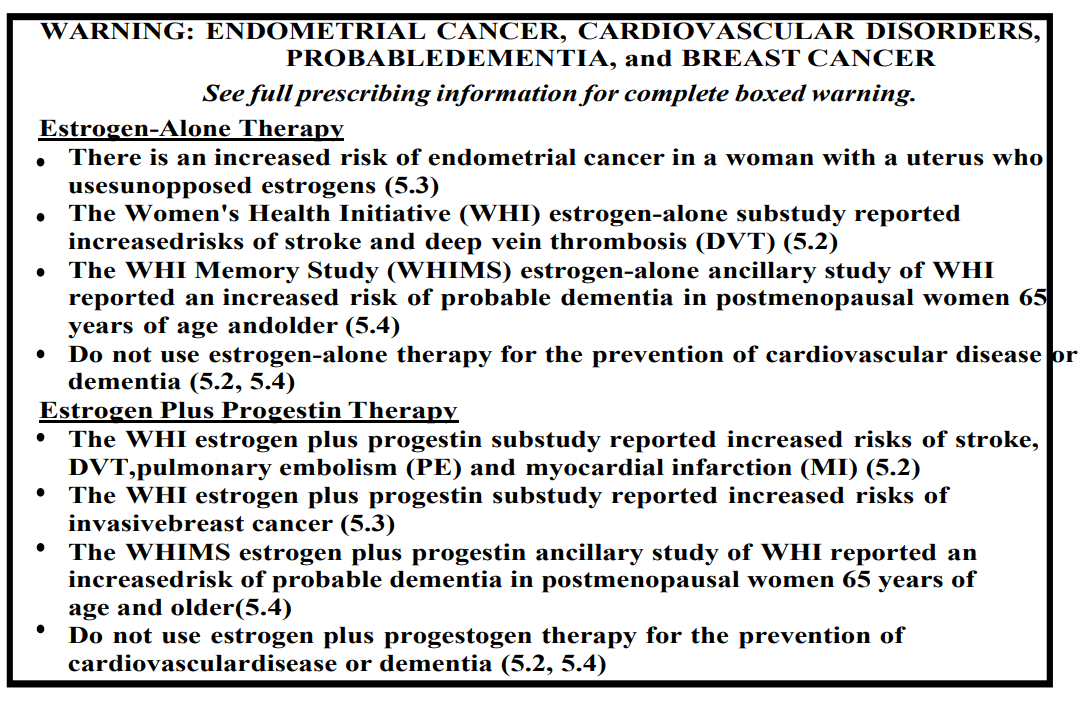
This decision followed a pivotal summer hearing where leading experts testified before the FDA, urging the agency to modernize its labeling to reflect the true science, not the outdated interpretations of the 2002 Women’s Health Initiative (WHI) press release that reshaped women’s healthcare for two decades.
How We Got Here
The original WHI study enrolled older, largely asymptomatic women (average age 63) using older synthetic hormone formulations. An early press release, issued before full data were released, overstated risks, particularly for breast cancer and cardiovascular events.
The impact was profound: MHT use plummeted from 35% of women to under 5%, and researchers now estimate that 18,000–91,000 women may have died prematurely due to the avoidable consequences of estrogen deprivation.
For two decades, this misunderstanding cast a long shadow.
Medical training shifted; fear replaced physiology. Women were often told to “just tough it out” or offered other less effective pharmacotherapy options (like antidepressants) for the hot flashes and mood symptoms that may arise during the menopausal transition.
As recently as July 2025, an American Family Physician editorial, read by over 180,000 clinicians, suggested menopause “should not be medicalized.” While menopause can indeed be a time of reflection and renewal, surveys reveal its human and economic cost when symptoms go untreated:
- $1.8 billion in annual productivity losses due to symptom-related absences
- 73% of women reported menopause contributed to marital strain or breakdown
That same editorial also recommended limiting MHT to “the shortest duration possible”, language now removed from The Menopause Society’s guidelines. Today’s consensus is clear:
- Menopausal hormone therapy can be continued as long as the benefits outweigh the risks.
This aligns with MHT’s FDA-approved role in osteoporosis prevention and growing evidence of cardiovascular, cognitive, and quality-of-life benefits, especially when started before age 60 or within 10 years of menopause. Although you may not gain all of the same benefits from a cardiovascular or dementia prevention standpoint with starting over the age of 60 or 10 years of menopause, you still can have amazing improvements in quality of life (see patient success story #2 – this is a 66 year old female, more than 20 years post menopause).
The Symptoms of Menopause: More Than Hot Flashes
Menopause is a complex physiologic transition involving multiple organ systems.
The Study of Women’s Health Across the Nation (SWAN) confirms that declining estrogen affects not only temperature regulation but also mood, cognition, metabolism, bone density, musculoskeletal health, cardiovascular health, and sexual function.
Clinicians may use the Menopause Rating Scale (MRS) to quantify symptom severity across 11 domains:
- Hot flashes and night sweats
- Heart discomfort or palpitations
- Sleep disturbances
- Depressive mood or mood swings
- Irritability or tension
- Anxiety or inner restlessness
- Physical and mental exhaustion (fatigue, brain fog, poor focus)
- Sexual problems (low desire, discomfort, decreased satisfaction)
- Bladder problems (urgency, leakage, frequency)
- Vaginal dryness or burning
- Joint and muscle pain or stiffness
Even moderate scores can disrupt sleep, relationships, and daily performance. These symptoms are treatable, and restoring balance can be life-changing.
Patient Story #1: From 20 → 3 in Just One Month
When this patient came to my practice, she was already on hormones, but was still very symptomatic.
She couldn’t sleep through the night, woke drenched in sweat, and noticed mounting irritability and fatigue. Her initial Menopause Rating Scale score was 20, indicating moderate symptoms across most domains.
We switched her to a higher dose of bioidentical transdermal estradiol with oral micronized progesterone, the combination most strongly supported by safety data and also some health benefits.
At her one-month follow-up, her score had fallen to 3, and she described feeling calm, rested, and herself again. I can not think of any other intervention with this kind of profound impact.
It’s like someone turned the lights back on. I can sleep, my mood is stable, and I finally feel like me again.”
Patient Story #2: From 28 → 9 After Twelve Months
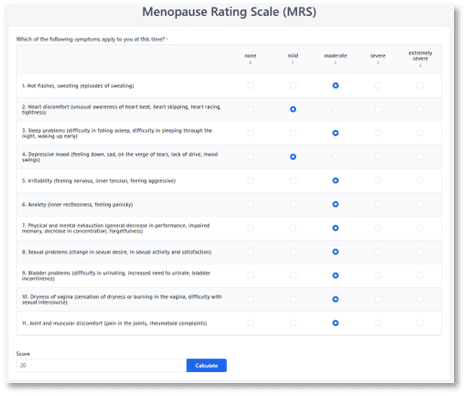
This 66-year old patient came to me with an initial score of 28, reflecting severe to extremely severe symptoms in nearly every category: sleep disturbance, mood swings, exhaustion, low libido, dryness, and joint pain.
She had been told by previous providers that due to her history of breast cancer that she could not take hormones. After reviewing the risks and benefits, we initiated bioidentical transde
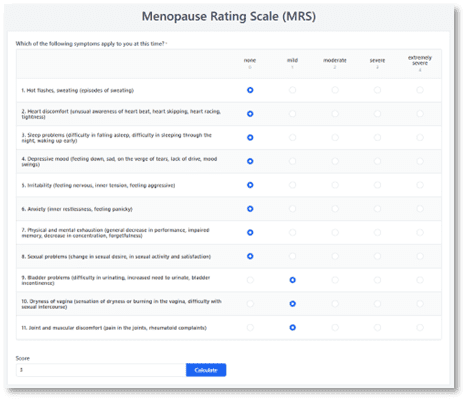
By 12 months, her score had improved to 9, and her energy, clarity, and joy had returned. She felt like she was given her life back and her husband was equally thrilled to have his wife back.
Both women experienced an ~70 % or greater reduction in total symptom burden. This is a testament to how quickly the right therapy can restore quality of life.
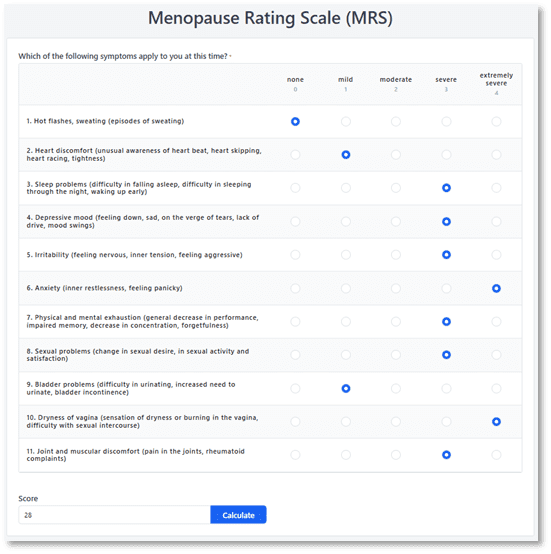 Menopause Rating Scale for patient story 2 before treatment, showing a total score of 28 with severe or extremely severe sleep, mood, anxiety, cognitive, sexual, vaginal-dryness, and joint symptoms. Open full-size image
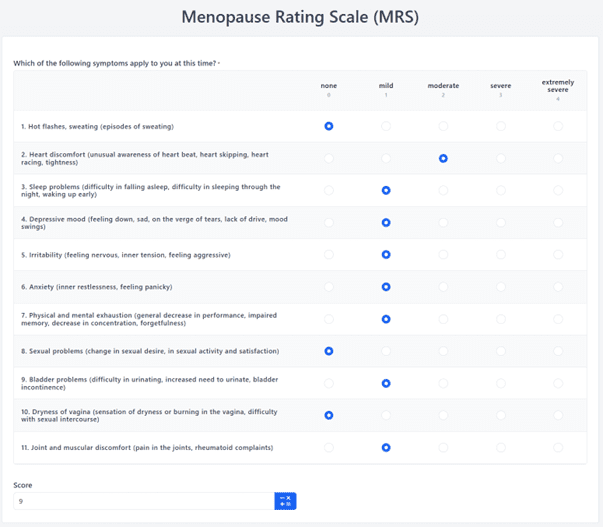 Menopause Rating Scale for patient story 2 after 12 months of treatment, showing a total score of 9 with mostly mild symptoms, moderate heart discomfort, and no hot-flash, sexual, or vaginal-dryness symptoms. Open full-size image
What the FDA Announced
In its November 10 statement, the FDA announced it would formally begin removing broad black-box warnings from MHT products.
Officials, including HHS Secretary Robert F. Kennedy Jr. and FDA Commissioner Dr. Marty Makary, emphasized that:
- There is no significant increase in breast-cancer mortality with modern regimens
- Initiating therapy before 60 can reduce cardiovascular and cognitive risk
Kennedy summarized it powerfully:
For more than two decades, the American medical establishment turned its back on women. Millions were told to fear the very therapy that could have given them strength, peace, and dignity through one of life’s most difficult transitions – menopause. That ends today.”
Why This Matters
This isn’t about pharmaceuticals, it’s about restoring trust in evidence-based women’s health. And while my philosophy has always been to help people reduce medications whenever possible, menopause hormone therapy is different: it’s about replacing what the body naturally loses, not adding something foreign. It may not be for everyone, but it’s a conversation worth having.
Modern MHT, especially transdermal estradiol with micronized progesterone, differs fundamentally from the older conjugated estrogens and synthetic progestins used in the WHI.
For healthy women under 60 or within 10 years of menopause, studies show:
- Reduced all-cause mortality
- Lower cardiovascular and Alzheimer’s risk
- Improved sleep, mood, libido, and overall quality of life (seen regardless of age)
If you’ve hesitated to discuss hormone therapy because of decades-old warnings, now is the time to revisit that conversation with your clinician.
A Personal Note
As a Family and Obesity Medicine physician and Menopause Society Certified Practitioner, my mission has always been to empower women with accurate information and practical tools to feel like themselves again.
The FDA’s announcement validates decades of scientific correction and advocacy.
It’s the dawn of a new era, one where women can approach menopause with clarity instead of fear, and science instead of stigma.
Companion Menopause Lessons
Watch Dr. Laura Buchanan’s companion lessons on menopause symptoms and treatment options.