
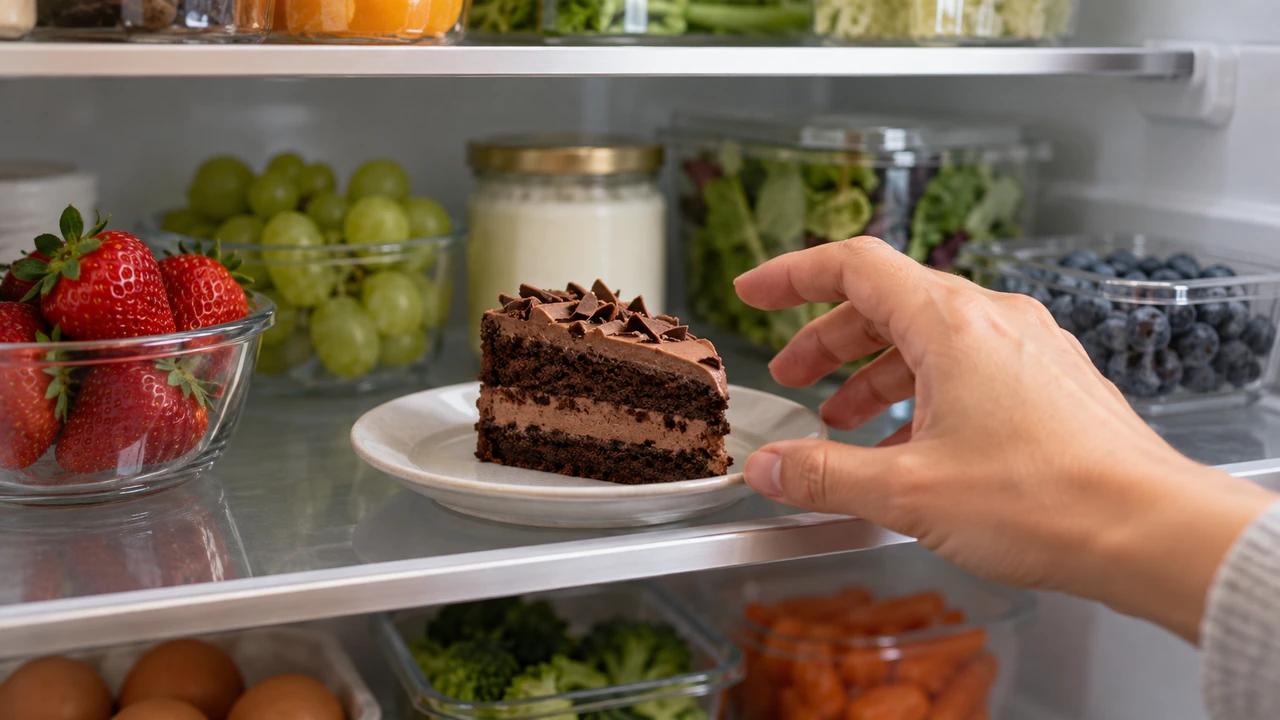
It’s been a long day. You’re exhausted, stressed, maybe anxious or overwhelmed. Emotions are running high, and suddenly, the urge to eat hits. You’ve “been good” all day, and know eating doesn’t align with your stated goals, but right on cue, that old, familiar voice swoops in after the craving: “Screw it. I’ll start again tomorrow. Just this one time won’t matter. I don’t care.”
The battle begins.
I call this the F-its, and if you’re reading this while standing in your kitchen, sitting in your car, or spiraling in your thoughts, please see this as the sign from the universe that you’re looking for…or sock it away and read it the next time you are in vulnerable territory and finding yourself negotiating for something your best self doesn’t want.
⏺ ⏺ ⏺
When you casually say to yourself, “I don’t care,” please ask yourself if that is actually true: Do you really not care?
Do you care when your lab results come back and your health hasn’t improved or gotten worse? Do you care when your doctor is concerned and increases your medications?
Do you care about being a burden to your loved ones? Do you care when you think about growing older, and what that looks like if you’re sick or have limited mobility?
Do you care when you’re out of breath from the activities of daily living? Do you care when you’re calculating the length of a walk to assess if you can keep up with family and friends?
Do you care when your knees hurt and every joint aches? Do you care when your body feels swollen and inflamed? Do you care when your stomach hurts from eating foods that don’t agree with you?
Do you care when your clothing feels snug? Do you care when you have to struggle with a zipper or tug at clothing that previously fit comfortably?
Do you care when you feel embarrassed about your size before going to social events? Do you care when you have to do mental gymnastics to calculate if a chair can accommodate your size?
Do you care when you wake up in the morning and realize you’ve given up on yourself…yet again?
Are you going to care tomorrow, next month, next year?
⏺ ⏺ ⏺
In the moment, those F-it thoughts seem unimportant. It’s only this one time, after all. But if this is the only time, if this is the last time, what were all those other times?
The F-its shine a spotlight on the immediate payoff, but they blind us to the future cost.
In the moment, food looks like relief and comfort. Or, it can look like rebellion and control, as your brain zooms in on the immediate reward of how good the food will taste, or that it will make you feel better, but it also conveniently blurs out tomorrow. It ignores all the consequences, the fear, the inflammation, the regret, the physical discomfort, the shame-spiral.
And most importantly, it ignores the promises you made to yourself.
⏺ ⏺ ⏺
The F-its are not about not caring, If anything, they’re the opposite. They show up when you care so much that it feels overwhelming, when you’re emotional, disappointed, exhausted, or scared that all your effort won’t pay off anyway. They are a way of pretending you don’t care, just long enough to get what you want when you want it. But they are half-truths, based on telling yourself only part of the story about the food you want to eat or the workout you want to skip.
So, we tell ourselves, “F-it,” not because we don’t care, but because, in that moment, caring feels like too much. Or because what we are caring about is so overwhelming that it feels more important than whatever we will face tomorrow.
If we truly didn’t care, we wouldn’t feel the internal tug-of-war. There would be no guilt, frustration or exhaustion from starting over and breaking promises to ourselves over and over.
⏺ ⏺ ⏺
Give yourself the gift of radical honesty, and ask the right questions.
If you are reading this, my guess is that you care deeply. So, the next time you hear an F-it thought, pause and ask yourself the right questions, and answer them with the whole truth. Not just: “I want this,” but also:
“I will very much care about this tomorrow. Five minutes of relief will turn into hours of regret.”
“I will feel this in my body, in the tightness of my clothes, the ache in my joints, the inflammation I pretend not to notice.”
“I will wake up disappointed in myself, before my feet even hit the floor.”
“I will wake up tomorrow regretting this.
“I break promises to myself over and over. I owe this to myself.”
“I will have to start over again, carrying the weight of another ‘Why did I do that?’”
“Who do I want to be tomorrow? Who do I want to be 6 months from now?”
“If last time was the last time, what is this time?”
We are all grown-up people making decisions about what to put in our grown-up mouths. We are allowed to choose whatever we want, but at the very least, we should do so with our eyes wide open to the whole truth about the food we consume and our eating patterns.
The F-it voice wants you to believe this moment is the only one that matters. But, of course, we know…it’s not, and you only have to check in with yourself and your own experiences to prove just how untrue that is.
This moment, the one right in front of you certainly matters, but saying F-it, at the expense of tomorrow also matters.
Tomorrow-you is the one who has to live in the body and with the consequences that today-you creates. So, before you say, “F it. I don’t care,” pause and ask yourself if that’s actually true.
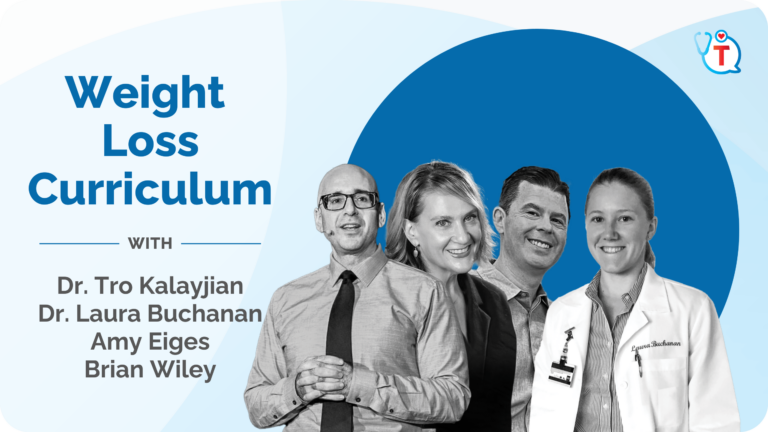
Two additional ways to create that pause: In a July 2020 Toward Health group discussion, Tro Kalayjian, DO, and Health Coaches Amy Eiges and Brian Wiley talked about “replacing what you can’t resist” and buying time before acting on a craving. Brian said that not having a replacement available contributed to high-carb meals early in his own journey. Amy shared a personal example of nearly overeating low-carb chocolate and peanut butter.
The group explicitly said these replacement foods were not weight-loss foods. Their practical point was to use an available alternative or a brief delay when the immediate choice feels difficult, then pay attention to whether that strategy supports or interferes with your goals.
Take a breath. Interrupt the spiral, even for a split second and ask yourself different questions. Step out of the pattern you’ve replayed over and over again and stop borrowing from your future to avoid facing some truths today.
The F-its feel overwhelming in the moment, but tomorrow-you will be grateful for your honesty and self-respect.