
Calories are real. They measure energy, and long-term changes in body weight necessarily involve changes in energy storage.

The myth is that knowing the number or trying harder to stay beneath a calculated limit is a complete treatment for obesity.
It is not.
A calorie target does not explain why one meal leaves you satisfied for hours while another makes you want to keep eating. It does not tell you why stress, sleep loss, food cues, medications, blood-sugar changes, or an ultra-processed food environment can change your appetite. It does not make a highly rewarding food less rewarding. And it does not turn a plan that leaves you chronically hungry into one you can follow for years.
For many people, the more useful question is not simply, “How many calories did I eat?” It is, “What made me hungry, what helped me feel full, and what made eating easier to control?”
That is why we do not make calorie counting the center of weight-loss care.
On this page
Energy balance is true, but it is not a behavioral plan
If someone eats less energy than the body uses over time, stored energy must decline. That biological accounting is not controversial.
But telling a person to “create a calorie deficit” describes the desired result. It does not reliably create the result.
Hunger changes when weight is lost. Appetite signals can rise. Food reward can become more intense. Energy expenditure can adapt. Some of the foods available to us can make it easier to stop eating; others can make it much harder. A useful treatment has to address those forces, not merely restate the arithmetic.
The amount of food matters, but the ability to regulate that amount comfortably matters more over the long term.
Calorie labels provide information, not satiety
Calorie information is everywhere: restaurant menus, food packages, fitness devices, and tracking apps. Yet more information has not made weight regulation simple.
The research includes a randomized fast-food experiment in 594 adolescents and adults. Adding calorie information to the menu did not significantly change the energy ordered or eaten in that single meal.[1] It also cited a restaurant observation in which only 6 of 4,311 patrons accessed the available nutrition information before ordering.[2] A review of 31 studies found some positive results, but the better-designed real-world studies available at that time did not show the desired population-level reduction in calories ordered.[3]
More recent evidence shows that labels can influence choices in some settings. In a 2026 randomized trial involving 2,462 restaurant diners in South India, several labeling formats reduced calories ordered in one of two participating restaurants, while the effects varied by setting.[5]
That is useful context. Calorie labels can inform a decision, but they do not teach a person how to recognize hunger, reduce cravings, build a satisfying meal, or recover from a stressful evening. An informed choice is not automatically a sustainable eating pattern.
Tracking is less precise than it feels
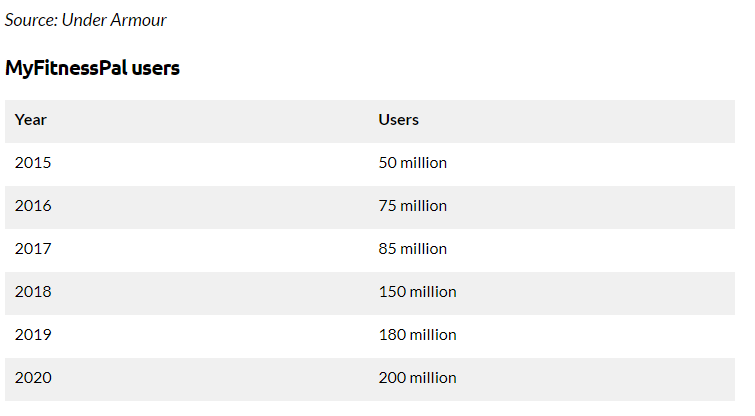
Calorie logging often produces a very exact-looking number. The inputs are rarely that exact.
Portion sizes vary. Recipes differ. Restaurant meals change from one preparation to the next. People forget bites, beverages, oils, sauces, and snacks. Exercise devices estimate rather than directly measure energy expenditure. Even trained professionals can misestimate intake.
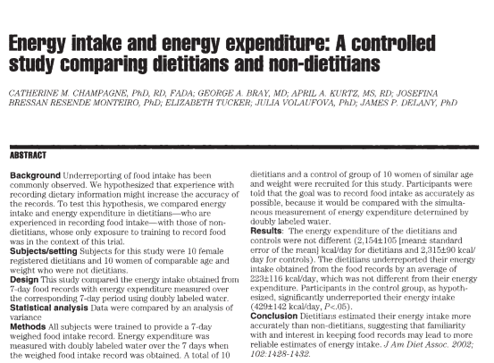
A controlled study compared dietitians with non-dietitians and documented meaningful error in estimates of both energy intake and expenditure.[4] The practical problem is not that tracking is useless. It is that a person can follow a difficult plan with great diligence while the apparent precision of the log exceeds the precision of the underlying data.
For some patients, short-term tracking is a helpful diagnostic tool. It can reveal grazing, liquid calories, restaurant frequency, low protein intake, or portions that have quietly grown. But it should be used as information—not as a moral score and not as the only explanation for hunger or weight change.
Study abstract: calorie estimation
Equal calories do not create equal appetite
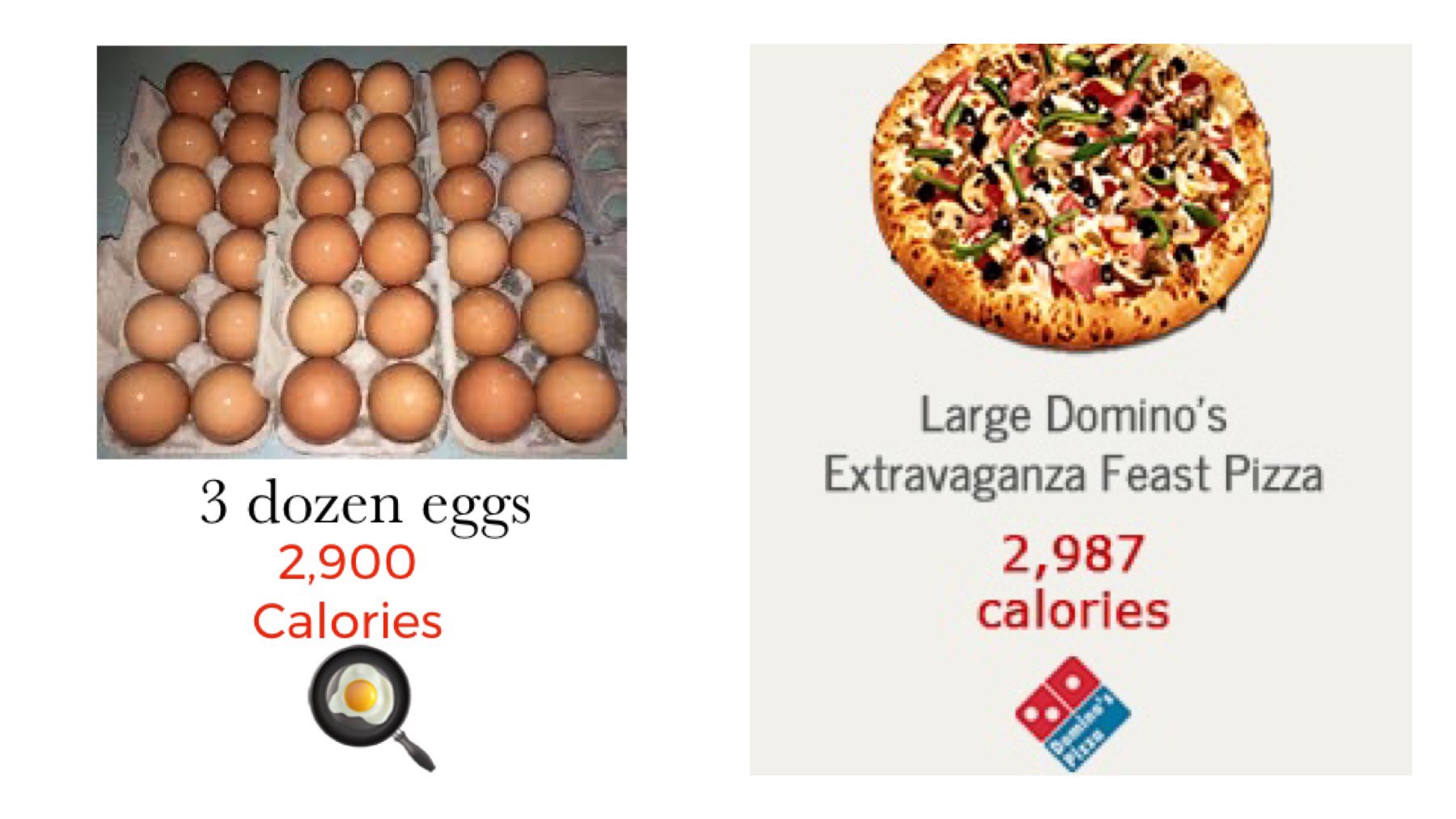
Two meals with the same calculated energy can produce very different experiences of fullness, food reward, and desire to eat again.
Protein is one reason. In a controlled feeding study, increasing protein from 15% to 30% of energy increased satiety. When participants were then allowed to eat freely, spontaneous intake fell by an average of 441 calories per day, with reductions in body weight and fat mass.[6]
Food processing is another. In an NIH inpatient randomized crossover trial, participants were offered either ultra-processed or unprocessed diets designed to be matched for presented calories, macronutrients, sugar, sodium, and fiber. During the ultra-processed phase, participants spontaneously ate about 508 more calories per day and gained weight; during the unprocessed phase, they lost weight.[7]
The lesson is not that energy stopped mattering. The lesson is that the type and structure of food changed how much energy people consumed without anyone handing them a stricter calorie target.
This is why a plate of eggs, fish, meat, poultry, or another protein-centered meal may affect appetite very differently from the same number of calories delivered through pizza, pastries, snack foods, or sweetened drinks. A calorie number does not capture protein leverage, chewing, eating rate, food reward, glycemic response, or the length of time a meal keeps someone satisfied.
Low-carb nutrition can make eating less feel less effortful
Low-carbohydrate nutrition is not an attempt to repeal energy balance. It is a strategy for changing the conditions that drive intake.
Reducing sugar and refined starch can decrease exposure to foods that are easy to overconsume. Prioritizing protein and minimally processed food can improve satiety. For some people, nutritional ketosis further reduces hunger and helps quiet the persistent drive to eat.
In a clinical study of adults after weight loss, the usual rise in ghrelin and subjective appetite was mitigated while participants remained ketotic.[8] That matters because the biological push to regain weight is one of the reasons a simple “eat less” plan becomes harder over time.
Longer trials also show that weight loss does not require making calorie counting the central daily task. In the 12-month DIETFITS randomized trial, 609 adults were assigned to a healthy low-fat or healthy low-carbohydrate approach emphasizing diet quality and a level of fat or carbohydrate reduction they could maintain. Both groups lost weight, with mean losses of 5.3 kilograms in the low-fat group and 6.0 kilograms in the low-carbohydrate group.[9]
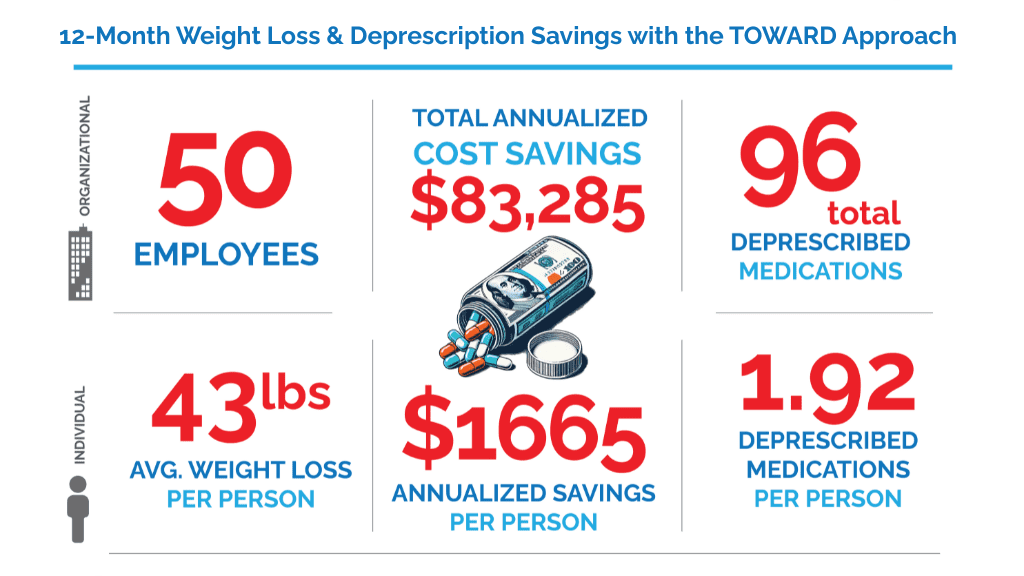
Toward Health’s published one-year employee cohort offers a clinical example of a different approach. The multimodal program emphasized therapeutic carbohydrate reduction, intermittent fasting when chosen by the patient, coaching, education, community support, and remote monitoring. Mean weight loss in the intention-to-treat analysis was 15.5% of initial body weight.[10]
These approaches do not prove that every person needs the same diet. They show why successful weight care can focus on food quality, carbohydrate exposure, protein, meal timing, monitoring, and support instead of requiring every patient to calculate every bite.
What to focus on instead
If calorie counting has helped you understand your intake without increasing anxiety or food preoccupation, you do not have to abandon it. Use it as one tool. Do not mistake it for the whole treatment.
A more durable plan often begins here:
- Build meals around protein. Choose an amount and source that fit your medical needs, preferences, and goals.
- Reduce sugar, refined starch, and ultra-processed foods. These foods can make it easy to consume more energy before fullness catches up.
- Find the carbohydrate level that improves control. Hunger, cravings, glucose response, medications, activity, and personal preference all matter.
- Notice the pattern between meals. Track how long you remain satisfied, when cravings appear, and whether stress or poor sleep changes the urge to eat.
- Create meal structure. Planned meals and fewer unplanned eating episodes are often easier to sustain than negotiating with food all day.
- Use data to answer a question. A food log, glucose monitor, scale trend, hunger rating, or eating-window record should help solve a specific problem—not generate shame.
If you use insulin, sulfonylureas, blood-pressure medication, or other drugs that may need adjustment as nutrition changes, make those changes with a clinician who can monitor you.
The better question
“Do calories matter?” is not the most useful argument.
The better question is: What allows a person to regulate intake without fighting severe hunger and cravings every day?
For many people, the answer is not more arithmetic. It is a more satiating food environment, adequate protein, fewer refined carbohydrates and ultra-processed foods, a meal pattern that reduces unplanned eating, and support that addresses the reasons they eat.
Calories describe energy. They do not describe the entire human experience of eating.
Related video: Why You Shouldn’t Overly Focus on Calories — Watch the 2-minute, 42-second recording.
References
- Harnack LJ, French SA, Oakes JM, et al. Effects of calorie labeling and value size pricing on fast food meal choices: results from an experimental trial. International Journal of Behavioral Nutrition and Physical Activity. 2008;5:63. doi: 10.1186/1479-5868-5-63. ↩
- Roberto CA, Agnew H, Brownell KD. An observational study of consumers’ accessing of nutrition information in chain restaurants. American Journal of Public Health. 2009;99(5):820-821. doi: 10.2105/AJPH.2008.136457. ↩
- Kiszko KM, Martinez OD, Abrams C, Elbel B. The influence of calorie labeling on food orders and consumption: a review of the literature. Journal of Community Health. 2014;39(6):1248-1269. doi: 10.1007/s10900-014-9876-0. ↩
- Champagne CM, Bray GA, Kurtz AA, et al. Energy intake and energy expenditure: a controlled study comparing dietitians and non-dietitians. Journal of the American Dietetic Association. 2002;102(10):1428-1432. doi: 10.1016/S0002-8223(02)90316-0. ↩
- Jeyashree K, Abdulkader RS, Raghupathy K, et al. Effect of restaurant menu labelling on consumer food choices: a randomised controlled trial in South India. Appetite. 2026;228:108756. doi: 10.1016/j.appet.2026.108756. ↩
- Weigle DS, Breen PA, Matthys CC, et al. A high-protein diet induces sustained reductions in appetite, ad libitum caloric intake, and body weight despite compensatory changes in diurnal plasma leptin and ghrelin concentrations. American Journal of Clinical Nutrition. 2005;82(1):41-48. doi: 10.1093/ajcn.82.1.41. ↩
- Hall KD, Ayuketah A, Brychta R, et al. Ultra-processed diets cause excess calorie intake and weight gain: an inpatient randomized controlled trial of ad libitum food intake. Cell Metabolism. 2019;30(1):67-77.e3. doi: 10.1016/j.cmet.2019.05.008. ↩
- Sumithran P, Prendergast LA, Delbridge E, et al. Ketosis and appetite-mediating nutrients and hormones after weight loss. European Journal of Clinical Nutrition. 2013;67(7):759-764. doi: 10.1038/ejcn.2013.90. ↩
- Gardner CD, Trepanowski JF, Del Gobbo LC, et al. Effect of low-fat vs low-carbohydrate diet on 12-month weight loss in overweight adults and the association with genotype pattern or insulin secretion: the DIETFITS randomized clinical trial. JAMA. 2018;319(7):667-679. doi: 10.1001/jama.2018.0245. ↩
- Buchanan L, Calkins M, Kalayjian T, et al. TOWARD, a metabolic health intervention, demonstrates robust 1-year weight loss and cost-savings through deprescription. Frontiers in Nutrition. 2025;12:1548609. doi: 10.3389/fnut.2025.1548609. ↩